
Finding a reliable luminous clock in Singapore requires balancing visibility, movement noise, and long-term durability against local environmental factors like high humidity. While online marketplaces are flooded with low-cost options, true value lies in selecting a clock that remains legible throughout the night without disrupting your sleep with loud ticking or overly bright glare. By understanding the underlying illumination technologies and evaluating brands based on local support and build quality, you can secure a timepiece that offers excellent utility for your bedside or study.
What Defines a Quality Luminous Table Clock
To understand what makes a luminous clock worth your investment, it is essential to look closely at the technology powering its visibility. Modern table clocks generally rely on two primary methods to illuminate their dials in the dark: passive photoluminescence and active LED backlighting. Passive photoluminescent clocks use specialized pigments applied to the hands and hour markers. These pigments absorb ambient light during the day and slowly release it as a soft glow in darkness. Older clocks often used zinc sulfide, which offered a relatively short glow duration. Modern, high-quality clocks utilize advanced compounds like strontium aluminate, which can glow significantly longer and brighter after a comparable charge.
Active LED backlighting, on the other hand, relies on an internal light source to illuminate the dial. This can be activated on-demand via a button press or set to turn on automatically when a built-in light sensor detects a dark environment. While LED backlighting provides consistent, bright illumination that does not fade over the course of the night, it requires a continuous power source. For battery-operated models, automatic light sensors can drain batteries quickly, necessitating frequent replacements. Understanding these technological differences helps you choose a clock that aligns with your personal preferences for nighttime visibility and maintenance.
Products mentioned in this guide
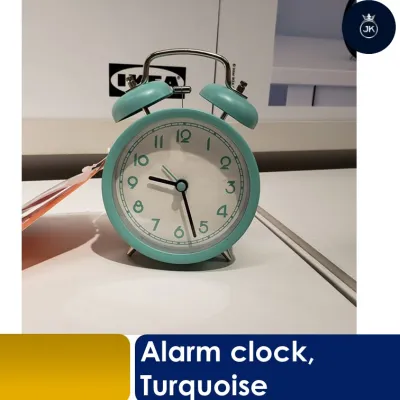

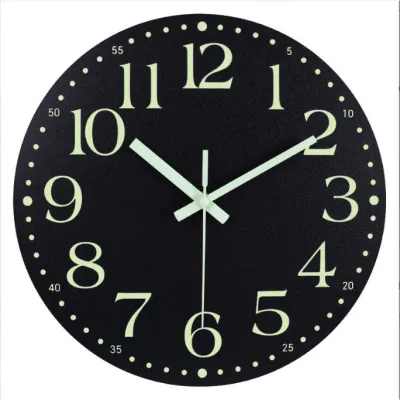

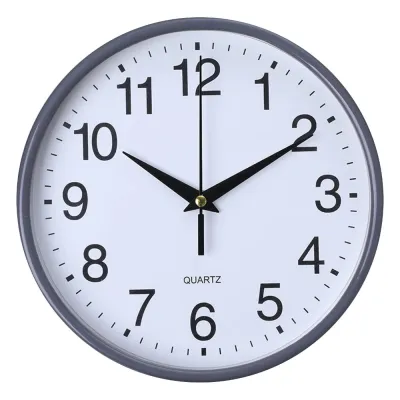
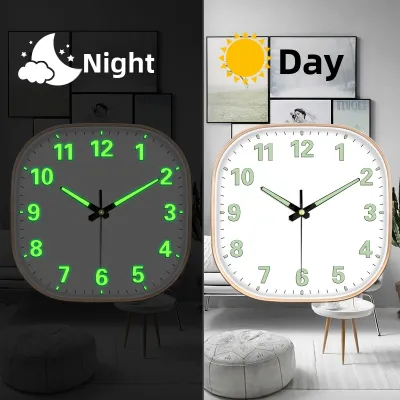
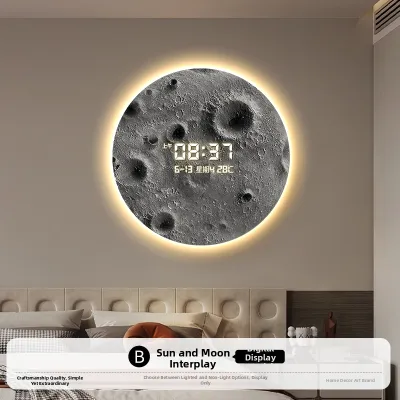

Prices are valid at publication and may change. Please refer to the product page for the latest price.
Dial readability is another critical factor that goes beyond the illumination method itself. A clock can have a bright glow, but if the contrast between the hands and the dial face is poor, reading the time at a glance remains difficult. High-contrast designs, such as pale green or white luminous hands set against a matte black or deep navy dial, offer the best legibility. The font size and style of the numerals also play a significant role. Clean, bold Arabic numerals are much easier to decipher in a semi-conscious state in the middle of the night compared to intricate Roman numerals or minimalist tick marks.
Finally, the power source configuration determines both the placement flexibility and the reliability of the clock. Battery-operated models offer the ultimate convenience, allowing you to place the clock on any bedside table, shelf, or desk without managing unsightly cords. However, if you prefer continuous LED illumination, a plug-in model is often more practical. When choosing a plug-in clock, look for designs that include a battery backup compartment. This feature ensures that even if there is a temporary power disruption in your home, the clock’s internal quartz movement continues to run, keeping your time and alarm settings accurate.
Key Criteria for Evaluating Brand Value
When evaluating different clock brands in Singapore, looking beyond the initial price tag is vital to securing long-term value. The quality of the casing materials is a primary indicator of durability. While budget-friendly brands often use thin, lightweight plastics that can degrade, discolor, or become sticky in Singapore’s warm and humid climate, reputable brands tend to use high-density polymers, brushed metals, or treated natural wood. A sturdy casing not only protects the delicate internal movement from dust and moisture but also dampens any internal vibrations, contributing to a quieter operation.

The internal movement itself is the heart of the clock, and its engineering determines both accuracy and noise levels. For bedroom environments, movement noise is a critical consideration. Traditional quartz movements produce a distinct ticking sound every second as the gears advance. In a quiet room, this repetitive sound can be highly disruptive to sleep. Value-focused brands that prioritize user comfort often feature “silent sweep” or “continuous sweep” quartz movements. These mechanisms move the second hand in a smooth, uninterrupted motion, eliminating the ticking sound entirely and ensuring a peaceful sleeping environment.
Another essential aspect of brand value is the availability of local after-sales support and warranty coverage. Purchasing a clock from an established brand with an authorized distributor or service center in Singapore ensures that you have recourse if the product develops a defect. A standard 12-month local warranty is a strong indicator of a manufacturer’s confidence in their product’s build quality. It also means that obtaining replacement parts, such as battery covers or adjustment knobs, is straightforward. In contrast, unbranded imports often lack any form of local support, meaning a minor component failure could force you to discard the entire clock.
Furthermore, battery compartment design is an overlooked detail that separates high-quality brands from cheap alternatives. In tropical climates, battery leakage can occur if a clock is left unused or if low-quality batteries are used. Well-designed clocks feature sealed battery compartments with robust, corrosion-resistant contacts. This design prevents leaked battery acid from reaching the main circuit board and destroying the clock’s movement, preserving your investment even in challenging environmental conditions.
Where to Shop and Compare Options in Singapore
Navigating the retail landscape in Singapore requires a strategic approach to avoid low-quality products and counterfeit goods. Online marketplaces offer an unparalleled selection of luminous clocks, but they also host numerous unbranded listings with exaggerated performance claims. To shop safely online, focus on official brand stores or authorized local retailers. Look for listings that provide detailed technical specifications rather than generic marketing jargon. Pay close attention to customer reviews, filtering them to read feedback from buyers who have used the clock for several weeks or months. Look for specific comments regarding the actual duration of the luminous glow and whether the movement is truly silent.
While online shopping offers convenience, visiting physical retail stores provides a valuable opportunity to inspect the clock’s quality firsthand. Department stores, home furnishing centers, and specialty clock shops across Singapore allow you to handle the products before making a decision. You can assess the weight and feel of the casing materials, test the responsiveness of the buttons, and listen closely to the movement to verify its noise level. To check the initial brightness of a photoluminescent clock, you can cup your hands over the dial to block out the store’s ambient light and observe how clearly the hands stand out.
When comparing options, there are several red flags to watch out for. Be cautious of unbranded clocks that claim to offer “permanent” or “infinite” glow without requiring any light exposure or power source, as these claims are physically impossible for safe consumer materials. For plug-in models, always verify that the power adapter carries the Enterprise Singapore Safety Mark. This certification indicates that the electrical component has been tested and approved for safe use with Singapore’s voltage standards, reducing the risk of short circuits or electrical hazards. Suspiciously low prices, such as clocks sold for under S$10, often indicate compromised build quality, fragile internal gears, or inefficient power consumption that will lead to high battery replacement costs.
How to Verify Luminous Performance Before Committing
Once you have selected a luminous clock, verifying its performance immediately after purchase is key to ensuring it meets your expectations. Start by consulting the product manual to understand the specific charging requirements for the luminous elements. If your clock uses photoluminescent paint, it will require exposure to a strong light source to charge the pigments. Position the clock under a bright desk lamp or near a window receiving indirect sunlight for the recommended duration, which is typically between 30 and 60 minutes.
After charging the clock, conduct a practical test in a completely dark room. Check the initial brightness of the dial and hands, ensuring that the time is easily readable from your typical viewing distance. To evaluate the longevity of the glow, check the clock again after several hours of darkness. A high-quality photoluminescent clock should retain enough visibility to let you read the time in the early hours of the morning, even as the initial brightness naturally tapers off. If you find that the glow fades completely within an hour despite adequate charging, this may indicate a defect in the luminous coating or the use of substandard materials.
If you encounter issues such as flickering LED backlights, a complete failure of the luminous paint to charge, or unusual heat coming from the battery compartment or power adapter, stop using the clock immediately. Do not attempt to open the casing or repair the internal electronics yourself, as this can void the warranty and pose safety risks. Instead, contact the seller or the local distributor to arrange for a replacement or refund under the terms of your warranty or the platform’s return policy.
Frequently Asked Questions (FAQ)
Do luminous table clocks require direct sunlight to charge?
Photoluminescent table clocks do not strictly require direct sunlight to charge, though natural sunlight is highly efficient due to its high concentration of ultraviolet (UV) light. Modern photoluminescent materials, such as strontium aluminate, can also be charged effectively using artificial indoor lighting. Cool-white LED bulbs, fluorescent tubes, and halogen lamps are particularly effective at charging these pigments. However, the charging time required under artificial light is typically longer than under direct sunlight. It is always best to refer to the manufacturer’s instruction manual to determine the optimal light exposure duration and intensity needed to achieve the maximum glow duration for your specific clock model.
Is it safe to keep a luminous clock on a bedside table?
Yes, modern luminous table clocks are completely safe to keep on your bedside table. Historically, some older timepieces manufactured in the mid-20th century used radioactive radium paint to achieve a continuous glow. However, modern consumer clocks utilize entirely non-radioactive, non-toxic photoluminescent materials or low-voltage LED backlighting, posing zero health risks. To ensure optimal sleep hygiene, focus on selecting a clock with a silent sweep quartz movement to prevent ticking noises from disrupting your rest. Additionally, if your clock features an active LED backlight, ensure it has an adjustable brightness setting or an on-demand button so that the light does not create an uncomfortable glare in your bedroom.
Why is my clock's glow fading after only a few minutes?
If your clock’s luminous glow fades rapidly, the most common cause is insufficient exposure to a strong light source during the day. Photoluminescent pigments require a certain intensity and duration of light to fully charge their energy-storing molecules. If the clock is placed in a dim corner or a room with weak ambient lighting, it will not achieve its full glow potential. Another factor could be the natural aging of the luminous material, especially in older or lower-quality clocks where the chemical compounds degrade over time. To resolve this, try repositioning the clock to a brighter location where it can absorb more light during the day, or check if the batteries need replacing if your clock uses an LED-assisted glow system.

Community discussion
Share your experience or ask a question. Comments are reviewed before publication.