
Maximizing the perceived size of a compact room while maintaining an organized, clutter-free environment is a common challenge in modern urban living, particularly in space-constrained Singapore apartments and HDB flats. A full-length mirror with integrated storage offers an elegant, dual-purpose solution to this dilemma. By combining a large reflective surface with hidden or structured shelving, these pieces of furniture serve two critical functions simultaneously: they bounce light to visually double the depth of a room, and they consolidate personal items that would otherwise occupy valuable floor or tabletop space. Choosing the right unit requires balancing aesthetic design, storage capacity, and structural safety to ensure the piece enhances your home without overcrowding it.
Design Features That Visually Expand Small Rooms
To successfully create the illusion of a larger room, the physical design of the mirror itself must be carefully considered. A bulky, heavily framed mirror can have the opposite of the desired effect, dominating a small room and making it feel cramped. Opting for a frameless design or an ultra-slim metal frame minimizes visual boundaries, allowing the reflection to merge seamlessly with the surrounding walls. This lack of a harsh border tricks the eye into perceiving the reflected space as a natural extension of the room, rather than a flat image on a wall.
The quality of the glass is equally critical when attempting to expand a space. Low-quality glass or thin acrylic mirrors are highly susceptible to warping and distortion, especially over larger surface areas. A distorted reflection immediately breaks the illusion of depth and can make a room feel chaotic and disorienting. High-quality, copper-free silver mirrors with a thickness of at least 4 to 6 millimeters provide a crisp, true-to-life reflection that accurately mimics the room’s actual dimensions, maximizing the space-amplifying effect.
Products mentioned in this guide
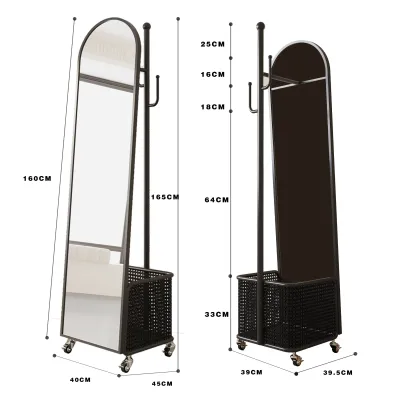
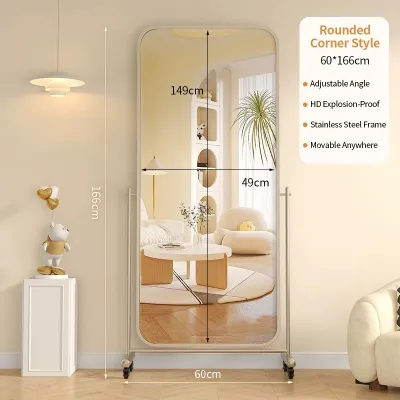
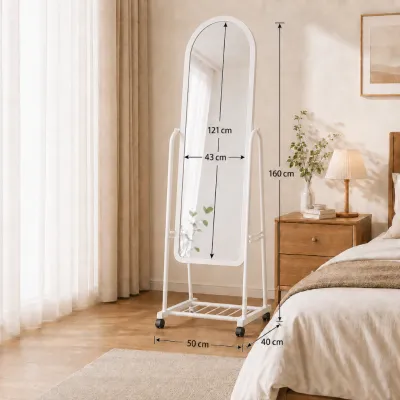
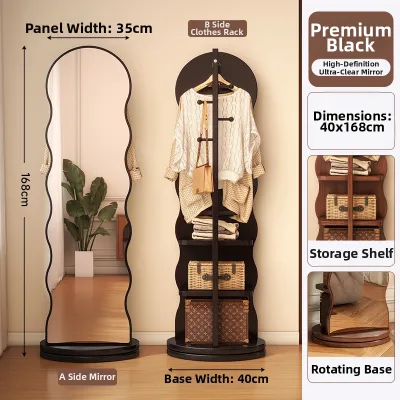
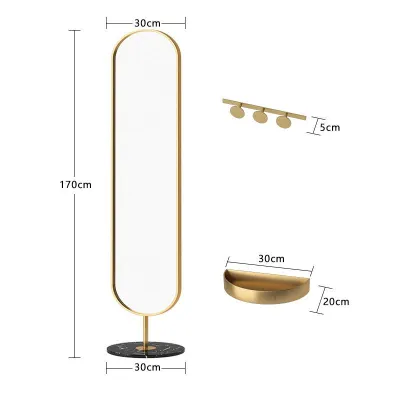
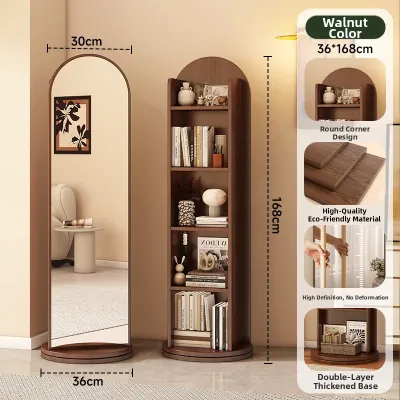
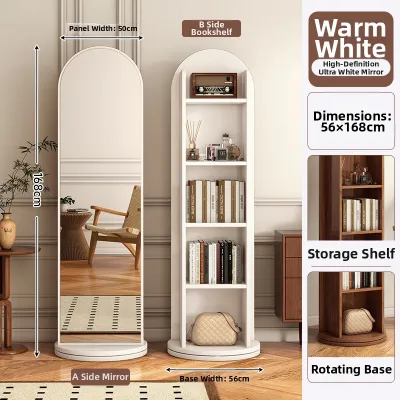
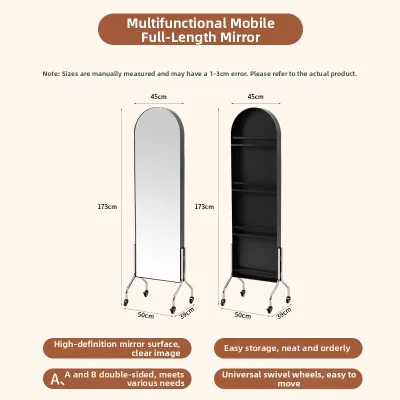
Prices are valid at publication and may change. Please refer to the product page for the latest price.
When evaluating storage mirrors, the depth of the cabinet versus its physical protrusion into the room is a vital trade-off. For a small bedroom or entryway, a cabinet depth of 10 to 12 centimeters is generally the sweet spot. This depth is sufficient to store jewelry, cosmetics, and small accessories without extending too far from the wall. Anything deeper than 15 centimeters begins to look like a standard wardrobe, which increases the visual weight of the piece and can obstruct narrow walkways, defeating the purpose of a space-saving solution.
Storage Configurations for Different Organizational Needs
Selecting the right storage layout depends entirely on what you intend to store and the physical constraints of your room. Different designs offer distinct trade-offs between accessibility, visual neatness, and structural stability.

Hidden Jewelry and Accessory Cabinets
Mirrors that open to reveal a hidden cabinet are highly effective for keeping small, valuable, or easily tangled items organized and completely out of sight. These units typically feature specialized compartments, including ring slots, necklace hooks, earring bars, and small drawers. When choosing a hidden cabinet, look for models with adjustable shelving. This flexibility allows you to customize the interior layout to accommodate taller items, such as perfume bottles or skincare canisters, preventing wasted vertical space.
Because these cabinets utilize a hinged door, you must account for the door’s swing radius. In tight spaces, such as the gap between a bed and a wardrobe, a door that swings open 90 to 120 degrees can easily block walkways or collide with adjacent furniture. Ensure you have at least 40 to 50 centimeters of clear clearance in front of the mirror to allow the door to open fully without obstruction.
Additionally, consider the weight distribution and hinge quality of the cabinet. When fully loaded with heavy cosmetics, perfumes, and jewelry, the door experiences significant downward force. High-quality steel hinges are essential to prevent the door from sagging over time, which can cause the mirror to misalign and make the cabinet difficult to close securely. Keeping heavier items stored toward the bottom or closer to the hinge side helps distribute this weight more evenly.
Mirrors with Open Shelving or Rack Backing
Freestanding swivel mirrors or leaning ladder-style mirrors often feature open shelves or hanging racks positioned behind the glass. This configuration is highly convenient for storing larger, daily-use items such as handbags, hats, folded clothes, or shoes. Because these items are easily accessible, this setup works well in entryways or dressing corners where quick access is a priority.
However, open storage carries a high risk of visual clutter. If the shelves behind the mirror are piled high with disorganized items, the reflection and the exposed sides can make the room feel busier and more cramped than before. To maintain the space-expanding illusion, open shelves should be curated carefully, utilizing small, uniform storage baskets to conceal smaller items and keep the overall look clean and intentional.
In Singapore’s tropical, humid climate, open shelving also requires more maintenance. Dust accumulates quickly on exposed surfaces, and high humidity can affect certain materials like untreated wood or leather bags stored openly. Regular dusting and ensuring adequate ventilation around the unit are necessary to keep both the storage and your belongings in pristine condition. Furthermore, because these units are often freestanding or rotate on a swivel base, placing heavier items on the lowest shelves is crucial to maintain a low center of gravity and prevent tipping hazards.
Space and Safety Checks Before Purchasing
Before purchasing a full-length storage mirror, conducting precise measurements of your physical space is essential to ensure a safe and functional installation. Begin by measuring the exact floor area where the mirror will stand or the wall space where it will be mounted. Do not forget to account for baseboards; a thick baseboard can prevent a leaning mirror or a wall-mounted unit from sitting flush against the wall, which can compromise its stability or require specialized spacers.
Next, verify all clearance zones. Open any adjacent wardrobe doors, room entry doors, and drawers fully to ensure they will not collide with the mirror. If you are opting for a swivel mirror, measure the diagonal clearance required for the unit to rotate a full 360 degrees without hitting nearby walls or furniture. A minimum clearance of 5 to 10 centimeters beyond the rotation path is recommended to prevent accidental impacts.
For wall-mounted units, structural safety is paramount. Many modern apartments utilize drywall partition walls for internal bedrooms, which cannot support the concentrated weight of a heavy storage mirror using standard plastic wall plugs. A fully loaded mirror cabinet can easily weigh 15 to 25 kilograms. You must locate the wooden or metal studs behind the drywall using a stud finder and secure the mounting brackets directly into them. If the studs do not align with your desired placement, heavy-duty hollow-wall anchors, such as steel toggle bolts, must be used.
If you are mounting the mirror onto a solid concrete wall, which is common in HDB structural walls, you will need a rotary hammer drill and appropriate masonry wall plugs to ensure a secure hold. If the mirror features integrated LED lighting, you must also verify the electrical requirements. Ensure the voltage matches Singapore’s standard 230V supply, check that the plug type is compatible, and verify that any wiring is kept away from damp areas. If the installation requires fixed wiring, working at significant heights, or if you are uncertain about your wall’s load-bearing capacity, stop and consult a qualified professional installer to prevent damage or injury.
Placement Strategies for Light and Depth
To maximize the space-expanding potential of your full-length mirror, its placement should be strategic rather than accidental. The primary goal is to capture and amplify natural light. Positioning the mirror on a wall adjacent to a window allows it to catch incoming daylight and bounce it deep into the darker corners of the room. This simple placement can make a dim, compact bedroom feel instantly brighter and more open.
Avoid placing the mirror directly opposite a window if the view outside is highly cluttered or if the direct sunlight causes intense glare. Direct glare can make the room uncomfortable to sit in and can cause the mirror backing to degrade prematurely over years of intense heat exposure. Instead, angle the mirror slightly so that it reflects a pleasant view, such as an indoor plant, a clean accent wall, or an open doorway, which naturally draws the eye forward and creates a sense of continuous space.
Finally, balance the mirror’s position with your existing room lighting and furniture flow. Avoid placing the mirror directly under a harsh overhead ceiling light, as this can cast unflattering shadows and create distracting reflections when you are trying to use the mirror. Instead, position it where it can benefit from soft, ambient light from bedside lamps or wall sconces, ensuring the mirror remains highly functional both day and night without disrupting the visual harmony of your room.
Frequently Asked Questions (FAQ)
Can a heavy storage mirror be safely mounted on standard drywall?
Yes, but standard plastic expansion anchors are not sufficient to support the weight of a heavy storage mirror, which can easily exceed 20 kilograms when fully loaded. To mount it safely, you must locate the vertical wall studs behind the drywall and secure the mounting brackets directly into them using heavy-duty wood screws. If the studs do not align with your desired mirror position, you must use high-quality hollow-wall anchors, such as steel toggle bolts or molly bolts, which expand behind the drywall to distribute the weight over a larger area. Always check the manufacturer’s specified weight limits, and if you are unsure of your wall’s construction, hire a qualified professional.
Do leaning storage mirrors need to be anchored to the wall?
Absolutely. Leaning mirrors with integrated storage present a significant tipping hazard because their center of gravity shifts constantly. Opening the cabinet door, rotating the unit, or simply retrieving items from the shelves alters the balance of the mirror. To prevent the unit from sliding at the base or tipping forward—which can cause severe injury or property damage—always secure the top of the mirror to the wall. Most manufacturers provide anti-tip straps, brackets, or wall anchors specifically for this purpose. Installing these safety devices is highly recommended, especially in homes with children, pets, or high foot traffic.
How do I clean the inside of a mirrored storage cabinet without damaging the finish?
Cleaning the interior of a storage mirror requires a gentle approach to protect both the glass backing and the internal lining, which is often made of felt, velvet, or delicate wood veneer. Never spray liquid glass cleaner directly onto the mirror surface; the liquid can run down and seep behind the glass, damaging the silver backing and causing permanent black spots (desilvering). Instead, spray a small amount of water or a mild, pH-neutral cleaner onto a microfiber cloth and gently wipe the glass. For felt or velvet interiors, use a soft brush attachment on a vacuum cleaner or a lint roller to remove dust and debris, and avoid using wet cloths which can ruin the adhesive holding the lining in place.

Community discussion
Share your experience or ask a question. Comments are reviewed before publication.