
Selecting an anti-slip seat cushion requires looking beyond comfort to evaluate how the cushion’s base interacts with your chair’s surface. While many products claim to offer a secure grip, the actual performance depends on a combination of material friction, user weight, and environmental conditions. A cushion that stays perfectly still on a textured fabric office chair might slide constantly on a polished leather executive seat or a glossy plastic dining chair.
Understanding the physical properties of gel, memory foam, and rubber bases allows you to choose a cushion that remains stable throughout the day. By matching the base material to your specific seating environment, you can prevent the constant need for readjustment and maintain proper ergonomic alignment.
How Anti-Slip Mechanics Work Across Different Chair Surfaces
The effectiveness of an anti-slip seat cushion relies on the physics of friction, which is governed by the contact between two surfaces and the downward force applied by the user. When you sit down, your body weight creates a downward normal force that presses the cushion base into the chair. This pressure allows textured patterns or high-friction materials to grip the seat surface, resisting the lateral shear forces that occur when you shift your weight, lean forward, or stand up.
Products mentioned in this guide
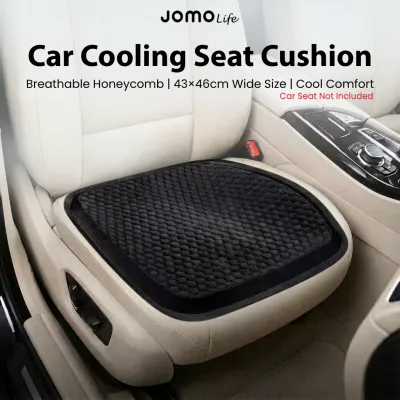
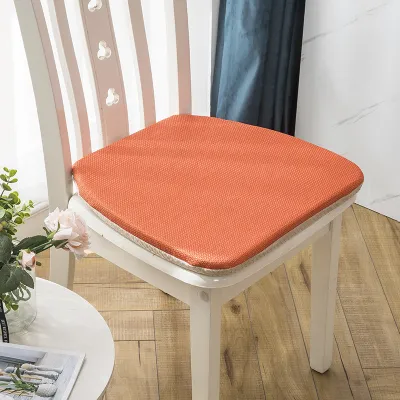
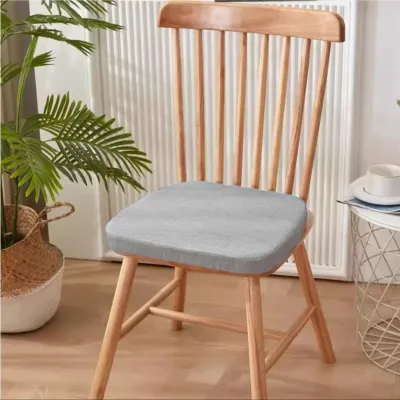
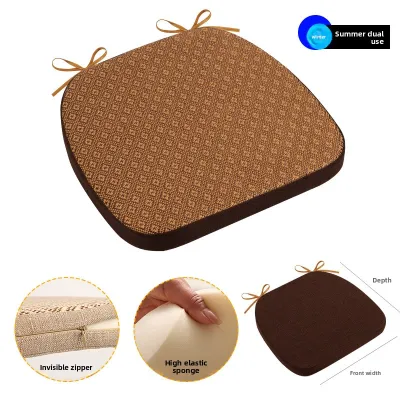
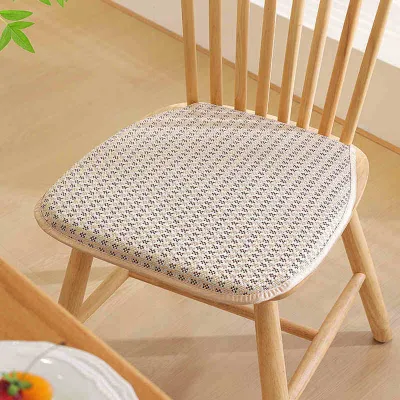
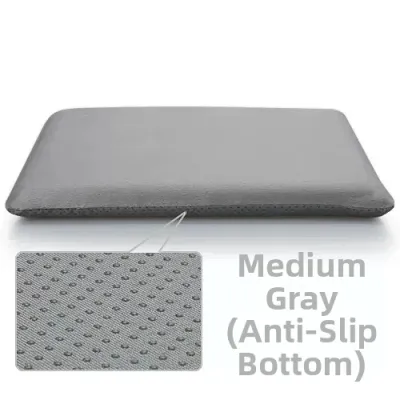
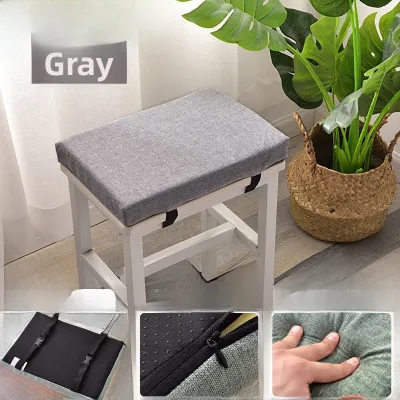
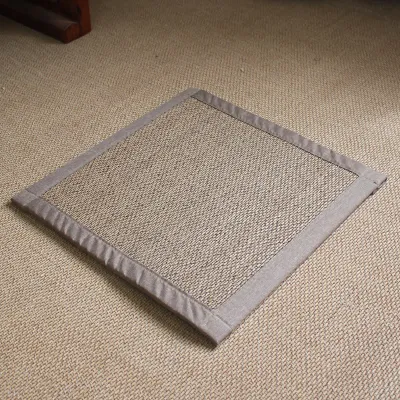
Prices are valid at publication and may change. Please refer to the product page for the latest price.
Different chair materials present unique challenges for cushion stability. Fabric upholstery features a highly textured, microscopic weave that naturally catches on textured cushion backings, making it the easiest surface to secure. In contrast, polished leather, vinyl, and smooth molded plastic offer very little surface texture, allowing cushions with low-friction backings to slide easily. Mesh office chairs present a different obstacle, as their open-weave design reduces the total surface area in contact with the cushion, requiring specialized grip patterns that do not slip through the gaps.
Environmental factors also play a significant role in material grip, particularly in warm, humid climates like Singapore. High ambient humidity can cause a micro-layer of moisture to build up between a non-porous cushion base and a smooth chair surface. This moisture acts as a lubricant, drastically reducing static friction and causing even heavy cushions to slide. Furthermore, persistent humidity can cause certain low-quality adhesive backings to soften, leading to reduced grip or sticky residues.
Because no single material performs perfectly across all seating environments, finding the right anti-slip cushion is always a conditional choice. You must evaluate the specific material of your chair, the typical humidity of your room, and how much you shift your weight during daily use before deciding on a cushion type.
Gel Cushions: Evaluating Weight and Surface Texture for Stability
Gel cushions, often constructed from hyper-elastic polymers molded into a honeycomb or open-grid structure, offer a unique physical advantage when it comes to stability: weight. A standard gel cushion is significantly heavier than its memory foam or polyurethane counterparts. This inherent density provides a form of passive stability, helping the cushion resist displacement from minor movements or drafts even when no one is sitting on it.

Despite their weight, raw gel polymers have a smooth, rubbery surface that can behave unexpectedly on different chairs. On textured fabric seats, the heavy gel conforms slightly to the fabric’s weave, creating a highly stable base. However, on polished leather or glossy plastic, raw gel can slide easily under lateral pressure. The smooth polymer lacks the microscopic texture needed to bite into polished surfaces, meaning a sudden shift in your posture can cause the cushion to slip out of place.
To address this limitation, it is essential to check product specifications for textured undersides or specialized encasement fabrics. High-quality gel cushions rarely feature exposed raw gel on the bottom; instead, they are supplied with a removable, zippered cover. The underside of these covers is typically reinforced with a high-friction material, such as a dense pattern of silicone beads or a textured neoprene fabric, which bridges the gap between the heavy gel core and the smooth chair surface.
While gel cushions offer excellent cooling benefits due to their open-grid design and thermal conductivity, you must consider the trade-offs on inclined surfaces. If you plan to use a gel cushion on an angled car seat or a reclining chair, the gel itself can deform under shear stress. Without a highly textured cover or integrated security straps, this deformation can gradually pull the cushion forward, requiring regular manual repositioning.
Memory Foam Cushions: Relying on Secondary Base Materials for Grip
Memory foam, or viscoelastic polyurethane foam, is highly regarded for its pressure-relieving properties and ability to contour to the body, but the raw foam itself possesses virtually no inherent grip. Raw memory foam is lightweight, porous, and has a dry, low-friction surface. If you place a bare memory foam core on any standard chair, it will slide with the slightest movement, meaning its anti-slip performance relies entirely on secondary materials integrated into its outer cover.
To make memory foam cushions stable, manufacturers typically construct covers with specialized non-slip backings. The most common design features a pattern of tiny silicone or PVC dots heat-pressed onto a durable polyester base. These dots act as individual friction points that grip the chair surface. The effectiveness of these dots depends on their density and material quality; soft, pliable silicone dots offer much better grip on smooth surfaces than hard, plasticized PVC dots, which can become slick over time.
Foam density also plays an indirect role in preventing displacement. High-density memory foam compresses gradually and contours deeply to your body, distributing your weight evenly across the entire seating surface. This even distribution minimizes the localized pressure spikes and sudden shifts in body weight that typically cause a cushion to slide. Low-density foam, on the other hand, compresses quickly and fully, causing the user to bottom out and shift more frequently, which puts greater physical stress on the anti-slip backing.
When choosing a memory foam cushion, match the base fabric to your specific chair type. For leather car seats, a breathable fabric base with soft silicone dots is ideal, as it provides grip without scratching or marring the delicate leather. For mesh office chairs, look for covers that feature larger, continuous rubberized patches rather than tiny dots, as small dots can sink into the mesh openings and fail to establish proper contact. Always check manufacturer labels to ensure the bottom layer is explicitly designed for high friction rather than just breathability.
Rubber and Silicone Bases: High Friction and Maintenance Limits
Rubber and silicone bases represent the highest level of pure friction available for seat cushions. Whether applied as a solid sheet, a textured grid, or a heavy coating on the bottom of the cushion cover, these materials conform slightly to the microscopic imperfections of the chair surface. This micro-conformance creates a powerful static grip, making rubber and silicone bases highly effective on hard, smooth surfaces like varnished wood, metal, and molded plastic.
Despite their excellent initial grip, rubber and silicone bases have distinct maintenance limits that can compromise their performance over time. The high-friction, slightly tacky surface of these materials naturally attracts dust, pet hair, lint, and skin cells. When used on fabric chairs, loose fibers quickly transfer to the cushion’s base. This accumulation creates a dry barrier over the rubber, preventing it from making direct contact with the chair and causing the cushion to slide as if it had no anti-slip backing at all.
Before purchasing, it is crucial to check the manufacturer’s guidelines regarding heat resistance and material compatibility. In warm environments or when exposed to direct sunlight—such as inside a car parked outdoors—low-quality rubber bases can undergo plasticizer migration. This chemical process can cause the rubber to become sticky, degrade, or leave a permanent, dark residue on delicate leather, light-colored fabrics, or polyurethane-finished wooden chairs.
Furthermore, rubber is susceptible to environmental aging. Over years of use, exposure to UV rays, ambient heat, and oxygen causes natural and synthetic rubbers to dry out, harden, and crack. As the material loses its elasticity, its coefficient of friction drops significantly. Silicone bases tend to resist UV degradation and heat much better than standard rubber, making them a more durable choice for sunny rooms or automotive use, though they still require regular cleaning to remain free of dust.
Material Comparison and Conditional Decision Guide
To help you select the right cushion base for your specific seating setup, the table below compares the primary characteristics, ideal environments, and key limitations of each material option.
| Cushion Base Material | Primary Grip Mechanism | Best Chair Surface | Potential Drawbacks | Key Specs to Verify |
|---|---|---|---|---|
| Weighted Gel (with cover) | Passive mass combined with textured cover fabric | Fabric, mesh, and standard office chairs | Heavy to transport; raw gel can slide on leather | Zippered cover with silicone-beaded backing |
| Memory Foam (with silicone dots) | Localized friction points on a contoured base | Fabric, leather, and car seats | Raw foam has zero grip; dots can wear off over time | High-density foam; soft silicone (not hard PVC) dots |
| Solid Rubber / Silicone Base | High coefficient of static friction | Varnished wood, metal, and molded plastic | Attracts dust and lint; potential to leave residue | Heat-resistant silicone; non-marring rubber certification |
Using a conditional decision framework can simplify your purchasing process. If your primary goal is to find a cushion for a standard fabric office chair and you prioritize pressure relief, choose a high-density memory foam cushion with a silicone-dotted cover. The fabric-on-fabric interaction combined with the silicone dots will provide excellent stability.
If you are placing a cushion on a hard, smooth surface like a wooden dining chair or a metal stool, choose a solid rubber or silicone base. These materials excel at gripping non-porous surfaces where fabric-backed cushions would easily slide. Be prepared to wipe the base clean periodically to maintain its grip.
If you sit for long periods in a warm room and require cooling, choose a weighted gel cushion. Ensure the product includes a removable cover with a high-friction bottom. If you are using the cushion on an adjustable office chair or a car seat that tilts, look for a model that includes integrated adjustable straps to physically anchor the cushion to the chair frame, as friction alone may not prevent sliding on angled surfaces.
How to Verify Anti-Slip Claims Before Buying Online
When shopping on e-commerce platforms, product listings frequently use generic marketing terms like “ultra-grip” or “100% slip-proof.” To find a cushion that actually stays in place, you must look past the headlines and verify the specific materials used in the base construction. Search the product description for concrete terms such as “vulcanized rubber,” “textured silicone bead backing,” or “neoprene non-slip base” rather than accepting vague claims.
User reviews and photos are invaluable resources for verifying real-world performance. Filter the reviews on online marketplaces using search terms like “slide,” “leather,” “mesh,” or “car” to see how other buyers have fared. Pay close attention to user photos showing the underside of the cushion; this allows you to verify the density of the friction dots or the texture of the rubber base, which may differ from the polished promotional images.
Because the interaction between a cushion and a chair is highly dependent on your specific furniture, check the seller’s return and exchange policies before purchasing. A hands-on trial is often the only way to confirm if a cushion’s base material will perform well on your chair without sliding or leaving marks. Look for sellers that offer hassle-free returns within a reasonable window.
Finally, verify if the cushion includes secondary security features. For high-movement environments, such as car seats, gaming chairs, or wheelchairs, physical attachments are highly recommended. Check the product specifications to see if the cushion features adjustable nylon straps with quick-release buckles or a non-slip insert tab that tucks into the crevice between the seat cushion and the backrest.
Frequently Asked Questions (FAQ)
Can I add an anti-slip mat to my existing cushion?
Yes, you can easily add an aftermarket anti-slip mat to a cushion that lacks built-in grip. Thin, non-adhesive PVC mesh liners or silicone sheets—similar to those used under area rugs or inside kitchen drawers—work exceptionally well. Simply cut the matting to a size slightly smaller than your cushion’s base so it remains hidden from view. Avoid using adhesive-backed mats or tapes on delicate leather or finished wooden chairs, as the chemical adhesives can react with the furniture’s finish, leaving sticky residues or causing permanent discoloration.
How do I clean a rubber or silicone base without ruining its grip?
To clean a rubber or silicone base, avoid using harsh chemical solvents, alcohol-based sprays, or high heat, as these will dry out and degrade the material, permanently destroying its grip. Instead, wipe the base gently with a microfiber cloth dampened with warm water and a few drops of mild, pH-neutral dish soap. Rinse the cloth with clean water and wipe the base again to remove any soapy residue, which can act as a lubricant if left behind. Always allow the base to air dry completely in a shaded, well-ventilated area before placing it back on your chair.

Community discussion
Share your experience or ask a question. Comments are reviewed before publication.