
When investing in home fragrance, understanding the lifespan of your Aroma Matters reed diffuser is essential for managing both your sensory experience and your decor budget. Generally, a standard reed diffuser can diffuse its fragrance for anywhere from one to three months, depending largely on the volume of the oil and the specific environment in which it is placed. In Singapore’s unique tropical climate, where homes frequently transition between humid, naturally ventilated spaces and dry, air-conditioned rooms, the rate of evaporation can vary significantly. By examining the physical mechanics of capillary action and environmental influences, you can accurately estimate how long your diffuser will last and take practical steps to maximize its longevity.
Factors That Influence Scent Duration
The lifespan of any reed diffuser is not a fixed number; it is a dynamic process governed by the surrounding atmosphere. Room size and airflow patterns play a primary role in how quickly the fragrance oil is drawn up through the reeds and dispersed into the air. In a highly ventilated room with open windows or active ceiling fans, air movement accelerates the evaporation of the oil from the exposed tips of the reeds. While this creates a more noticeable and immediate scent throw, it also means the liquid level in your vessel will deplete much faster than it would in a closed, still room.
Temperature and humidity levels also dictate the rate of diffusion. In Singapore, the ambient warmth and high humidity can affect the viscosity of the fragrance oil and the absorption rate of the reeds. When you run an air conditioner, the air becomes cooler and significantly drier. This dry air acts like a sponge, pulling moisture and volatile fragrance compounds out of the reeds at an accelerated rate. Consequently, placing a diffuser directly in the path of an air conditioning unit or near a dehumidifier will noticeably shorten its overall lifespan.
Products mentioned in this guide
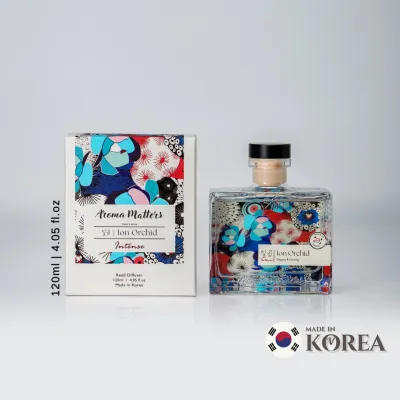
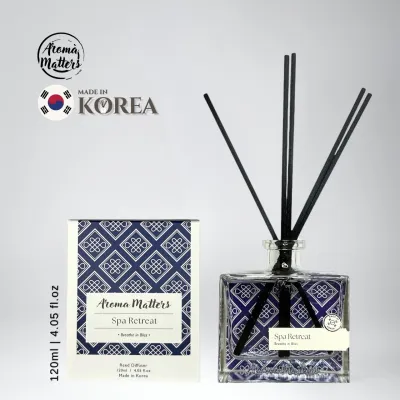
Prices are valid at publication and may change. Please refer to the product page for the latest price.
The physical properties of the reeds themselves are equally critical. Natural rattan reeds contain tiny, hollow channels that slowly draw the oil upward via capillary action. Synthetic fiber reeds, on the other hand, are engineered to absorb and release oil more rapidly and consistently. While fiber reeds often deliver a stronger scent throw, their high absorption rate can lead to faster oil consumption. Additionally, the number of reeds you insert into the vessel acts as a control valve: more reeds increase the surface area for evaporation, intensifying the scent but reducing the number of weeks the diffuser will last.
How to Extend the Life of Your Reed Diffuser
To get the most value out of your Aroma Matters diffuser, you can employ several simple maintenance strategies that balance scent intensity with oil conservation. Flipping the reeds is the most common method for reviving a fading fragrance, but doing it too frequently will rapidly deplete your oil. When you flip a reed, you expose the fully saturated end to the open air, causing a sudden burst of evaporation. For a balanced approach, limit flipping to once every one to two weeks, or only when you notice the fragrance has naturally softened.

Over time, reeds can become clogged with airborne dust, pet dander, or microscopic debris, especially in high-traffic living areas. When the microscopic pores of rattan or fiber reeds are blocked, the oil can no longer travel upward efficiently. Instead of flipping clogged reeds—which only forces dust back into the oil reservoir—it is far more effective to replace them entirely. Keeping a spare set of high-quality replacement reeds on hand allows you to restore the diffuser’s performance without having to discard the remaining fragrance oil.
Strategic placement is another highly effective way to prolong the life of your diffuser. Avoid placing the glass vessel in direct sunlight, such as on a sunny windowsill, as solar heat warms the glass and causes the volatile top notes of the fragrance to evaporate prematurely. Similarly, keep the diffuser away from heat-generating appliances, electronics, and major draft sources like open doorways or exhaust fans. Positioning the vessel in a shaded, moderate-traffic area of the room allows the natural movement of people to gently disperse the scent without artificially accelerating the evaporation process.
Signs It Is Time to Replace or Refill
Recognizing when your reed diffuser has reached the end of its functional life helps you maintain a consistent sensory environment in your home. The most obvious visual cue is the physical depletion of the liquid inside the bottle. However, even if a small amount of liquid remains at the bottom, it may eventually lose its efficacy. Over months of exposure to air, the lighter, more volatile fragrance molecules evaporate, leaving behind a thicker, highly concentrated base oil that the reeds can no longer draw upward. If the remaining liquid appears unusually dark, cloudy, or viscous, it is a clear sign that the active fragrance components have been exhausted.
Olfactory changes are another reliable indicator. You may notice a significant fading of the scent, or you might experience “nose blindness”—a natural sensory adaptation where your brain filters out a constant background aroma. To test this, step out of your home for a few hours and note whether the fragrance is still perceptible when you return. If the air remains scentless or if the fragrance profile has shifted to a flat, chemical, or stale note, the diffuser’s active lifespan has concluded.
Finally, perform regular hygiene and safety checks on the vessel and reeds. In humid environments, dust and moisture can settle on the exposed parts of the reeds, creating an unsightly buildup that can harbor mold or bacteria. If you observe any discoloration on the reeds or a dusty film on the surface of the oil, it is time to safely dispose of the old materials, thoroughly clean the glass bottle, and start fresh with a new refill or set.
Evaluating Long-Term Value and Refill Options
When your diffuser eventually runs dry, evaluating the cost-effectiveness of refills versus purchasing an entirely new set is a smart way to manage your home decor expenses. Many premium home fragrance brands offer dedicated refill bottles and replacement reed packs. By checking official brand channels or authorized local retailers, you can often find refill options that allow you to reuse your existing glass vessel. This approach is not only more environmentally sustainable, but it also typically offers a lower cost per milliliter compared to buying a brand-new decorative glass set.
Before pouring a new refill into your existing vessel, proper preparation is essential to preserve the integrity of the new fragrance. If you are switching to a completely different scent profile—for example, moving from a light floral to a deep woody aroma—any residue from the previous oil will contaminate the new blend. To prevent this, wash the empty glass bottle thoroughly with warm, soapy water, rinse it with clean water, and allow it to dry completely before refilling.
If the glass vessel has become chipped, permanently stained, or heavily scratched, or if you simply want to update the aesthetic of your space, purchasing a complete new set is the preferred choice. Weighing the price of a fresh, beautifully designed vessel against the ongoing cost of refills helps ensure you maintain a high-quality sensory experience in your home without unnecessary spending.
Frequently Asked Questions (FAQ)
Can I reuse the same reeds for a different fragrance?
Reusing the same reeds for a different fragrance is highly discouraged. Reeds function by absorbing oil deep into their internal porous structures, and these fibers permanently retain the chemical compounds of the original scent. If you insert used reeds into a new, different fragrance oil, the remaining residue will mix with the new scent, resulting in a distorted, muddy, and unpredictable aroma profile. To ensure the purity and quality of your new fragrance, always use a fresh set of reeds when refilling or changing scents.
Does flipping the reeds more often make the scent last longer?
Flipping the reeds more frequently does not make the scent last longer; in fact, it has the exact opposite effect. While flipping provides an immediate, intense burst of fragrance by exposing wet oil to the air, it significantly accelerates the overall rate of evaporation. Each time you flip the reeds, you speed up the consumption of the liquid reservoir. To achieve a sustainable balance between a consistent scent throw and a long-lasting diffuser, aim to flip the reeds only once every week or two, or when the aroma naturally begins to fade.

Community discussion
Share your experience or ask a question. Comments are reviewed before publication.