
When investing in premium home fragrance, understanding how long a product will last is key to evaluating its overall value. For those considering Hysses reed diffusers, longevity is a common question. While a standard bottle can provide continuous aroma for several weeks or months, the actual lifespan is not a fixed number. It depends on a combination of product specifications, environmental conditions, and maintenance habits. In Singapore’s unique climate, where high humidity and air conditioning constantly interact, managing these variables is essential to getting the most out of your purchase.
By understanding the mechanics of evaporation and wicking, you can make an informed decision before buying. This guide breaks down the real-world factors that influence how quickly a diffuser empties, how to estimate its lifespan from the packaging, and how to maintain it for maximum duration.
Factors That Determine Your Hysses Diffuser Lifespan
The volume of the liquid is the most obvious factor, but the bottle’s design is equally critical. A narrow neck restricts the surface area of the liquid exposed directly to the air, which helps slow down passive evaporation. Conversely, a wide opening allows more air contact, speeding up the rate at which the carrier solvent escapes. When choosing a diffuser, look at the bottle shape; a tapered neck is generally more efficient at conserving liquid than an open-jar design.
Products mentioned in this guide
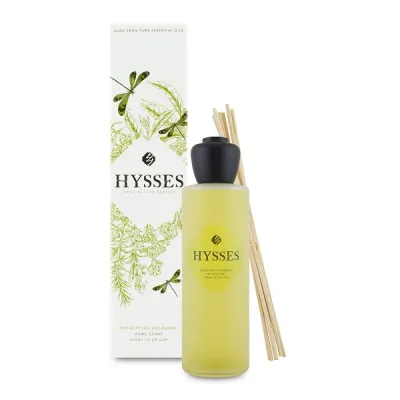
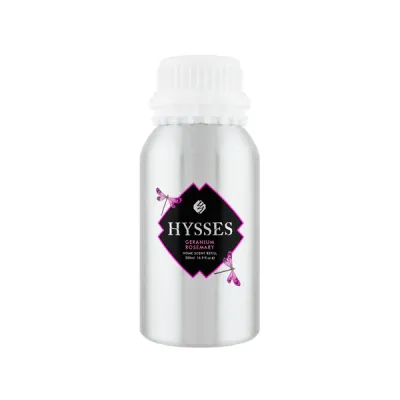
Prices are valid at publication and may change. Please refer to the product page for the latest price.
The reeds themselves act as the engine of the diffuser. Rattan or fiber reeds contain tiny capillary channels that draw the liquid upward. The more reeds you insert, the more channels are active, which increases the scent throw but also accelerates liquid consumption. Thick reeds or those made of highly porous materials will wick and release the fragrance faster than thinner, denser alternatives. Adjusting the number of reeds is the easiest way to balance fragrance intensity against overall longevity.
Environmental factors in Singapore play a massive role in how quickly a diffuser depletes. In a typical home, rooms may transition from hot, humid ambient air during the day to cool, dry, air-conditioned air at night. Air conditioning lowers humidity, which can increase the evaporation rate of the diffuser liquid. Additionally, placing a diffuser near ceiling fans, standing fans, or open windows creates active air currents that pull the fragrance off the reeds rapidly, exhausting the bottle much faster than in a still corner.
How to Check the Expected Lifespan Before You Buy
Before making a purchase, you can estimate the longevity and cost-effectiveness of a diffuser by examining its packaging and specifications. Manufacturers often print an estimated duration on the box, such as “lasts up to 2 months.” This figure is a helpful baseline, but keep in mind it is typically calculated under controlled laboratory conditions with moderate temperatures and minimal airflow. Real-world performance will vary based on your specific home environment.

The carrier base used in the formulation is another critical indicator of lifespan. Diffusers generally use either alcohol-based or alcohol-free carrier liquids to dilute the essential oils. Alcohol-free bases, such as those utilizing glycol-derived solvents, evaporate at a much slower, more controlled rate. This ensures a steady release of fragrance over a longer period. Checking the ingredient list or product specifications for the base type can give you a clear indication of how quickly the liquid will flash off.
To compare the long-term value of different options, calculate the cost per milliliter. Take the retail price in S$ and divide it by the volume of the bottle. For example, a larger refill bottle might have a higher upfront price but a significantly lower cost per milliliter compared to a smaller starter kit. This simple calculation helps you identify which product size or line offers the best return on your investment over several months of continuous use.
Maintenance Tips to Extend the Fragrance Duration
Extending the life of your diffuser does not require complex tools; simple, reversible daily habits can make a noticeable difference. One common practice is flipping the reeds. While flipping refreshes the scent throw by bringing the wet ends to the top, doing it too frequently accelerates evaporation. To conserve liquid, only flip the reeds when you notice the fragrance fading, and always do so carefully over a sink to prevent oil from dripping onto and damaging your furniture.
Placement is key to controlling the evaporation rate. Avoid positioning your diffuser in direct sunlight, near heat sources, or directly in the path of air conditioning vents. Heat and direct drafts strip the moisture from the reeds at an accelerated rate, forcing the bottle to empty much faster. Instead, choose a cool, shaded spot with gentle, natural air circulation where the scent can drift naturally across the room.
Dust is an often-overlooked factor that shortens diffuser lifespan. Over weeks of exposure, airborne dust settles on the bottle neck and the exposed portions of the reeds. This dust clogs the microscopic capillary channels, blocking the liquid from wicking upward. Gently wiping the bottle opening and occasionally dusting or replacing clogged reeds ensures the system operates efficiently without wasting the remaining fragrance liquid.
Signs It Is Time to Replace or Refill Your Diffuser
Recognizing when your diffuser has reached the end of its functional life prevents you from keeping an ineffective bottle on display. The most obvious sign is a fading or altered fragrance profile. Essential oils consist of top, middle, and base notes, which evaporate at different rates. Toward the end of the diffuser’s life, the lighter, more pleasant notes may be entirely gone, leaving behind a faint, flat, or slightly heavy scent that no longer fills the room.
You can also look for physical changes in the liquid itself. As the volatile carrier base evaporates, the remaining fluid often becomes discolored, cloudy, or noticeably thicker and syrupy. When the liquid reaches this state, its viscosity prevents it from traveling up the reeds, rendering the remaining mixture ineffective even if there is still fluid left in the bottle.
The condition of the reeds is another clear indicator. After months of continuous wicking, reeds become fully saturated with heavy oil molecules and dust. They may appear dark, greasy, or stiff to the touch. Once the reeds are completely saturated and clogged, they can no longer draw liquid upward, meaning it is time to replace both the reeds and the fluid.
Evaluating the Long-Term Value of Hysses Diffusers
Evaluating the long-term value of Hysses diffusers involves looking beyond the initial purchase price of a starter kit. Starter kits, which include a decorative glass vessel, reeds, and the fragrance liquid, carry a higher initial cost. However, once you own the glass bottle, you can transition to purchasing official refill bottles. Refills are typically priced lower per milliliter, allowing you to maintain your home fragrance setup at a fraction of the ongoing cost.
When planning your budget, remember to factor in the cost of replacement reeds. Reeds are consumable components that must be replaced periodically to maintain optimal wicking. Reusing old reeds with a fresh refill bottle will result in poor scent throw and slow wicking, so purchasing a new pack of reeds with each refill is a necessary step for maintaining performance.
Finally, matching the diffuser size to your room dimensions is crucial for both scent satisfaction and value. Placing a small 50ml diffuser in a large, open-plan living room will result in a weak scent, tempting you to add more reeds and exhaust the liquid rapidly. For larger spaces, investing in a larger volume bottle is more efficient, while smaller bottles are perfect for enclosed areas like bathrooms or study rooms where a subtle scent is desired.
Frequently Asked Questions (FAQ)
Can I reuse the reeds when refilling my Hysses diffuser?
While it is physically possible to reuse reeds, it is highly discouraged. Over time, the capillary channels inside the reeds become clogged with dust, environmental debris, and heavy oil residues from the previous liquid. Reusing these clogged reeds with fresh liquid will result in extremely poor wicking and a weak scent throw. Additionally, if you are changing to a different fragrance, the old reeds will retain the previous scent, leading to an unpleasant mixing of fragrance profiles. For the best results, always use a fresh set of reeds with every refill.
Does flipping the reeds more often make the scent last longer?
No, flipping the reeds more frequently actually shortens the overall lifespan of your diffuser. When you flip the reeds, you expose the fully saturated bottom ends to the air, which provides an immediate, intense burst of fragrance. However, this action also exposes more wet surface area to rapid evaporation, drawing liquid out of the bottle at an accelerated rate. If you flip the reeds daily, you will exhaust the liquid much faster. To maximize the longevity of your diffuser, flip the reeds only when you notice a significant drop in scent intensity, typically once every one to two weeks.

Community discussion
Share your experience or ask a question. Comments are reviewed before publication.