
Pristine Aroma reed diffusers offer a flame-free, low-maintenance way to introduce consistent fragrance into your living spaces, but their actual lifespan depends heavily on how you manage their environment and setup. While product labels generally estimate a lifespan of several weeks to a few months for standard sizes like 50ml or 180ml, the rate of evaporation is highly variable. In typical Singapore households, factors such as high tropical humidity, frequent air conditioning, and room ventilation play a decisive role in how quickly the fragrance oil depletes and how long the scent remains noticeable. Understanding these dynamics allows you to get the most value out of your home fragrance investment.
To determine whether a diffuser provides acceptable longevity for your needs, you must look beyond the liquid volume and evaluate the physical conditions of the room where it is placed. By learning how capillary action works within the reeds and how external factors accelerate or decelerate evaporation, you can actively manage the scent throw and extend the usable life of your diffuser.
Factors That Determine Pristine Aroma Reed Diffuser Longevity
The rate at which a reed diffuser depletes is governed by evaporation and capillary action, both of which are highly sensitive to the surrounding atmosphere. In a tropical climate, the balance between humidity and temperature creates a unique environment for home fragrances. When you place a diffuser in a room, the ambient conditions dictate how quickly the liquid travels up the reeds and disperses into the air.
Products mentioned in this guide
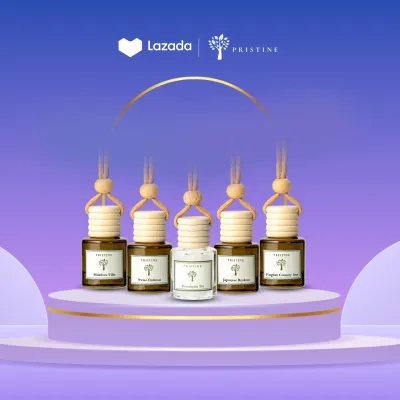

Prices are valid at publication and may change. Please refer to the product page for the latest price.
Room size, airflow, and temperature are the primary environmental drivers of oil consumption. In a compact, closed bedroom with active air conditioning, the dry air accelerates evaporation at the reed tips, drawing oil up from the bottle at a faster rate. Conversely, in an open-concept living room with open windows and a ceiling fan, high natural humidity might slightly slow down evaporation at the reed tips, but constant airflow will rapidly disperse the scent molecules. This can make the fragrance seem weaker, tempting you to add more reeds, which increases oil consumption.
The material and quantity of the reeds also play a critical role. Pristine Aroma diffusers typically utilize polyester fiber reeds rather than traditional rattan. Fiber reeds are engineered with highly uniform, porous channels designed to draw oil upward more efficiently and distribute scent more consistently. While this provides a stronger scent throw, it also means the oil is consumed at a faster, more predictable rate. The number of reeds you insert acts as a physical throttle; inserting all the provided reeds maximizes the scent surface area, leading to rapid evaporation, while using fewer reeds preserves the oil but reduces the fragrance intensity.
Finally, the chemical formulation of the diffuser oil itself influences how long it lasts. Diffuser oils are composed of a carrier solvent blended with fragrance oils or essential oils. Different scent profiles have varying evaporation rates based on their molecular weight. For example, lighter top notes like citrus or mint consist of smaller molecules that evaporate quickly, providing a strong initial burst but depleting faster. Heavier base notes like sandalwood or vanilla consist of larger, more stable molecules that linger much longer in the vessel, resulting in a more gradual and extended scent release.
How to Maximize the Scent Lifespan of Your Diffuser
Maximizing the lifespan of your reed diffuser does not require complex tools, but it does demand a few deliberate, low-risk maintenance habits. By controlling where the diffuser sits and how you handle the reeds, you can significantly extend the time between refills without sacrificing the quality of the fragrance.

Flipping the reeds is the most common method to refresh a fading scent, but doing it too frequently will accelerate oil depletion. Every time you flip the reeds, you expose a fully saturated end directly to the air, causing a rapid burst of evaporation. To conserve oil, only flip the reeds when you notice a significant drop in scent intensity, typically once every one to two weeks. When performing this step, always hold the reeds over a paper towel or sink to prevent oil droplets from landing on wooden furniture, plastics, or delicate surfaces, as concentrated oils can cause permanent staining.
Strategic placement is equally vital for preserving the oil. Avoid placing your diffuser in direct sunlight, such as on a sunny windowsill. Solar heat warms the glass vessel and the oil inside, drastically increasing the evaporation rate and potentially altering the chemical structure of the fragrance compounds. You should also keep the diffuser away from direct drafts, such as the immediate airflow from air-conditioning vents or standing fans. Instead, find a stable, shaded spot with gentle, indirect air circulation—such as a shelf or a hallway console—where the scent can naturally drift across the room.
Another often overlooked factor is dust accumulation. Over weeks of exposure, airborne dust and environmental debris settle on the exposed portions of the reeds. This debris clogs the microscopic pores of the fiber material, blocking the capillary action that draws the oil upward. To prevent this, gently wipe the dry ends of the reeds with a clean, dry microfiber cloth during your regular cleaning routine. If the reeds become heavily coated in dust, they will stop throwing scent entirely, even if the bottle is still full of oil.
Signs It Is Time to Replace the Oil or Reeds
Recognizing when your reed diffuser has reached the end of its effective lifecycle helps you avoid wasting money on ineffective adjustments. There comes a point where simply flipping the reeds or moving the vessel will no longer restore the fragrance, indicating that a physical or chemical change has occurred.
Visual cues are often the most immediate indicators of a spent diffuser. Over time, exposure to light, air, and dust causes the remaining oil to oxidize, which frequently results in discoloration, turning the liquid darker or cloudy. The consistency of the oil may also thicken, becoming syrupy or sticky. When the oil reaches this state, its viscosity is too high for the reeds’ capillary channels to draw it upward effectively. If you observe a thick residue at the bottom of the vessel or notice that the reeds look heavily discolored and caked with dust near their bases, the system is no longer functioning.
Scent throw reduction is another clear sign of depletion. If you flip the reeds and still fail to notice any fragrance within a few hours, the reeds have likely become fully saturated or clogged. Over months of continuous use, the porous channels within the fiber reeds become permanently blocked by dust and heavy fragrance molecules. Once a reed is completely saturated and clogged, it loses its capillary efficiency, meaning it can no longer draw fresh oil up to the surface to evaporate.
It is important to differentiate between reed saturation and complete oil depletion. If your diffuser bottle still contains a significant amount of liquid but has stopped emitting scent entirely, the issue is almost certainly saturated reeds. In this scenario, you do not need to buy a whole new set; you simply need to discard the old reeds and insert a fresh set of replacement reeds. However, if the vessel is completely empty or contains only a tiny amount of thick, dark residue, it is time to wash the bottle and add a fresh batch of diffuser oil.
Evaluating Long-Term Value and Refill Options
To maintain a fragrant home without overspending, it is highly beneficial to evaluate the long-term cost-effectiveness of refills versus purchasing entirely new sets. Pristine Aroma, like many home fragrance brands, offers sustainable options that allow you to reuse your existing glass vessels while minimizing waste.
Before making a purchase, check the product labels and official brand channels on online marketplaces to verify the availability of official refill bottles. Purchasing a larger refill bottle in S$ is almost always more economical than buying a brand-new starter set every time. A single large refill bottle can typically top up your existing glass vessel multiple times, significantly lowering your monthly cost of home fragrancing. When buying refills, ensure you also purchase a pack of fresh replacement reeds, as using old, clogged reeds with fresh oil will result in poor scent throw and waste the new liquid.
When it is time to transition to a new scent or replenish your current one, proper disposal and repurposing of the old components are essential. Saturated reeds contain highly concentrated fragrance oils and should be disposed of in your general household waste; do not place them in recycling bins, as the oil-soaked fibers cannot be processed by standard recycling facilities. The glass vessel, however, is highly durable and reusable. To repurpose it, rinse the empty bottle thoroughly with warm, soapy water to remove any residual oil. Once clean, you can use the elegant glass bottle as a small bud vase for dried flowers, a decorative holder, or simply refill it with your next batch of fragrance oil.
Frequently Asked Questions (FAQ)
Can I reuse the reeds with a new bottle of fragrance oil?
No, you should not reuse old reeds with a new bottle of fragrance oil. Over time, reeds become fully saturated with the previous oil, dust, and environmental debris, which permanently clogs their microscopic pores. If you place these old reeds into a fresh bottle of oil, they will fail to draw the liquid upward effectively, resulting in little to no scent throw. Additionally, if you are changing to a different fragrance, the old reeds will carry residual scent molecules, leading to unpleasant scent cross-contamination that ruins the profile of your new fragrance. Always use a fresh set of reeds with every new bottle or refill.
Does adding water or alcohol extend the diffuser oil?
You should never add water or household alcohol to your reed diffuser oil in an attempt to extend its lifespan. Diffuser oils are carefully formulated chemical mixtures designed to evaporate at a specific, controlled rate. Adding water will cause the oil and water to separate, creating an unsightly mixture and completely blocking the reeds from absorbing the fragrance. Adding rubbing alcohol or other unverified solvents can ruin the formulation, cause the scent to evaporate far too quickly, or create potential safety hazards. To ensure safe and effective performance, always follow the manufacturer’s instructions and use only official refills.
How many reeds should I use for a stronger scent?
The number of reeds you should use depends on the size of your room and your personal preference for fragrance intensity, but keep in mind there is a direct trade-off with oil longevity. Using more reeds increases the surface area for evaporation, which creates a stronger, more noticeable scent throw but depletes the oil much faster. For small spaces like bathrooms or compact study rooms, start with three to four reeds to conserve oil while maintaining a subtle aroma. For larger areas like living rooms or open-concept spaces, you may need to use five to eight reeds to achieve the desired strength. Adjust the count gradually to find the perfect balance between scent throw and oil lifespan.

Community discussion
Share your experience or ask a question. Comments are reviewed before publication.