
A Hooga reed diffuser typically lasts between one and four months, depending on the bottle’s volume, the number of reeds used, and your home’s environmental conditions. While a standard 100ml bottle generally provides steady fragrance for four to six weeks, larger 200ml options can scent a room for up to three or four months under ideal conditions. However, real-world longevity is rarely static. In warm, tropical climates like Singapore, factors such as high ambient temperatures, humidity, and constant indoor airflow can significantly accelerate evaporation, causing the oil to deplete faster than expected.
By understanding the mechanics of capillary action and how your home’s microclimate interacts with the diffuser oil, you can take active steps to control the rate of evaporation. This guide breaks down the key variables influencing the lifespan of your diffuser, offers practical maintenance strategies to stretch your investment, and helps you evaluate whether this home fragrance format delivers the long-term value you expect.
Factors That Determine Hooga Reed Diffuser Longevity
The rate at which your diffuser oil disappears is governed by basic physics, specifically evaporation and capillary action. The size of your room and ceiling height play an indirect but crucial role. In a large, open-plan living area, fragrance molecules disperse rapidly into a vast volume of air, which often prompts homeowners to use more reeds to achieve a noticeable scent throw. This increased reed count directly accelerates oil consumption, shortening the overall lifespan of the diffuser.
Products mentioned in this guide
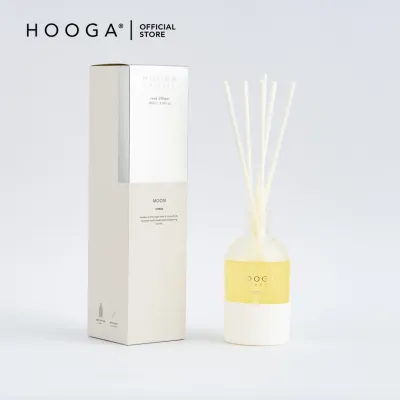
![[ONLINE EXCLUSIVE] Hooga SCENTFUL LIVING Reed Diffuser 180ml | Home Fragrance](https://img.lazcdn.com/g/p/8317d46b06101cb0c714d6b274a8b012.jpg_400x400q80.jpg_.webp)
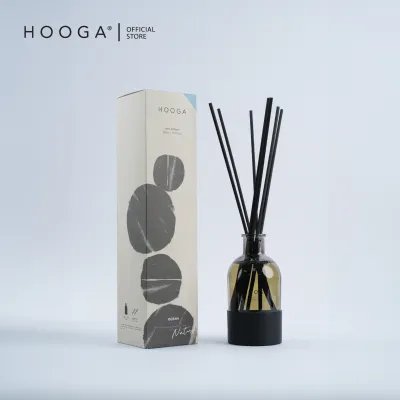
![[6 NEW SCENTS] Hooga Black Series Reed Diffuser 200ml](https://img.lazcdn.com/g/p/1ffd8c3f6be39df0f302c26adff3be23.jpg_400x400q80.jpg_.webp)
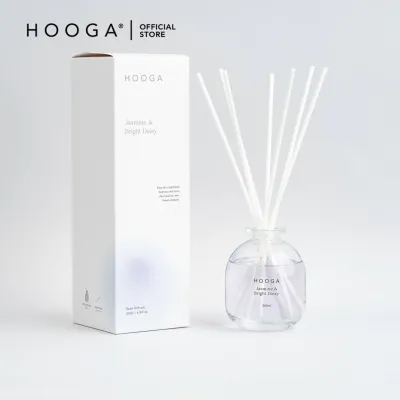
![Hooga Black Series Diffuser [Refill 500ml]](https://img.lazcdn.com/g/p/e2b5159470b1a0e72efe039c34941e95.jpg_400x400q80.jpg_.webp)
Prices are valid at publication and may change. Please refer to the product page for the latest price.
Airflow patterns within your home are equally influential. When a diffuser is placed near an open window, an oscillating fan, or directly in the path of an air conditioning unit, moving air continuously strips fragrance molecules from the exposed reed tips. This constant removal creates a pressure differential that pulls oil up through the reeds much faster than in a still room, leading to rapid depletion.
Ambient temperature and humidity levels also dictate evaporation rates, especially in tropical environments. High indoor temperatures increase the kinetic energy of the fragrance oil, causing volatile compounds to transition from liquid to gas at an accelerated rate. Furthermore, placing a diffuser in direct sunlight warms the glass bottle, heating the oil and causing it to evaporate much faster than a bottle kept in a cool, shaded corner.
Finally, the physical properties of the reeds determine how much oil is drawn daily. The number of reeds you insert acts as a valve; more reeds provide a larger surface area for evaporation, resulting in a stronger scent but a shorter lifespan. The porosity of the material also matters, as highly porous fiber reeds tend to draw and release oil more rapidly and consistently than traditional rattan reeds, offering a more intense fragrance throw at the expense of longevity.
Practical Tips to Extend the Lifespan of Your Diffuser
To maximize the lifespan of your diffuser without sacrificing scent quality, manage how and when you flip the reeds. Flipping draws fresh oil to the top, providing an immediate boost in fragrance, but it also exposes fully saturated reeds to the open air, which speeds up evaporation. Limit flipping to once every one to two weeks, or only when you notice the scent throw has significantly diminished. When performing this maintenance, always flip the reeds over a sink or a protective cloth, as stray oil droplets can permanently stain or strip paint, varnish, and wood finishes on your furniture.

Strategic placement is one of the simplest ways to slow down oil consumption. Position your diffuser away from active drafts, heating elements, and cooling vents. Instead, look for areas with gentle, natural air movement, such as a hallway, entryway, or the center of a room where the natural foot traffic of residents gently stirs the air. This movement is usually sufficient to disperse the fragrance throughout the space without forcing the oil to evaporate prematurely.
You can also customize the intensity and longevity of the diffuser by adjusting the reed count to match the specific dimensions of each room. For small, enclosed spaces like bathrooms or compact home offices, three to four reeds are usually more than enough to create a pleasant aroma. Using fewer reeds restricts the capillary pathways, ensuring the oil lasts significantly longer. Save the full bundle of six to eight reeds for spacious living rooms or open-plan dining areas where a higher evaporation rate is necessary to fill the space.
Additionally, consider sealing the bottle if you plan to leave your home for an extended period, such as during a vacation. Simply remove the reeds, place them on a protective tray, and pop the original plastic cap or cork back into the neck of the bottle. This simple step halts all evaporation, ensuring you do not waste precious fragrance oil while the house is empty.
Clear Signs It Is Time to Replace the Reeds or Oil
Recognizing when your diffuser has reached the end of its functional life prevents you from wasting effort on ineffective maintenance. The most obvious sign is a fading scent throw that does not improve even after you flip the reeds. When the fragrance remains faint or non-existent despite flipping, it usually indicates that the reeds have become fully saturated with the heavier, less volatile base notes of the oil, leaving them unable to draw up fresh scent.
Over time, reeds also become physically compromised by environmental factors. Airborne dust, pet hair, lint, and microscopic cooking grease settle on the exposed portions of the reeds. This accumulation clogs the tiny pores and channels within the material, forming a physical barrier that blocks the oil from traveling upward. If your reeds look visibly dusty, discolored, or feel greasy to the touch, they can no longer function efficiently and must be replaced, even if there is still oil left in the bottle.
The oil itself will also undergo visible changes as it ages. Because different fragrance components evaporate at different rates, the lighter top notes disappear first, leaving behind the heavier, denser carrier liquids and base notes. This process can cause the remaining liquid to look noticeably thicker, darker, or cloudy. If the oil has changed color significantly, developed a viscous consistency, or smells stale rather than fresh, it is time to discard the residue, thoroughly clean the glass vessel with warm soapy water, and start fresh with a new batch of oil and reeds.
Evaluating Long-Term Value and Cost per Use
When deciding whether a Hooga reed diffuser fits your household budget, it helps to look at the cost per month of continuous fragrance. A standard diffuser set typically ranges from S$15 to S$30 depending on the specific collection and bottle size. If a 200ml bottle lasts approximately three months in a moderately air-conditioned room, your ongoing cost breaks down to roughly S$5 to S$10 per month. This makes it a highly economical option for continuous, passive home fragrancing.
To improve this value proposition further, prioritize buying official refill oils and replacement reed packs instead of purchasing a brand-new decorative glass bottle every time. Refill bottles are generally priced lower than complete starter sets because you are not paying for the heavy glass vessel or retail packaging. Utilizing refills not only reduces your monthly expenditure but also minimizes household waste, making your home fragrance routine more environmentally friendly.
Compared to other home fragrance formats, reed diffusers offer unique practical advantages that justify their price point. Scented candles provide a highly concentrated burst of fragrance and a cozy ambiance, but they require active supervision, present a fire hazard, and cannot be left burning when you leave the house or go to sleep. Room sprays offer immediate odor correction but dissipate within minutes. A reed diffuser, by contrast, operates safely and silently 24 hours a day without electricity, open flames, or manual intervention, providing a consistent baseline of fragrance that makes your home feel welcoming the moment you step through the door.
Frequently Asked Questions (FAQ)
Can I reuse the reeds with a new bottle of fragrance oil?
No, you should always use fresh reeds when starting a new bottle of fragrance oil, even if it is the same scent. Used reeds are already saturated with old, partially oxidized oil and have likely accumulated a layer of airborne dust and household debris. Reusing them will severely restrict the capillary action, resulting in a very weak scent throw. Furthermore, if you are switching to a different fragrance, the old oil trapped inside the reeds will mix with the new scent, distorting the intended aroma profile.
Does adding water or carrier oil make the diffuser last longer?
Adding water or household carrier oils to your diffuser is highly discouraged and will likely ruin the product. Commercial reed diffuser oils are carefully formulated with specific solvents and alcohol bases designed to maintain a precise viscosity and evaporation rate. Introducing water will cause the oil and water to separate, resulting in a cloudy, unappealing mixture that cannot climb the reeds. Adding random carrier oils can make the liquid too thick for the reeds to absorb, permanently clogging them and stopping the scent dispersion entirely.

Community discussion
Share your experience or ask a question. Comments are reviewed before publication.