
A reed diffuser is an effortless way to keep your living space smelling fresh, but its value ultimately depends on how long the fragrance lasts. If you are considering a Prestine diffuser for your home, understanding its real-world longevity is key to deciding whether it fits your lifestyle and budget. While manufacturer packaging often provides a general estimate, the actual lifespan of any reed diffuser depends heavily on its volume, your home’s environment, and how you maintain the reeds. By evaluating these factors, you can accurately predict how long your scent will last and maximize every drop of oil.
Factors That Determine Prestine Diffuser Longevity
Singapore’s tropical climate plays a significant role in how quickly a reed diffuser evaporates. High ambient temperatures and humidity levels accelerate the rate at which fragrance oil travels up the reeds and disperses. If you place your diffuser in a room relying on natural ventilation, the constant warm airflow causes the liquid to deplete faster than in a cooler, sealed environment. Conversely, placing it directly under an air conditioning unit also speeds up evaporation due to dry, moving air drawing moisture out of the reeds.
The physical characteristics of the reeds are equally critical. Diffusers typically use natural rattan or synthetic fiber reeds. Rattan reeds contain tiny hollow channels that slowly draw oil upward, offering a controlled, gradual release. Fiber reeds are engineered to absorb and release oil more rapidly, resulting in a stronger immediate scent throw but a shorter overall lifespan. The number of reeds acts as a throttle: more reeds create more surface area for evaporation, intensifying the scent while shortening the product’s lifespan.
Products mentioned in this guide
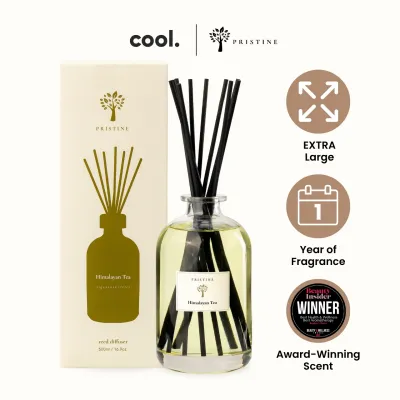
Prices are valid at publication and may change. Please refer to the product page for the latest price.
Finally, the chemical composition of the oil formulation dictates its volatility. Essential oil blends and synthetic fragrance compounds evaporate at different rates depending on their molecular weight and the carrier liquid. Light citrus notes naturally diffuse and dissipate faster than heavier base notes like wood, amber, or musk. The physical design of the bottle, particularly the width of the neck, also influences how much oil is directly exposed to the open air, affecting the baseline evaporation rate.
How to Estimate the Duration Before Purchasing
Before purchasing, you can estimate the lifespan of a Prestine diffuser by analyzing its physical specifications. The most reliable indicator of longevity is the net volume of the bottle, typically measured in milliliters (ml). As a general rule for passive home fragrances, a standard 50ml diffuser is designed to last three to six weeks, while a larger 150ml or 180ml bottle can stretch from three to five months. Comparing the volume against these baseline industry averages helps set realistic expectations.

Always check the manufacturer’s label or product description for their official estimated duration. Keep in mind that these estimates are calculated under ideal, controlled laboratory conditions—usually in a room with stable temperatures, moderate humidity, and minimal drafts. If your home environment deviates significantly, adjust the estimated lifespan downward. For instance, in a highly ventilated hallway, you might experience only 70% to 80% of the advertised duration.
Another subtle detail to inspect is the bottle neck design. A well-designed diffuser bottle features a narrow opening that tightly constrains the reeds. This minimizes the surface area of the oil exposed directly to the air inside the bottle, preventing unnecessary evaporation. If a bottle has a wide, open neck, a significant portion of the fragrance escapes directly from the bottle rather than being drawn up through the reeds, leading to premature depletion.
Maintenance Tips to Extend the Fragrance Duration
To get the most out of your home fragrance, simple maintenance habits can significantly extend the life of the oil. Flipping the reeds is the most common way to refresh a fading scent, but doing it too frequently wastes the oil. When you flip a reed, you expose the heavily saturated end to the air, causing a sudden burst of fragrance but accelerating evaporation. Instead of flipping them daily, aim for once every one to two weeks, or only when the scent throw has noticeably diminished.
Placement is another crucial factor in preserving your diffuser’s oil. Keep the bottle away from direct sunlight, such as on windowsills, as solar heat warms the glass and causes volatile oils to evaporate rapidly. Similarly, avoid placing the diffuser directly in the path of active air currents, such as next to an electric fan, near an open window, or directly beneath an air conditioning vent. A sheltered spot with gentle, natural air circulation—such as on a console table, a bookshelf, or a bathroom counter—is ideal for a steady, long-lasting scent throw.
Over time, reeds can become oversaturated or clogged with household dust, preventing them from drawing up the oil efficiently. If you notice the liquid level has stopped dropping but there is no scent in the room, the reeds are likely blocked. Instead of adding more oil or flipping the clogged reeds, replace them entirely with a fresh set. Keeping a spare pack of high-quality rattan or fiber reeds allows you to revive the fragrance performance while preserving the remaining oil in the bottle.
Signs It Is Time to Replace Your Reed Diffuser
Recognizing when your reed diffuser has reached the end of its functional life prevents you from keeping an ineffective decorative bottle on display. The most obvious sign is a permanent drop in scent throw. If you have flipped the reeds, cleaned the dust, and placed the bottle in an optimal spot, yet you can no longer smell the fragrance even when standing nearby, the active scent compounds have likely fully evaporated, leaving behind only the heavier, less volatile carrier oils.
You should also perform a visual inspection of the remaining liquid. Over weeks of exposure to air, light, and dust, the chemical structure of the diffuser oil can change. If the liquid appears cloudy, has separated into distinct layers, or has darkened significantly from its original color, it is a clear sign of degradation. This altered liquid will no longer diffuse cleanly and may produce an unpleasant or weak aroma that does not match the original scent profile.
Lastly, examine the physical condition of the reeds. Reeds that have been submerged for months eventually accumulate a layer of airborne dust, pet dander, and microscopic debris. This accumulation clogs the porous channels of rattan or coats the fibers of synthetic reeds, completely blocking the capillary action required to lift the oil. When the reeds look dusty, feel greasy to the touch, or fail to draw up any liquid, the system is no longer working, and it is time for a fresh replacement or refill.
Evaluating the Value for Repurchase
When deciding whether to repurchase a Prestine diffuser or try a different home fragrance option, calculate the actual cost-to-duration ratio. Take the retail price you paid in S$ and divide it by the number of months the diffuser remained effective. For example, if a diffuser costing S$30 lasted for three months, your monthly cost is S$10. Comparing this monthly expense against other household decor and fragrance options—such as scented candles, electric plug-ins, or essential oil nebulizers—gives you a clear picture of its financial value.
Beyond the financial calculation, evaluate the quality of the experience throughout the diffuser’s lifespan. A high-quality reed diffuser should maintain a relatively consistent scent profile from the day you open it until the bottle is nearly empty. If the fragrance was pleasant during the first week but quickly degraded into a harsh, chemical smell or faded to almost nothing within a fortnight, the formulation may not be worth a repurchase, regardless of how much liquid remains in the bottle.
Finally, consider how the diffuser fits into your overall home environment compared to alternative methods. Reed diffusers offer a passive, flame-free, and electricity-free scent solution, making them exceptionally safe for continuous use in bathrooms, entryways, and bedrooms. If you prefer a hands-off approach to home styling and decor, the low maintenance and steady performance of a quality reed diffuser often justify the cost over active fragrance methods that require constant monitoring, power outlets, or open flames.
Frequently Asked Questions (FAQ)
Can I add water or alcohol to stretch the remaining oil?
You should avoid adding water, rubbing alcohol, or other household solvents to your diffuser bottle. Diffuser oils are carefully formulated with specific carrier liquids to ensure a precise evaporation rate and proper binding of fragrance compounds. Adding water will cause the oil and water to separate, clogging the reeds and stopping the diffusion process entirely. Adding alcohol can make the mixture highly volatile, causing it to evaporate almost instantly while creating a potential fire hazard or damaging nearby wooden furniture surfaces if spilled.
Do thicker reeds make the Prestine diffuser last longer?
Thicker reeds do not make a diffuser last longer; in fact, they usually have the opposite effect. Thicker reeds have a larger surface area and a greater internal volume, which allows them to absorb and hold more fragrance oil at any given time. While this results in a stronger, more intense scent throw in your room, it also accelerates the rate at which the oil is drawn from the bottle. If your goal is to maximize the longevity of your diffuser, using fewer or slightly thinner reeds is a more effective strategy to slow down oil consumption.

Community discussion
Share your experience or ask a question. Comments are reviewed before publication.