
A Pristine reed diffuser refill typically provides several weeks to a few months of continuous fragrance, but the exact lifespan depends heavily on the volume of the bottle, the local indoor climate, and how you manage the reeds. In Singapore’s warm and humid environment, evaporation rates can vary significantly from standard laboratory estimates. Understanding how these factors interact allows you to maximize the value of your refill while maintaining a consistent scent profile in your home.
Setting Realistic Lifespan Expectations for Pristine Refills
Manufacturers often provide baseline estimates for diffuser lifespans, suggesting that smaller bottles last around four to six weeks, while larger refills can stretch to several months. However, these estimates are usually calculated under controlled, temperate conditions with minimal airflow. In a real-world home environment, especially in tropical climates, the actual consumption rate can differ substantially from these benchmarks.
The volume of the liquid in your refill bottle is the primary baseline indicator of its potential lifespan. A larger volume naturally contains more fragrance oil and solvent, allowing it to sustain capillary action through the reeds for a longer duration. However, volume alone does not guarantee a fixed expiration date, as the rate of diffusion is dynamic rather than linear.
Products mentioned in this guide



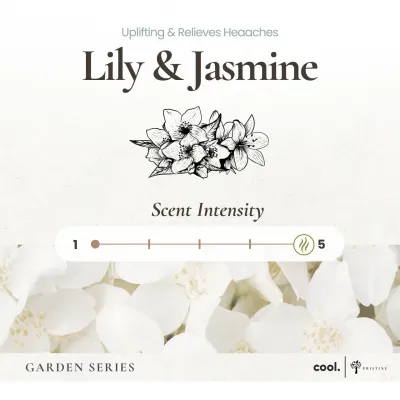



Prices are valid at publication and may change. Please refer to the product page for the latest price.
This explains why two identical Pristine refill bottles can deplete at completely different speeds in different households, or even in different rooms within the same house. A refill placed in a closed, air-conditioned bedroom will evaporate at a very different rate compared to one sitting in a breezy living room near an open balcony. By viewing the manufacturer’s timeline as a flexible guide rather than a guarantee, you can better evaluate whether your diffuser is performing efficiently.
Environmental and Usage Factors That Drain Fragrance Faster
The physical characteristics and quantity of the reeds you insert into the refill bottle act as the primary engine for fragrance delivery. Each reed contains microscopic capillary channels that draw the liquid upward to evaporate into the air. Increasing the number of reeds or using thicker reeds increases the total surface area available for evaporation, which directly accelerates the rate at which the liquid is consumed. Regularly flipping the reeds also introduces a fresh, fully saturated surface to the air, causing a temporary spike in evaporation and draining the bottle faster.
The physical layout and ventilation of your living space also play a major role in how quickly the fragrance oil disappears. Large rooms with high ceilings require more scent molecules to fill the volume of air, which often prompts users to use more reeds, thereby draining the refill quicker. Continuous airflow from ceiling fans, standing fans, or air conditioning units creates draft currents that pull the fragrance off the reeds at an accelerated pace, forcing the capillary action to work in overdrive to keep the reeds wet.
Singapore’s tropical climate is a particularly dominant factor in fragrance depletion. High ambient temperatures naturally increase the kinetic energy of the liquid molecules, causing them to transition into gas much faster than they would in cooler climates. While high humidity can sometimes slow down the evaporation of water-based liquids, many high-quality diffuser refills utilize specialized alcohol or oil bases designed to disperse readily, meaning the ambient heat of a non-air-conditioned room will steadily drive up the consumption rate.
Practical Steps to Extend Your Diffuser's Lifespan
To balance a pleasant scent throw with a reasonable lifespan for your Pristine refill, you must actively manage the number of reeds based on the specific room size. For smaller spaces like bathrooms or study rooms, starting with just two or three reeds is often sufficient to distribute the aroma without overwhelming the space or wasting the liquid. You can always add more reeds gradually if you find the scent throw too faint, rather than starting with a full bundle that depletes the bottle prematurely.
Strategic placement within your home is another highly effective way to slow down evaporation. Avoid placing your diffuser vessel in direct sunlight, such as on a window sill, as solar heat warms the glass and the liquid inside, causing rapid evaporation. Similarly, keep the vessel away from direct heat sources, electronic appliances that generate heat, and the direct path of air conditioning vents or fan drafts, which strip the moisture from the reeds too quickly.
When you do choose to flip your reeds to refresh the scent, employ proper techniques to prevent unnecessary waste. Always hold a paper towel beneath the reeds as you lift and rotate them to catch any dripping oil, preventing stains on your furniture and conserving every drop of fragrance. Avoid flipping the reeds too frequently—once every one to two weeks is generally sufficient to maintain a steady aroma without oversaturating the reeds and accelerating the depletion of the refill.
Clear Signals That Your Refill Needs Replacing
Knowing when to replace your diffuser refill involves observing both the performance of the scent and the physical state of the liquid and reeds. The most obvious signal is a fading scent throw that does not recover even after you have freshly flipped the reeds. When the active fragrance compounds have fully evaporated, the remaining liquid may lose its aromatic strength, leaving behind a faint or altered smell that no longer fills the room.
Visual changes in the remaining liquid are also clear indicators of degradation. Over time, exposure to air, light, and dust causes the fragrance oil to undergo oxidation, which can manifest as cloudiness, a noticeable darkening of the color, or a thicker, more viscous consistency. When the liquid changes state in this manner, its ability to travel up the reeds via capillary action is severely compromised.
Furthermore, the reeds themselves have a limited functional lifespan and can become clogged with airborne dust, pet dander, and microscopic debris over months of exposure. Once the pores of the reeds are blocked, or when they become permanently saturated with the heavier, non-evaporating components of the oil, they can no longer draw the fresh liquid upward. If your reeds feel greasy to the touch but fail to project any scent, they have likely reached the end of their usability.
Before pouring a fresh Pristine refill into your glass vessel, it is essential to prepare the container properly to avoid contaminating the new batch. Empty any remaining residue from the old liquid and wash the vessel thoroughly with warm, soapy water to remove lingering oils and dust. Allow the vessel to dry completely before refilling it, and always pair the fresh liquid with a brand-new set of reeds, as reusing old, clogged reeds will immediately degrade the performance of your new refill.
Frequently Asked Questions (FAQ)
Can I mix a new Pristine refill with leftover liquid?
Mixing a fresh refill with leftover liquid from an old batch is generally not recommended if you want to maintain the purity and strength of the fragrance. The remaining liquid in an older bottle has likely undergone oxidation and accumulated dust, which can alter the scent profile and accelerate the degradation of the new oil. For the best sensory experience and optimal capillary action, it is always best to clean the vessel and start with a completely fresh pour.
Does using more reeds make the scent stronger but shorten the lifespan?
Yes, there is a direct trade-off between the intensity of the fragrance and the longevity of the refill. Inserting more reeds into the vessel increases the total surface area of saturated material exposed to the air, which amplifies the scent throw but also draws the liquid out of the bottle at a much faster rate. If you want to extend the lifespan of your refill, use the minimum number of reeds required to achieve your desired scent level in that specific room.

Community discussion
Share your experience or ask a question. Comments are reviewed before publication.