
Finding the right track light holder for your home lighting setup can be challenging if you do not know which track standard you currently have installed. H, J, and L are the three dominant track lighting systems on the market. While they look remarkably similar at a glance, they are physically and electrically incompatible with one another. To determine which system your track light holder needs, you must examine the connector pins on the holder, check the copper contact strips inside the track rail, and verify the dimensions of the track opening.
Using the wrong combination can lead to loose physical connections, electrical arcing, or a complete failure to power your lights. By taking a few systematic measurements and checking the electrical ratings, you can easily identify the correct standard and ensure a safe, reliable installation.
Understanding H, J, and L Track Standards
The terms H, J, and L originally refer to proprietary track lighting standards developed by three major North American manufacturers: Halo (H-type), Juno (J-type), and Lightolier (L-type). Over the years, these proprietary designs became industry benchmarks. Today, many global and local lighting brands manufacture compatible fixtures and rails using these three standard profiles, making them the default options for residential and commercial track lighting.
Products mentioned in this guide
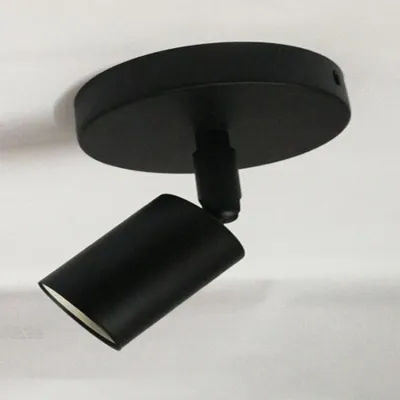
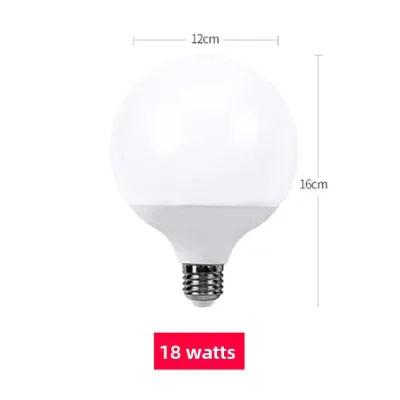
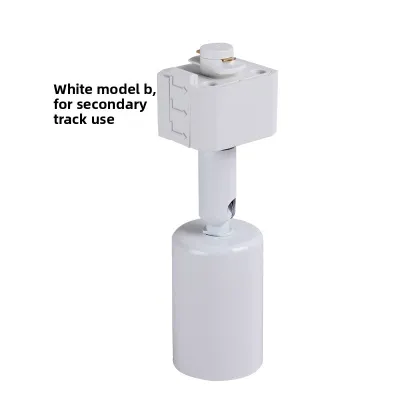
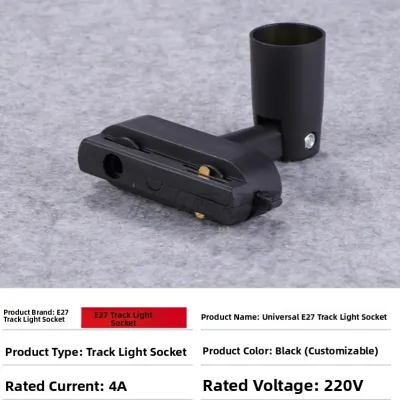
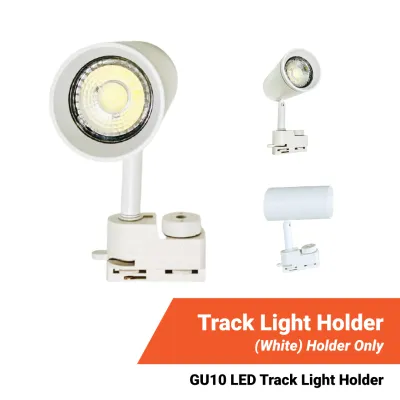
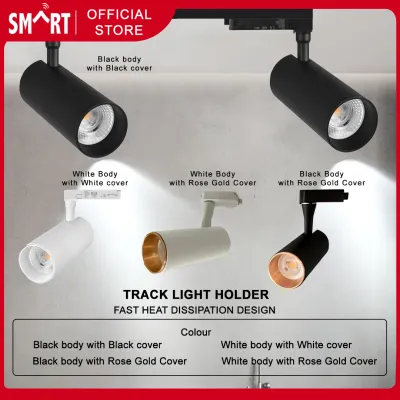
Prices are valid at publication and may change. Please refer to the product page for the latest price.
The primary physical differences among these three standards lie in the contact configuration and the dimensions of the track adapter:
- H-Type (Halo Compatible): This system features a track adapter with three contact pins. Two of these pins are on one side, and one is on the opposite side. The pins are spaced approximately 1 inch (25.4 mm) apart. The track rail itself has a wider internal channel to accommodate this three-contact design.
- J-Type (Juno Compatible): This system uses two contact pins spaced exactly 1 inch apart. The adapter often has a wide, square-shaped base, and the ground contact is a wide metal strip on the side of the housing rather than a pin.
- L-Type (Lightolier Compatible): This system uses two contact pins that are closer together, spaced roughly 7/8 inch (22 mm) apart. The adapter is typically narrower and sleeker than the J-type, fitting into a more compact track profile.
Although these standards originated in 120V markets, manufacturers worldwide now produce 230V versions of H, J, and L tracks and holders. This means a letter designation alone is not a guarantee of compatibility. You must ensure both the physical profile and the electrical specifications of your specific track light holder match your track rail.
How to Physically and Electrically Verify Compatibility
Before performing any physical inspection or measurement of your lighting system, always isolate the power supply at your home’s main distribution board (DB box). Switching off the wall switch is not sufficient to guarantee safety when handling internal electrical contacts.

Physical Inspection
To begin, visually inspect the inside of the track rail. Look for the copper contact strips running along the inner walls. A standard single-circuit track has two copper strips (live and neutral) plus a ground strip. A two-circuit track has three copper strips, allowing you to control two groups of lights independently. Next, look at the connector head of your track light holder. Count the contact pins and note their layout. An H-type holder will not physically slide or lock into a J-type or L-type track because the pin alignment and locking tabs are completely different.
Measurement
Use a digital caliper or a precise ruler to measure the inner width of the track opening. An H-type track typically has an opening width of about 35 mm, while J-type and L-type tracks have slightly different profiles. Compare your measurements against the manufacturer’s technical specification sheet for the track light holder. Relying solely on visual estimation often leads to purchasing the wrong parts.
Electrical Verification
Locate the rating labels or stamped markings on both the track rail and the track light holder. These labels are usually found on the back of the rail or on the side of the holder’s connector. You must verify that both components are rated for the same voltage and frequency.
Power and Load Limits
Calculate the total wattage of the light bulbs you intend to install on a single track run. Add up the wattage of each bulb and ensure the sum does not exceed the maximum load limit of the track rail. In Singapore, residential track rails are typically rated for 10 amps or 16 amps. Exceeding these limits can cause overheating, melting of plastic components, or tripping of your home’s circuit breaker.
Critical Voltage and Safety Rules for Singapore Homes
Singapore’s standard household electrical supply operates at 230V at 50Hz. This is a critical factor when sourcing lighting accessories online. Many H, J, and L track light holder products sold on global ecommerce platforms are designed for the North American 120V system.
Installing a 120V-rated track light holder on a 230V Singapore circuit is extremely dangerous. The excess voltage will cause immediate component failure, destroy the driver or bulb, and present a high risk of electrical fire or severe electric shock. Always check the product label to ensure the track light holder is explicitly rated for 230V, or features a wide-voltage range such as 100-240V.
When testing or installing, practice strict safety protocols. Never work on a live circuit; always turn off the main circuit breaker. Never force a track light holder into a rail. If you have to push hard, the pins are likely misaligned or you are trying to insert a mismatched type. Forcing the connector can bend the copper contacts inside the track, leading to poor electrical contact, arcing, or short circuits.
Solutions for Mismatched Track Systems
If you find yourself with mismatched components, there are a few ways to resolve the issue safely.
Track Adapters
Physical adapters, such as H-to-J or J-to-L converters, can sometimes bridge the physical gap. However, these adapters introduce an extra mechanical and electrical connection point, which can increase electrical resistance. Only use adapters that are certified for 230V use and explicitly approved by the track manufacturer. Avoid cheap, unbranded adapters sourced from unregulated online marketplaces.
Component Replacement
The safest and most reliable solution is to replace either the track light holder or the track rail so that the entire system uses a single, uniform standard. If you have already installed a high-quality track rail, it is much easier and safer to return the incorrect light holder and purchase one that matches your rail’s standard.
Professional Boundaries
If your track system requires hardwiring modifications, if you are working at heights on high ceilings, or if you notice any signs of heat damage, discoloration, or melting on your existing track, stop immediately. Do not attempt a DIY fix. Consult a licensed electrician who can safely inspect, repair, or replace your track lighting system in compliance with Singapore’s electrical safety standards.
Frequently Asked Questions (FAQ)
Can I use an adapter to fit an H-type holder on a J-type track?
While physical adapters exist to convert H-type fixtures to J-type tracks, they are generally not recommended for long-term residential use in Singapore. Any adapter must be rated for 230V and match the circuit configuration of your track. Using third-party, uncertified adapters can void your product warranties and compromise electrical safety. The safest approach is to buy a matching track light holder.
How do I know if my track is 1-circuit or 2-circuit?
A 1-circuit (single-circuit) track rail has two copper contact strips running along the inside walls (plus a ground wire). All light fixtures installed on this track will turn on and off together. A 2-circuit (dual-circuit) track rail features three copper contact strips. This setup allows you to split your lights into two separate groups and control them independently, provided your track light holder is designed with a 3-pin connector and a built-in circuit selector dial.

Community discussion
Share your experience or ask a question. Comments are reviewed before publication.