
A digital clock with radio might seem like a simple, nostalgic bedside companion, but modern models come with a surprising variety of technical specifications. Choosing the wrong display type can ruin your sleep with harsh glare, while a poor antenna setup can turn your favorite morning broadcast into static. Whether you are placing a clock on a compact bedside table in a cozy apartment or setting up a high-visibility timepiece on a kitchen counter, understanding key specifications ensures you select a device that integrates seamlessly into your daily routine.
Display and Readability: Brightness, Dimmer, and Screen Size
The display is the most active component of any digital clock, making its readability and light output critical. When shopping, look closely at the dimming mechanism. Basic models offer manual high/low toggle switches, but these can still be too bright at night or too dim during the day. Advanced models feature continuous manual rotary dials or auto-dimming sensors that adjust the screen’s brightness based on ambient light. This is particularly important for maintaining a dark, sleep-friendly bedroom environment.
Screen size and digit height directly dictate how far away you can stand while still reading the time. For a standard bedside table, a digit height of 0.8 to 1.2 inches is usually sufficient. If you plan to place the clock across a larger living room or kitchen, look for digits measuring 1.8 inches or larger to ensure clear visibility.
Products mentioned in this guide
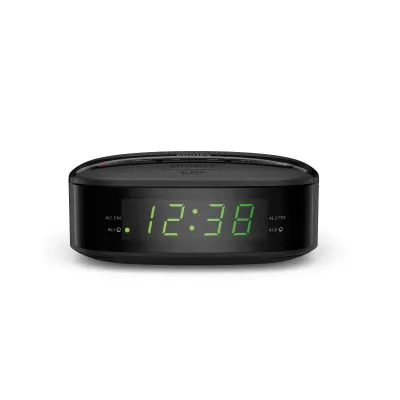

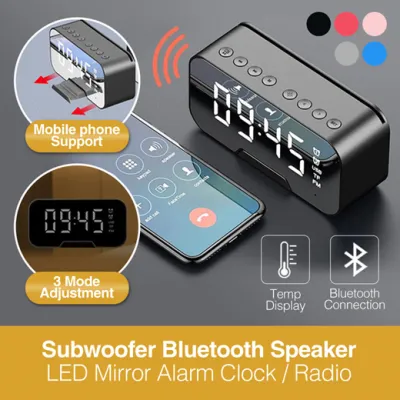
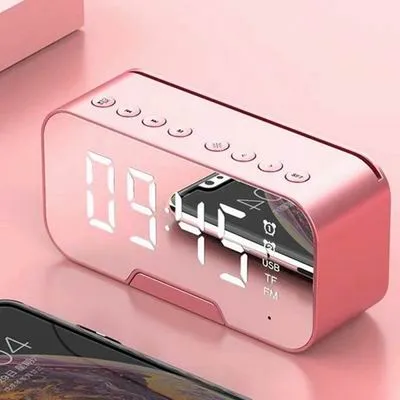
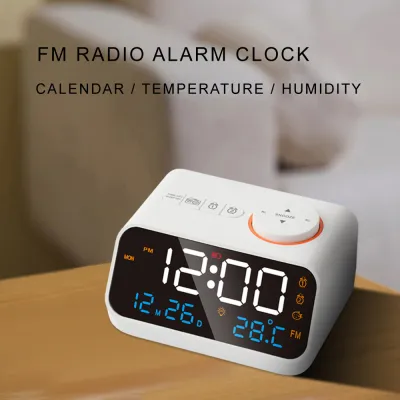
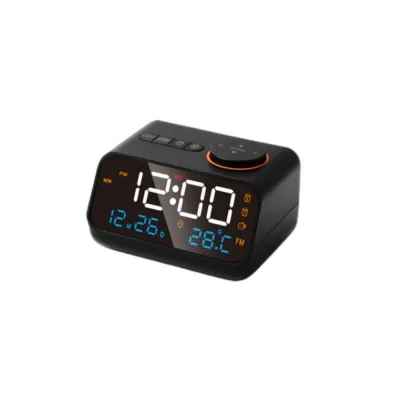
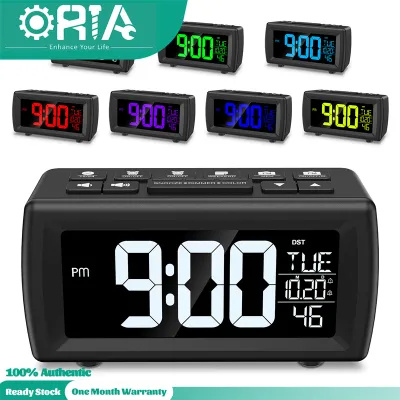
Prices are valid at publication and may change. Please refer to the product page for the latest price.
Finally, consider the display color. Red and amber LED displays emit longer wavelengths of light, which are generally less disruptive to nighttime sleep patterns. Blue and bright white displays, while modern and crisp, can emit high levels of blue light that may interfere with your natural sleep cycle if left un-dimmed near your bed.
Radio Reception and Audio Specifications
A clock radio’s primary appeal is its ability to deliver clear audio without requiring a smartphone or internet connection. Before purchasing, verify the supported radio bands. While some models offer both AM and FM bands, many modern digital clocks focus solely on FM. In regions where local broadcasts are primarily centered on the FM band, an FM-only tuner is highly practical and often allows for a more compact device design.

Reception quality depends heavily on the antenna type. Many tabletop clocks use a flexible wire antenna trailing from the back of the unit. While easy to hide, these wires must be fully uncoiled and positioned carefully to avoid static. If your home has thick concrete walls, which are common in modern high-rise apartments, a model with an adjustable telescopic rod antenna can offer better directional tuning to capture weaker signals.
Do not expect high-fidelity home theater sound from a compact clock radio. Most units feature small, single-driver speakers rated between 0.5 and 2 watts. For bedside listening, this output is perfectly adequate. However, if you want the radio to fill a noisy kitchen or a spacious study, look for a model with a slightly larger speaker cavity and a higher wattage rating to ensure clear dialogue without distortion.
Alarm Functions and Power Backup Requirements
The reliability of a clock radio hinges on its alarm system and its ability to withstand power interruptions. Look for models that offer flexible wake options. While a standard buzzer is effective, many prefer waking up to a live radio broadcast. A gradual wake feature, which slowly increases the volume over several seconds, prevents the jarring startle of a sudden, loud alarm.
Pay attention to the physical design of the snooze button. It should be large, centrally located, and easy to find by touch alone in the dark. Standard snooze intervals are typically set to nine minutes, though some digital models allow you to customize this duration.
Power backup is another critical specification. Most digital clocks plug directly into a wall outlet, but they should also feature a battery backup compartment. It is vital to understand what the battery backup actually does. In most standard models, a small button-cell battery or a pair of AAA batteries only maintains the internal time and alarm settings during a power outage; the display and radio will not function until main power is restored. If you live in an area prone to brief electrical trips, this memory backup prevents you from waking up to a flashing screen and a missed alarm. Always verify that the power adapter matches local voltage standards (typically 230V) and carries appropriate electrical safety certifications.
Simplifying Your Choice: Which Specs Actually Matter?
To avoid overpaying for features you will not use, match the clock’s specifications directly to its intended location. For a bedside table, prioritize a highly adjustable dimmer, a gentle wake alarm, and a reliable battery backup. The physical footprint is also crucial; measure your nightstand to ensure the clock, its power cord, and any trailing antenna wire fit comfortably without crowding your lamp or phone charger.
Conversely, for a kitchen or home office, prioritize a larger display screen and a more robust speaker over advanced dimming options. In these active spaces, secondary features like complex audio equalizer settings or Bluetooth pairing are rarely necessary on a basic clock radio and often inflate the price. Whether you are looking at a basic S$20 model or a more advanced option, focus instead on a clean, stable design with intuitive physical buttons that are easy to wipe clean.
Frequently Asked Questions (FAQ)
Is a dedicated digital clock with radio still useful if I have a smartphone? (FAQ)
Yes, a dedicated digital clock with radio offers several distinct advantages over a smartphone. First, it promotes a healthier sleep environment by allowing you to leave your phone in another room, reducing the temptation of late-night scrolling. Second, a physical clock radio features dedicated, tactile buttons that are easy to operate in the dark without looking at a bright screen. Finally, because it remains plugged into the wall with an independent battery backup, a dedicated clock is not subject to sudden smartphone software updates, battery drain, or silent mode overrides that can accidentally disable your morning alarm.

Community discussion
Share your experience or ask a question. Comments are reviewed before publication.