
Choosing a hand model sculpture for your home decor requires balancing artistic expression with spatial harmony, material durability, and structural stability. These expressive pieces serve as captivating focal points, drawing the eye with their organic shapes and symbolic gestures. To select the ideal sculpture, you must evaluate how its design language complements your interior theme, ensure its physical dimensions fit your display surfaces, and verify that its material composition can withstand your local indoor climate. By focusing on these practical and aesthetic criteria, you can find a piece that elevates your living space while remaining safe and easy to maintain. Whether you are investing S$30 or S$300 in a decorative accent, understanding the nuances of form, material, and placement will guide you to a successful purchase.
Match the Sculpture to Your Interior Style and Space
Hand model sculptures are unique decorative objects that bridge the gap between classical art and modern curiosity. Because the human hand is inherently expressive, these sculptures carry a strong visual presence that can easily dominate a room’s aesthetic. To ensure the piece enhances rather than disrupts your home, start by aligning the sculpture’s design language with your existing interior theme. An abstract hand with fluid, elongated lines or negative space fits seamlessly into minimalist, contemporary, or mid-century modern spaces. Conversely, a classical hand sculpture with anatomically precise details, reminiscent of Renaissance marble studies, beautifully complements traditional, eclectic, or transitional interiors.
Beyond style, you must carefully evaluate the physical dimensions of your intended display surfaces. In space-conscious homes, such as modern apartments or HDB flats in Singapore, surfaces like floating shelves, study desks, and entryway console tables often have limited depth. Placing a sculpture that is too wide or deep for its shelf creates an immediate safety hazard, increasing the risk of the piece being knocked over. Measure the surface depth and width beforehand, ensuring there is ample room for the sculpture to sit entirely on the flat surface without overhanging the edges.
Products mentioned in this guide

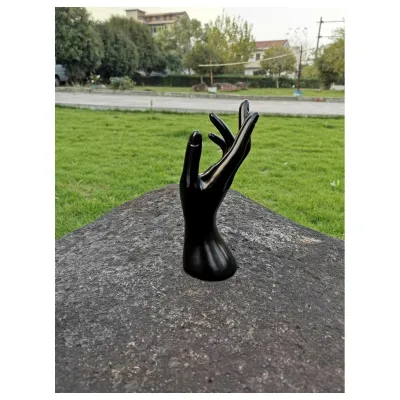


Prices are valid at publication and may change. Please refer to the product page for the latest price.
Visual breathing room is equally important when positioning a hand model. A sculpture needs empty space around it to be fully appreciated as an art piece. Crowding a hand model among books, candles, and other small trinkets dilutes its visual impact and makes the display area look cluttered. Aim to leave a clear zone around the sculpture, allowing its silhouette to stand out clearly against the background.
Finally, consider the sightlines and background contrast of the room. Think about where a person’s eye naturally lands when entering the space. A dark bronze or black resin hand placed against a dark charcoal wall will disappear into the shadows, losing its decorative value. To prevent this, place dark sculptures against light, neutral backgrounds to create a striking silhouette. Conversely, a white ceramic or light wood hand stands out beautifully against a textured dark wood panel or a vibrant accent wall, maximizing its visual contribution to the room.
Choose the Right Material and Finish for Your Aesthetic
The material of your hand sculpture dictates not only its tactile quality and visual weight but also its long-term durability and maintenance needs. Common materials like resin, ceramic, metal, and wood each offer distinct characteristics that influence the room’s atmosphere. Resin is highly versatile, lightweight, and capable of capturing incredibly fine details, making it an excellent choice for complex, modern, or highly stylized poses. Ceramic offers a classic, smooth elegance that carries significant visual weight, though its fragile nature means it must be placed far out of reach of pets and young children.

Metal sculptures, such as those made of brass, bronze, or aluminum, bring an industrial or luxurious feel to a space. They offer excellent durability and a heavy, stable base, though they can be quite heavy and require sturdy support. Wood hand models, particularly those with articulated joints reminiscent of traditional artists’ mannequins, introduce warmth, organic texture, and a sense of interactive playfulness, allowing you to change the hand gesture periodically to suit your mood.
Finishes play a crucial role in how the sculpture interacts with the lighting in your home. Matte finishes absorb light, highlighting the sculpture’s pure form and silhouette without distracting glare. This makes matte pieces ideal for bright, sunlit rooms where reflections could obscure the artistic details. Glossy finishes, on the other hand, reflect light dynamically, creating bright highlights that draw attention even in dimly lit corners or under focused spotlighting.
Distressed, patinated, or highly textured finishes add vintage character and depth, but they require careful consideration regarding household dust levels. Intricate surfaces with deep crevices collect dust more quickly and are more challenging to clean than smooth, sealed surfaces. If your home is prone to dust or if you prefer a low-maintenance cleaning routine, a smooth, semi-gloss, or sealed finish will be much easier to keep pristine over time. Always review the manufacturer’s care instructions to ensure the material and finish align with your lifestyle.
Evaluate Poses, Proportions, and Artistic Details
The pose of a hand sculpture is its primary means of communication, setting the tone for the entire room. Relaxed, open palms or gently cupped hands convey a sense of peace, welcome, and serenity, making them highly suitable for entryways, living room coffee tables, or bedside stands. These open gestures invite a feeling of calm and hospitality, subtly softening the surrounding decor.
In contrast, gripping, pointing, or clenched gestures create tension and drama. These dynamic poses serve as bold statement pieces that spark conversation, making them excellent additions to a study, home office, or library shelf where they can inspire focus and creative energy. Abstractly distorted, fragmented, or elongated fingers offer a surrealist, avant-garde vibe that appeals to collectors of modern art, adding an intriguing, intellectual layer to the room’s design.
When choosing a sculpture, you must also balance anatomical realism with artistic exaggeration based on your personal preference. Highly realistic sculptures showcase detailed skin folds, veins, and fingernails, offering a lifelike, academic aesthetic that feels grounded and classic. Exaggerated or stylized proportions focus on form and movement, stripping away distracting details to emphasize the pure geometry of the hand, which aligns beautifully with minimalist and ultra-modern aesthetics.
Inspect the level of craftsmanship and detail from various viewing distances before making your choice. A high-quality sculpture should look intriguing from across the room, presenting a strong, balanced silhouette. Upon closer inspection, it should reveal clean joints, well-defined fingernails, and a lack of unsightly manufacturing flaws, such as rough mold seams or uneven patches in the finish. Investing in a piece with refined details ensures it remains a source of visual pleasure for years to come.
Finalize Your Shortlist: Essential Pre-Purchase Checks
Before finalizing your purchase, performing a few essential pre-purchase checks will ensure your chosen hand sculpture is safe, stable, and compatible with your home environment. Start by verifying the exact dimensions and weight from the product label. Heavy metal, stone, or solid ceramic sculptures require sturdy, load-bearing surfaces, whereas lightweight resin or hollow wood pieces can sit safely on delicate glass shelves or floating ledges.
Next, check the base stability and weight distribution of the sculpture. A top-heavy hand sculpture with a narrow base is highly prone to tipping over, which can damage both the sculpture and your furniture. Look for designs that feature a wide, weighted base or those equipped with non-slip, scratch-resistant pads on the bottom. If the sculpture does not come with protective pads, consider purchasing adhesive felt or silicone pads separately to protect your wooden or glass surfaces from scratches.
If the hand model features integrated lighting elements—such as holding a decorative bulb or featuring built-in LEDs—you must verify the electrical specifications. Check the voltage compatibility, base/interface type, and maximum wattage limits to ensure safe operation. Always confirm that the lighting components carry appropriate electrical safety certifications, such as the local SAFETY Mark, to prevent electrical hazards in your home.
For wall-mounted hand sculptures, which act as suspended loads, safety is paramount. Always follow the manufacturer’s installation instructions, use appropriate wall anchors for your wall type (such as heavy-duty anchors for drywall or masonry plugs for concrete), and isolate the power supply if any fixed wiring is required. If you are unsure about drilling or wiring at height, consult a qualified professional to ensure a secure installation.
Finally, confirm that the material composition and care guidelines are clearly documented by the manufacturer. Evaluate the packaging and shipping protections, especially when purchasing online. Delicate, protruding fingers are highly vulnerable to snapping during transit, so ensure the seller uses custom-molded foam or robust protective packaging to guarantee the sculpture arrives intact.
Frequently Asked Questions (FAQ)
How do I clean and maintain a hand model sculpture?
Always check the manufacturer’s specific care label before applying any cleaning method, as different materials react uniquely to moisture and friction. For general maintenance, use a soft, dry microfiber cloth or a clean, soft-bristled makeup brush to gently sweep away dust from intricate crevices and finger joints. Avoid using harsh chemical cleaners, abrasive pads, or excessive moisture, which can strip protective sealants, tarnish metal patinas, or damage painted finishes. If you must spot-clean a smudge, test a slightly damp cloth on an inconspicuous area first, and stop immediately if the finish shows any signs of discoloration or texture change.
Can I display a hand sculpture in high-humidity areas like bathrooms?
Displaying decorative sculptures in high-humidity areas requires careful material selection due to constant moisture and temperature fluctuations. Porous or untreated materials, such as raw wood, unglazed ceramic, and certain plaster compositions, can absorb moisture, leading to warping, cracking, mold growth, or structural degradation over time. Unless the manufacturer’s specifications explicitly rate the sculpture as moisture-resistant or suitable for damp environments, it is best to keep these decorative pieces in well-ventilated, climate-controlled rooms. If you wish to decorate a bathroom, opt for non-porous, sealed materials like high-quality resin, glazed ceramic, or rust-resistant metals, and ensure the space remains well-ventilated to prevent condensation buildup.

Community discussion
Share your experience or ask a question. Comments are reviewed before publication.