
Selecting a high-quality German silver pooja set requires a careful balance of material awareness, aesthetic appreciation, and practical inspection. While these sets offer the brilliant, reflective luster of sterling silver at a much more accessible price point, their long-term durability depends entirely on the quality of the underlying alloy and the precision of the craftsmanship. Because German silver is not actually silver, understanding its composition is the first step toward making an informed purchase. By focusing on key indicators such as weight, engraving depth, joint stability, and seller transparency, you can select a beautiful set that elevates your home altar and withstands the test of time.
Understanding German Silver: Material Basics and Expectations
To make a wise purchasing decision, you must first understand what German silver actually is. Despite its misleading name, German silver contains no elemental silver at all. Instead, it is a non-precious metal alloy typically composed of copper, nickel, and zinc. The standard formulation often consists of approximately 60% copper, 20% nickel, and 20% zinc, though these ratios can vary depending on the manufacturer. The inclusion of nickel gives the alloy its characteristic silvery-white metallic luster, while the copper provides structural strength and the zinc adds hardness.
When comparing German silver to sterling silver, the differences in cost, weight, and maintenance become clear. Sterling silver is a precious metal containing 92.5% pure silver, making it highly valuable, soft, and prone to rapid tarnishing. German silver, on the other hand, is significantly more affordable, making it an excellent choice for large, multi-piece pooja sets that would otherwise be prohibitively expensive in sterling silver. Additionally, the copper-nickel-zinc alloy is much harder and more dent-resistant than pure silver, allowing it to withstand daily handling and the heat of ritual lamps without warping.
Products mentioned in this guide
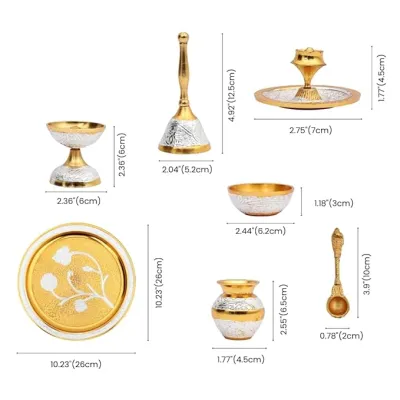
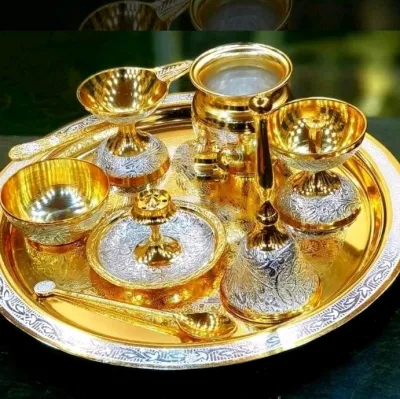
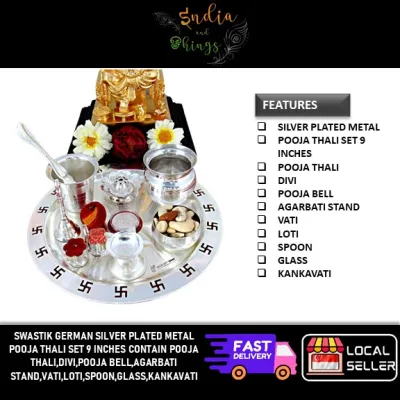
Prices are valid at publication and may change. Please refer to the product page for the latest price.
It is equally important to manage your expectations regarding tarnishing. Because German silver contains a high percentage of copper and nickel, it will naturally oxidize when exposed to air, moisture, humidity, and skin oils. Over time, this chemical reaction creates a dark patina on the surface. This darkening is an inherent characteristic of the alloy rather than a manufacturing defect or a sign of low quality. Understanding this natural process allows you to approach maintenance with the right tools and realistic expectations, ensuring you do not mistake normal oxidation for product failure.
Essential Craftsmanship and Quality Markers to Inspect
When evaluating a German silver pooja set, the quality of the craftsmanship is the most reliable indicator of longevity. Begin your inspection by closely examining the surface engraving and polishing. High-quality sets feature deep, crisp, and symmetrical patterns, often depicting traditional floral motifs, deities, or geometric borders. The engraving should be uniform across all pieces in the set, with clean lines that show no signs of fading or shallow stamping. Run your fingers gently over the engraved areas; the edges should feel smooth and polished, without any sharp burrs or rough metal fragments that could snag your cleaning cloths or cause minor cuts during handling.

Structural integrity is another critical factor to assess before purchasing. Inspect the joints where different components are fused together, such as the handle of a bell, the stand of a diya, or the rim of a thali. High-quality manufacturing utilizes seamless soldering techniques that leave no visible gaps, yellow brass lines, or messy adhesive residues. The bases of all standing items—especially the kalash, the incense holder, and the oil lamps—must be perfectly flat and weighted. A wobbly diya or a top-heavy incense holder poses a significant safety hazard on a prayer altar, making stability a non-negotiable quality marker.
The weight and thickness of the metal sheets used in construction offer direct clues about the set’s overall durability. High-quality German silver items have a reassuring heft when held in the hand. This weight indicates that the manufacturer used thick-gauge metal sheets that can resist denting, bending, and warping under normal use. Conversely, unusually light pieces are often made from paper-thin metal sheets or contain cheap, hollow fillers that can crack or degrade over time. When possible, compare the weight of similar-sized items to gauge whether the set is built to last or if it has been structurally compromised to save on material costs.
Evaluating Design, Functionality, and Set Completeness
A high-quality pooja set must not only look beautiful but also function flawlessly during daily rituals. Start by verifying the completeness and proportional sizing of the set’s components. A standard comprehensive set typically includes a central thali, a diya, an incense holder, a small bell, a kalash, and small bowls for kumkum or turmeric. Ensure that all these items fit comfortably on the thali without overcrowding. The scale of the individual pieces should be visually balanced; for instance, a massive bell paired with a tiny, delicate diya will look disproportionate and may make the layout feel cluttered.
Functional design details are crucial for safe and comfortable use. Look for diyas that feature deep oil reservoirs to prevent frequent spilling and to ensure the flame can burn steadily throughout your prayers. The wick holder should be positioned centrally and securely to prevent the flame from coming into direct contact with the metal edges, which can cause localized overheating and discoloration. If the set includes a hand-held incense holder or a camphor burner, check for heat-resistant handles or insulated bases that allow you to move the items safely while they are hot. The bell should have a securely attached clapper that produces a clear, resonant, and pleasant sound rather than a dull, metallic clatter.
Finally, consider how the visual scale and aesthetic style of the set align with your existing prayer altar. In many modern homes, especially those with compact wall-mounted altars or dedicated prayer corners, space is at a premium. Measure your altar surface carefully before selecting a thali size. An 8-inch or 10-inch thali is often ideal for smaller spaces, while a 12-inch or larger set requires a spacious, independent altar table. Choose a design style—whether highly ornate with intricate traditional carvings or sleek and minimalist—that complements the overall decor of your home temple, creating a harmonious and serene environment for reflection.
How to Verify Seller Reputation and Product Descriptions
Navigating the market for German silver pooja sets requires a critical eye, especially when browsing online marketplaces or specialty home decor platforms. One of the most common issues buyers face is encountering vague, misleading, or outright deceptive product descriptions. Some sellers use confusing terminology such as “pure German silver,” “white silver,” or “silver alloy” to imply that the product contains actual precious silver. Always look for sellers who are completely transparent about the material composition, explicitly stating that the item is a copper-nickel-zinc alloy. If a listing claims the product is silver-plated, verify the thickness of the plating or look for a clear statement regarding the base metal underneath.
Customer feedback and seller policies provide invaluable insights into the real-world quality of the products. When reading reviews on e-commerce platforms, look past the overall star rating and focus on specific comments regarding packaging, transit damage, and long-term wear. Because these sets are often shipped internationally or contain delicate, detailed components, robust packaging is essential. Reviews that complain of bent thali rims, broken handles, or missing pieces point to poor quality control or inadequate shipping protection. Additionally, check the seller’s return policy; reputable merchants should offer a clear, hassle-free return window if the product arrives damaged or does not match the advertised specifications.
Before finalizing your purchase, do not hesitate to contact the seller directly to request additional product details. Ask for specific care instructions, the country of origin, and whether the items have been treated with an anti-tarnish lacquer coating. A professional and knowledgeable seller will be able to provide clear answers and may even offer a manufacturer specification sheet. If a seller is evasive, fails to answer basic questions about the metal composition, or refuses to clarify their return terms, it is best to look elsewhere. Investing your time in verifying the seller’s credibility protects you from receiving substandard, easily damaged goods.
Care and Maintenance for Long-Lasting Shine
Proper care and maintenance are essential to preserve the brilliant luster of your German silver pooja set and protect it from premature wear. For routine cleaning after daily prayers, always use mild, non-acidic dishwashing liquid and lukewarm water. Gently wash the items using a soft microfiber cloth or a non-abrasive sponge to remove oil residues, soot, and kumkum stains. Strictly avoid using steel wool, harsh scrubbing pads, or abrasive cleaning powders, as these will scratch the polished surface and strip away any protective coatings, leaving the underlying metal vulnerable to rapid oxidation.
Polishing frequency and methods depend heavily on whether your set has been treated with a protective lacquer. Many modern German silver items are coated with a thin, clear anti-tarnish lacquer that seals the metal away from oxygen and moisture. If your set is lacquered, do not use metal polishes, brass cleaners, or acidic solutions, as these chemicals will dissolve the lacquer unevenly, resulting in a patchy, unsightly appearance. For lacquered pieces, a simple wipe with a dry, soft microfiber cloth is sufficient to maintain their shine. For unlacquered sets, you can use a specialized, mild metal polishing cream recommended by the manufacturer. Always check the product label to ensure the polish is compatible with copper-nickel alloys, and apply it gently in circular motions using a soft cloth.
Storage conditions play a vital role in preventing tarnish, particularly in humid tropical climates. When the pooja set is not in active use, store it in a cool, dry cupboard away from direct sunlight and moisture. To minimize exposure to air, wrap each individual piece in soft butter paper, acid-free tissue paper, or place them inside airtight zip-lock bags. Adding a few food-safe silica gel packets to the storage container is an excellent way to absorb excess moisture and slow down the oxidation process. Keep the set away from direct contact with perfumes, camphor, and chemical fumes, as these substances can react aggressively with the metal, causing deep, difficult-to-remove discoloration.
Frequently Asked Questions (FAQ)
Is German silver safe for holding food or prasad during pooja?
When using a German silver pooja set, it is important to exercise caution regarding food contact. Because the alloy contains high concentrations of copper and nickel, it can react chemically when it comes into contact with acidic, salty, or highly moist substances. Offerings such as yogurt, lemon juice, sliced fruits, or moist sweets can leach trace amounts of these metals, which may alter the taste of the food and pose potential health risks if consumed. To ensure safety, check if the manufacturer has provided explicit food-safe certifications or guidelines for the set. If no such certification is available, it is best to use the set only for dry offerings like nuts, sugar candies, or dry fruits. Alternatively, you can line the bowls with fresh banana leaves, small glass inserts, or dry betel leaves to create a safe barrier between the food and the metal surface. Always clean and dry the bowls immediately after the ritual to prevent stubborn stains and maintain hygiene.
Why does my German silver pooja set turn black over time?
The gradual darkening or blackening of your German silver pooja set is a completely natural chemical process known as oxidation. When the copper and nickel in the alloy are exposed to oxygen, moisture, humidity, and sulfur compounds present in the air, they react to form copper sulfide and nickel oxides on the surface of the metal. This reaction is further accelerated by contact with skin oils, sweat, and the heat or soot from ritual lamps. It is important to understand that this tarnishing is not a sign of poor quality, fake materials, or manufacturing defects; rather, it is proof of the metal’s authentic alloy composition. You can easily manage and reverse this darkening by establishing a gentle, regular cleaning routine. For unlacquered sets, applying a mild, manufacturer-approved metal polish with a soft cloth will safely strip away the oxidized layer and restore the set’s original, brilliant silver-like luster without damaging the underlying structure.

Community discussion
Share your experience or ask a question. Comments are reviewed before publication.