
Selecting the right light fittings for your home involves balancing aesthetic preferences with strict technical requirements. To choose a UK-standard E27 bulb holder in Singapore, you must verify electrical safety compliance (such as the Singapore Safety Mark or British Standards certification), confirm physical compatibility with your luminaire, and match the holder’s material and wattage limits to your specific lighting environment.
Understanding the intersection of Singapore’s electrical regulations and British manufacturing standards ensures that your lighting setup remains safe, efficient, and durable. By focusing on certified components and correct installation practices, you can avoid common hazards like electrical shorts, overheating, and premature bulb failure.
What "UK-Standard" Means for E27 Holders in Singapore
The term “E27” refers to an Edison Screw base that measures 27 millimeters in diameter. While historically the United Kingdom and Singapore relied heavily on the B22 bayonet cap—a push-and-twist style connector—modern residential and commercial properties in Singapore have overwhelmingly transitioned to the E27 screw standard. This shift offers homeowners access to a significantly wider selection of global bulb designs, including advanced smart bulbs and decorative filament LEDs.
Products mentioned in this guide
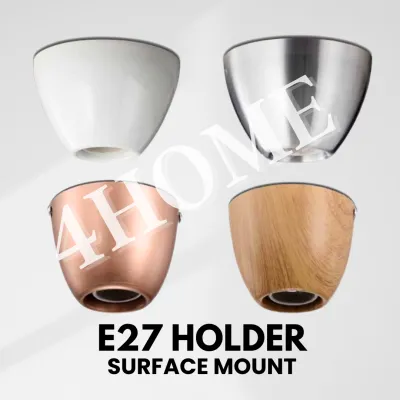
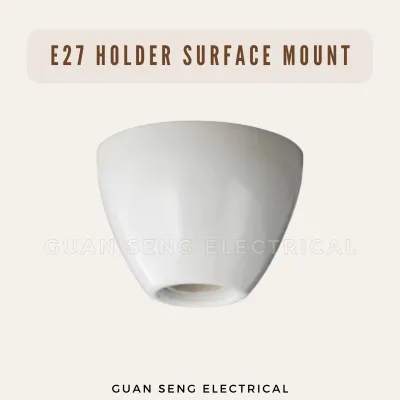
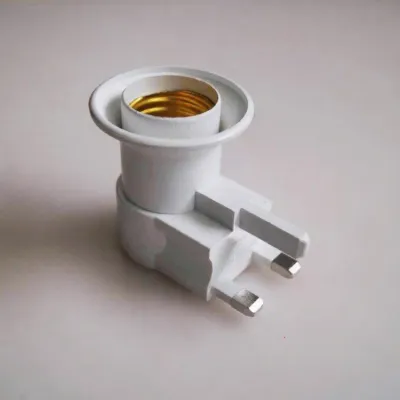
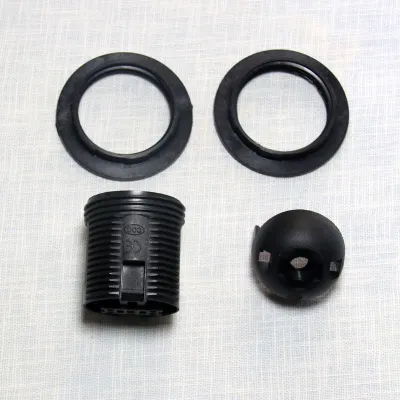
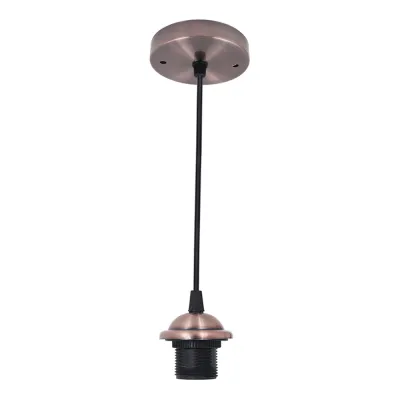
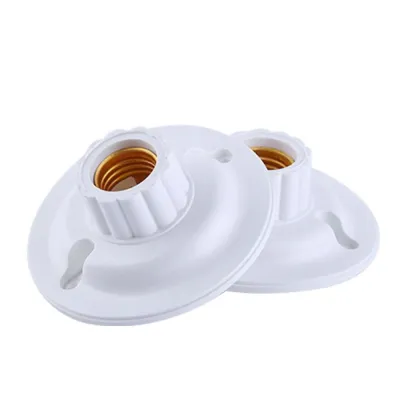
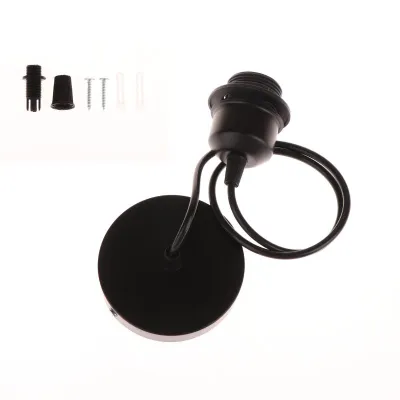
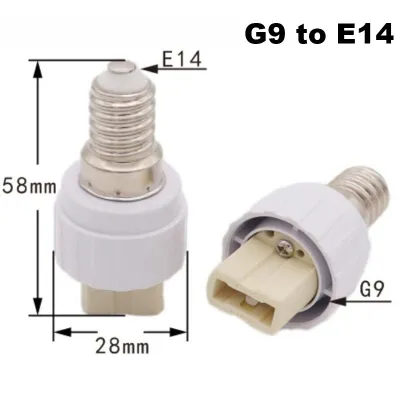
Prices are valid at publication and may change. Please refer to the product page for the latest price.
When a bulb holder is marketed as “UK-standard” in Singapore, it typically denotes one of two configurations. For portable or plug-in fixtures, it means the assembly is pre-wired with a BS 1363 compliant 3-pin rectangular plug. For hardwired fixtures, it indicates that the holder has been manufactured and tested in accordance with British Standards (such as BS EN 60238 for Edison screw lampholders), which govern mechanical strength, insulation, and heat resistance.
Singapore’s electrical grid operates at a nominal voltage of 230 volts AC with a frequency of 50 hertz (Hz). Because the United Kingdom’s power grid operates under identical nominal parameters, any bulb holder built to genuine UK standards is fully compatible with Singapore’s electrical infrastructure. This alignment means you can install these fixtures directly without the need for voltage step-down transformers or frequency converters.
Safety Certifications and Compliance Checks to Verify
Electrical accessories sold in Singapore are subject to strict regulatory oversight to protect consumers from fire and shock hazards. Controlled goods, which include portable luminaires, multi-way adapters, and 3-pin plug tops, must carry the Singapore Safety Mark. Before purchasing a pre-wired E27 bulb holder, look for this distinctive logo on the packaging or the product itself, and verify the unique 8-digit registration number on the Consumer Product Safety Office (CPSO) online database.

For corded E27 holders, the integrated plug must conform to the BS 1363 standard. A genuine BS 1363 plug features insulated sleeves on the live and neutral pins to prevent accidental contact during insertion, and it must contain an internal cartridge fuse conforming to BS 1362. For domestic lighting circuits, this fuse should typically be rated at 3 amperes (3A) or 5 amperes (5A); using an incorrect 13A fuse meant for high-power appliances can prevent the fuse from blowing during a minor fault, creating a severe fire hazard.
Additionally, pay close attention to the construction materials of the holder. High-quality E27 holders are made from ceramic (porcelain) or high-grade, flame-retardant thermoplastics like polybutylene terephthalate (PBT) or Bakelite. Ceramic holders are highly recommended for high-heat applications or when using traditional incandescent bulbs. Avoid cheap, unbranded plastic holders from unverified online marketplaces, as they often lack thermal stabilizers and can melt or crack under the continuous heat generated by the bulb.
Matching Wattage, Dimmers, and Smart Bulb Requirements
Every E27 bulb holder is stamped with a maximum wattage rating, commonly ranging from 60W to 100W for standard domestic models. Even if you plan to use energy-efficient LED bulbs, which draw a fraction of the power of incandescent bulbs, you must respect this limit. The driver electronics in the base of an LED bulb still generate localized heat, and installing a bulb that exceeds the holder’s thermal dissipation capacity can degrade the internal metal contacts over time.
If your lighting setup includes dimming capabilities, compatibility must be verified across the entire circuit. If the E27 holder features an inline dimmer switch, the bulb you install must be explicitly labeled as “dimmable” by its manufacturer. Furthermore, ensure your dimmer switch technology matches your bulb type; older leading-edge dimmers designed for incandescent bulbs often cause modern LED bulbs to flicker or buzz, whereas trailing-edge dimmers are optimized for the electronic drivers inside LEDs.
Smart bulbs, such as those integrated into home automation systems, introduce unique operational constraints. Because smart E27 bulbs require a continuous electrical current to maintain their Wi-Fi or Zigbee connection, they should not be paired with holders that utilize physical inline dimmer switches. Turning off a physical switch cuts power to the bulb’s internal radio, rendering it offline. For smart lighting, keep the physical switch permanently in the “on” position, or bypass inline switches entirely by plugging the holder into a smart plug.
Selecting the Right E27 Holder Type for Your Space
Pendant and Ceiling Lamp Holders
Pendant holders are suspended from the ceiling by an electrical cable, making them ideal for ambient and task lighting over dining tables, kitchen islands, or in living rooms. When choosing a pendant E27 holder, you must verify the maximum weight capacity of both the suspension cord and the ceiling rose. Heavy decorative glass globes or oversized vintage LED bulbs require cords with integrated strain relief grips (cord grips) to prevent the weight from pulling directly on the copper wire terminals. Adjustable cord lengths allow you to customize the drop height, while premium materials like brushed brass or matte black aluminium can enhance your interior design.
Batten and Surface-Mount Holders
Batten holders are designed to be screwed directly flush against a ceiling or wall conduit, offering a clean, utilitarian lighting solution. These are commonly deployed in functional spaces such as storerooms, utility closets, household shelters, or covered outdoor walkways. Because batten holders are hardwired directly into the building’s electrical infrastructure, checking their build quality is critical. For installations in damp or humid zones—such as bathrooms, kitchens, or semi-exposed balconies—you must select a holder with an appropriate Ingress Protection (IP) rating, such as IP44 or higher, to prevent moisture from corroding the internal brass terminals.
Corded Table and Floor Lamp Holders
Portable corded holders allow you to position light sources precisely where they are needed, such as on desks, bedside tables, or reading corners. These assemblies come pre-wired with a flexible cable, an inline on/off switch, and a standard 3-pin plug. When evaluating these products, inspect the cable jacket for double insulation (indicated by the Class II double-square symbol) to ensure protection against electric shock. Verify that the cord has robust strain relief sleeves at both the plug entry and the holder base, and choose a cord length that comfortably reaches your wall outlet without requiring daisy-chained extension cords.
Safe Installation Practices and When to Call an Electrician
For portable, plug-in E27 bulb holders, routine safety maintenance is simple but vital. Regularly inspect the flexible cord for physical damage, such as cuts, kinks, or exposed copper wiring, and ensure the plug pins remain straight and firmly attached. When routing cables around your home, keep them clear of high-traffic walkways where they present a tripping hazard, and avoid pinching them behind heavy furniture or placing them near direct heat sources.
For hardwired installations, such as replacing a ceiling pendant or mounting a new batten holder, you must establish a strict safety boundary. Never rely solely on the wall switch to isolate the power, as some circuits may be incorrectly wired on the neutral side, leaving the fixture live even when switched off. Always turn off the corresponding circuit breaker at your home’s main distribution board (DB box) and use a reliable voltage tester to confirm the wires are completely dead before commencing work.
In Singapore, regulatory boundaries dictate when professional help is mandatory. Under the Electricity Act, any new fixed electrical wiring, alteration of existing circuits, or installation of heavy suspended fixtures must be performed by a Licensed Electrical Worker (LEW). Do not attempt to DIY hardwire a fixture if your ceiling junction box lacks a proper green-and-yellow earth wire, shows signs of scorching, or if the manufacturer’s installation instructions conflict with your home’s wiring. In these scenarios, stop immediately and contact a qualified professional.
Frequently Asked Questions (FAQ)
Can I use a US-standard E26 bulb in an E27 holder in Singapore?
No, you should not use a US-standard E26 bulb in an E27 holder in Singapore. Although an E26 bulb (26mm base) can physically thread into an E27 holder (27mm base), E26 bulbs are designed for the 120V electrical systems used in North America. Singapore’s power grid delivers 230V, which will immediately overload a 120V bulb, causing it to fail instantly, pop, trip your home’s circuit breakers, or potentially shatter and cause a fire. Always check the voltage rating on the bulb’s packaging and ensure it is rated for 220-240V before installation.
Do I need a travel adapter for a UK-plug E27 holder in Singapore?
No, you do not need a travel adapter. Singapore uses the exact same Type G (BS 1363) three-pin rectangular plug configuration as the United Kingdom. A genuine UK-standard corded E27 holder will plug directly into any standard Singaporean wall socket. However, you must still verify that the plug is a genuine, certified product containing the correct internal fuse, and ensure that the overall electrical rating of the light fixture is compatible with Singapore’s 230V/50Hz power supply.

Community discussion
Share your experience or ask a question. Comments are reviewed before publication.