
Selecting a full-size decorative mirror in Singapore requires balancing aesthetic aspirations with the practical realities of compact high-rise living. In apartments where floor area is at a premium, a well-chosen mirror serves as more than a simple dressing aid; it acts as an architectural tool that visually doubles room dimensions and amplifies available light. To find the best options among local retailers and specialized glass merchants, homeowners must look beyond surface-level styling. The ideal choice depends on verifying structural safety, glass thickness, humidity resistance, and the specific installation requirements of Singaporean residential walls.
Rather than relying on unverified brand rankings, smart buyers evaluate mirrors based on material specifications and construction quality. A high-quality full-size mirror should feature copper-free silver glass to withstand local humidity, a robust backing material to prevent warping, and a secure mounting system tailored to the home’s wall type. By understanding these technical details, you can confidently select a mirror that enhances your space while ensuring long-term safety and durability.
Why Full-Size Mirrors Enhance Small Spaces
Integrating a full-size mirror into a compact room relies on basic optical principles to alter the perception of physical boundaries. When light hits a highly reflective surface, it bounces back into the room rather than being absorbed by dark finishes or solid walls. In typical Singapore apartments, where deep layouts can leave entryways and dining alcoves feeling dim, a large mirror positioned to capture natural light from windows or balcony doors effectively redistributes that illumination, making the entire floor plan feel brighter and more open.
Products mentioned in this guide
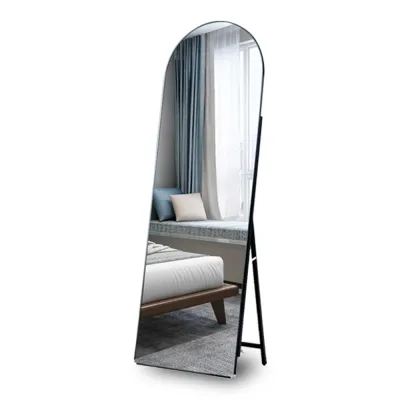
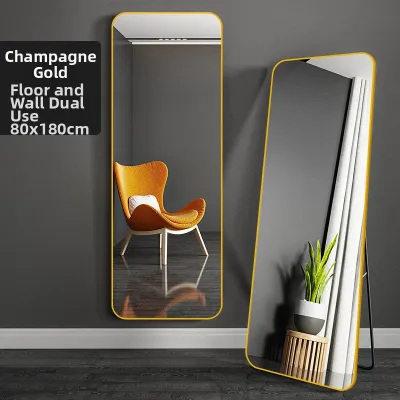
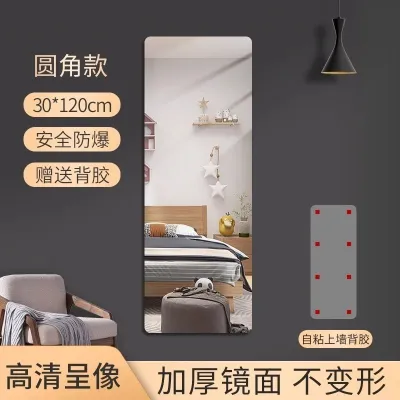
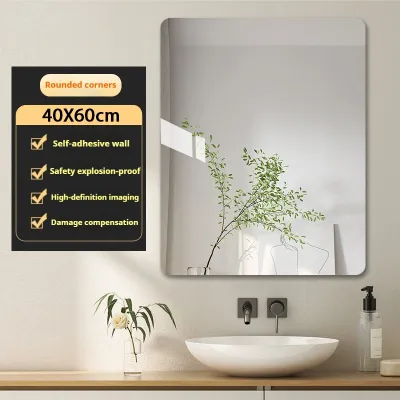
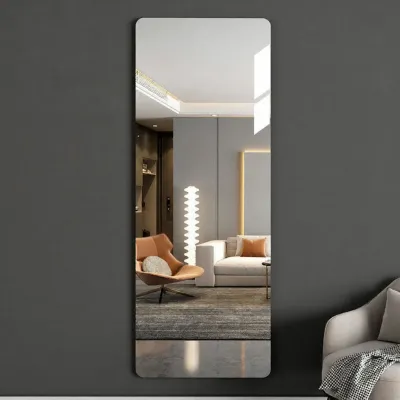
Prices are valid at publication and may change. Please refer to the product page for the latest price.
Beyond light amplification, large mirrors create a powerful illusion of spatial depth. By reflecting the floor, ceiling, and opposing walls, a full-size mirror tricks the brain into perceiving an additional room or an extended corridor where a solid wall actually stands. This visual continuation breaks the box-like feeling of small bedrooms or narrow hallways, providing a sense of breathing room that makes compact living spaces feel significantly less confining.
This spatial expansion also has a psychological impact. Human comfort in indoor environments is closely tied to the perceived distance of surrounding surfaces. Tight, enclosed spaces can induce subtle feelings of restriction. By introducing unbroken reflections that extend the visual field, a full-size mirror reduces visual clutter and creates a calmer, more balanced atmosphere. The key to achieving this effect lies in choosing a mirror large enough to reflect a substantial portion of the room without interrupting the visual plane with thick, heavy frames.
Key Design Features for Space-Enhancing Mirrors
To maximize the space-expanding effect of a full-size mirror, the physical design of the frame and glass must be carefully considered. Heavy, ornate frames can defeat the purpose of a space-saving mirror by adding visual weight and drawing too much attention to the boundary of the mirror itself. For compact apartments, ultra-thin metal frames—such as those made from slim aluminum or powder-coated steel—or completely frameless designs are highly effective. These minimalist profiles allow the reflection to blend seamlessly with the surrounding wall, enhancing the illusion of continuous space.

Mirror shape and orientation also play a critical role in shaping the proportions of a room. A tall, rectangular or arched mirror oriented vertically draws the eye upward, emphasizing vertical clearance and making low ceilings feel higher. This is particularly useful in modern apartments where structural beams or dropped ceilings can create a heavy overhead feeling. Conversely, mounting a wide rectangular mirror horizontally along a dining wall stretches the room visually, making a narrow dining or living area feel significantly wider.
Glass quality is another crucial factor that directly affects both the visual outcome and safety. Cheap, thin mirrors often suffer from minor surface variations that cause a “funhouse” distortion effect, which instantly ruins the illusion of depth and can cause eye strain. To ensure a true-to-life reflection, look for mirrors with a glass thickness of at least 5mm to 6mm. Thicker glass is inherently flatter, more rigid, and far less prone to warping over time, providing a crisp, deep reflection that genuinely enhances the room’s perceived dimensions.
How to Evaluate Mirror Brands and Retailers in Singapore
When shopping for a full-size mirror in Singapore, you will encounter a wide range of options, from mass-market home decor chains to bespoke local glass merchants. To identify reliable brands and retailers, you must look past marketing claims and evaluate concrete product specifications. A primary indicator of quality is the type of silvering process used. In Singapore’s humid tropical climate, standard mirrors are highly susceptible to oxidation, which manifests as unsightly black spots or peeling edges. High-quality brands specify the use of copper-free silver mirrors, which offer superior resistance to moisture and atmospheric corrosion.
Safety is paramount when dealing with large sheets of glass in residential environments. Always verify that the mirror features a shatterproof protective backing. This safety film is applied to the rear of the glass; in the rare event of an impact, the film holds the broken shards together, preventing dangerous glass fragments from scattering across your floor. Additionally, examine the backing board material. High-density fiberboard (HDF) or moisture-resistant engineered wood backing provides crucial structural support, preventing the glass from bowing under its own weight over time.
Before finalizing a purchase, carefully review the retailer’s warranty terms and return policies. A reputable brand should offer a clear warranty covering manufacturing defects, silvering degradation, and frame warping. Because full-size mirrors are heavy and fragile, transport risks are high. Ensure the retailer’s policy explicitly covers any damage that might occur during transit. If you are purchasing an illuminated or LED-integrated mirror, verify that the product carries the appropriate electrical safety certifications, such as the Singapore Safety Mark, and check that the voltage matches the local 220-240V standard.
Finally, assess the delivery and installation services offered by the retailer. Transporting a mirror that stands over 1.8 meters tall is challenging, especially when navigating tight condominium corridors, service lifts, or HDB stairwells. Reliable retailers often provide specialized delivery teams who understand how to handle large glass items safely. Many also offer professional installation services. Opting for professional mounting is highly recommended, as it ensures the correct wall anchors are used and shifts the liability for safe installation to qualified technicians.
Placement and Installation Strategies for Maximum Illusion
To get the most out of a full-size mirror, its placement must be planned in relation to the room’s layout and light sources. Positioning a mirror directly opposite a window can sometimes backfire by reflecting direct sunlight, creating harsh glare and visual discomfort. Instead, angle the mirror slightly or place it on an adjacent wall. This allows it to capture and bounce ambient daylight into the room without reflecting the sun’s direct path. Additionally, ensure the mirror reflects an attractive, uncluttered view—such as a clean dining area, a piece of art, or indoor plants—rather than a cluttered utility closet or a busy hallway.
| Installation Method | Best Suited For | Structural Requirements | Safety Considerations |
|---|---|---|---|
| Secure Wall-Mounting | Narrow hallways, dining areas, homes with children/pets | Solid concrete, brick, or reinforced drywall studs | Requires heavy-duty anchors, level alignment, and professional mounting |
| Leaning (Freestanding) | Spacious bedrooms, dressing corners, rental properties | Flat, non-slip flooring and a solid wall surface | Must be anchored to the wall with safety straps to prevent tipping |
Deciding between a leaning installation and a wall-mounted setup involves both aesthetic and structural considerations. Leaning a large mirror against a wall offers a relaxed, contemporary look and is highly popular in rental homes where drilling is restricted. However, even a leaning mirror must never be left completely unanchored. Always use the manufacturer-provided anti-tip kits or safety straps secured to the wall to prevent the mirror from sliding forward or tipping over due to vibrations or accidental contact.
For wall-mounted installations, understanding your wall type is critical for safety. Most residential walls in Singapore are made of solid concrete or brick, which require a masonry drill bit and heavy-duty nylon wall plugs (such as Fischer plugs) to support the substantial weight of a full-size mirror. If you are mounting onto a drywall partition—common in newer condominium layouts—you must locate the internal timber or metal studs using a stud finder. Never hang a heavy mirror directly onto unsupported drywall using standard screws; doing so risks structural failure and severe damage.
If your chosen mirror features integrated LED lighting or smart features, electrical safety must be prioritized. For plug-in models, ensure the cable is neatly routed and does not present a tripping hazard. For a clean, high-end look, you may prefer to hardwire the mirror directly into your home’s electrical system. This requires routing cables behind the wall and isolating the power source before installation. Because working with fixed wiring carries significant safety risks, this task must be handled by a licensed electrical worker to ensure compliance with local safety standards.
Maintenance and Care for Large Decorative Mirrors
To preserve the clarity and longevity of a large decorative mirror, a proper maintenance routine is essential. Avoid using harsh, ammonia-based commercial glass cleaners, as these chemicals can seep behind the edges of the glass and attack the silver backing, leading to irreversible desilverisation. Instead, use a simple solution of distilled water and a few drops of mild, pH-neutral dish soap, or a specialized alcohol-based glass cleaner. Spray the cleaning solution directly onto a clean microfiber cloth rather than spraying it onto the mirror itself, which prevents liquid from pooling along the bottom edge of the frame.
When wiping the mirror, use a consistent Z-shaped motion to prevent streaking. Microfiber cloths are highly recommended because they trap dust and oils without scratching the delicate glass surface. Pay special attention to the corners and edges where dust and moisture tend to accumulate. If your mirror has a metal or wooden frame, use a separate dry cloth to clean the frame material, ensuring that no moisture remains trapped between the frame and the glass edge.
In Singapore’s humid climate, environmental control is key to preventing edge creep and backing degradation. Ensure your home has adequate ventilation, especially if the mirror is placed near a bathroom or kitchen area. Running an air conditioner or a dehumidifier periodically helps maintain stable indoor humidity levels, protecting the mirror’s backing materials. Finally, make it a habit to inspect the mounting hardware and wall anchors once or twice a year. Check for any signs of loosening, tilting, or structural sagging to ensure your full-size mirror remains safely and securely positioned for years to come.
Frequently Asked Questions (FAQ)
Can a full-size mirror make a room feel too bright or cause glare?
Yes, if a full-size mirror is placed directly opposite a strong light source, such as a west-facing window or an unshielded light fixture, it can reflect intense light directly into your line of sight. This creates uncomfortable glare and visual fatigue. To avoid this, position the mirror at an angle to the light source or place it on an adjacent wall. This allows the mirror to bounce ambient light throughout the room, brightening the space softly without creating harsh, direct reflections.
Is it safe to lean a large mirror against a wall without anchoring?
No, leaning a large, heavy mirror against a wall without securing it is a significant safety hazard. Vibrations from footsteps, slamming doors, or accidental bumps can cause the base of the mirror to slide outward, leading to a dangerous fall. This risk is especially high in homes with children or pets. To prevent tipping, always secure a leaning mirror to the wall using heavy-duty safety straps, anti-tip brackets, or anchor kits designed specifically for large furniture and mirrors.

Community discussion
Share your experience or ask a question. Comments are reviewed before publication.