
To make a Singapore living room feel significantly larger, the choice of a decorative mirror brand depends on finding the right balance between optical design, structural safety, and climate-resilient materials. In typical local apartments, such as high-density condominiums or HDB flats, space is often at a premium, and natural light can be limited by neighboring buildings or deep balconies. Selecting a brand that offers high-clarity glass, slim frames, and robust mounting systems allows you to visually double your floor area and amplify incoming daylight. Rather than focusing solely on brand names, the key is knowing how to evaluate a retailer’s material specifications, delivery services, and customization options to suit your specific living space.
Design Features That Create the Illusion of Space
The physical characteristics of a mirror dictate how effectively it manipulates the perception of space in a room. Large-format and oversized floor mirrors are among the most powerful tools for creating depth. When a mirror stretches from near the floor to a height of 1.8 meters or more, it creates a portal effect that visually extends the floor plane. This boundary blurring tricks the brain into perceiving an adjacent room rather than a solid wall, which instantly opens up tight living areas.
Frame profiles play an equally critical role in managing the visual weight of the mirror within your interior design. Frameless mirrors offer the most seamless integration, as they lack any border that defines where the reflection ends, making them ideal for ultra-minimalist spaces. Thin metal frames, often finished in matte black, brass, or brushed steel, provide a clean, modern outline that defines the mirror without adding unnecessary bulk. In contrast, thick wooden or ornate plaster frames carry significant visual weight; while they can serve as beautiful focal points, they can also make a small room feel more crowded if the scale is not carefully balanced with the surrounding furniture.
Products mentioned in this guide
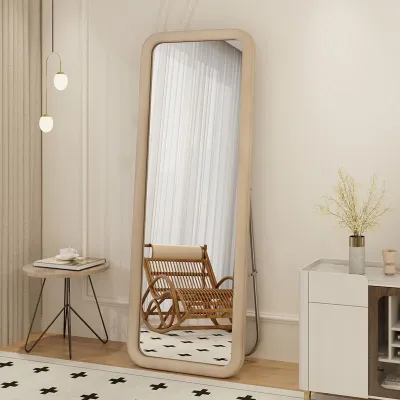
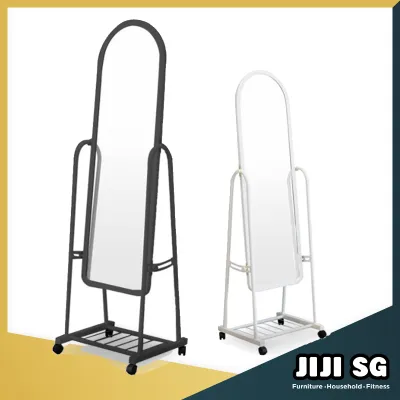
![[Delivered in 1 days]Standing Mirror Full length Mirror Floor Mirror Home Bedroom Large Mirror Hanging Wall Hanging Fitting](https://img.lazcdn.com/g/p/e18709c82d74ad5234f1ada3475c9a3d.jpg_400x400q80.jpg_.webp)
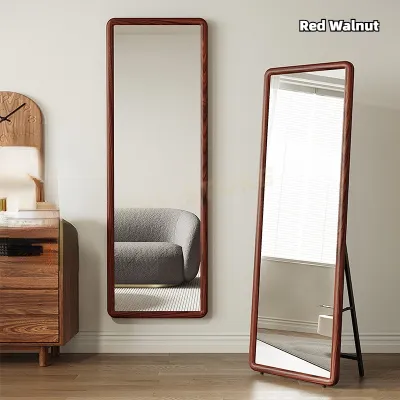
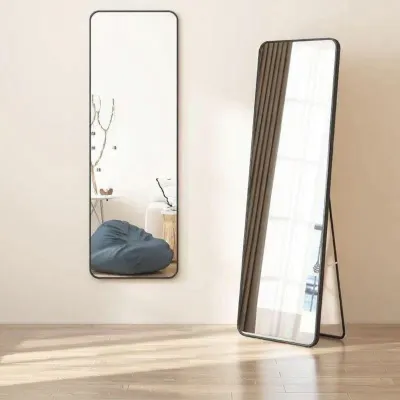


Prices are valid at publication and may change. Please refer to the product page for the latest price.
The shape of the mirror can be used strategically to alter the perceived proportions of your living room. Arched mirrors are highly effective at drawing the eye upward, mimicking the architectural lines of tall windows or doorways and making standard ceilings feel loftier. Geometric and asymmetrical shapes break up the rigid, boxy layouts common in modern apartments, creating dynamic focal points that distract from limited square footage. Round mirrors soften the sharp angles of rectangular sofas and cabinets, introducing a sense of flow and organic movement to the space.
Beyond shape and size, the treatment of the glass edges and surface finish influences how light is distributed. Beveled edges feature a slanted border that catches and refracts light, acting like subtle prisms that scatter brightness around the room and add a touch of classic elegance. Flat, polished edges offer clean, uninterrupted lines that align perfectly with contemporary, minimalist aesthetics. While antique or tinted finishes—such as bronze or grey mirrors—add rich texture and reduce glare, they absorb more light than clear glass, meaning they should be used primarily for mood and decoration rather than maximum spatial expansion.
Criteria for Evaluating Mirror Brands and Retailers in Singapore
When searching for the right mirror brand or retailer in Singapore, relying solely on online product listings can lead to disappointing results. Visiting a physical showroom is highly recommended to inspect the glass quality in person. Low-grade glass often suffers from minor warping or inconsistencies in thickness, which can cause a distracting distortion over larger surface areas. By viewing the mirror from various angles and distances in a showroom, you can verify that the reflection remains perfectly true and clear.

In-person inspection also allows you to evaluate the craftsmanship of the edge polishing and frame joins. High-quality brands ensure that the edges of frameless mirrors are smoothly ground and polished to prevent chipping and ensure safe handling. For framed models, look closely at the corners to ensure there are no visible gaps, uneven seams, or loose joints. The backing of the mirror should be securely fastened to the frame, with no signs of adhesive seepage or loose mounting hardware.
Because large decorative mirrors are both heavy and exceptionally fragile, a retailer’s delivery and installation policies are critical factors in your purchasing decision. Standard courier services often lack the specialized equipment and training required to transport oversized glass safely. Look for brands that provide dedicated, white-glove delivery services where trained handlers transport the mirror directly to your living room. Furthermore, check if the retailer offers professional installation services, as mounting a heavy mirror securely requires specialized tools and expertise that go beyond basic DIY capabilities.
Warranty terms offer valuable insight into a brand’s confidence in its product durability. A robust warranty should cover silvering defects, such as desilvering or the appearance of black spots, which can occur if moisture penetrates the protective backing. It should also cover frame warping and any damage that might occur during transit or installation if handled by the brand’s authorized team. Clear, written warranty terms protect your investment and ensure peace of mind when purchasing premium decorative pieces.
Given Singapore’s tropical climate, material specifications are paramount to ensuring the longevity of your mirror. High relative humidity can rapidly degrade poorly sealed mirrors, leading to oxidation of the silver backing. Reliable brands specify the use of copper-free silver mirrors, which are significantly more resistant to atmospheric corrosion than traditional mirrors. Additionally, ensure that the frames and backings are constructed from moisture-resistant materials, such as treated metals, sealed hardwoods, or marine-grade backing boards, to prevent warping and mold growth over time.
Strategic Placement for Maximum Visual Impact
The impact of a decorative mirror depends heavily on where it is positioned relative to the light sources and architectural features of your living room. To maximize natural light, place the mirror opposite or adjacent to a window. This positioning allows the mirror to catch incoming daylight and bounce it deep into the darker corners of the room, instantly making the entire space feel brighter and more open. During the evening, a mirror placed near floor lamps or wall sconces can similarly amplify artificial light to create a warm, expansive ambiance.
Equally important is being mindful of what the mirror will reflect. A mirror acts as a visual duplicator, so placing it directly opposite a cluttered shelving unit, a busy kitchen counter, or a dark, narrow corridor will only double the visual noise and make the room feel more chaotic. Instead, aim the reflection toward pleasant views, such as an outdoor balcony garden, a clean accent wall, or a beautifully styled dining area. This ensures that the duplicated image contributes to a sense of order and beauty rather than clutter.
Leaning floor mirrors can be used creatively to soften the boundaries of a room, particularly when placed in empty corners. Corners often represent dead space that defines the physical limits of a room; by placing a tall, leaning mirror there, you blur those boundaries and create the illusion of an extra dimension extending beyond the walls. This technique is especially useful in compact HDB living rooms where every square meter counts, as it adds depth without requiring permanent wall alterations.
For wall-mounted mirrors, maintaining visual continuity requires careful alignment with the room’s viewing contexts. The center of a wall-mounted mirror should generally align with the average eye level of a standing person, which is approximately 1.5 meters from the floor. However, in a living room where family members and guests spend most of their time seated, adjusting the mounting height slightly lower ensures that the reflection remains within the natural line of sight. This continuity prevents the mirror from feeling disconnected from the rest of the room’s furniture arrangement.
Safety, Installation, and Climate Considerations
Mounting a heavy decorative mirror in a Singapore home requires a clear understanding of your wall construction. Most local residential properties feature a mix of reinforced concrete structural walls, brick partition walls, and drywall installations. Concrete and brick walls offer excellent load-bearing capacity but require masonry drill bits, plastic or metal wall plugs, and heavy-duty screws to hold the weight of a large mirror. Drywall partitions, commonly found in renovated flats, require locating the underlying timber or metal studs, or using specialized heavy-duty toggle bolts if mounting directly to the plasterboard.
Using the correct mounting hardware is essential to prevent catastrophic falls. For exceptionally heavy or wide mirrors, a French cleat system is highly recommended. This system uses two interlocking metal or wooden brackets—one secured to the wall and the other to the back of the mirror—to distribute the weight evenly across a wider surface area. Avoid relying on simple picture wire or adhesive strips for large mirrors, as these methods can fail over time due to material fatigue or environmental factors.
Recognizing when to hire a professional installer is crucial for personal safety and structural integrity. If a mirror weighs more than 15 kilograms, requires drilling into hard structural concrete, or involves complex hanging mechanisms, professional installation is the safest path. Experienced installers have the specialized tools, such as stud finders, laser levels, and heavy-duty rotary hammer drills, to ensure the mirror is perfectly level and securely anchored. They can also identify potential hazards, such as hidden electrical conduits or water pipes, before drilling.
To prevent desilvering and frame degradation, avoid exposing your mirror to extreme environmental conditions. Direct, intense afternoon sunlight can heat the glass and frame unevenly, causing thermal stress that may lead to cracking or warping. Keep mirrors away from high-humidity zones, such as directly adjacent to open bathroom doors or in the immediate path of humidifiers and indoor water features. Ensuring adequate ventilation in your living room helps maintain a stable indoor climate, protecting both the mirror backing and the frame finish from moisture damage.
Routine cleaning should be performed using methods that protect the mirror’s delicate backing and frame materials. Avoid spraying liquid glass cleaners directly onto the mirror surface, as the liquid can run down the glass and pool along the bottom edge, seeping behind the frame and attacking the silver backing. Instead, spray a small amount of mild, ammonia-free glass cleaner or a simple mixture of water and white vinegar onto a clean microfiber cloth, then gently wipe the glass. Use a separate dry cloth to buff away any remaining streaks, and clean the frame using a dry or slightly damp cloth appropriate for its specific material.
Frequently Asked Questions (FAQ)
Can a mirror be too large for a compact living room?
While large mirrors are excellent for creating depth, a mirror can overwhelm a compact living room if its proportions are not carefully balanced with the surrounding furniture. A mirror that spans an entire wall can sometimes feel visually aggressive or create a disorienting reflection that disrupts the cozy feel of a home. To avoid this, ensure there is a clear margin of wall space around the mirror to frame it as a decorative element. If a single oversized mirror feels too dominant, using a curated arrangement of multiple smaller mirrors or a paneled window-style mirror can offer a more scalable and visually balanced alternative.
How do I prevent a mirror frame from warping in a humid climate?
Preventing frame warping in a humid climate starts with checking the manufacturer’s material specifications before purchasing. Opt for frames made from moisture-resistant materials, such as powder-coated aluminum, stainless steel, or engineered woods like high-density fiberboard (HDF) that have been fully sealed with water-resistant lacquers. Ensure your living room has adequate ventilation by utilizing ceiling fans, air conditioning, or keeping windows open to promote consistent airflow. Additionally, avoid placing the mirror in close proximity to indoor plants, which release moisture into the air, or directly in front of air conditioning vents where condensation can form.
Should I choose a beveled or flat edge for a modern living room?
The choice between a beveled or flat edge depends on the specific design aesthetic and lighting goals of your modern living room. A flat, polished edge offers clean, minimalist lines that align perfectly with contemporary, industrial, or Scandinavian interiors, providing an uninterrupted reflection that feels highly integrated with the wall. A beveled edge, on the other hand, features a slanted border that catches and refracts light, creating a subtle decorative frame within the glass itself. This light-diffusing property can add a sense of luxury and brightness, making it an excellent choice if you want the mirror to stand out as a distinct architectural feature rather than blending seamlessly into the background.

Community discussion
Share your experience or ask a question. Comments are reviewed before publication.