
Singapore apartments, such as Housing & Development Board (HDB) flats and condominiums, often feature long, narrow corridors that lack pre-installed electrical wiring points. Installing traditional wired wall sconces in these spaces typically requires extensive wall hacking, surface-mounted casing, or hiring a licensed electrician, which can quickly escalate home renovation costs. Rechargeable wall lights have emerged as a highly practical, drill-free alternative, offering flexible illumination without the clutter of exposed wires. To find the best rechargeable wall light for your corridor, you must look beyond aesthetic appeal and focus on battery longevity, sensor responsiveness, safety certifications, and ease of maintenance.
Core Features to Evaluate for Corridor Illumination
When shopping for a rechargeable wall light, the battery capacity is the most critical factor determining how often you will need to dismount the fixture for charging. Battery capacity is measured in milliampere-hours (mAh). For corridor lighting, look for fixtures with a capacity of at least 2,000 mAh to 4,000 mAh. If the light operates primarily on a motion-sensor mode, a higher capacity ensures the device can run for several weeks or even months on a single charge. Conversely, low-capacity batteries under 1,200 mAh may require weekly charging, which quickly becomes a tedious household chore.
Brightness and color temperature significantly influence both safety and visual comfort. Corridor lighting does not need to be blindingly bright; a range of 100 to 200 lumens is generally sufficient to illuminate the floor path without causing discomfort to sleepy eyes. Color temperature is largely a matter of personal preference, but it has a functional impact. Warm white light (2700K to 3000K) creates a cozy, inviting atmosphere and is gentler on the eyes during late-night trips to the bathroom or kitchen. Cool white or neutral light (4000K) offers higher contrast and clarity, which can be beneficial in darker, windowless hallways.
Products mentioned in this guide

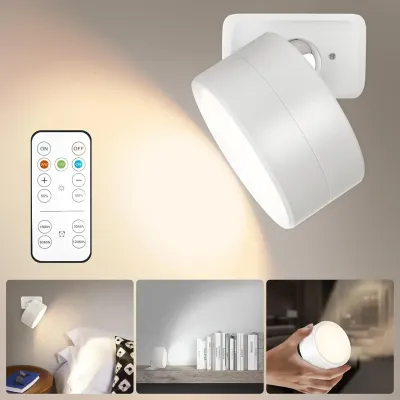
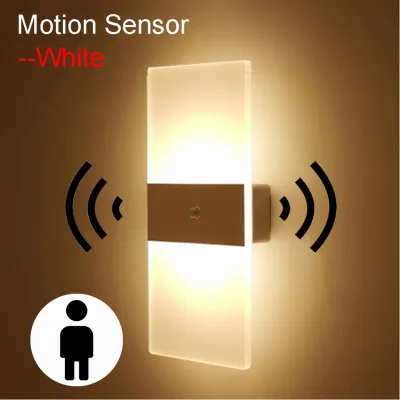
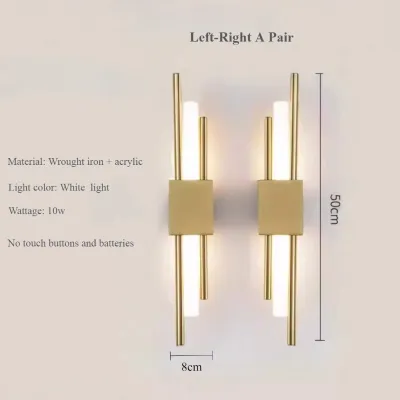
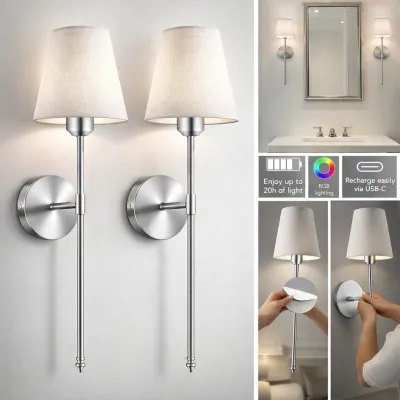
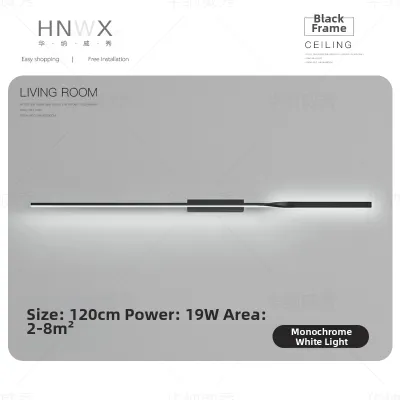
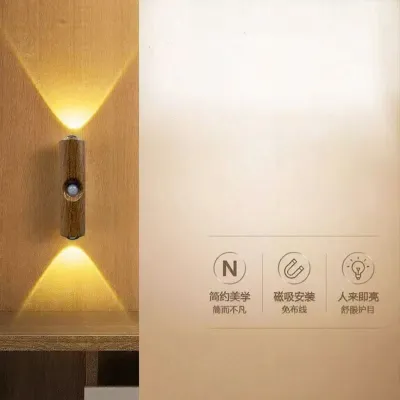
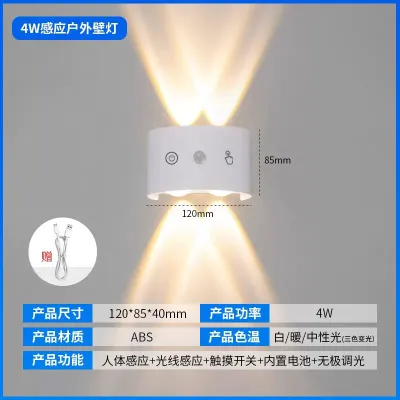
Prices are valid at publication and may change. Please refer to the product page for the latest price.
Motion sensor technology is essential for conserving battery life while providing hands-free convenience. Most reliable brands utilize Passive Infrared (PIR) sensors, which detect changes in heat signatures as people move. When evaluating sensors, check the detection angle and range. A detection angle of 120 degrees and a range of 3 to 5 meters are ideal for narrow Singapore hallways. This ensures the light activates the moment you step into the corridor, rather than requiring you to walk halfway down the dark hall before it turns on.
Finally, consider the charging interface and physical mounting mechanism. Modern fixtures should utilize a USB-C interface, which offers faster and more stable charging than older Micro-USB ports. The mounting system should feature a magnetic bracket. The base of the bracket is semi-permanently attached to the wall using strong double-sided adhesive or small screws, while the light body itself attaches magnetically. This design allows you to effortlessly snap the light off the wall when it needs a recharge and snap it back on without disturbing the alignment.
Verifying Safety Standards and Brand Reliability
Because rechargeable wall lights rely on built-in lithium-ion batteries, verifying safety standards is paramount to prevent overheating and fire hazards. When browsing online marketplaces or local lighting shops, look for products that carry recognized international safety certifications such as CE, FCC, and RoHS. If the light comes with a dedicated charging adapter, or if you plan to use an existing USB wall charger, ensure the adapter carries the Safety Mark certified by Enterprise Singapore. This mark guarantees that the electrical component has been tested and approved for safe use with Singapore’s 230V power grid.

A robust Battery Management System (BMS) is another critical safety feature to verify. High-quality brands integrate protective circuitry that prevents overcharging, over-discharging, and short-circuiting. This protection is especially vital in Singapore’s warm, humid tropical climate, where ambient heat and humidity can accelerate battery degradation or increase the risk of thermal runaway. Always check the manufacturer’s product specifications to confirm these built-in battery protections are active.
Warranty coverage and customer support accessibility are strong indicators of brand reliability. Reputable manufacturers typically offer a warranty of at least 6 to 12 months. Avoid unbranded, generic lights that offer no warranty or return policy, as these often use low-grade lithium cells that degrade rapidly within a few months. Checking verified user reviews on ecommerce platforms can provide valuable insights into real-world battery lifespan and whether customer service honors warranty claims promptly.
While rechargeable models are ideal for dry, indoor corridors, always verify the installation environment. If your corridor is semi-outdoor, exposed to wind-blown rain, or located near a damp bathroom entrance, you must check the fixture’s Ingress Protection (IP) rating. An IP20 rating is sufficient for dry indoor hallways, but damp or semi-outdoor areas require at least an IP44 rating to prevent moisture from penetrating the battery compartment. For any installations requiring fixed electrical wiring, work at significant heights, or mounting heavy suspended loads, always isolate the main power supply and consult a qualified licensed electrician to ensure compliance with local electrical codes.
Strategic Placement and Sensor Optimization
To maximize the efficiency of your rechargeable wall lights, strategic placement is key. The optimal mounting height for corridor wall lights is generally between 1.5 and 1.8 meters above the floor. This height ensures that the light is distributed evenly across the walking path while keeping the PIR sensor at an ideal angle to detect oncoming movement. Mounting the light too high can limit the sensor’s downward range, while mounting it too low can result in uneven lighting and physical obstruction.
Preventing direct line-of-sight glare is crucial for maintaining visual comfort, especially when transitioning from a dark bedroom into the hallway. Opt for fixtures that feature frosted diffusers, or choose downlight designs that direct the illumination downward toward the floor. This “wall-washing” effect utilizes the wall surface to reflect a soft, indirect glow, which is much easier on the eyes than a direct, exposed LED bulb.
In long or L-shaped corridors, managing sensor overlap is essential to prevent premature shut-offs. A single light is rarely sufficient for a hallway exceeding 3 meters. Space multiple units approximately 2 to 3 meters apart, ensuring their sensor detection zones overlap slightly. This setup creates a continuous path of light that activates sequentially as you walk, eliminating dark zones and preventing the lights from turning off while you are still navigating the space.
The texture and color of your corridor walls also play a significant role in lighting efficiency and sensor accuracy. Light-colored walls, which are common in Singapore apartments, reflect light exceptionally well, allowing you to use lower brightness settings and conserve battery life. However, highly reflective surfaces, such as glossy ceramic tiles or large mirrors, can occasionally cause glare or interfere with PIR sensors by reflecting ambient heat signatures. Matte or lightly textured painted walls are the ideal backdrop for soft, consistent illumination and reliable sensor performance.
Building a Comparison Shortlist for Your Space
Before making a purchase, it is highly beneficial to build a structured comparison shortlist tailored to your household’s specific traffic patterns and layout. Start by defining your must-have features versus nice-to-have features. For instance, if you have young children or elderly family members who frequently use the corridor at night, a highly sensitive motion sensor and a warm, glare-free light output are non-negotiable must-haves. If the corridor is purely decorative, aesthetic design and customizable color modes might take priority.
Create a simple evaluation matrix to compare different brands and models. Your matrix should include columns for battery capacity (mAh), sensor range and angle, physical dimensions, mounting method, and price. Cross-referencing these specifications will help you identify which product offers the best value for your specific needs. Keep in mind that while some premium brands may have a higher upfront cost, their superior battery longevity and reliable sensor performance often translate to a lower total cost of ownership over time.
Physical dimensions must be carefully matched to your available wall space. In narrow HDB corridors, space is at a premium. A bulky wall light that protrudes significantly from the wall can easily be knocked loose by passing residents, laundry baskets, or furniture. Measure the width of your corridor and select low-profile, slimline fixtures that protrude no more than 5 to 8 centimeters from the wall surface to maintain a clear, safe walkway.
Finally, establish a realistic budget that accounts for multi-unit purchases. Because corridors typically require more than one light fixture to achieve even illumination, calculating the total cost for three or four units is essential. Many reputable brands offer multi-pack bundles at a discounted rate, which can help you save on the initial purchase. By systematically comparing these factors, you can confidently select a rechargeable wall light system that enhances both the safety and aesthetic appeal of your Singapore home.
Frequently Asked Questions (FAQ)
How long do rechargeable wall light batteries typically last before needing replacement?
Most high-quality rechargeable wall lights utilize lithium-ion batteries that have a lifespan of approximately 300 to 500 charge-discharge cycles. If the light is set to motion-sensor mode and only requires charging once a month, the battery can easily last between three to five years before you notice a significant drop in capacity. Observable signs of battery degradation include the light dimming much faster than usual, requiring more frequent charges, or failing to hold a charge altogether. If the battery begins to swell or the fixture becomes unusually hot during charging, the unit should be decommissioned and replaced immediately.
Can rechargeable wall lights be left plugged in continuously?
While many modern rechargeable wall lights feature built-in overcharge protection that stops the flow of electricity once the battery is full, it is generally not recommended to leave them plugged in continuously. Constant connection to a power source can generate continuous low-level heat, which accelerates the chemical degradation of the lithium-ion cells, especially in Singapore’s warm and humid climate. To maximize battery lifespan and ensure optimal fire safety, always unplug the light fixture once the charging indicator shows it is fully charged. Never leave charging devices unattended on flammable surfaces, and always follow the manufacturer’s specific charging instructions.

Community discussion
Share your experience or ask a question. Comments are reviewed before publication.