
Selecting a reliable led ceiling downlight brand in Singapore for a whole-home installation requires looking beyond basic price tags to evaluate manufacturer transparency, local safety certifications, and thermal construction. A successful whole-home lighting plan relies on consistent color rendering, long-term driver stability, and the availability of matching replacement fixtures years down the road. Because downlights are recessed directly into ceiling voids, making the wrong choice can lead to persistent flickering, mismatched color temperatures, or even safety hazards within your home.
For Singapore homeowners navigating renovations in HDB flats, condominiums, or landed properties, the lighting market presents an overwhelming array of options. While budget-friendly fixtures on online marketplaces may seem appealing, whole-home projects demand a systematic approach to quality verification. By focusing on established engineering standards and local compliance, you can build a lighting system that is both visually cohesive and electrically secure.
This guide outlines the essential technical parameters, safety markers, and planning frameworks needed to evaluate lighting brands. Whether you are coordinating with an interior designer or sourcing fixtures independently, these steps will help you identify brands that deliver lasting performance in our local tropical climate.
Products mentioned in this guide
![[SG Seller] LED Ceiling light Slim Downlight 9W 12W | Goldberg Home](https://img.lazcdn.com/g/p/e9beacab3b7fb5e2568a629e9c3afac0.png_400x400q80.png_.webp)
![[Buy 3 Free 1]BWL LED LIGHT Recessed Light/LED Downlight Square/ Round Downlight Tri-Tone/3000k/6000k/6W/8W/15W/20W](https://img.lazcdn.com/g/p/669964dfab7a8886c5255221b92d6dd8.jpg_400x400q80.jpg_.webp)
![[BUY 2 FREE 1] BWL LED Recessed Downlight With Safety Mark Driver/Downlight Square/ Round 9W 12W 18W](https://img.lazcdn.com/g/p/847af43887ea141a64347d7bb89e1dfd.jpg_400x400q80.jpg_.webp)
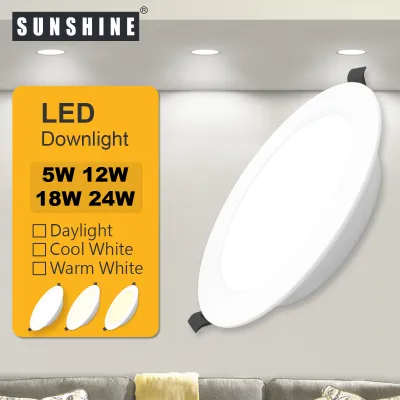
![Third generation [Ready Stock] [Superior Quality] LED Downlight 170V-265V Spotlight Tricolor 3W 5W 9W 12W 15W 18W Recessed LED Ceiling Downlight Cold & Warm White Light For Commercial Building Bedroom Decoration Spot light Led Panel Light](https://img.lazcdn.com/g/p/e3364a41b4260165d26a7fd8d72351e8.jpg_400x400q80.jpg_.webp)
![[BUY 3 FREE 1] DFS Led SG Stock Recessed Downlight 6W 8W 15W 20W Adjustable/Tri-Tone/3000k/4000k/6000k](https://img.lazcdn.com/g/p/268a361f750c4bf47f03692c96c38976.jpg_400x400q80.jpg_.webp)
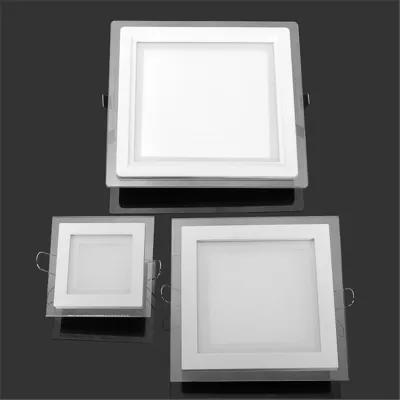
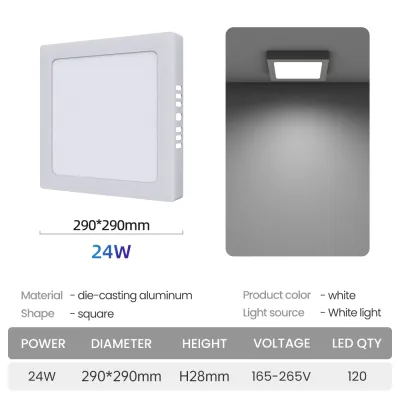
Prices are valid at publication and may change. Please refer to the product page for the latest price.
Key Indicators of a Reliable LED Downlight Brand
Evaluating a manufacturer’s transparency is the first step in identifying a reliable lighting brand. Trustworthy brands readily publish detailed photometric data, including polar curves and Illuminating Engineering Society (IES) files. These documents allow lighting designers and electrical contractors to calculate exact light distribution patterns before a single hole is cut in your false ceiling. If a brand cannot or will not provide these technical sheets, it is a strong indicator of generic, unverified manufacturing.
Product line longevity is another critical factor that separates premium manufacturers from short-lived brands. A whole-home installation represents a long-term commitment to a specific cutout size and aesthetic design. If a single downlight fails three years after installation, you want to be certain you can purchase an identical replacement. Established brands maintain stable product families with standardized dimensions, ensuring you do not have to patch plaster or replace an entire room’s fixtures due to a single component failure.
Establishing where and how a brand distributes its products in Singapore provides practical security. Brands with dedicated local showrooms, authorized distributors, or physical retail presence along established lighting districts like Balestier Road or Jalan Besar offer a level of accountability that cross-border online sellers cannot match. Visiting a physical showroom allows you to inspect the build quality firsthand, observe the actual light output, and verify that the brand has a permanent local footprint to handle future service needs.
Critical Specifications for Consistent Whole-Home Performance
Achieving visual consistency across open-plan living areas requires close attention to color temperature (CCT) tolerances. Even if two different brands label their products as “3000K Warm White,” their actual color output can vary significantly, resulting in a patchy, uncoordinated ceiling appearance. Reliable brands control this variation through a process called binning, often specified as a MacAdam Ellipse or Standard Deviation of Color Matching (SDCM) rating. To ensure uniform light across your home, look for brands that guarantee a 3-step or 4-step MacAdam Ellipse tolerance.

Thermal management is the single most important factor determining the lifespan of an LED luminaire. LED chips generate substantial heat at their junction points, which must be dissipated to prevent premature dimming or driver failure. High-quality brands construct their downlights with robust die-cast aluminum heat sinks rather than thin plastic or lightweight sheet metal. In Singapore’s warm, humid climate, where ceiling voids can trap stagnant, hot air, effective heat dissipation is essential for protecting the sensitive internal electronics.
Different zones within a home require specific levels of protection against dust and moisture. While standard dry areas like living rooms and bedrooms can safely use IP20-rated downlights, wet zones require higher Ingress Protection. For bathrooms, particularly directly above shower stalls, and kitchen cooking zones where grease and steam accumulate, select brands that offer IP44 or IP65-rated fixtures. These ratings ensure that moisture cannot penetrate the housing and cause short circuits or corrosion.
Voltage compatibility and driver quality must match local electrical standards. Singapore’s electrical grid operates at a nominal voltage of 230V AC at 50Hz. Reliable brands supply drivers specifically engineered to handle these parameters, complete with built-in surge protection to absorb minor grid fluctuations. Verifying that the driver matches your local voltage limits prevents premature component degradation and ensures stable, flicker-free operation.
Verifying Safety Compliance and Warranty Terms
In Singapore, electrical safety is governed by strict regulatory frameworks. LED drivers and integrated LED luminaires are classified as Controlled Goods under the Consumer Protection (Safety Requirements) Registration Scheme. This means they must carry the Singapore Safety Mark, complete with a unique, traceable registration number. Before purchasing any brand, locate this mark on the product packaging or driver casing, and verify its validity on the official Enterprise Singapore database to protect your home from electrical hazards.
Understanding the structure of a manufacturer’s warranty is crucial for managing long-term maintenance costs. A generic “5-year warranty” claim can be misleading if it only covers the LED chip itself while excluding the driver, which is statistically the most common point of failure. Carefully read the warranty terms to confirm that both the light source and the driver are fully covered. A reliable brand will offer a comprehensive, transparent warranty that clearly outlines the claim process without hidden administrative fees.
Confirming the brand’s authorized dealer status ensures that your warranty will actually be honored. Purchasing fixtures from unauthorized parallel importers or unverified online storefronts often voids the manufacturer’s warranty within Singapore. By sourcing directly from authorized local dealers, you gain access to local service centers. This local support means that if a component does fail, you can obtain a replacement immediately rather than waiting weeks for overseas shipping while living with a dark room.
Budgeting and Planning for a Whole-Home Downlight Layout
Planning a successful layout requires calculating the correct quantity of fixtures based on room dimensions and ceiling heights. For typical Singapore residential ceiling heights of 2.6 to 2.8 meters, spacing downlights approximately 1.0 to 1.2 meters apart generally provides even coverage. You must also consider the beam angle of the fixtures: narrow beam angles (24 to 36 degrees) are ideal for highlighting artwork or features, while wider beam angles (60 degrees or more) are better suited for general ambient illumination in living areas.
Strategic budget allocation allows you to maximize your investment without compromising on safety. Allocate a larger portion of your budget to high-use, high-visibility areas such as the living room, dining room, and kitchen, where color accuracy and dimming performance are most noticeable. For utility spaces, bomb shelters, or infrequently used guest rooms, you can opt for simpler, more cost-effective fixtures from the same reliable brand, ensuring that even your budget-friendly choices still meet baseline safety certifications.
When calculating the total cost of your lighting project, remember to factor in the hidden expenses of installation and control. Dimmable downlights require compatible dimmer switches—typically trailing-edge dimmers—to prevent buzzing and flickering. If you plan to integrate your lighting with a smart home system, you must budget for compatible smart drivers or wireless control modules. Finally, always account for professional installation fees; under local regulations, all fixed electrical wiring must be performed by a Licensed Electrical Worker (LEW) to ensure compliance and safety.
For all physical installation steps, working at height, or mounting fixtures in damp areas, always isolate the power at the main distribution board before commencing work. Follow the manufacturer’s installation instructions precisely, and engage a qualified professional to handle the physical wiring and mounting of your new fixtures.
Frequently Asked Questions (FAQ)
Can I mix different LED downlight brands in the same room?
Mixing different LED downlight brands in a single continuous space is highly discouraged due to visual and technical inconsistencies. Even if two brands claim identical color temperatures, their actual spectral output and Color Rendering Index (CRI) often differ, resulting in a patchy, uneven appearance across your ceiling. Furthermore, different brands utilize distinct driver designs; mixing them on the same electrical circuit can lead to uneven dimming rates, localized flickering, or premature driver failure.
What should I do if a newly installed downlight flickers?
If a newly installed downlight begins to flicker, follow a systematic troubleshooting sequence to identify the cause safely. First, isolate the power at the main distribution board before inspecting any physical components. Next, verify that the downlight is explicitly rated as dimmable and that your dimmer switch is compatible with the specific driver type. Check for loose wiring connections at the junction box, ensuring all terminals are secure. If the flickering persists after these basic checks, cease troubleshooting immediately and consult a Licensed Electrical Worker (LEW) to diagnose potential grid issues or driver faults.

Community discussion
Share your experience or ask a question. Comments are reviewed before publication.