
Selecting a reliable solar LED flood light with a motion sensor in Singapore requires balancing energy efficiency with extreme environmental resilience. The local climate—marked by intense tropical heat, high humidity, and sudden monsoon downpours—presents unique challenges for outdoor electronic devices. To secure a lighting system that remains operational throughout the night and lasts for years, you must look beyond basic brightness ratings and focus on component quality, battery chemistry, and weatherproofing standards.
By understanding how to evaluate technical specifications and installation requirements, you can avoid the common pitfalls of premature product failure. This guide provides a comprehensive framework to help you assess solar flood lights, navigate available market options, and optimize your setup for consistent, long-term performance.
Core Specifications to Evaluate for Your Space
When evaluating a solar LED flood light, matching the fixture’s light output to your specific spatial requirements is the first step. Many buyers make the mistake of comparing solar lights based on equivalent wattage ratings, which can be highly misleading. Instead, focus on the rated lumen output, which measures the actual visible light emitted by the fixture.
Products mentioned in this guide
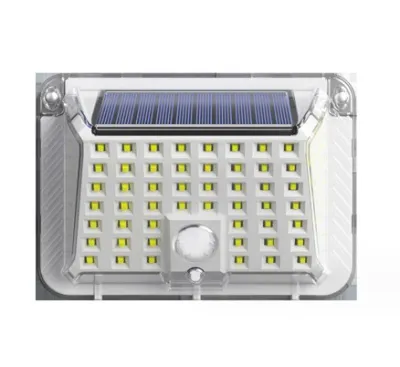
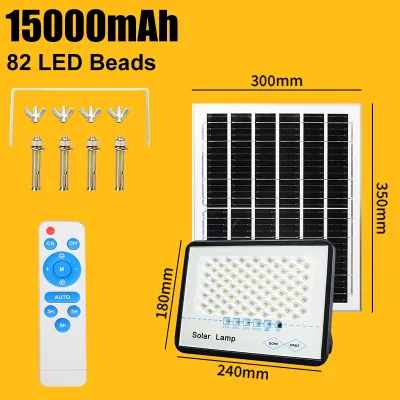
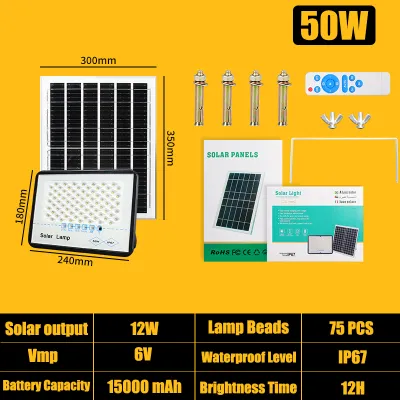
Prices are valid at publication and may change. Please refer to the product page for the latest price.
For small pathways, side gates, or narrow residential corridors, a light output of 300 to 500 lumens is generally sufficient to provide clear visibility. Larger areas, such as private driveways, backyards, or commercial security perimeters, typically require fixtures delivering 1,000 to 3,000 lumens. Keep in mind that as you mount a light higher, the illumination spreads over a larger area but decreases in intensity on the ground, meaning higher mounting heights demand a higher lumen rating to maintain effective coverage.
Motion sensor technology is equally critical for security and energy conservation. Passive Infrared (PIR) sensors are the most common, detecting changes in heat signatures within their field of view. They are highly effective at identifying human or vehicular movement while ignoring wind-blown foliage, though their detection range can decrease slightly when ambient tropical temperatures closely match human body temperature. Microwave sensors emit low-power radar waves and measure the reflection off moving objects; they offer superior range and sensitivity regardless of temperature, but they can sometimes penetrate thin walls or fences, leading to false triggers from adjacent properties.
Battery chemistry directly dictates how many years your flood light will operate before requiring maintenance. Standard Lithium-ion (Li-ion) batteries are common in budget-friendly fixtures, but they typically offer only 300 to 500 charge cycles and degrade faster when exposed to sustained heat. Lithium Iron Phosphate (LiFePO4) batteries are highly recommended for outdoor installations in Singapore. They offer exceptional thermal stability, reducing safety risks under direct sunlight, and routinely deliver 1,500 to 3,000 charge cycles, allowing the fixture to perform reliably for several years.
The solar panel type determines how efficiently the system converts sunlight into stored electrical energy. Monocrystalline silicon panels feature higher purity, achieving conversion efficiencies between 15% and 22%, which makes them ideal for maximizing power generation during limited daylight hours or overcast days. Polycrystalline panels are more cost-effective to manufacture but offer lower efficiency (typically 12% to 15%), meaning they require a physically larger panel surface to generate the same amount of power as a monocrystalline equivalent.
Weatherproofing Requirements for Singapore's Climate
Singapore’s intense weather patterns demand robust weatherproofing to prevent internal component corrosion and electrical short circuits. The Ingress Protection (IP) rating is the standard metric used to verify a fixture’s resistance to solids and liquids. For fully exposed outdoor installations, such as on perimeter walls or unshaded poles, an IP65 rating is the absolute minimum standard, indicating complete protection against dust and resistance to low-pressure water jets from any angle. For areas highly vulnerable to severe monsoon downpours, upgrading to an IP66 or IP67 rated fixture provides an extra layer of security against water ingress.
Semi-sheltered areas, such as under deep roof eaves or balcony ceilings, can sometimes utilize IP54 rated fixtures, which protect against splashing water. However, given the high ambient humidity and the potential for wind-driven rain, opting for a higher IP rating across all outdoor fixtures is a safer strategy for long-term durability. Always verify the IP rating on the manufacturer’s specification sheet rather than relying on generic marketing terms like “waterproof.”
Housing materials play a vital role in resisting physical degradation over time. Cheap plastics can quickly become brittle, yellow, and crack under intense ultraviolet (UV) radiation. Look for fixtures constructed from UV-stabilized polycarbonate or die-cast aluminum. Aluminum housings not only offer superior structural durability but also act as natural heat sinks, drawing damaging heat away from the LED chips and internal battery cells to prolong their operational lifespan.
For split-system solar lights, where the solar panel is mounted separately from the light fixture, the connecting cable is a frequent point of vulnerability. Ensure the cable insulation is rated for outdoor use and UV resistance. The connectors themselves should feature threaded locking mechanisms and rubber O-rings to prevent moisture from seeping into the electrical contacts, which can cause corrosion and interrupt the charging process.
Navigating Brand Tiers and Purchase Channels
Navigating the market requires distinguishing between established lighting manufacturers and generic, unbranded products often found on online marketplaces. Established manufacturers typically invest in rigorous quality control, utilize certified components, and provide accurate, verified technical specifications. In contrast, generic brands frequently advertise inflated lumen outputs and unrealistic battery capacities that do not reflect real-world performance. While generic options may feature a lower initial purchase price, they often require frequent replacement, making them less cost-effective over time.
Before purchasing, verify that the product complies with recognized international safety and quality standards, such as CE, RoHS, or FCC certifications. For products sold locally, check for compliance with relevant regional electrical safety guidelines. These certifications ensure the internal charging circuitry, battery management systems, and LED drivers have been tested to prevent overheating and electrical faults.
Warranty terms offer a clear indication of a manufacturer’s confidence in their product’s durability. Look for warranties that explicitly cover battery performance and water ingress for at least one to two years. Be cautious of products that only offer short-term return windows, as environmental degradation issues typically take several weeks or months of outdoor exposure to manifest.
When choosing where to buy, physical hardware stores and authorized local distributors allow you to inspect the build quality, weight, and material finishes firsthand. They also provide a straightforward point of contact for warranty claims or replacement parts. If you prefer purchasing from online marketplaces, prioritize official brand stores or highly rated local sellers with established track records. Carefully read customer reviews, paying close attention to feedback regarding how the light performs after six months to a year of continuous outdoor exposure.
Optimizing Installation and Sensor Placement
To maximize the efficiency of your solar LED flood light, proper installation and positioning are essential. Because Singapore is located very close to the equator, solar panels should ideally be installed with a slight tilt of 10 to 15 degrees, facing either north or south depending on localized structural obstructions. This tilt is not only optimal for capturing consistent year-round sunlight but also allows rainwater to run off freely, naturally washing away accumulated dust, pollen, and debris that would otherwise block light absorption.
Ensure the solar panel is positioned to receive at least four to six hours of unshaded, direct sunlight daily. Even partial shading from a nearby tree branch, gutter, or adjacent building can drastically reduce the panel’s energy output, as solar cells are typically wired in series, meaning a shadow on one section can bottleneck the power generation of the entire panel.
Mounting height and angle must be carefully calibrated to balance effective motion detection with useful light distribution. Mounting the fixture between 2.5 and 4 meters high generally provides an optimal balance for most residential and light commercial properties. Angle the light downward toward the target area to concentrate the illumination where it is needed most, while ensuring the beam does not spill over into neighboring properties or common corridors, which can cause visual discomfort and local disputes.
Fine-tuning the motion sensor settings prevents energy waste and unnecessary light pollution. Most quality motion-activated flood lights feature adjustable dials or digital settings for sensitivity, time delay, and ambient light thresholds. Adjust the sensitivity so the sensor triggers reliably for human movement but ignores small animals or swaying tree branches. Set the ambient light threshold so the fixture remains inactive during daylight hours, conserving the stored battery power exclusively for nighttime operation.
Finally, decide whether an integrated or split-system design best suits your installation site. Integrated, all-in-one fixtures combine the solar panel, battery, LEDs, and sensor into a single unit, offering a clean appearance and simple installation on unshaded walls or poles. Split-system designs, which connect the light fixture to a separate solar panel via a cable, provide greater flexibility. This allows you to position the light in a shaded area, such as under a carport or porch, while placing the solar panel on a roof or sunny wall to maximize solar exposure.
Routine Maintenance and Basic Troubleshooting
Regular maintenance is key to extending the lifespan of your solar lighting system and ensuring it operates at peak efficiency. Over time, atmospheric dust, soot, and bird droppings accumulate on the surface of the solar panel, creating a barrier that reduces charging efficiency. Establish a routine to clean the panel surface every three to six months using a soft, damp microfiber cloth and clean water. Avoid using abrasive scrubbing pads, steel wool, or harsh chemical detergents, as these can scratch the protective glass or degrade the anti-reflective coatings, permanently reducing light transmission.
If you notice a significant reduction in the light’s runtime or if it fails to stay illuminated through the night, the battery may be failing to hold a charge or reaching the end of its useful life. First, check that the solar panel is clean and completely free from new obstructions, such as overgrown foliage. If the charging path is clear, consult the manufacturer’s documentation to determine if the battery is user-replaceable. When replacing batteries, always use cells that match the original manufacturer’s specifications for voltage, capacity, and chemistry, and handle them carefully to avoid short circuits.
Inconsistent motion detection can often be resolved with simple troubleshooting steps. Clean the motion sensor lens with a dry, soft cloth to remove dirt, spiderwebs, or moisture buildup that can block infrared or microwave signals. If the light triggers too frequently or stays on continuously, re-evaluate the surrounding environment for moving heat sources, such as air conditioning exhaust vents, or adjust the sensor’s sensitivity dial downward.
While basic cleaning, battery replacement, and setting adjustments are safe and straightforward DIY tasks, certain scenarios require professional assistance. If your solar flood light is a hybrid system integrated with a mains-power backup, or if it is connected to a complex home automation network, always isolate the power supply before inspecting the unit. For any complex electrical wiring issues or installations requiring work at significant heights, consult a qualified, licensed electrician to ensure safety and compliance with local installation standards.
Frequently Asked Questions (FAQ)
Do solar flood lights work effectively during Singapore's monsoon seasons?
Yes, high-quality solar flood lights can operate effectively during monsoon seasons, provided they are equipped with efficient monocrystalline solar panels and adequately sized batteries. While prolonged cloud cover and heavy rain reduce the amount of direct sunlight available for charging, monocrystalline panels can still generate electricity from diffuse daylight. Many premium fixtures feature intelligent power-management systems that automatically dim the light output or shorten the active duration during consecutive cloudy days, conserving battery reserves to ensure the motion sensor and basic security lighting remain functional.
Can I replace the battery in a solar LED flood light myself?
Whether you can replace the battery yourself depends entirely on the design of the specific fixture. Many mid-to-high-end solar flood lights are designed with accessible battery compartments and plug-and-play wire connectors, making battery replacement a simple and safe DIY task. However, some budget-friendly or ultra-slim models feature completely sealed housings with batteries soldered directly to the internal circuit board. Attempting to replace sealed batteries can compromise the fixture’s waterproof integrity and void the warranty. Always consult the manufacturer’s instruction manual to verify if the battery is user-replaceable and to identify the exact replacement specifications required.

Community discussion
Share your experience or ask a question. Comments are reviewed before publication.