
A standing mirror is one of the most effective design tools for visually expanding a compact home, such as a cozy apartment or condominium in Singapore. By strategically reflecting light and creating a secondary visual plane, a well-placed mirror can make a narrow hallway or a tight living room feel twice its actual size. To achieve this effect without cluttering your floor plan, you must balance the mirror’s physical footprint, frame design, and placement relative to your room’s light sources.
How Standing Mirrors Visually Expand Compact Rooms
Standing mirrors work on simple optical principles that trick the brain into perceiving more depth than physically exists. When you place a large reflective surface in a room, it acts as a visual window, extending the sightlines beyond the wall. This illusion of depth is particularly powerful in compact layouts where solid walls can otherwise feel restrictive. By reflecting the floor and ceiling, a tall mirror blurs the boundaries of the room, making the physical limits of the space less apparent.
To maximize this effect, position the mirror where it can capture and bounce natural light. Placing a standing mirror opposite or adjacent to a window allows it to grab incoming daylight and disperse it deeper into the room, instantly brightening dark corners. If natural light is limited, positioning the mirror to reflect artificial light sources, such as a warm floor lamp or a pendant light, can achieve a similar brightening effect. This secondary light source reduces the need for heavy overhead lighting, creating a softer, more open ambiance.
Products mentioned in this guide

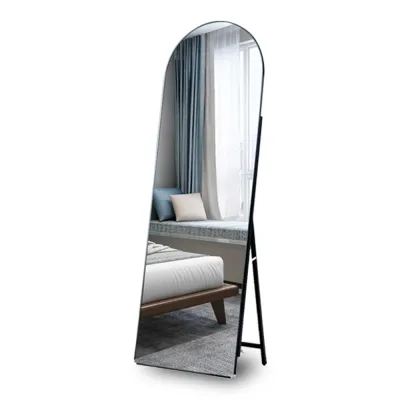
![[Delivered in 1 days]Standing mirror whole body floor mirror bedroom mirror wall hanging household solid wood makeup mirror](https://img.lazcdn.com/g/p/f6edcc5605a526ddbd63a88d307a342b.jpg_400x400q80.jpg_.webp)
![[Delivered in 1 days]Standing Mirror Full length Mirror Floor Mirror Home Bedroom Large Mirror Hanging Wall Hanging Fitting](https://img.lazcdn.com/g/p/e18709c82d74ad5234f1ada3475c9a3d.jpg_400x400q80.jpg_.webp)
![[Delivered in 1 days] Standing mirror floor mirror full-body mirror aluminum frame Nordic minimalist style](https://img.lazcdn.com/g/p/06086362a256d9e72b728c565266cfef.jpg_400x400q80.jpg_.webp)

![[SG Seller]Full Length Mirror Floor Stand Mirror Home Bedroom Wall Hanging Mirror](https://img.lazcdn.com/g/p/065152821a44a4114bdb5a528cb91350.jpg_400x400q80.jpg_.webp)
Prices are valid at publication and may change. Please refer to the product page for the latest price.
However, the key to successful mirror placement is being mindful of what the mirror reflects. A mirror reflecting a cluttered shelf, a busy workspace, or a utility area will double the visual noise, making the room feel more cramped rather than spacious. Aim to position the mirror so it reflects clean, open spaces, a minimalist wall, or outdoor greenery to maintain a serene and expansive atmosphere. If your window looks out onto a garden or a clear sky, placing the mirror to capture that view effectively brings the outdoors inside, further enhancing the feeling of openness.
Design Features That Maximize Space and Decor Appeal
The physical design of a standing mirror plays a significant role in how it integrates into a small room. Heavy, ornate frames can dominate a space and make it feel smaller by drawing too much attention to the mirror’s physical boundaries. For compact layouts, slim metal or minimalist wooden frames are highly suitable, as they provide a clean transition between the glass and the wall, minimizing visual weight. Frameless designs are also an excellent option, as they blend seamlessly into the background, making the mirror appear almost invisible.

The shape of the mirror also influences the perception of space. Arched standing mirrors are excellent for creating an illusion of height, as the curved top draws the eye upward, mimicking the architectural lines of tall windows or doorways. Rectangular mirrors, on the other hand, offer clean, structured lines that align well with modern interior themes and can be placed horizontally or vertically to emphasize width or height respectively. Round-topped or irregular organic shapes can soften the sharp angles of a small room, adding a touch of modern elegance without cluttering the visual field.
Another critical design choice is deciding between a leaning mirror and a freestanding model with a support bracket. Leaning designs sit flush against the wall, requiring very little floor depth, which makes them ideal for narrow corridors or tight bedroom corners. Freestanding mirrors with an integrated easel back or base offer excellent stability and flexibility since they do not rely on wall support, but they require more floor space behind the mirror. This is a key consideration if every square centimeter of floor area matters in your layout.
Sizing and Proportion Guidelines for Small Layouts
Selecting the right dimensions is crucial to ensure your standing mirror delivers the desired visual impact without physically obstructing your living space. A mirror that is too small will fail to create the illusion of an expanded room, while an oversized piece can overwhelm the layout and block essential walkways. You must carefully balance the height, width, and depth of the mirror against the scale of your existing furniture.
For a true full-body reflection, the mirror’s height should generally be at least half the height of the tallest user, though a taller mirror is always better for spatial expansion. When choosing a leaning mirror, remember that the leaning angle will slightly compress the vertical reflection. You will need to account for this angle to ensure you can see your entire figure from a comfortable viewing distance without having to step too far back. A mirror height of 150cm to 180cm is often a versatile range for most residential spaces.
Width is equally important, especially in narrow areas like entryways or hallways. Measure the available wall width and ensure there is a comfortable buffer on either side so the mirror does not look squeezed into place. Additionally, always measure the floor clearance. A leaning mirror requires its base to sit a certain distance away from the wall to remain stable—typically around 10% to 15% of its height—so you must verify that this footprint does not encroach on high-traffic pathways or block doors from opening fully.
Safety, Stability, and Placement Checks
Because standing mirrors are heavy and tall, ensuring their physical stability is paramount, particularly in homes with active pets, children, or high foot traffic. A falling mirror poses a safety hazard and can cause significant damage, so proper installation and securing methods must never be overlooked. Even if a mirror is designed to stand on its own, taking extra precautions is always a wise decision.
For freestanding mirrors that rely on a fold-out stand, evaluate the weight of the base and the overall center of gravity. A wider, heavier base provides better resistance against accidental bumps. If you choose a leaning mirror, it is highly recommended to use anti-tip hardware or wall-anchoring straps. These safety devices secure the top of the frame to the wall stud or solid masonry, preventing the mirror from sliding forward or tipping over while maintaining the elegant leaning aesthetic. If you are renting and cannot drill into walls, look for heavy-duty adhesive anchors designed specifically for this purpose, or opt for a highly stable freestanding model.
Floor surfaces also affect stability. Smooth, polished floors like marble, polished concrete, or smooth tiles can cause the base of a leaning mirror to slip outward over time. To mitigate this risk, place non-slip rubber pads, felt protectors, or silicone bumpers on the bottom contact points of the frame. Always check that the floor is perfectly level before positioning the mirror, as even a minor slope can compromise its balance and cause it to lean unevenly, putting unnecessary stress on one side of the frame.
Building Your Shortlist: What to Verify Before Purchase
When browsing online marketplaces or visiting local home decor showrooms in Singapore, having a clear verification checklist will help you avoid low-quality purchases and logistical headaches. Focus on the structural specifications of the mirror rather than relying solely on styled product photos, which can often misrepresent the actual scale and quality of the item.
First, verify the quality of the glass and backing. Look for mirrors with a thickness of at least 4mm to 5mm to prevent the distortion effect common in thin, cheap glass. Ensure the mirror features a shatter-resistant membrane or safety backing, which holds the glass fragments in place if the mirror ever breaks. Edge finishing is also important; polished or beveled edges prevent cuts and add a refined touch to frameless designs. Additionally, check if the frame material is moisture-resistant if you plan to place it near a kitchen or bathroom entryway.
Second, check the retailer’s packaging standards and delivery policies. Large glass items are highly susceptible to damage during transit. Confirm that the seller uses reinforced packaging, such as wooden crates or thick foam corner protectors, and offers a clear, hassle-free replacement policy for items damaged on arrival. Finally, do not forget to measure your home’s access points. Ensure the packaged dimensions of the mirror can easily fit through your building’s elevators, stairwells, and entry doors to avoid delivery complications, as many high-rise apartments have strict size limits for lift access.
Frequently Asked Questions (FAQ)
Can a standing mirror be placed in a humid area like a bathroom?
Yes, but you must select the frame and backing materials carefully. High humidity can cause wooden frames to warp or rot, and can lead to desilvering on the mirror backing if moisture penetrates the protective layers. For damp environments, choose mirrors with rust-resistant aluminum or stainless steel frames, and ensure the backing is fully sealed. Adequate bathroom ventilation is essential to allow moisture to dissipate quickly after use.
How do I clean a large standing mirror without leaving streaks?
To clean a large mirror surface effectively, avoid using harsh chemical cleaners or excessive water, which can seep behind the frame and damage the silver backing. Instead, use a clean, lint-free microfiber cloth lightly dampened with a mixture of equal parts distilled water and white vinegar, or a dedicated glass cleaner. Wipe the mirror in a consistent Z-shaped pattern from top to bottom, and use a second dry microfiber cloth immediately afterward to buff away any remaining moisture and prevent streaks.
Is it better to lean a standing mirror against the wall or use a freestanding base?
The choice depends on your available floor space and safety requirements. Leaning mirrors are highly space-efficient because they sit close to the wall, making them ideal for tight spaces, but they must be anchored to the wall for safety. Freestanding mirrors with an easel back are highly mobile and require no wall drilling, but their support legs occupy more floor depth, which can restrict movement in narrow rooms.

Community discussion
Share your experience or ask a question. Comments are reviewed before publication.