
The best scented candles to pair with a candle warmer set are defined by their physical and chemical properties rather than their brand name alone. While some manufacturers formulate their wax specifically for melting, any high-quality candle can perform exceptionally well if it features the right wax blend, jar dimensions, and fragrance concentration. Because candle warmers rely on external heat rather than combustion to release scent, choosing the right candle requires looking closely at how different materials respond to controlled warming.
By focusing on observable traits such as wax type, melting points, and container materials, you can easily identify which candles will deliver a powerful, clean scent throw in your home. This guide outlines the essential factors to evaluate when matching scented candles to your warmer, ensuring a safe, efficient, and highly aromatic experience.
Understanding How Candle Warmers Affect Scent Throw
To choose the right candle, it helps to understand how a candle warmer set interacts with wax. Traditional burning relies on a lit wick to melt the wax and draw it up to be consumed by a flame. This process chemically alters the fragrance oils through combustion, sometimes scorching delicate top notes. In contrast, a candle warmer uses gentle, flame-free heat to liquefy the wax, allowing the fragrance oils to evaporate cleanly into the air while leaving the physical wax volume intact.
Products mentioned in this guide
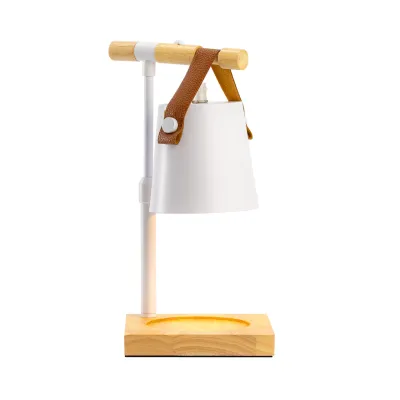
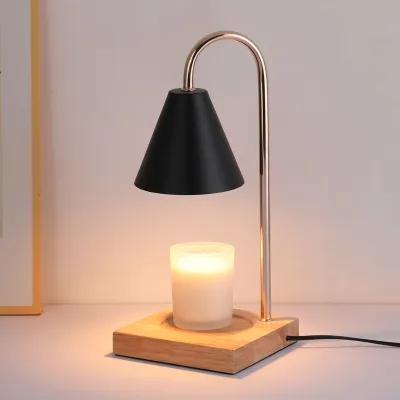
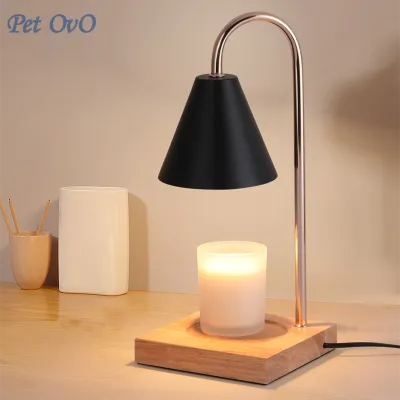
Prices are valid at publication and may change. Please refer to the product page for the latest price.
The heating method of your device plays a significant role in this process. Top-down warmers utilize a halogen bulb—typically a 25-watt to 50-watt GU10 bulb—to project heat downward onto the surface of the candle. This design quickly creates a shallow melt pool, resulting in a rapid and intense release of fragrance. Bottom-up warmers feature a heated base plate that warms the candle from the bottom. While this method takes longer to create a full melt pool, it heats the entire jar more uniformly, making it highly effective for smaller candles or wax melts.
Because the wax is melted rather than burned, the intensity and longevity of the scent throw depend entirely on the wax’s melting point and fragrance load. Waxes with lower melting points liquefy faster under moderate heat, releasing their scent profile with minimal energy. Conversely, harder waxes with higher melting points require sustained, higher temperatures to achieve a complete melt pool, which is necessary for the fragrance to disperse effectively throughout a room.
Key Traits to Look for in Candle Warmer-Friendly Brands
When evaluating candle brands for use with a candle warmer set, start by checking the manufacturer’s label for wax composition and safety guidelines. Many modern brands explicitly state whether their candles are suitable for warmer use. If this information is not present, you can determine compatibility by examining the type of wax used in the candle.

Soy wax and coconut wax blends are highly recommended for candle warmers due to their relatively low melting points, which typically range between 49°C and 54°C. These soft waxes liquefy quickly under the heat of a standard halogen bulb, producing a rapid hot throw. Paraffin wax, while having a slightly higher melting point of around 53°C to 65°C, is also highly compatible because of its excellent fragrance-holding capacity. Paraffin blends often deliver an exceptionally strong scent throw when melted, making them a popular choice for larger living spaces. Harder waxes, such as pure beeswax, have very high melting points and may struggle to melt completely in low-wattage warmers, resulting in a weak scent throw.
Fragrance oil concentration is another critical factor. Premium candle brands generally formulate their products with a fragrance load of 8% to 12%. Because a warmer does not consume the wax, a higher fragrance concentration ensures that the scent remains robust over multiple warming cycles. Look for brands that use high-quality essential oils or synthetic fragrance oils designed to withstand prolonged heat exposure without degrading or losing their complexity.
Matching Candle Dimensions and Jar Types to Your Warmer
Physical compatibility is essential to ensure both optimal performance and safety. Before purchasing a candle, measure its height and diameter against the physical clearance of your candle warmer set. Top-down warmers have a fixed distance between the heating bulb and the base plate. If a candle jar is too tall, it will sit too close to the bulb, which can overheat the wax, degrade the fragrance oils prematurely, or create a safety hazard. If the jar is too short, the heat may not reach the wax surface effectively, preventing a proper melt pool from forming.
The material of the candle container is equally important. Always choose candles housed in thick, heat-resistant glass jars. These containers are designed to withstand sustained thermal exposure without cracking. Avoid candles in delicate ceramic vessels, thin glassware, or decorative containers with uneven thickness, as uneven heating can cause thermal shock and lead to structural failure.
If you want to use a shorter candle in a tall top-down warmer, you can adjust the height safely by placing a stable, non-flammable riser under the jar. A thick ceramic coaster or a flat stone tile works well to bring the wax surface closer to the halogen bulb. This ensures even heat distribution and a complete melt pool without compromising safety.
Maximizing Fragrance and Ensuring Safe Operation
To get the most out of your candle warmer set, limit your warming sessions to two to four hours at a time. This duration is sufficient to create a full melt pool and fill your space with fragrance. Leaving the warmer on for extended periods can cause the fragrance oils to evaporate too quickly, leaving behind unscented wax. Always allow the wax to cool and solidify completely before turning the warmer back on.
Proper placement of your warmer enhances both safety and scent dispersion. Position the device on a flat, heat-resistant surface away from direct drafts, open windows, or air conditioning units. Drafts can cool the exterior of the glass jar, preventing the wax from melting evenly. Additionally, ensure the warmer is kept clear of flammable materials such as curtains, paper, or loose fabrics.
Because the wax does not evaporate during warming, the top layer will eventually lose its scent while remaining in the jar. When you notice the fragrance fading, turn off the warmer and let the wax cool slightly. Safely pour off the top liquid layer of unscented wax into a disposable container, or absorb it using cotton balls, and discard it in the trash. Never pour liquid wax down household drains, as it will solidify and cause severe blockages. Keep the candle’s wick trimmed flush to the wax surface to prevent it from floating or coming into contact with the glass jar.
Candles and Conditions to Avoid with Candle Warmers
While candle warmers are highly versatile, certain candles and conditions present safety risks or poor performance. Avoid using candles with exceptionally high melting points, such as those made from pure beeswax or hard pillar waxes, unless your warmer is specifically rated for high-temperature operation. Insufficient heat will only melt a small tunnel down the center of the candle, wasting the surrounding wax.
Never place candles housed in plastic containers or highly conductive metal tins on a warmer. Plastic can melt or release harmful fumes under sustained heat, while metal tins can become extremely hot to the touch, posing a burn hazard and potentially damaging the warmer’s base plate. Additionally, avoid candles that contain embedded decorative elements like dried flowers, paper labels inside the jar, or plastic glitter, as these materials can scorch or ignite when exposed to constant heat.
Monitor your candles closely during use. If the wax begins to discolor significantly, emits a burnt or chemical odor, or if you notice any hairline cracks forming in the glass jar, discontinue using that candle immediately. Always ensure your candle warmer set is rated for your local electrical voltage—such as 230V systems—and features appropriate safety certifications to guarantee reliable, hazard-free operation.
Frequently Asked Questions (FAQ)
Can I use any jar candle with a candle warmer set?
No, you should only use candles housed in thick, heat-resistant glass jars that fit comfortably within your warmer’s physical dimensions. Avoid thin glass, plastic, or highly conductive metal containers, and always check the manufacturer’s guidelines to ensure the vessel can safely withstand sustained external heat.
Do candle warmers make scented candles last longer?
Yes, candle warmers significantly extend the lifespan of scented candles because they melt the wax rather than burning it away. However, while the physical volume of the wax remains constant, the fragrance oils will eventually evaporate. To restore the scent throw, you must periodically remove the depleted top layer of wax.

Community discussion
Share your experience or ask a question. Comments are reviewed before publication.