
Selecting the appropriate hell money, also widely known as joss paper, for the Hungry Ghost Festival requires a thoughtful understanding of the distinct traditions tied to different spiritual recipients. During this seventh lunar month, the gates of the underworld open, allowing spirits to visit the living world. Preparing the correct offerings is a core practice of filial piety and communal respect, ensuring that ancestors are comfortable, deities are honored, and wandering spirits are appeased.
The right choice of paper offerings depends heavily on whether you are honoring heavenly deities, remembering deceased ancestors, or pacifying wandering spirits who have no living relatives to care for them. Additionally, family traditions and regional dialect customs play a significant role in determining the exact composition of your offering bundle. By understanding the various denominations, formats, and purposes of hell money, you can assemble a respectful, complete, and culturally accurate offering.
Matching Hell Money Types to Their Intended Recipients
To avoid cultural missteps, you must first identify the primary recipients of your offerings. The spiritual world is viewed as a structured hierarchy, and offering the wrong type of paper can be seen as disrespectful or ineffective. Deities, ancestors, and wandering spirits each require specific types of paper materials, colors, and foil types that correspond to their spiritual status.
Products mentioned in this guide
Prices are valid at publication and may change. Please refer to the product page for the latest price.
Deities occupy the highest spiritual tier and are offered gold joss paper. This paper represents heavenly wealth and is burned to show gratitude, seek protection, and honor high-ranking spirits. Offering silver paper or lower-denomination banknotes to deities is inappropriate, as these materials do not match their elevated status.
Ancestors represent the familial lineage and are offered silver joss paper, specialized rebirth papers, and modern hell banknotes. These offerings are intended to provide comfort, pay off spiritual debts, and ensure a stable, prosperous existence in the afterlife. Honoring ancestors is a private family affair, typically conducted at home or at columbaria.
Wandering spirits, often referred to as the good brothers, are spirits without descendants to care for them. They are offered smaller silver paper, basic banknotes, and simple paper clothing. These offerings are burned outside residential areas or business premises to appease the spirits, keep them satisfied, and prevent them from causing mischief or bringing bad luck to the household.
Family traditions and regional backgrounds heavily influence these choices. Hokkien, Teochew, Cantonese, and Hakka families each have unique customs regarding the specific types of paper they burn and the arrangement of their offering bundles. Consulting older family members or local religious goods shopkeepers can help you align your offerings with your specific family heritage.
Choosing Traditional Gold and Silver Joss Paper
Traditional joss paper remains the foundation of Hungry Ghost Festival offerings. These papers are typically made from bamboo or straw pulp and feature a small square of metallic foil applied to the center. The distinction between gold and silver foil is strict and must be maintained throughout your rituals.

Gold joss paper is reserved exclusively for deities. The gold foil represents celestial currency and is often stamped with red ink depicting auspicious symbols, longevity characters, or images of the Three Stars of Fortune. When preparing offerings for deities, ensure that the gold paper is placed at the top of the pile or burned first to maintain proper spiritual order.
Silver joss paper is used for ancestors and wandering spirits. The silver foil represents earthly or underworld currency. It is available in various sizes, with larger sheets typically reserved for ancestors and smaller sheets used for wandering spirits during roadside offerings.
When purchasing traditional joss paper, it is important to check the quality of the materials. High-quality paper is made from natural bamboo fibers, which burn completely to leave light, grey ash that is easily contained. The metallic foil should be firmly adhered to the center of the paper; loose or flaking foil often indicates lower-quality manufacturing, which can lead to incomplete burning and excessive smoke.
Paper thickness also matters. Thinner, high-quality sheets burn more efficiently and produce less soot, making them safer and more environmentally friendly. Avoid papers that feel overly stiff or plastic-like, as these materials do not burn well and can release unpleasant, toxic fumes into the air.
When to Use Modern Hell Banknotes and High Denominations
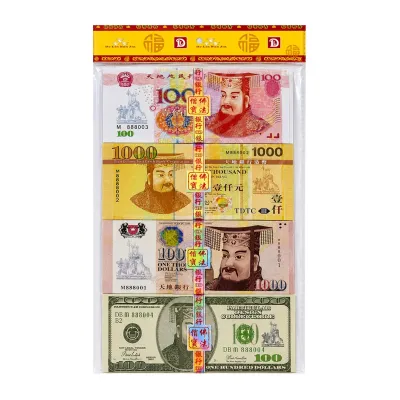
Modern hell banknotes have become increasingly popular as a supplement to traditional joss paper. These notes are designed to resemble real-world currency, featuring elaborate borders, serial numbers, and portraits of the Jade Emperor or other mythological figures. They often feature exceptionally high denominations, ranging from millions to billions of dollars.
These high-denomination banknotes are intended primarily for ancestors and wandering spirits. They represent a way to provide substantial wealth to the deceased, allowing them to purchase comforts and navigate the spiritual economy of the underworld. They are not used for deities, who do not require earthly style currency.
While modern hell banknotes are visually striking and convenient, they should not completely replace traditional gold and silver paper. Traditional joss paper is considered the essential base currency, while modern banknotes act as high-value supplementary funds. A culturally complete offering bundle should always maintain a balance, using traditional silver paper as the foundation and adding modern banknotes to enhance the offering.
When selecting modern banknotes, look for clear printing and paper that is easy to fold and burn. Some modern notes are printed on glossy or treated paper, which can be difficult to ignite and may produce heavy black smoke. Opt for matte, lightweight paper options that burn cleanly and completely.
Selecting Specialized Papers for Rebirth and Spiritual Merit
In addition to standard currency, specialized joss papers are used to address specific spiritual needs, such as facilitating a good rebirth or clearing spiritual debts. These papers carry deep religious significance and are often printed with sacred texts, mantras, or symbolic diagrams.
Rebirth paper is a common specialized paper used during the Hungry Ghost Festival. Typically square and yellow or red, it is printed with circular Buddhist mantras, specifically the Rebirth Mantra. Burning rebirth paper is believed to help the souls of ancestors and wandering spirits transition smoothly through the underworld, alleviate their suffering, and assist them in achieving a favorable rebirth in the next life.
Sutra papers are another important category. These sheets are printed with sacred scriptures, such as the Great Compassion Mantra or the Heart Sutra. Burning these papers generates spiritual merit and blessings for the deceased, helping to cleanse their past karma and bring them peace.
Including these specialized papers in your offering bundle is highly recommended, especially when honoring ancestors or performing roadside offerings for wandering spirits. They add a layer of spiritual care that goes beyond material wealth, focusing instead on the spiritual progression and well-being of the souls.
Preparing Folded Ingots and Supplementary Paper Crafts
Preparing your offerings often involves folding traditional joss paper into specific shapes, most notably gold and silver ingots. This practice transforms flat sheets of paper into three-dimensional representations of ancient currency, significantly increasing their symbolic value.
Folding paper into ingots is a traditional way to show sincerity and devotion. The time and effort spent folding each piece by hand are believed to infuse the offerings with your personal intentions and filial piety. Many families gather before the festival to fold ingots together, making it a communal activity that passes cultural traditions down to younger generations.
If you have a busy schedule, pre-folded paper ingots are widely available for purchase. While buying pre-folded items saves time, combining them with a few hand-folded pieces is a common compromise that balances convenience with personal sincerity.
Beyond currency, supplementary paper crafts are burned to provide for the daily needs of the spirits. These items include paper clothing, shoes, chests, and modern replicas of luxury goods such as smartphones, cars, and houses. When selecting these items for ancestors, consider what they enjoyed during their lifetime to make the offering more personal and meaningful.
For wandering spirits, basic paper clothing and simple daily necessities are sufficient. These items help clothe and comfort the spirits, ensuring they are well-provided for during their brief visit to the living world.
Assembling and Budgeting for Your Offering Bundles
Sourcing and assembling your offering bundles ahead of the Hungry Ghost Festival ensures a smooth and respectful ritual. You can find hell money and related supplies at local religious goods shops, traditional wet markets, or online marketplaces.
Local religious goods shops are highly recommended, especially for those who are new to the practice. The shopkeepers possess deep knowledge of local customs and dialect-specific traditions, and they can guide you in selecting the correct items and quantities based on your specific needs.
To estimate the required quantity of hell money, consider the scale of your ritual and the number of ancestors you are honoring. A basic family offering typically requires a few bundles of silver paper, a selection of modern banknotes, rebirth papers, and incense. Roadside offerings for wandering spirits can be smaller but should still include a respectful variety of papers.
For convenience, many shops offer pre-assembled Hungry Ghost Festival bundles. These packages are categorized by recipient, such as ancestor bundles or wandering spirit bundles, and contain all the necessary papers, incense, and candles in the correct proportions. Purchasing these pre-assembled kits saves time and ensures that you do not accidentally omit any essential components of the offering.
Following Safe and Compliant Burning Practices in Singapore
Because burning joss paper involves open flames and high heat, it is crucial to follow local municipal regulations and safety guidelines. Practicing safe and responsible burning respects both the spiritual traditions and the living community.
In HDB estates, you must use the designated red or silver burning bins provided by the local town councils. These bins are strategically placed throughout the estates to contain the fire and ash. Never burn joss paper directly on the grass, pavements, common corridors, or under void decks, as this damages public property, creates a severe fire hazard, and causes air pollution.
If you reside in a private estate or condominium, check the specific management by-laws regarding open burning. Many condominiums designate specific areas and provide specialized, eco-friendly burners for residents to use during the festival. Always adhere to these designated zones to maintain safety and harmony within the community.
Fire safety protocols must be strictly observed during the burning process. Never leave a burning bin unattended, and keep a bucket of water nearby to manage any unexpected flare-ups. Avoid burning joss paper during windy conditions, as strong gusts can carry hot embers onto nearby dry grass or residential balconies, posing a significant fire risk.
Ensure that the fire is completely extinguished before you leave the area. Once the burning is complete, cover the bin properly to prevent ash from blowing away. Additionally, if you have placed food offerings on the ground, remember to clean them up after the ritual to prevent attracting pests and maintain the cleanliness of the neighborhood.
Frequently Asked Questions (FAQ)
Can I use the same hell money for deities, ancestors, and wandering spirits?
No, you should not use the same type of hell money for all recipients. Traditional rules strictly separate the use of gold and silver paper. Gold joss paper is reserved exclusively for deities to honor their high spiritual status. Silver joss paper and modern banknotes are used for ancestors and wandering spirits. Mixing these up or offering gold paper to wandering spirits is considered culturally inappropriate.
Is it necessary to fold the joss paper into ingots before burning?
While folding joss paper into ingots is not strictly mandatory, it is highly recommended. Folding the paper into three-dimensional shapes represents a transformation of flat paper into solid wealth, which is believed to be more valuable to the spirits. If you are short on time, you can purchase pre-folded ingots or burn the sheets flat, but folding at least a portion of the paper by hand is a meaningful way to show sincerity.
What should I do with leftover hell money after the festival?
Leftover hell money can be kept for future rituals, such as the Qingming Festival or the following year’s Hungry Ghost Festival. Store the unused paper in a clean, dry, and elevated place, away from moisture and direct sunlight, to prevent the paper from dampening or the foil from degrading. Avoid storing religious items on the floor or in cluttered spaces to maintain respect for the materials.

Community discussion
Share your experience or ask a question. Comments are reviewed before publication.