
Selecting the right Philips LED downlights for your Singapore home is not about finding a single, universally perfect model. Instead, a successful lighting setup depends on matching the specific function of each room, the physical constraints of your ceiling infrastructure, and local electrical standards. Whether you are renovating a newly collected Housing & Development Board (HDB) flat or upgrading an existing condominium unit, the choice of recessed lighting directly impacts both daily comfort and electrical safety.
This guide provides a structured approach to navigating the technical specifications, room-by-room requirements, and installation safety boundaries of Philips LED downlights. By understanding how to verify compatibility and plan your layout, you can create a balanced, energy-efficient lighting scheme tailored to your household’s lifestyle.
Key Specifications to Check Before Buying Philips Downlights
Before purchasing any recessed light fixtures, you must verify their physical compatibility with your ceiling. In Singapore, false ceilings are commonly installed in living rooms and bedrooms to conceal wiring and create a flush look, whereas original concrete slabs are standard in other areas. If you have a false ceiling, you must measure the available ceiling depth—the vertical space between the plasterboard and the concrete soffit—to ensure the downlight housing and its driver can fit comfortably without touching structural elements or trapped wiring.
Products mentioned in this guide
![[Local Set] [3 Year Warranty] Philips Meson LED Downlight Ceiling Light 9W/13W Round/Square [Bundle Deal Available]](https://img.lazcdn.com/g/p/d8d02051d9b113c0010c4b1a40161081.png_400x400q80.png_.webp)
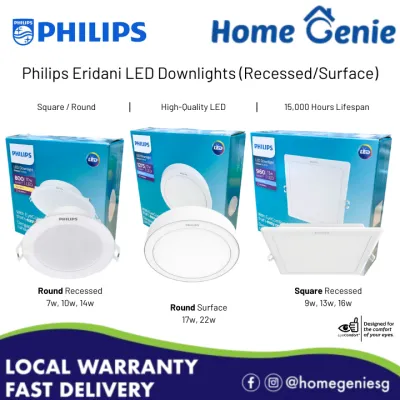
![[Climate Voucher] PHILIPS 3 Color Meson LED Downlight 5.5W 9W 13W 17W Tri Tone Scene Switch for False Ceiling Local Warranty](https://img.lazcdn.com/g/p/4f25f6fa6bf4fcf754b08b97b4102da3.jpg_400x400q80.jpg_.webp)
Prices are valid at publication and may change. Please refer to the product page for the latest price.
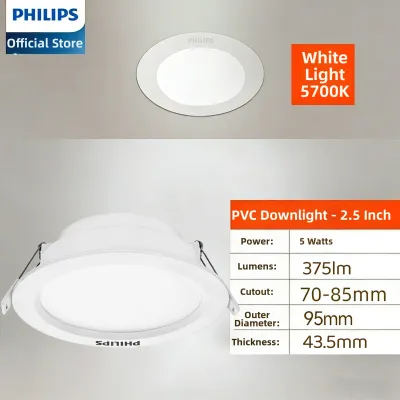
The cut-out size is another critical physical dimension that requires precise measurement. This refers to the diameter of the hole cut into the false ceiling panel, which must match the specified cut-out diameter of the Philips downlight model. Standard cut-out sizes typically range from 70 millimetres to 150 millimetres. Choosing a downlight with a matching cut-out size prevents the need for messy plasterboard modifications or the purchase of adapter rings.
Electrical compatibility is equally vital to ensure safe operation and longevity of your lighting system. In Singapore, the standard domestic supply voltage is 230V at a frequency of 50Hz. You must verify that the integrated driver of the Philips downlight is rated for this input voltage. Additionally, if you plan to use dimmer switches, you must confirm that both the downlight model and the specific dimmer switch are explicitly rated as compatible; using non-dimmable LED downlights on a dimming circuit can cause flickering, buzzing, or premature driver failure.
Finally, always look for local safety compliance marks on the product packaging. In Singapore, controlled electrical appliances must carry the Safety Mark issued by the Enterprise Singapore Consumer Product Safety Office. This certification indicates that the downlight and its external driver have undergone testing to meet local safety standards, reducing the risk of electrical fires or short circuits in your home.
Lighting Requirements by Room Type
Every room in a home serves a distinct purpose, requiring a tailored approach to lighting design. A successful layout balances three layers of light: ambient lighting for general illumination, task lighting for focused activities, and accent lighting to highlight specific features. Achieving this balance involves selecting the appropriate color temperature, brightness levels, and beam angles for each zone.

Color rendering is another critical factor to consider when selecting downlights. The Color Rendering Index (CRI) measures how accurately a light source reveals the true colors of objects compared to natural daylight. For areas where color accuracy is important, such as kitchens or vanity areas, choosing downlights with a higher CRI ensures that food, clothing, and makeup appear natural and undistorted.
Over-illumination can make a compact space feel sterile and uncomfortable, while under-illumination leads to eye strain. By calculating the required lumen output based on the floor area and the room’s primary function, you can select downlights with the appropriate wattage and light output. This careful calibration ensures that each room is adequately lit without wasting energy or creating excessive glare.
Living Room and Bedroom: Comfort and Layering
The living room and bedroom are multi-functional spaces where relaxation and visual comfort are the primary priorities. To create a warm and inviting atmosphere, homeowners often prefer warmer color temperatures, such as warm white (typically around 2700K to 3000K). These tones mimic the soft glow of traditional incandescent bulbs, helping the body wind down in the evening.
Visual comfort in these relaxation zones also depends heavily on glare control. When selecting Philips downlights, look for models designed with recessed light sources or anti-glare optics. These designs direct the light downward while keeping the bright LED emitter shielded from direct line of sight, reducing eye fatigue when you are reclining on a sofa or lying in bed.
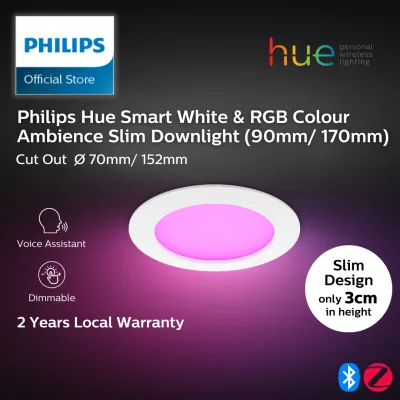
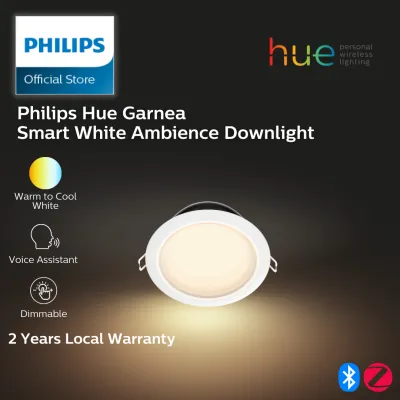
For spaces that serve multiple purposes—such as a living room that doubles as a home office—dimmable or smart Philips downlights offer excellent flexibility. Dimmable fixtures allow you to lower the light levels for movie nights or raise them for reading. Smart downlights, which can be controlled via mobile applications or voice assistants, enable you to adjust both brightness and color temperature dynamically throughout the day.
If you want to highlight artwork, shelving, or architectural features in your living room, adjustable gimbal downlights are an excellent choice. Unlike fixed downlights that cast light straight down, gimbal models allow you to tilt the light engine. This flexibility lets you direct a focused beam of light toward a wall or decorative object, adding depth and visual interest to the room’s design.
Kitchen and Bathroom: Task Visibility and Moisture Protection
Kitchens and bathrooms demand a different approach to lighting due to the presence of moisture, steam, and task-oriented activities. In these spaces, safety and high visibility are paramount. You must select downlights with appropriate Ingress Protection (IP) ratings to ensure they can withstand the environmental conditions of these wet zones.
The IP rating consists of two digits: the first indicates protection against solid particles, and the second indicates protection against liquids. For bathroom zones directly above a shower or bathtub, downlights should have a minimum rating of IP44 to protect against splashing water. In kitchen splash areas or high-steam zones, a higher IP rating prevents moisture from penetrating the fixture housing and causing electrical faults.
Task visibility in the kitchen is essential for safe food preparation, chopping, and cleaning. For these areas, cooler color temperatures, such as cool white (around 4000K), are generally preferred as they provide crisp, clear illumination that enhances focus. Combining these cooler tones with a higher lumen output ensures that countertops and cooking surfaces are brightly lit without casting dark shadows.
Additionally, you must check the enclosure and insulation ratings of the downlights if they are installed in confined ceiling cavities. In some modern condominium designs, ceiling spaces may contain thermal or acoustic insulation. Ensuring that your chosen Philips downlights are rated for safe operation near these materials prevents heat buildup, protecting both the ceiling structure and the lifespan of the LED driver.
Matching Philips Downlight Features to Your Space
When planning your home’s lighting layout, you must choose between standard integrated LED downlights, smart lighting ecosystems, and adjustable fixtures. Standard fixed downlights are highly reliable and cost-effective for general ambient lighting across large areas. They offer a clean, minimalist look that blends seamlessly into the ceiling plane, making them a staple for corridors and open-plan living areas.
For homeowners seeking advanced automation and convenience, smart lighting ecosystems provide extensive control. These systems allow you to group downlights by room, set automated schedules, and integrate your lighting with other smart home devices. When choosing smart downlights, verify whether they connect directly via wireless protocols like Bluetooth or Wi-Fi, or if they require a dedicated bridge or hub to access full automation features.
Beam angle is another critical specification that determines how light is distributed across your floor plan. A wide beam angle (typically 100 degrees or more) disperses light over a broad area, making it ideal for general ambient lighting in living rooms and hallways. A narrow beam angle (around 24 to 36 degrees) concentrates the light into a focused spot, which is perfect for task lighting over kitchen islands or accent lighting on decorative features.
You must also evaluate the long-term maintenance trade-offs between integrated LED modules and replaceable bulb fixtures. Integrated LED downlights feature built-in light sources and drivers designed to work together efficiently, often resulting in a slimmer profile and longer operational lifespan. However, if an integrated fixture eventually fails, the entire unit must be replaced. In contrast, fixtures with replaceable LED bulbs allow you to swap out the bulb easily, though they may have a bulkier design and fewer advanced optical features.
Installation and Safety Boundaries
Installing or replacing recessed downlights involves working with fixed electrical wiring, which carries inherent safety risks. Before undertaking any maintenance or replacement work, you must isolate the power supply at the main consumer unit or circuit breaker. Never rely solely on the wall switch to turn off the power, as the wiring behind the switch may still be live. Use a reliable voltage tester to verify that the wires are completely dead before touching any connections.
While replacing a simple plug-and-play LED downlight driver or swapping a compatible bulb can often be done safely by a homeowner, more complex tasks require professional intervention. In Singapore, any modification to fixed electrical wiring, installation of new circuits, or cutting of new holes in false ceilings should be performed by a Licensed Electrical Worker (LEW). A qualified professional ensures that the wiring complies with local electrical standards and that the structural integrity of the ceiling is maintained.
If your home features ceiling insulation, you must pay close attention to the Insulation Contact (IC) rating of the downlights. Non-IC rated downlights require a minimum clearance space around the fixture to allow heat to dissipate safely. Covering a non-IC rated fixture with insulation can cause extreme heat buildup, leading to premature component failure or posing a fire hazard. Always check the manufacturer’s instructions to confirm the required clearance distances or select IC-rated fixtures designed for direct contact with insulation.
Frequently Asked Questions (FAQ)
Can I replace my existing halogen downlights with Philips LED models directly?
Directly replacing older halogen downlights with integrated Philips LED models usually requires modifying the existing electrical setup. Halogen systems often operate on low voltage (typically 12V) and rely on magnetic or electronic transformers to step down the mains voltage. Integrated LED downlights, however, generally operate on mains voltage (230V) and utilize their own dedicated LED drivers.
To upgrade to integrated LED downlights, you must have a qualified professional remove or bypass the old halogen transformers. Connecting an LED driver directly to an old halogen transformer can cause severe flickering, operational failure, or permanent damage to the new LED fixture. Additionally, ensure that the existing ceiling cut-out size matches the dimensions of the new LED downlight unit.
Do Philips smart downlights require a separate hub to work in a Singapore home?
Whether a Philips smart downlight requires a separate hub depends on the specific wireless technology used by the model. Many modern smart downlights feature dual-protocol connectivity, allowing them to connect directly to your smartphone or tablet via Bluetooth for basic control, such as dimming and color adjustments within a single room.
However, to access advanced features—such as out-of-home control, voice assistant integration, and complex automation schedules—you will typically need a dedicated smart bridge or hub. This hub connects to your home router via an Ethernet cable and communicates with the downlights using a stable wireless protocol. When setting up a hub-connected system, ensure your home Wi-Fi network operates on a compatible frequency and provides adequate coverage to all areas where smart downlights are installed.

Community discussion
Share your experience or ask a question. Comments are reviewed before publication.