
Choosing the right wall mirror size for a small bedroom requires balancing functional utility with spatial design. In a compact room, a mirror does double duty: it serves your daily grooming needs while acting as a visual amplifier that bounces light to make the space feel larger. To achieve this without overwhelming your layout, the ideal wall mirror should generally measure between 50% and 75% of the width of any furniture it sits above, or extend vertically to at least 120 centimeters if you opt for a full-length design. Selecting the correct dimensions requires analyzing your wall dimensions, furniture proportions, and the physical constraints of your room.
By taking a systematic approach to measuring, positioning, and mounting, you can transform a cramped sleeping area into an airy, light-filled sanctuary. The key is to treat the mirror not just as an accessory, but as an architectural element that interacts with the room’s existing boundaries and light sources.
Assessing Your Available Wall Space and Clearances
Before browsing mirror styles, you must establish the physical boundaries of your target wall. Start by measuring the exact width and height of the clear wall space where you plan to hang the mirror. Do not rely on visual estimates; even a discrepancy of a few centimeters can make a mirror look cramped or prevent it from hanging flat against the wall.
Products mentioned in this guide

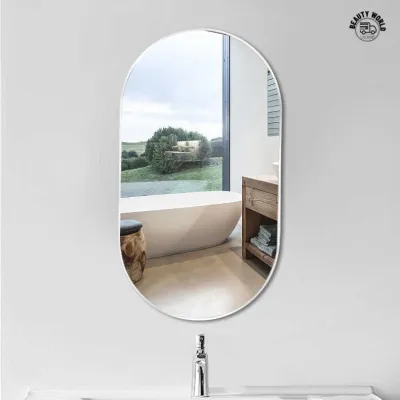
![[SG Seller] READY STOCK Nordic simple full-body mirror wall mirror high-definition explosion-proof mirror](https://img.lazcdn.com/g/p/766233425aef5573fd81153079ececdf.jpg_400x400q80.jpg_.webp)
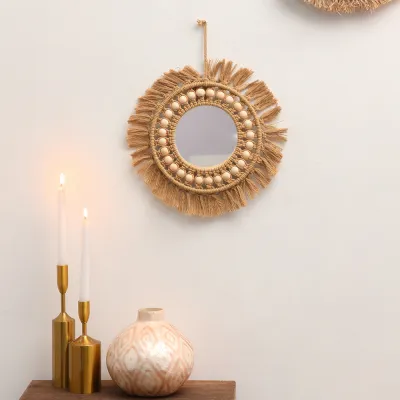
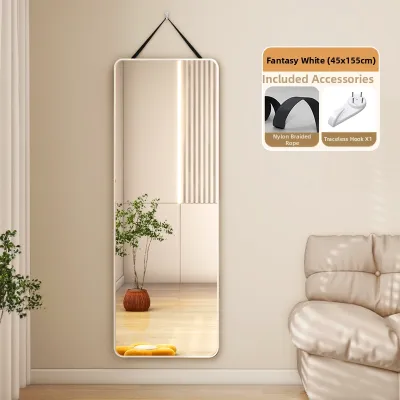
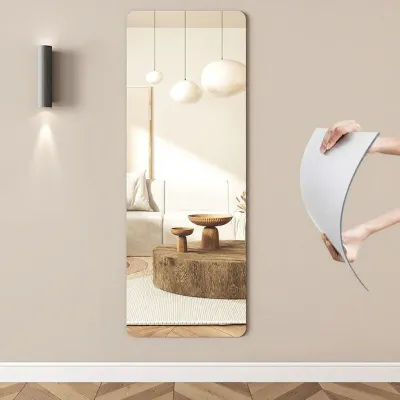
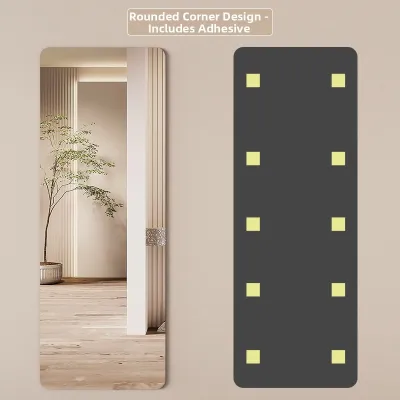

Prices are valid at publication and may change. Please refer to the product page for the latest price.
In compact bedroom layouts, wall space is rarely a blank canvas. Map out all fixed obstructions, including light switches, power outlets, air conditioning units, and wall-mounted fans. If you are considering a backlit or LED-integrated mirror, note the distance to the nearest electrical outlet or junction box to plan for safe wire routing.
Physical clearances are equally critical for safety and comfort. Calculate the swing paths of bedroom doors, wardrobe doors, and cabinet drawers to ensure they will not strike the mirror when opened. Additionally, leave a visual buffer of at least 10 to 15 centimeters between the edge of the mirror and adjacent walls or window frames to prevent the corner from feeling cluttered.
Matching Mirror Proportions to Your Room and Furniture
When hanging a mirror above a piece of furniture, such as a dresser, vanity, or bedside table, proportion is everything. A mirror that is wider than the furniture below it creates a top-heavy, unstable look. To maintain visual balance, select a mirror that is slightly narrower than the furniture, ideally keeping to the two-thirds or three-quarters rule.

Your choice between a full-length and half-length format should depend on your ceiling height and available vertical wall space. Full-length mirrors are excellent for maximizing vertical lines, making low ceilings feel higher. Half-length or landscape-oriented mirrors work better when you want to emphasize the width of a room or when wall space is limited by low-profile furniture.
Scale mistakes can dramatically alter the perception of a small room. An oversized mirror with a heavy, ornate frame can swallow up a compact bedroom, making the walls feel like they are closing in. Conversely, an undersized mirror looks disconnected and floating, failing to provide either functional reflection or spatial expansion.
Optimizing Placement and Orientation for Spatial Illusion
To make a small bedroom feel more expansive, position your mirror to capture and bounce light. Placing a mirror adjacent to or directly opposite a window allows it to catch natural daylight and disperse it throughout the room. If natural light is limited, position the mirror to reflect primary artificial light sources, such as a pendant light or wall sconces.
Orientation plays a major role in shaping the room’s visual dimensions. Hanging a rectangular mirror horizontally stretches the wall visually, which is highly effective for widening narrow bedrooms. Hanging the same mirror vertically draws the eye upward, creating an illusion of height that benefits rooms with low ceilings.
Mindful placement also involves choosing what the mirror reflects. Avoid positioning a mirror where it directly reflects cluttered areas, open wardrobes, or utility zones, as this duplicates visual noise. For psychological comfort and better sleep hygiene, avoid placing the mirror directly opposite the bed, where sudden reflections in the dark can disrupt your rest.
Evaluating Frame Depth, Weight, and Wall Compatibility
In tight quarters, the profile of the mirror frame is just as important as its face dimensions. Frameless mirrors or those with ultra-slim metal frames are ideal for small bedrooms because they minimize visual bulk and sit nearly flush against the wall. Thick, deep frames protrude into walking paths and can make narrow walkways feel even tighter.
Wall compatibility is a critical safety factor that dictates how large or heavy your mirror can be. Compact apartments often feature a mix of solid concrete structural walls and lightweight drywall partitions. Heavy mirrors require robust mounting hardware; concrete walls require masonry plugs, while drywall partitions require finding studs or using heavy-duty toggle bolts.
For added safety in high-traffic areas or tight spaces where accidental bumps are possible, verify that the mirror features a safety backing or shatter-resistant film. If you choose an illuminated or smart mirror, ensure it matches local electrical standards (such as 220-240V compatibility) and carries recognized safety certifications. For any fixed wiring, damp-area installations, or mounting at significant heights, always isolate the power supply and engage a qualified professional to handle the installation.
Common Sizing and Placement Mistakes to Avoid
One of the most frequent errors in small bedroom design is ignoring the scale of existing furniture. Placing a massive, heavy-framed mirror above a delicate, slender bedside table creates an awkward visual mismatch that disrupts the harmony of the room.
Another common oversight is failing to account for the total depth of the mirror, including its mounting brackets. In narrow pathways—such as the clearance between the foot of the bed and the wall—a protruding frame can easily catch on clothing or shoulders, posing a constant physical hazard.
Finally, avoid mounting the mirror too high or too low. A mirror hung too high forces users to tilt their heads and reflects the ceiling rather than the room, while one hung too low cuts off functional sightlines. Always test the mounting height with a helper holding the mirror in place before drilling any holes into your wall.
Frequently Asked Questions (FAQ)
What is the standard hanging height for a bedroom wall mirror?
For standard wall mirrors, the general rule is to position the center of the glass at average eye level, which is approximately 150 centimeters from the floor. This height ensures that most users can view themselves comfortably without straining or bending.
When hanging a mirror above a dresser or console table, maintain a visual gap of 15 to 20 centimeters between the bottom of the mirror frame and the top of the furniture. This gap prevents the two pieces from looking crowded while keeping them visually connected as a single design unit.
For full-length mirrors, the bottom edge should sit approximately 20 to 30 centimeters off the floor. This positioning allows you to view your entire figure, from head to toe, from a reasonable standing distance without needing to step backward into walls or furniture.

Community discussion
Share your experience or ask a question. Comments are reviewed before publication.