
To compare cordless table lamps for study and desk use in Singapore, you must evaluate three primary pillars: battery performance, light quality, and physical stability. While cordless designs offer unmatched portability for compact Singaporean study corners or dining table workspaces, they introduce limitations in runtime and maximum brightness compared to traditional corded models. A successful comparison requires looking past marketing buzzwords and verifying technical specifications like milliampere-hours (mAh), lumen output, and color rendering indexes. This guide provides a structured framework to evaluate these features, helping you choose a lamp that supports long study sessions without causing eye strain or requiring constant recharging.
Core Comparison Dimensions for Study Lamps
When transitioning from a traditional corded desk lamp to a cordless alternative, the criteria for evaluation change significantly. You are no longer just comparing aesthetic design and bulb wattage; you are now managing a self-powered appliance. The primary metrics that dictate a lamp’s utility on a study desk are its battery capacity relative to its power consumption, its optical performance, and its physical balance.
Battery capacity directly influences how long the lamp can maintain its peak brightness before the light begins to dim. Many portable lamps can run for dozens of hours on their lowest, dimmest setting, but this low-intensity light is often insufficient for active reading or writing. Therefore, you must compare the runtime specifically at the maximum brightness level required for study tasks.
Products mentioned in this guide
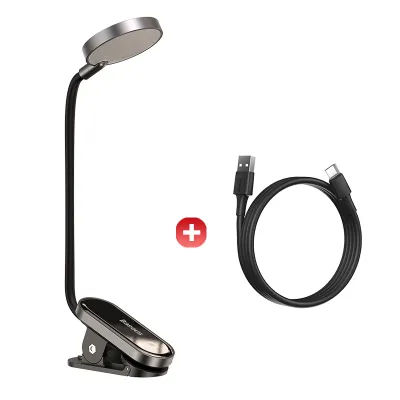
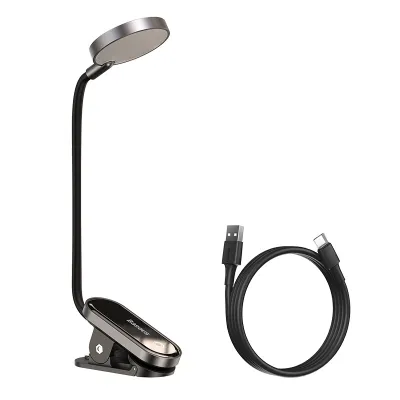
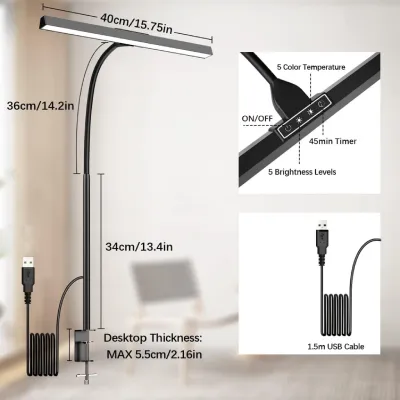
![[SG Local Stock] 2000mAh LED Table Lamp Study Foldable Desk Light Bedroom Bedside Touch Control Dimmable USB Rechargeable 台灯 CNY Gift Present](https://img.lazcdn.com/g/p/254b9aa79170e7ac80d5ab37505c1212.jpg_400x400q80.jpg_.webp)
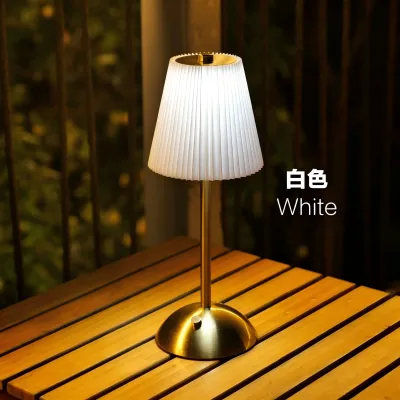
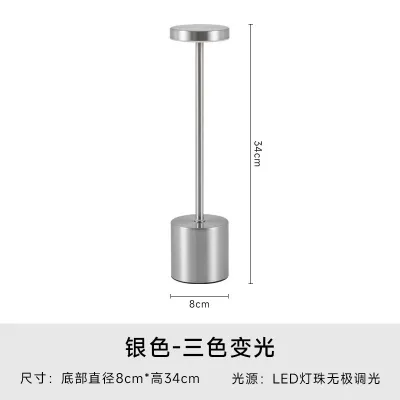
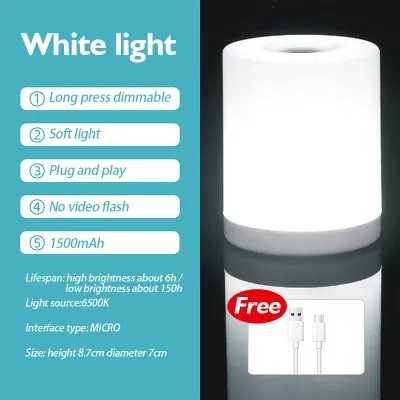
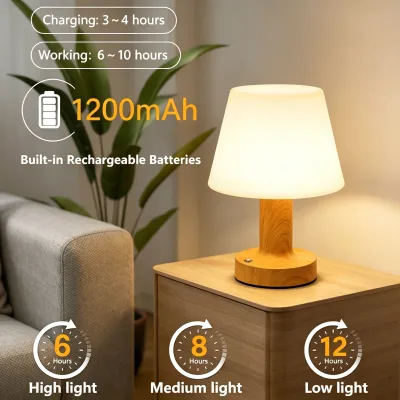
Prices are valid at publication and may change. Please refer to the product page for the latest price.
Brightness levels and adjustability are critical for maintaining eye comfort across different times of day. A study lamp needs to deliver focused, glare-free illumination directly onto your workspace. The ability to adjust both the brightness and the color temperature allows you to transition the lamp from a stimulating cool-white light for daytime focus to a relaxing warm-white light for late-night revision.
Finally, build materials and base weight determine how well the lamp functions in a dynamic desk environment. Because cordless lamps are designed to be moved, they are highly susceptible to tipping if they lack a weighted base. A sturdy base ensures that adjusting the lamp’s angle does not cause the entire unit to topple over onto your books or laptop.
Evaluating Battery Life and Charging Convenience
To ensure a cordless table lamp can sustain your study sessions, you must look closely at its power specifications. Manufacturers often highlight impressive runtime figures, such as “up to 40 hours of light,” but these claims almost always refer to the lowest ambient setting. For study purposes, you need to verify the battery capacity, which is typically measured in milliampere-hours (mAh) or watt-hours (Wh).

A higher mAh rating generally indicates a larger energy reservoir, but actual runtime depends on the lamp’s power consumption at your desired brightness. When comparing models, look for the technical specification sheet on the packaging or the manufacturer’s official website. A lamp with a 2000 mAh battery might provide only three to four hours of light at its maximum brightness, whereas a 4000 mAh or 5000 mAh model can easily power through an entire evening of study on a single charge.
Charging interfaces also play a major role in daily convenience. Modern cordless lamps predominantly use USB-C ports, which allow you to share chargers with your phone or laptop. When purchasing a lamp in Singapore, verify if a power adapter is included and whether it carries the Enterprise Singapore Safety Mark. If you plan to use an existing USB wall charger or power strip, ensure its output voltage and current match the lamp’s input requirements, which are typically 5V at 1A or 2A.
Another critical feature to identify is pass-through charging, which is the ability to use the lamp while it is actively plugged into a power source. Some portable lamps disable the light or limit its brightness during charging to prevent overheating. If you anticipate using the lamp at a fixed desk for long periods, choosing a model that supports full-brightness pass-through charging ensures you are never left in the dark when the battery runs low.
Comparing Brightness, Color Temperature, and Light Quality
The quality of light emitted by a desk lamp directly impacts your productivity and eye health. When comparing cordless models, do not rely on wattage as an indicator of brightness, as LED efficiency varies widely. Instead, look for the lumen (lm) output, which measures the total amount of visible light emitted by the source. For comfortable reading and writing, a desk lamp should ideally deliver a focused light output of at least 200 to 300 lumens.
In addition to lumens, consider the lux level, which measures the intensity of light falling on a specific surface area. A high-quality study lamp will provide a concentrated beam that illuminates your immediate workspace without spilling excess glare into your eyes or onto your computer screen. Check the manufacturer’s specifications for lux diagrams, which show the light distribution at specific distances from the lamp head.
Adjustable color temperature is another essential feature for a versatile study lamp. Color temperature is measured in Kelvin (K). A range of 4000K to 5000K (often called cool white or daylight) is optimal for reading and high-focus tasks because it mimics natural daylight and helps keep you alert. For evening study, a warmer temperature around 2700K to 3000K is preferable, as it reduces blue light exposure and prepares your mind for sleep. Look for lamps that offer stepless dimming and smooth color transitions rather than a few rigid preset levels.
Light quality also depends on the absence of flicker, which can cause headaches and eye strain even when it is not consciously visible. High-quality cordless lamps use constant-current drivers to deliver a steady stream of power to the LEDs. You can perform a simple visual check for high-frequency flicker by opening your smartphone camera and pointing it at the illuminated lamp; if you see moving dark bands or rapid strobing on your screen, the lamp’s driver may be of lower quality.
Assessing Build Quality, Stability, and Adjustability
Because cordless lamps are designed to be picked up, carried, and repositioned, their physical construction must be robust enough to withstand daily handling. The first physical attribute to evaluate is the base weight and footprint. A lamp with a lightweight plastic base and a long, adjustable neck is highly prone to tipping over when the arm is fully extended. Look for models that feature a weighted base, often reinforced with metal plates or a dense rubberized bottom that grips the desk surface securely.
The durability of the hinges and joints is another critical factor, especially for lamps with articulating arms. Over time, friction-based joints can loosen, causing the lamp head to droop under its own weight. When comparing lamps, check if the joints use adjustable screws that can be tightened with a hex key or screwdriver if they become loose. Avoid models with cheap plastic hinges that cannot be adjusted or repaired.
Material finishes also play a dual role in aesthetics and performance. Aluminum and high-grade alloys are excellent for heat dissipation, which is crucial for extending the lifespan of the LED chips and the internal battery. While plastic lamps are lighter and often more affordable, they can trap heat and may degrade or discolor over years of exposure to warmth and sunlight. A matte or textured finish is also more practical for a study desk, as it resists fingerprints and reduces distracting reflections from other light sources.
Decision Framework: Matching Lamp Features to Your Desk Setup
Choosing the right cordless table lamp depends heavily on your specific study habits, desk space, and how you intend to use the device. If you have a dedicated study desk with limited power outlets, your priority should be a high-capacity, heavy-base model. These lamps function similarly to traditional corded lamps but eliminate cable clutter. They offer the stability and high lumen output needed for long, focused study sessions, and their larger batteries mean you only need to charge them once or twice a week.
Conversely, if you live in a compact Singaporean apartment where spaces serve multiple purposes, a lightweight and highly portable model is more suitable. A compact lamp can easily transition from a study desk in the bedroom to the dining table for a remote work session, or even to a bedside table for night reading. For this setup, prioritize a slim footprint, a folding design that is easy to carry, and a standard USB-C charging port that works with your existing mobile chargers.
Before making a final purchase, always verify that the lamp’s maximum brightness and color temperature range align with your primary tasks. If your work involves detailed drawing, crafting, or reading small print, do not compromise on light intensity for the sake of a sleeker design. Ensure the lamp can deliver a bright, cool-white light of at least 300 lumens, and check that the physical adjustments allow you to position the light source directly over your work area without casting shadows.
Frequently Asked Questions (FAQ)
Can I leave a cordless table lamp plugged in all the time?
Whether you can safely leave a cordless lamp plugged in continuously depends on its internal battery management system. You should always check the user manual to see if the manufacturer explicitly supports continuous plugged-in use or warns against it. Many modern lamps feature overcharge protection circuits that stop drawing power once the battery is full, but prolonged exposure to high charge states and heat can still accelerate battery degradation. If you notice the battery compartment or the base of the lamp becoming warm to the touch during extended plugged-in use, it is best to unplug the device once it is fully charged to preserve the battery’s lifespan.
How do I clean and maintain the lamp's finish and joints?
To keep your cordless table lamp looking and functioning its best, regular, gentle maintenance is required. Always turn off the lamp and unplug it from any power source before cleaning. Use a dry or slightly damp microfiber cloth to gently wipe away dust and fingerprints from the exterior surfaces and the LED diffuser panel. Avoid using harsh chemical cleaners, solvents, or abrasive pads, as these can strip away protective coatings or scratch the optical lenses. Never spray liquids directly onto the lamp, and keep moisture far away from the charging ports, power buttons, and articulating joints to prevent electrical shorts or internal corrosion.

Community discussion
Share your experience or ask a question. Comments are reviewed before publication.