
Finding a home fragrance that consistently fills your living space without fading after a few days is a common challenge. Many homeowners invest in beautiful reed diffusers only to find the liquid evaporates rapidly or the scent disappears within weeks. To identify the longest-lasting options, you must look past aesthetic packaging and focus on the underlying science of fragrance diffusion. The longevity of a reed diffuser depends on a delicate balance of carrier oil chemistry, reed material physics, and environmental factors. By understanding these elements, you can make informed purchasing decisions that maximize both scent throw and value for money.
Key Factors That Determine Reed Diffuser Longevity
To understand why some diffusers outlast others, it is essential to examine the carrier liquid that holds the fragrance oil. The carrier, or base oil, acts as the vehicle that transports the scent up through the reeds and into the air.
Alcohol-based formulations are common in mass-market products because alcohol evaporates quickly, providing an immediate and powerful burst of fragrance. However, this rapid evaporation means the diffuser will deplete its oil supply much faster, often lasting only a fraction of the time of alcohol-free alternatives.
Products mentioned in this guide
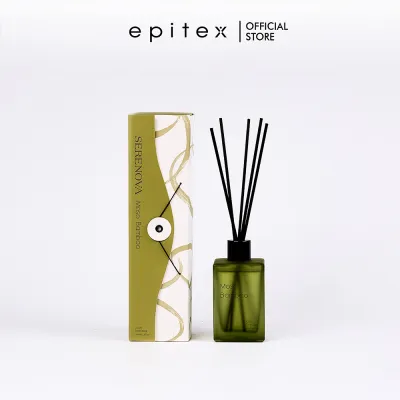
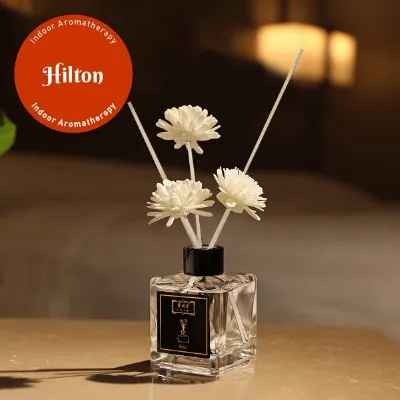
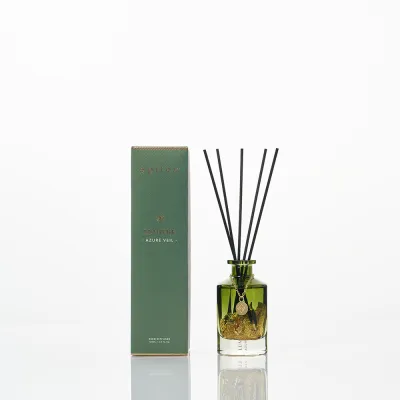
Prices are valid at publication and may change. Please refer to the product page for the latest price.
In contrast, alcohol-free carrier oils—typically formulated with glycol ethers, dipropylene glycol (DPG), or bio-based solvents—have a much lower volatility. These heavier molecules evaporate at a slow, controlled rate, allowing the fragrance to release gradually over several months.
The physical medium of transport, the reeds themselves, also plays a critical role in longevity. Natural rattan reeds contain tiny, hollow vascular channels that draw the oil upward through capillary action. Because rattan is a natural wood, its wicking speed is moderate and steady, making it highly compatible with medium-viscosity oils.
Synthetic fiber reeds, on the other hand, are engineered with uniform, highly porous structures that pull liquid upward much faster than natural wood. While fiber reeds deliver a highly intense scent throw, they also accelerate the consumption of the fragrance oil, leading to a shorter overall lifespan for the diffuser.
Finally, the physical design of the diffuser vessel itself directly influences the rate of passive evaporation. A bottle with a wide mouth exposes a large surface area of the liquid directly to the ambient air, allowing volatile compounds to escape without ever traveling up the reeds.
A well-designed diffuser bottle features a narrow neck or a restricted opening that tightly hugs the reeds. This structural constraint ensures that almost all evaporation occurs through the wicking action of the reeds rather than direct exposure to the air, significantly extending the life of the fragrance oil.
How to Evaluate Brand Claims on Scent Duration
When shopping for home fragrances, you will frequently encounter bold marketing claims promising several months of continuous scent. Evaluating these claims critically requires looking beyond the front label and examining the product specifications and ingredient lists.

Start by checking the ingredient list for the type of carrier oil used. High-quality, long-lasting brands will often specify the use of non-hazardous, low-VOC (volatile organic compound) bases, such as Augeo or similar eco-solvent bases. If a brand does not disclose its base or lists alcohol as a primary ingredient, you can expect a much faster evaporation rate regardless of the advertised duration.
It is also vital to recognize that environmental conditions in your home will drastically alter any standardized longevity metrics provided by a manufacturer. Brand testing is typically conducted in controlled laboratory environments with static air, moderate temperatures, and neutral humidity.
In a real-world home environment, particularly in warm and humid climates like Singapore, factors such as open windows, ceiling fans, and active air conditioning units will accelerate evaporation. Air conditioning strips moisture from the air, which can cause the carrier oil to evaporate faster, while constant airflow pulls scent molecules away from the reeds at an accelerated rate.
To determine the true value of a reed diffuser, calculate its cost-effectiveness by analyzing the price per milliliter in S$. A premium diffuser priced at S$80 for 200ml of high-quality, slow-evaporating oil costs S$0.40 per milliliter and may last up to four months.
Conversely, a budget option priced at S$25 for 50ml costs S$0.50 per milliliter and might evaporate completely within three weeks due to a high alcohol content. Calculating this metric helps you look past the initial price tag and identify brands that offer genuine long-term value.
What to Look for in Long-Lasting Fragrance Brands
When searching for a brand that prioritizes longevity, look for manufacturers that demonstrate a commitment to formulation transparency and sustainable product design. Brands that openly share their ingredient sourcing and carrier oil types are generally more reliable than those relying on vague marketing terms.
Prioritize brands that offer high-capacity vessels, specifically those holding 200ml or more of fragrance oil. Smaller bottles, such as 50ml or 100ml sizes, have a lower thermal mass and a higher ratio of exposed surface area to volume, which can lead to faster degradation and evaporation of the scent compounds.
A larger volume of oil not only lasts longer chronologically but also maintains a more stable scent profile over time, as the delicate top notes do not burn off as quickly relative to the base notes.
Furthermore, look for brands that support a circular product ecosystem by selling dedicated refill pouches and compatible replacement reeds. Because reeds inevitably become clogged with dust and saturated with heavy oil molecules over time, being able to purchase fresh reeds is essential for maintaining scent throw.
Refill pouches are not only more environmentally friendly and cost-effective, but they also allow you to keep using a high-quality glass vessel indefinitely. A brand that does not offer refills or replacement reeds is forcing you to purchase a new decorative bottle every time, which is both wasteful and expensive.
Maximizing Scent Throw and Lifespan at Home
Once you have selected a high-quality reed diffuser, proper placement and maintenance are key to maximizing its lifespan and ensuring a consistent scent throw. Simple adjustments in how you handle the diffuser can add weeks to its operational life.
When you need to refresh the scent, flipping the reeds is a common practice, but it must be done safely to protect your home decor. Fragrance oils are highly concentrated solvents that can easily strip varnish off wooden tables, dissolve plastics, or stain porous stone surfaces like marble.
Always flip the reeds over a sink or a protective ceramic tray, and immediately wipe away any drips that land on the exterior of the bottle or surrounding furniture. To extend the oil’s life, avoid flipping the reeds too frequently; once every two to three weeks is generally sufficient for a subtle boost.
Placement is another critical factor that dictates how quickly your diffuser depletes. Avoid placing the vessel in direct sunlight, such as on a sunny windowsill, as solar heat will rapidly degrade the fragrance oils and accelerate evaporation.
Similarly, keep the diffuser away from direct drafts, such as those from air conditioning vents, standing fans, or open windows. While a gentle breeze helps distribute the scent, high-velocity airflow will strip the oil from the reeds faster than the capillary action can replenish it, drying out the diffuser prematurely.
Finally, learn to recognize when your reeds are no longer functioning effectively. Over time, airborne dust, pet dander, and heavy fragrance compounds will accumulate in the microscopic pores of the reeds, clogging them completely.
If you notice that the oil level in the bottle has stopped dropping but the scent has faded entirely, flipping the reeds will no longer help. This is a clear sign that the reeds are saturated and must be replaced with a fresh set to restore proper capillary action.
Frequently Asked Questions (FAQ)
Why does my reed diffuser stop smelling after a few weeks?
There are two primary reasons a reed diffuser seems to lose its scent: olfactory fatigue and physical clogging. Olfactory fatigue, commonly known as nose blindness, occurs when your brain becomes accustomed to a constant background scent and filters it out. To test this, step out of your home for a few hours; if the scent is noticeable when you return, your diffuser is working fine. If there is still no scent, the reeds may be physically clogged with household dust and airborne particles, preventing the oil from wicking upward.
Are fiber reeds better than rattan reeds for longevity?
Fiber reeds and rattan reeds offer different trade-offs when it comes to scent longevity. Fiber reeds are highly porous and engineered to wick oil rapidly, which results in a much stronger and more immediate scent throw. However, this rapid wicking consumes the fragrance oil at a faster rate, shortening the overall lifespan of the diffuser. Rattan reeds wick oil more slowly and steadily, providing a milder but longer-lasting scent experience, making them the preferred choice for maximizing duration.
Can I mix different brand refills and reeds?
While it is physically possible to mix refills and reeds from different brands, it is generally not recommended if you want to maximize performance. Different brands formulate their fragrance oils with varying viscosities and carrier bases, which are specifically paired with the density and pore size of their proprietary reeds. Mixing a heavy, oil-based refill with reeds designed for a thin, alcohol-based formula can result in poor wicking, clogged pores, or an uneven scent throw that fails to fill the room.

Community discussion
Share your experience or ask a question. Comments are reviewed before publication.