
Selecting the best flashlight with laser for a Housing & Development Board (HDB) emergency kit in Singapore requires balancing illumination power, laser safety compliance, and long-term battery reliability. In a high-density residential environment, a dual-function tool serves a unique purpose, but only if it is built to survive years of storage and operate safely in confined spaces. Rather than relying on generic marketing claims, residents must evaluate technical specifications, battery chemistry, and physical build quality to ensure their emergency gear remains dependable when a crisis occurs.
By understanding how these tools function in a domestic setting, you can make an informed purchase that protects your household. This guide outlines the practical role of laser-equipped flashlights, the core specifications to verify, and the maintenance protocols required to keep your device ready for any situation.
The Role of a Laser-Equipped Flashlight in HDB Emergencies
High-rise HDB blocks feature specific architectural layouts, including deep service yards, high ceilings, and shared common corridors. During a localized power outage or a building-wide emergency, a standard flashlight illuminates your immediate path, while an integrated laser pointer allows for precise, non-verbal communication. If you need to point out a specific structural hazard, a water leakage point on a high ceiling, or an obstruction across a dark corridor to family members or emergency responders, a laser provides an exact visual marker. This minimizes confusion and reduces the need to move through potentially unsafe areas.
Products mentioned in this guide
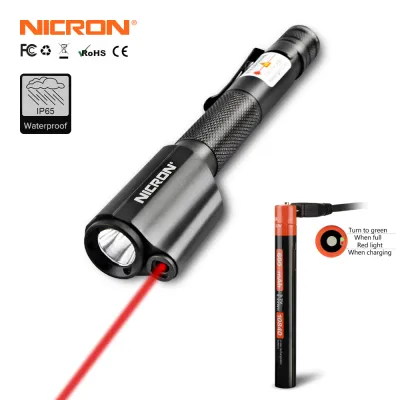
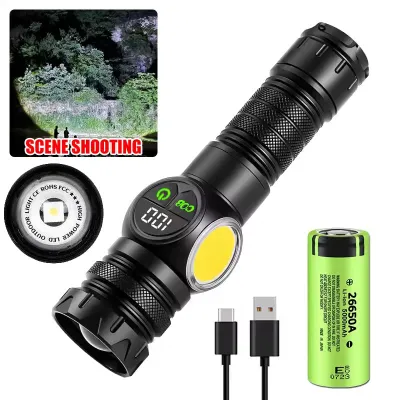
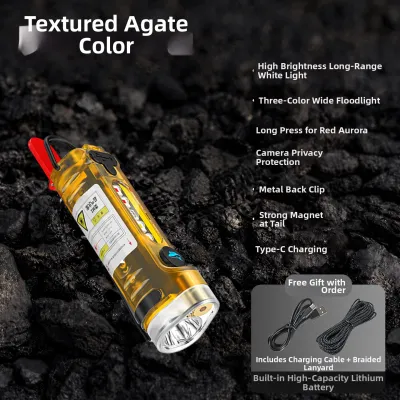
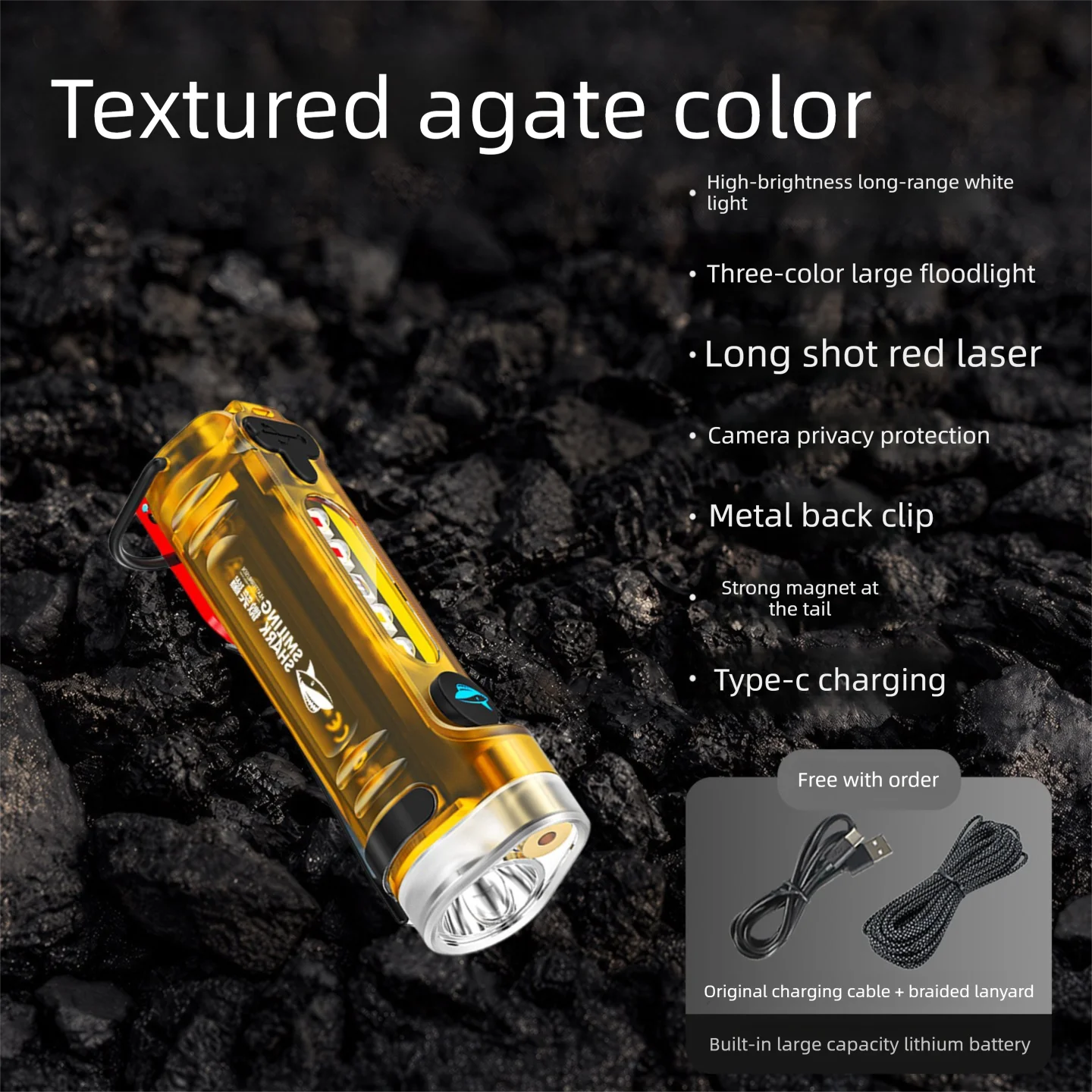
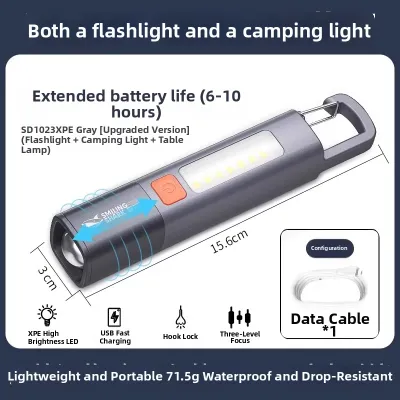
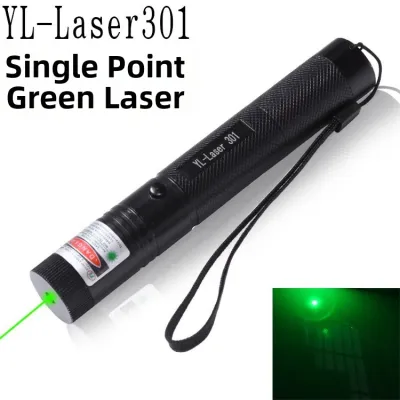
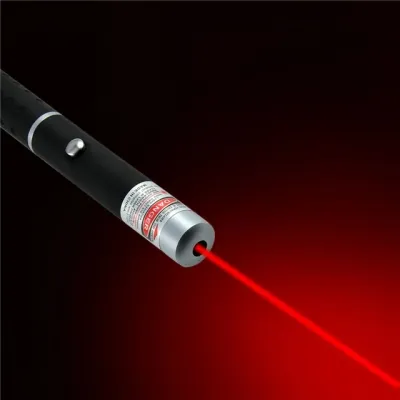
Prices are valid at publication and may change. Please refer to the product page for the latest price.
Using a laser indoors requires strict adherence to safety boundaries to prevent accidental eye exposure. Reflective surfaces common in modern HDB flats—such as glass window panes, polished floor tiles, and stainless steel appliances—can redirect a laser beam unexpectedly. Accidental eye exposure to high-power lasers can cause permanent retinal damage. Understanding these safety boundaries and choosing a low-emission laser class is paramount for domestic emergency preparedness.
Unlike standard emergency lights designed solely for broad area illumination, a laser-equipped flashlight is a directional tool. It should complement, not replace, your primary ambient light sources. When used together, a broad LED beam illuminates your immediate surroundings for safe movement, while the narrow laser beam serves as an efficient signaling device over longer distances, such as across HDB airwells or down multi-story stairwells.
Core Specifications to Check Before Purchasing
When evaluating a flashlight with laser, lumen output is the first specification to check on the manufacturer’s label. For indoor HDB use, excessively high lumen counts can cause blinding glare when reflected off light-colored interior walls. A versatile emergency flashlight should offer adjustable outputs, with a low mode of 10 to 50 lumens for close-up tasks and a high mode of 300 to 1000 lumens for illuminating long corridors or outdoor pathways. Beam distance should be evaluated based on manufacturer specifications, keeping in mind that indoor distances rarely exceed 15 to 20 meters, while outdoor block-to-block signaling may require a throw of 100 meters or more.

Laser safety classification is the most critical safety metric to verify before purchase. Consumers must check the product packaging or manual for official safety labels. Class 1 and Class 2 lasers, which typically operate under 1 milliwatt of power, are generally considered safe for accidental exposure because the human blink reflex provides sufficient protection. Class 3R lasers require much greater caution, and any higher classification should be strictly avoided for household emergency kits to prevent accidental injury.
Build quality determines whether a flashlight will survive a fall during a chaotic situation. Look for anodized aluminum bodies that offer impact resistance, typically rated for drops of 1 to 2 meters. Water resistance ratings of at least IPX4 (splash-proof) or IPX8 (submersible) ensure the tool remains functional during heavy tropical downpours, plumbing emergencies, or high-humidity conditions. These ratings should always be verified directly from the official product documentation.
Verify the switch mechanism to prevent accidental activation during long-term storage. A reliable emergency flashlight must feature a physical lockout mode, a recessed button, or a tail-cap twist design. Without these features, a flashlight stored in a drawer or emergency bag can easily turn on accidentally, draining the battery completely and leaving you without light when you need it most.
Power Sources and Long-Term Storage Viability
Battery chemistry is a critical decision point for emergency gear stored for long periods. Standard alkaline batteries are widely available in Singapore supermarkets, but they present a severe risk of leakage over time. As alkaline batteries discharge or age, they release corrosive potassium hydroxide, which can permanently ruin the flashlight’s internal circuitry. For a dedicated emergency kit, alkaline batteries are generally not recommended for long-term standby storage.
Lithium primary batteries, such as CR123A cells, offer a vastly superior shelf life of up to 10 to 15 years. They maintain stable voltage in varying temperatures and do not leak, making them the gold standard for standby emergency kits. Rechargeable lithium-ion batteries, such as 18650 or 21700 cells, provide high capacity and cost-effective operation for regular use, but they suffer from gradual self-discharge. If a rechargeable flashlight is left unattended for a year, the battery may be flat when an emergency strikes.
To mitigate these risks, residents should either store the flashlight with high-quality lithium primary batteries or keep rechargeable batteries separate from the device in a climate-controlled environment. If using rechargeable cells, establish a strict maintenance schedule. Inspect the flashlight and test both the LED and laser functions at least once every six months, recharging the power cells as necessary to ensure they remain at a functional capacity.
Creating a Condition-Based Shortlist for Local Availability
When shopping for a flashlight with laser in Singapore, buyers should establish a systematic verification process rather than relying on unverified online reviews. Look for reputable brands that provide clear, transparent technical specifications and offer local warranty support through authorized distributors. This ensures access to replacement parts and reliable customer service if a component fails. When browsing local retail stores or reputable online platforms, use a structured comparison matrix to evaluate potential models.
| Evaluation Axis | Ideal Specification | Verification Method |
|---|---|---|
| LED Output | 10 to 1000 lumens (adjustable) | Check manufacturer spec sheet |
| Laser Class | Class 1 or Class 2 (Red or Green) | Verify safety label on body |
| Battery Type | CR123A (Primary) or Dual-Fuel (Li-ion/CR123A) | Inspect battery compartment specs |
| Ingress Protection | IPX4 minimum (IPX8 preferred) | Look for official IP rating certification |
| Lockout Feature | Physical tail-cap twist or electronic lockout | Test switch mechanism in hand |
Beware of common red flags on product listings. Unrealistic performance claims, such as tens of thousands of lumens from a pocket-sized light, are clear indicators of low-quality manufacturing. Missing safety certifications, unlabeled laser classes, or the absence of a physical brand name on the product housing should prompt immediate exclusion from your emergency kit shortlist. Stick to products that carry verifiable certifications from recognized testing bodies.
Safe Storage and Maintenance Inside an HDB Flat
Proper storage within an HDB flat ensures the flashlight remains operational when needed. Singapore’s tropical climate features high relative humidity, which can accelerate contact oxidation and degrade electronic components. Avoid storing emergency kits in damp areas like under-sink cabinets, unventilated store rooms, or near bathroom walls. Instead, select a cool, dry, and easily accessible location, such as a dedicated emergency drawer in the living room or a sealed dry box alongside other sensitive electronics.
Routine maintenance takes only a few minutes but dramatically extends the tool’s lifespan. Periodically wipe the optical lens with a microfiber cloth to remove dust and fingerprints, which can diffuse the beam and reduce output. Inspect the rubber O-rings around the battery cap and bezel; apply a thin layer of silicone grease to keep them pliable and maintain the water seal. Check the battery contacts for any signs of dullness or white powdery residue, cleaning them with a cotton swab dipped in isopropyl alcohol if necessary.
Establish clear stop conditions for the device to prevent safety hazards. If you observe battery leakage, severe corrosion on the springs, a flickering beam that persists after changing batteries, or a misaligned laser module that does not align with the main beam, discard the compromised components safely. Do not attempt to repair a damaged laser module yourself, as exposure to internal components can bypass safety filters and increase the risk of eye injury.
Frequently Asked Questions (FAQ)
Can a laser flashlight cause a fire hazard in an HDB flat?
High-power lasers and extremely high-lumen LED flashlights can generate significant thermal energy, but they do so differently. A standard consumer-grade laser (Class 1 or Class 2) does not produce enough concentrated heat to ignite household materials. However, the bezel of a high-lumen LED flashlight, especially those exceeding 1000 lumens, can become hot enough during prolonged high-output operation to melt synthetic fabrics or scorch paper if placed face-down on a surface.
To prevent fire hazards, always activate the physical or electronic lockout mode when storing the device, and never leave a high-output flashlight turned on and unattended near flammable materials. Ensure family members understand that the flashlight should only be operated at high outputs when held in the hand, allowing your palm to act as a heat sink and alerting you if the temperature rises too high.
Is a green laser better than a red laser for indoor emergency signaling?
The choice between a green and red laser depends on human visual perception and environmental conditions. The human eye is naturally more sensitive to green wavelengths (around 555 nanometers) under both daylight and low-light conditions, making a green laser appear significantly brighter than a red laser of the same power output. This makes green lasers highly effective for rapid signaling across dusty corridors or through smoke.
However, green laser modules typically consume more battery power and can be more sensitive to extreme temperature fluctuations than red laser diodes. Regardless of the color chosen, the most critical step is verifying that the device carries an official Class 1 or Class 2 safety rating to protect the eyes of your family members during indoor use.

Community discussion
Share your experience or ask a question. Comments are reviewed before publication.