
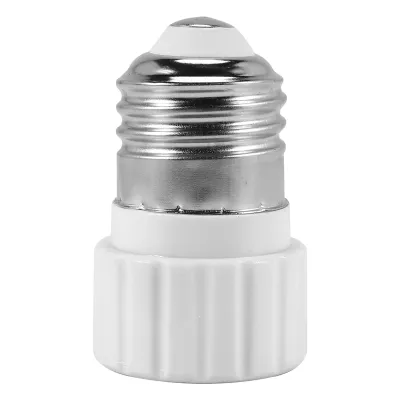
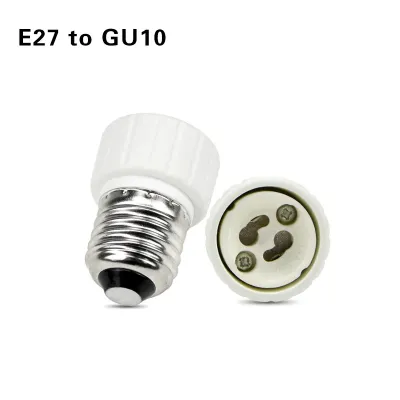
Using an E27 to GU10 adapter is safe under specific, controlled conditions, but it is not a universally risk-free solution. These mechanical adapters allow you to fit a twist-and-lock GU10 spotlight bulb into a standard Edison screw E27 socket. While this conversion is highly convenient, safety depends entirely on using low-wattage LED bulbs, respecting the thermal limits of the adapter, and verifying the physical clearance of your light fixture.
If you attempt to use these adapters with high-heat halogen bulbs, install them inside fully enclosed fixtures, or overload a loose socket, you introduce serious electrical and fire hazards. To ensure a safe installation, you must understand the thermal, mechanical, and electrical boundaries of your lighting setup before making the switch.
Electrical Compatibility and Voltage in Singapore
In Singapore, the standard household electrical system operates on a nominal mains voltage of 230V AC at a frequency of 50Hz. Both native E27 screw sockets and GU10 bi-pin sockets are designed to run directly on this standard mains voltage. Because both formats share the same operating voltage, an E27 to GU10 adapter does not require any internal transformer, voltage step-down mechanism, or electronic driver.
Products mentioned in this guide
![[HomeBox] 🇸🇬 E27/B22/GU10/G24/MR16 Convertor Adaptor/Base Holder Bulb Base Lamp Socket Holders](https://img.lazcdn.com/g/p/c2e782df3ef1c15a167282f6c37dcfae.jpg_400x400q80.jpg_.webp)
Prices are valid at publication and may change. Please refer to the product page for the latest price.
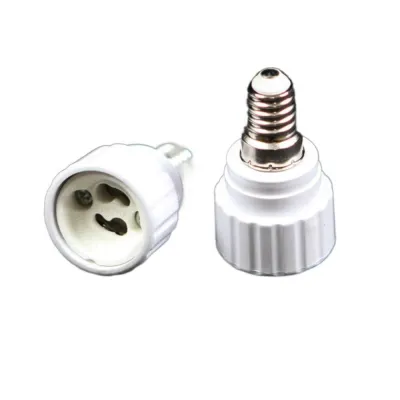
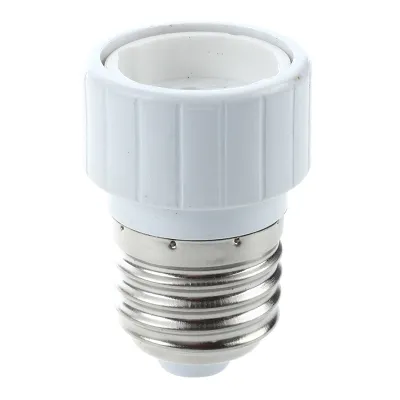
An E27 to GU10 adapter is a purely mechanical and conductive bridge. Internally, it features simple metal tracks that route the active and neutral electrical currents from the E27 screw thread and base contact directly to the two female GU10 pin receptacles. Because there are no active electronics inside the adapter, there is no inherent voltage conversion taking place.
However, the simplicity of this mechanical connection can be deceptive. While the electrical supply matches perfectly, the physical design, ventilation, and thermal tolerances of your host fixture dictate whether the setup is safe to operate over the long term. A match in voltage does not automatically guarantee a match in thermal safety.
Critical Safety Limits: Wattage, Heat, and Weight
To prevent electrical failures, melted components, or household fires, you must carefully evaluate the physical and thermal limits of the adapter and the fixture. Adding an intermediate accessory changes how heat dissipates and how weight is distributed within the light socket.

Wattage and Heat Dissipation
Every component in a lighting setup has a maximum wattage rating, and your safety is governed by the weakest link in this chain. When using an adapter, you must identify the maximum wattage rating of the host E27 fixture, the adapter itself, and the GU10 bulb you intend to install. You must strictly follow the lowest maximum wattage rating among these three components.
Many cheap adapters imported through online marketplaces have surprisingly low maximum wattage ratings, often limited to 10W or 15W for LED use. While a native E27 ceramic socket might easily support a 60W traditional bulb, inserting an adapter with a lower threshold immediately lowers the safe limit of the entire fixture.
Thermal management is the most critical safety factor when adapting sockets. Standard adapters are typically constructed from polybutylene terephthalate (PBT) plastic or, in higher-quality models, ceramic. PBT plastic has a specific thermal breakdown point; if subjected to prolonged high temperatures, it will degrade, become brittle, and eventually melt, exposing live electrical contacts.
Because of these thermal limits, you must never use GU10 halogen bulbs with a plastic E27 to GU10 adapter. Halogen spotlights operate at extremely high temperatures, often exceeding 200°C, which will rapidly melt plastic adapters and create an immediate fire hazard. Only use low-wattage, high-efficiency LED GU10 bulbs, which generate significantly less heat.
Even with LED bulbs, heat buildup remains a concern in enclosed or recessed E27 fixtures. LED bulbs produce heat at their base where the internal driver circuit is located. If the adapter is installed inside a tight, unventilated ceiling canister, this heat becomes trapped, accelerating the thermal degradation of the adapter’s plastic casing and oxidizing the internal copper contacts, which can lead to high electrical resistance and arcing.
Physical Clearance and Mechanical Stress
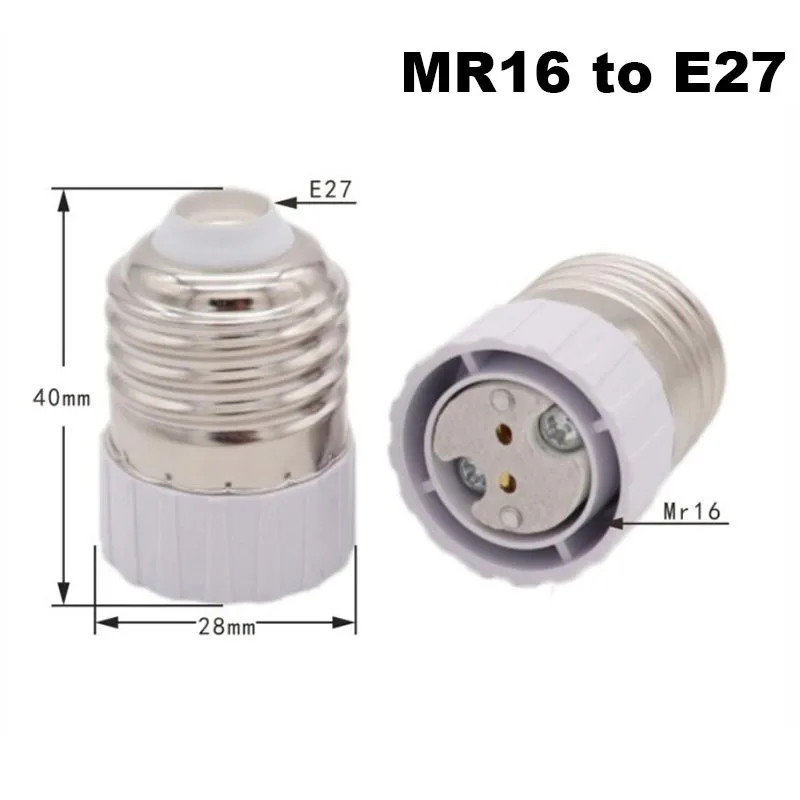
An E27 to GU10 adapter adds significant physical length to the lighting assembly, typically extending the bulb forward by 3 to 5 centimeters. This changes the focal point of the light source and can cause the GU10 bulb to protrude awkwardly from recessed ceiling cans or pendant shades.
This protrusion is not just an aesthetic issue; it can create a severe glare hazard or a physical obstruction. More importantly, if the extended bulb sits too close to or touches a flammable lampshade made of fabric, paper, or thin plastic, the localized heat transfer can ignite the material over time. Always check the manufacturer instructions for both your fixture and the adapter to ensure the required safety clearances are maintained.
Mechanical weight stress is another often-overlooked hazard. Standard E27 sockets are engineered to support the downward vertical weight of a standard lightweight bulb. When you insert an adapter and then twist a heavy, glass- or aluminum-bodied LED GU10 spotlight into it, you create a longer lever arm that exerts increased torque on the original E27 socket.
Over time, this physical stress can loosen the internal metal contacts of the E27 socket or cause the socket housing itself to sag. This risk is particularly high in downward-facing fixtures, articulated desk lamps, or fixtures subject to constant physical vibration, such as ceiling fans with integrated light kits. A loose mechanical connection leads to poor electrical contact, which can cause localized overheating and electrical arcing.
Step-by-Step Compatibility Check Before Installation
Before purchasing or installing an adapter, perform this systematic compatibility check to verify that your proposed setup meets basic safety standards.
- Check the Adapter Labels: Inspect the physical body of the adapter for printed technical specifications. Ensure it clearly states the maximum allowable wattage (e.g., "Max 10W LED") and voltage rating (e.g., "220-240V"). If the adapter has no markings or labels, do not install it.
- Verify Fixture Limits: Locate the safety sticker inside the host E27 fixture, usually found near the base of the socket or on the mounting plate. Note the maximum wattage limit and ensure your combined adapter and bulb wattage is well below this threshold.
- Measure Physical Depth: Use a ruler to measure the depth of your fixture's housing. Add the length of the adapter to the length of your chosen GU10 bulb, and compare this to the fixture depth to confirm the bulb will not protrude dangerously or touch the surrounding shade.
- Verify Safety Certifications: Check the adapter's packaging or product listing for recognized safety certifications. In Singapore, electrical accessories should ideally carry safety marks indicating compliance with local standards, or international equivalents such as CE, RoHS, or UL certifications, which verify that the plastics used are flame-retardant.
- Assess the Installation Environment: Evaluate where the fixture is located. Standard E27 to GU10 adapters are not sealed against moisture. Ensure the installation area is completely dry and free from condensation; standard adapters must never be used in damp or wet locations.
Safe Installation Practices and When to Call an Electrician
When you are ready to install the adapter, following correct safety protocols will protect you from electrical shock and ensure a reliable connection.
First, isolate the electrical power. Do not rely solely on the wall switch, as it may only cut the neutral wire if the room was wired incorrectly. Turn off the dedicated lighting circuit breaker at your home’s main distribution board (DB box) before touching any electrical components.
Before inserting the adapter, inspect the existing E27 socket. If the socket feels loose, has visible cracks, shows signs of brown or black scorching, or if the metal contacts inside are corroded, stop immediately. Do not attempt to use an adapter on a compromised socket, as this will exacerbate poor electrical contact.
When assembling the parts, screw the adapter firmly into the E27 socket, but do not overtighten it, which can crack the adapter’s housing or flatten the socket’s center contact. Next, align the two pins of the GU10 bulb with the adapter holes, push gently, and twist clockwise until it locks. Never force the bulb; if it does not twist smoothly, the pins may be misaligned or the internal contacts may be bent. Forcing the connection can damage the internal spring mechanism, leading to a loose, high-resistance connection.
If the manufacturer instructions for your host fixture and those of the adapter conflict in any way—such as differing statements on maximum wattages or structural clearances—always follow the more restrictive safety instruction. If you cannot resolve the conflict, or if the treated item’s specifications are missing, stop the installation and consult a qualified professional.
You must stop using the adapter and seek professional help if you observe any of the following warning signs:
- The light flickers constantly, or you hear a faint buzzing or sizzling sound when the switch is turned on.
- You detect a distinct fishy or burning plastic smell near the fixture.
- The adapter or the surrounding fixture housing feels excessively hot to the touch after a few minutes of operation.
- The E27 socket is located in a high-moisture zone, such as a bathroom, kitchen splash zone, or outdoor balcony.
Keep in mind that using an E27 to GU10 adapter is ultimately a temporary design workaround. If you require dedicated, high-quality spotlighting in your space, the safest, most energy-efficient, and permanent solution is to hire a licensed electrician to replace the entire fixture with a native GU10 spotlight housing or install proper track lighting.
Frequently Asked Questions (FAQ)
Can I use a dimmable GU10 bulb with an E27 adapter?
Yes, you can use a dimmable GU10 LED bulb with an E27 to GU10 adapter, but the adapter itself does not enable or control the dimming function. Because the adapter is a passive metal-and-plastic conductor, it simply passes the electrical signal through. The success of your dimming setup depends entirely on whether your wall dimmer switch is compatible with the specific driver inside your dimmable GU10 LED bulb. If you pair an incompatible phase-cut wall dimmer with a modern LED bulb, you may experience severe flickering, buzzing, or premature bulb failure, regardless of the adapter used.
Are E27 to GU10 adapters safe for outdoor or bathroom use?
No, standard E27 to GU10 adapters are highly unsafe for use in bathrooms, outdoor balconies, patios, or any environment exposed to high humidity and moisture. These adapters are typically rated IP20, meaning they offer no protection against water ingress. The mechanical joints between the E27 socket, the adapter, and the GU10 bulb create multiple unsealed gaps where moisture and condensation can easily penetrate. This can lead to rapid corrosion of the electrical contacts, short circuits, tripped circuit breakers, or severe electrical shock hazards. For damp or outdoor areas, you must use native, sealed fixtures with an appropriate IP rating (such as IP44 or IP65) designed specifically for those environments.

Community discussion
Share your experience or ask a question. Comments are reviewed before publication.