
Waking up on time is a daily struggle for those who sleep through standard smartphone alarms. For chronic oversleepers, the Sonic Bomb alarm clock is often presented as the ultimate wake-up call. This high-intensity device relies on an exceptionally loud siren and a physical bed-shaking attachment to force even the heaviest sleepers awake. However, whether this extreme approach is worth the investment depends heavily on your living arrangements, your physical bedroom setup, and how your body responds to abrupt, high-stimulus waking methods.
Evaluating this specialized clock requires looking beyond the novelty of its extreme volume. For many, a standard alarm simply becomes background noise, leading to missed appointments, late mornings, and constant stress. By combining physical vibration with high-decibel sound, this device aims to disrupt deep sleep cycles more effectively than sound alone. Before making a purchase, it is essential to understand who genuinely benefits from this level of sensory stimulation and how to integrate it safely into your home.
Who Actually Needs an Extreme Alarm Clock?
Standard smartphone alarms are designed for average sleepers, but they often fail those who experience deep sleep phases or severe sleep inertia. Sleep inertia is that heavy, disoriented feeling that makes you turn off your alarm half-conscious and fall back asleep. If you regularly find yourself waking up hours late with no memory of silencing your phone, your brain may require a more intense sensory trigger to transition into full wakefulness.
Products mentioned in this guide

Prices are valid at publication and may change. Please refer to the product page for the latest price.
Heavy sleepers are not the only ones who struggle with standard alarms. Individuals with hearing impairments often find traditional high-frequency alarm tones completely ineffective. For these users, an alarm that relies on physical vibration rather than pure volume is not just a convenience, but a necessity for maintaining an independent daily schedule.
Shift workers also face unique waking challenges. When you must sleep during the day, your body fights its natural circadian rhythm, often leading to fragmented or unusually deep sleep cycles. Waking up in the middle of the afternoon when ambient neighborhood noise is high requires an alarm that can cut through both physical fatigue and environmental distractions.
However, it is important to distinguish between heavy sleep habits and underlying medical issues. If you experience chronic fatigue, constant oversleeping, or severe daytime sleepiness despite getting a full night of rest, the root cause might be a sleep disorder such as sleep apnea or chronic sleep deprivation. In these cases, relying on an increasingly loud alarm clock is a temporary fix that masks a larger issue. Consulting a qualified sleep specialist or medical professional is highly recommended to address the underlying causes of your fatigue.
Evaluating the Sonic Bomb: Core Features and Practical Trade-offs
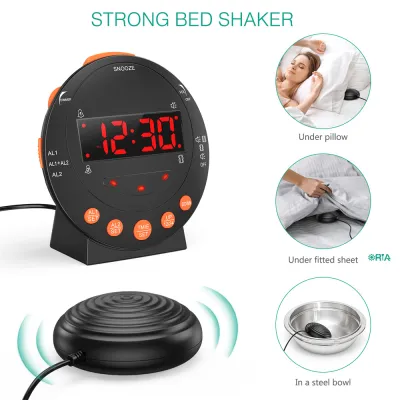
The defining feature of the Sonic Bomb is its dual-alert system, which combines an adjustable high-decibel siren with a plug-in bed shaker. According to manufacturer specifications, the audio alarm can reach volume levels up to 113 decibels. To put this in perspective, this level of noise is comparable to a live music concert or a car horn at close range. Fortunately, the volume and tone are fully adjustable, allowing you to customize the alert to a level that is effective without being unnecessarily jarring.

The bed shaker is a small, circular disc connected to the main clock unit by a thin cable. When the alarm triggers, this disc vibrates vigorously. Placing it under your mattress or pillow translates the electrical signal into a direct, physical wake-up call. This physical stimulation is often what successfully rouses sleepers who have become desensitized to auditory alarms.
However, the physical design of the device introduces several practical trade-offs. The main unit has a distinct, utilitarian aesthetic that may not blend seamlessly with modern bedroom decor. Additionally, managing the cords can be challenging. You must route the cable from the bedside table, down behind the furniture, and up into your bedding. This setup can look cluttered and creates a potential snagging hazard if you move around frequently in your sleep.
Living arrangements are another critical factor to consider. In high-density housing environments, such as HDB flats or condominiums in Singapore, sound and physical vibrations travel easily through shared concrete walls and floors. A 113-decibel siren can easily disturb family members in adjacent rooms or even neighbors next door. Furthermore, if the bed shaker is placed on a wooden bed frame, the vibration can create a loud, low-frequency rumbling that resonates throughout the entire room, potentially waking up partners or scaring household pets.
Power reliability is another aspect to verify before relying on this device. The clock typically features a battery backup slot, usually requiring a standard 9V battery. It is crucial to consult the product manual to understand how this backup behaves. In most cases, the battery backup only preserves the time and alarm settings during a power outage; it does not have sufficient power to run the high-decibel siren or the motorized bed shaker. If a power failure occurs overnight, the clock will not be able to wake you using its primary high-intensity features.
Bedroom Setup and Safety Checks Before Purchasing
Before purchasing an extreme alarm clock, you must evaluate your physical bedroom layout to ensure safe and effective installation. Start by measuring your bedside table. The main unit requires a stable, flat surface with enough clearance to prevent it from being accidentally knocked over in the dark. You also need to ensure there is a functioning power outlet within easy reach of both the clock’s power adapter and the bed shaker’s cable.
Electrical compatibility is a vital safety check, especially for imported electronics. In Singapore, the standard mains voltage is 230V at 50Hz, utilizing the Type G three-pin plug. Many specialty alarm clocks sold online are manufactured for other regions with different voltage standards, such as 110V systems. Before plugging the device into your wall, verify the voltage rating printed on the power adapter. Using an incompatible voltage without a proper step-down transformer can damage the clock’s internal circuitry or pose a serious electrical fire hazard.
Hearing safety should also be a primary concern when using a high-decibel device. Prolonged exposure to sounds above 85 decibels can lead to gradual, permanent hearing damage. To protect your hearing, avoid placing the main clock unit directly next to your head on the nightstand if you plan to use the maximum volume setting. A safer strategy is to rely primarily on the bed shaker’s physical vibration to wake you, while keeping the audio volume set to a moderate, safe level.
Finally, review the manufacturer’s warranty and the retailer’s return policy before committing to a purchase. The physical vibration mechanism in the bed shaker contains moving parts that are subject to mechanical wear and tear over time. Additionally, because bed frames and mattress materials vary widely, you may find that the vibration intensity is either too weak or uncomfortably strong for your specific setup. Having a clear return policy allows you to test the device in your own home without financial risk.
Alternative Wake-Up Solutions for Different Sleep Profiles
If the intense sound and physical vibration of the Sonic Bomb seem too aggressive or impractical for your living situation, several alternative wake-up solutions cater to different sleep profiles. For those who prefer a more natural transition from sleep to wakefulness, a sunrise alarm clock is an excellent option. These devices gradually increase light intensity over 30 to 60 minutes before your set wake-up time, mimicking a natural sunrise. This gradual light exposure signals your brain to reduce melatonin production, helping you wake up feeling more refreshed and less disoriented.
For individuals who share a bed or live in close quarters, wearable technology offers a silent, highly effective alternative. Many modern fitness trackers and smartwatches feature silent, wrist-based haptic alarms. These devices vibrate directly against your skin, waking you up reliably without making any sound that could disturb your partner or housemates. This is an ideal solution for maintaining a peaceful household while ensuring you still wake up on time.
Smart home integration provides another customizable path to waking up. By utilizing smart plugs, automated motorized blinds, or smart light bulbs, you can design a personalized wake-up routine. For example, you can program your bedroom lights to turn on at maximum brightness and your blinds to open automatically at your desired wake-up time. Combining bright light with your standard phone alarm can significantly reduce sleep inertia.
When comparing these options, consider the trade-offs between setup complexity and daily reliability. Smart home systems and wearables offer high customization and low noise, but they rely on stable Wi-Fi connections, regular software updates, and frequent battery charging. A dedicated, standalone alarm clock, while less customizable, offers unmatched reliability because it does not depend on external networks or app compatibility to function every morning.
Final Decision Checklist: Should You Buy the Sonic Bomb?
To help you decide if this high-intensity alarm clock is the right choice for your bedroom, consider the following self-assessment matrix matching your sleep habits, living situation, and physical space:
- Ideal Candidate: You sleep heavily, live alone or have highly understanding housemates, have a spacious bedside table with a nearby power outlet, and require physical stimulation to wake up.
- Alternative Candidate: You share a bed, live in a thin-walled apartment, prefer a gentle waking process, or do not have a safe way to route the bed shaker cord. In this case, a wearable haptic alarm or a sunrise clock is a better fit.
There are several clear red flags that indicate this device may not be suitable for your home. If you have sensitive pets that are easily startled by loud noises, or if your bed frame is made of lightweight metal that will rattle loudly against the wall when the shaker vibrates, you should avoid this style of alarm. Additionally, if you cannot safely route the shaker cable without creating a tripping hazard across your bedroom floor, the physical setup may pose a safety risk.
If you decide to proceed with the purchase, take steps to ensure you are buying an authentic product. Look for authorized local distributors or reputable electronics retailers to ensure you receive a unit with a native Type G plug and a valid local warranty. Verify current pricing in S$ across multiple trusted online marketplaces, and be cautious of suspiciously low prices, which often indicate counterfeit goods that lack proper electrical safety certifications.
Frequently Asked Questions (FAQ)
Can the Sonic Bomb cause hearing damage?
Yes, if used improperly. The clock’s siren can reach up to 113 decibels, which exceeds the safe threshold for prolonged noise exposure. To protect your hearing, avoid placing the main unit directly next to your head on your bedside table if you use high volume settings. A safer approach is to rely on the bed shaker for physical stimulation while keeping the audio volume at a moderate, comfortable level.
Will the bed shaker work on all types of mattresses?
The effectiveness of the bed shaker depends on your mattress material and thickness. Thick memory foam, heavy latex, or dense pocket-spring mattresses tend to absorb and dampen physical vibrations, reducing the intensity felt on the surface. If you have a thick mattress, placing the vibrating disc directly under your pillow or inside your pillowcase, rather than deep beneath the mattress, will ensure the physical pulses are transferred effectively.

Community discussion
Share your experience or ask a question. Comments are reviewed before publication.