
Evaluating whether a specialized headlamp like the Wurkkos HD04 is practical for Housing & Development Board (HDB) flat emergencies requires looking closely at how its physical design handles sudden power failures. In a high-density residential environment, a reliable hands-free light source can make the difference between a calm, organized response and a hazardous situation. By examining the beam configurations, battery systems, and mounting options of this specific model, you can determine if it meets the unique demands of modern Singaporean household layouts.
While standard handheld flashlights have their place, a multi-functional headlamp offers distinct advantages when navigating dark rooms or attempting to restore power. The practicality of the Wurkkos HD04 depends heavily on verifying its technical specifications against your household’s layout, ensuring that its light output, runtimes, and physical interfaces align with local emergency preparedness standards.
Understanding Emergency Lighting Needs in an HDB Flat
Emergency lighting in an HDB flat must address several spatial challenges unique to high-rise, high-density living. Most modern flats feature concrete structural walls that block natural light from reaching central corridors, bathrooms, and household shelters. When a localized blackout or a tripped circuit breaker occurs, these interior spaces can instantly plunge into complete darkness, making movement highly hazardous without immediate illumination.
Products mentioned in this guide
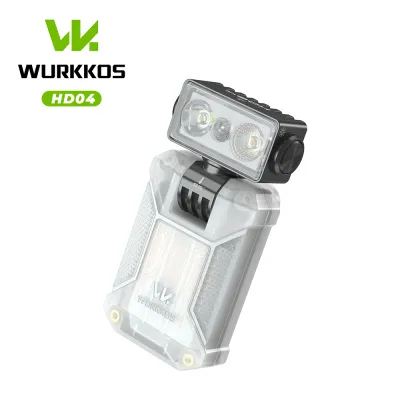
Prices are valid at publication and may change. Please refer to the product page for the latest price.
Hands-free operation is the primary requirement during a household power failure. Whether you need to carry an infant, assist an elderly family member, or safely transport emergency supplies, having both hands free is essential. A headlamp secures the light source directly to your forehead, ensuring that the beam automatically follows your line of sight and eliminates the awkwardness of balancing a traditional flashlight under your arm or between your teeth.
Furthermore, an effective emergency light must balance two distinct beam profiles: a wide, soft floodlight for close-up tasks inside small rooms, and a focused spotlight for longer distances. In a confined space like an HDB kitchen or bathroom, a harsh, narrow beam creates blinding glare off tiled surfaces. Conversely, navigating shared common areas requires a beam with enough throw to spot obstacles from a distance.
Finally, battery reliability and storage safety are critical in Singapore’s warm, humid climate. Emergency equipment often sits unused for months at a time, meaning the device must feature reliable power retention and safe battery chemistry. The charging interface must also be highly accessible, allowing you to top up the power cell using standard household accessories or portable power banks during extended outages.
How the Wurkkos HD04 Fits Into Common HDB Scenarios
Transitioning from general emergency requirements to specific product features requires evaluating how the design of the Wurkkos HD04 performs across distinct household situations. By checking the manufacturer’s specifications for this multi-light model, you can assess its practical utility in real-world HDB settings.

Indoor Power Failures
During a sudden blackout inside your flat, the immediate priority is establishing safe, comfortable ambient light. When evaluating the Wurkkos HD04, check the user manual to confirm if its floodlight mode utilizes a high color rendering index (CRI) or a wide-angle lens. A quality flood beam disperses light evenly across a room, allowing you to monitor your surroundings without experiencing the eye strain caused by intense, localized hotspots.
Confined spaces like bedrooms and living areas often require low-lumen settings to prevent disturbing sleeping family members or pets. Verify if the headlamp features a dedicated low-brightness mode or a red-light function. Red light preserves your natural night vision and provides sufficient illumination for basic navigation without casting a harsh glare that reflects off windows and mirrors.
Comfort is another critical factor during prolonged power outages that may last for several hours. Examine the headlamp’s headband material and overall weight distribution. A model that balances the weight of the battery and the light emitter comfortably across your forehead prevents slippage and tension headaches, ensuring you can wear the device comfortably while waiting for the grid to recover.
Corridor and Stairwell Navigation
If a power failure extends beyond your individual unit to the entire block, you may need to navigate shared corridors and emergency stairwells. In these scenarios, check the headlamp’s beam throw specifications. A focused spotlight mode is necessary to spot potential tripping hazards, wet floors, or structural obstacles along unlit concrete stairwells from a safe distance.
When walking through shared HDB corridors, maintaining neighborly courtesy is important. Utilizing a low-brightness or red-light setting prevents you from shining a blinding beam directly into the windows or doorways of adjacent units. A versatile headlamp should allow you to toggle quickly between a focused beam for stairwells and a dimmed beam for shared walkways.
Physical security of the headlamp is vital when descending multiple flights of stairs in the dark. Verify that the headstrap features an adjustable top strap or a high-friction inner lining. This prevents the unit from shifting or falling off your head if you must move quickly or carry heavy emergency bags down the emergency exit stairs.
Store-Room and Household Tasks
Most HDB flats feature a reinforced household shelter, commonly utilized as a store-room, where the main electrical distribution board (DB box) is located. When a circuit trips, you must navigate this windowless space to inspect the switches. Before attempting any electrical checks, ensure you isolate the main power switches at the DB box if you observe signs of severe electrical faults, and always contact a qualified professional for complex wiring issues.
To facilitate hands-free maintenance at the DB box, check if the Wurkkos HD04 features a magnetic tailcap or a removable pocket clip. A strong integrated magnet allows you to mount the light directly to the metal casing of the DB box or adjacent steel shelving, directing steady light onto the switches while keeping both of your hands free to safely operate the breakers.
Verify the runtime specifications on the headlamp’s medium and low settings to ensure it can sustain continuous operation during extended repairs. The user interface should rely on simple, tactile physical buttons rather than complex touch-sensitive panels. In complete darkness, a raised, textured button is much easier to locate and operate by feel alone, even if your hands are damp or dirty.
Key Specifications to Verify on Your Headlamp
To ensure your headlamp remains fully operational when needed, you must verify several technical specifications on the product packaging, user manual, or physical unit before integrating it into your emergency kit.
| Feature to Verify | Recommended Specification for HDB Use | Purpose |
|---|---|---|
| Battery Type | Rechargeable Lithium-Ion (e.g., 18650) | High energy density and compatibility with standard chargers |
| Charging Interface | USB-C Port | Allows convenient charging via phone chargers and power banks |
| Ingress Protection | IP66 or IP68 Rating | Protects against high humidity, dust, and accidental splashes |
| Lockout Mode | Physical or Electronic Lockout | Prevents accidental activation and battery drain during storage |
First, identify the battery configuration of the headlamp. Models utilizing standard, removable lithium-ion cells offer excellent energy density and can be swapped out quickly if you keep spare, pre-charged cells on hand. Ensure the charging port is a standard USB-C interface, which allows you to recharge the device using the same cables and portable power banks you use for your mobile phone.
Second, verify the water and dust resistance ratings, commonly denoted by an IP (Ingress Protection) code. Singapore’s tropical climate features high relative humidity, which can cause internal corrosion in poorly sealed electronic devices over time. A rating of IP66 or higher ensures the headlamp remains protected against moisture, heavy condensation, and accidental water splashes in kitchens or bathrooms.
Third, review the manufacturer’s guidelines regarding heat dissipation and thermal regulation. High-output LED headlamps generate significant heat when operated on maximum brightness settings. Check if the device features an automatic thermal step-down function, which automatically lowers the brightness to prevent the aluminum housing from overheating and causing discomfort or battery degradation in enclosed rooms.
Finally, look for a reliable lockout feature to prevent accidental activation while the headlamp is stored in a drawer or emergency bag. An electronic lockout (activated by a specific button sequence) or a physical lockout (such as slightly unscrewing the battery tailcap to break the electrical contact) ensures the light does not turn on accidentally, which would leave you with a drained battery when a real emergency arises.
Building a Complete Emergency Lighting Strategy
While a high-quality headlamp like the Wurkkos HD04 is an exceptional tool for individual movement and task-oriented lighting, it should not be your only source of illumination during a power outage. A robust household emergency plan relies on a layered lighting strategy that combines different types of light sources to meet various spatial needs.
Headlamps are inherently directional, meaning they only illuminate the specific area where the wearer is looking. If multiple family members are gathered in a living room or dining area, relying solely on headlamps can lead to discomfort, as family members will inadvertently blind each other during conversation. To prevent this, supplement your headlamps with stationary emergency lanterns or battery-operated LED bulbs designed to cast a wide, 360-degree ambient glow across the entire room.
Position your emergency lighting assets strategically throughout your flat. Keep a primary headlamp in an easily accessible location near your bed or inside your household shelter close to the DB box. Store secondary ambient lanterns in common areas like the living room or kitchen. This ensures that no matter where you are when the power fails, you can safely locate a light source within seconds.
Proper battery maintenance is essential for long-term readiness in tropical climates. Lithium-ion batteries naturally self-discharge over time, and prolonged exposure to warm ambient temperatures can accelerate capacity loss. Establish a regular maintenance schedule—such as once every six months—to check the charge levels of your emergency lights, top them up to recommended storage levels, and inspect the physical contacts for any signs of corrosion or wear.
Frequently Asked Questions (FAQ)
Can I use a headlamp as my only emergency light in an HDB flat?
While a headlamp is excellent for hands-free tasks and personal navigation, it is not recommended as your sole emergency light source. Headlamps produce a directional beam that moves with your head, which can cause visual fatigue for others in the room and make group coordination difficult. For a complete emergency setup, pair your headlamp with a stationary, omnidirectional lantern to provide stable ambient light for shared living spaces.
How should I store the headlamp battery to ensure it works during a power outage?
To maintain the health of a lithium-ion battery in Singapore’s warm climate, store the headlamp in a cool, dry place away from direct sunlight. Check the manufacturer’s manual for specific storage guidelines; most recommend storing lithium-ion cells at approximately 40% to 60% charge rather than completely full or empty if they will sit unused for months. Set a calendar reminder to inspect and recharge the battery every six months to prevent deep discharge damage.

Community discussion
Share your experience or ask a question. Comments are reviewed before publication.