
Selecting the right photo frame involves balancing the physical structure of your walls with the visual language of your interior decor. In Singapore’s diverse housing landscape, where compact HDB flats, high-ceilinged condominiums, and landed properties present unique spatial challenges, choosing a frame style requires a deliberate approach. Umbra’s design portfolio offers a wide array of options, from minimalist floating frames to multi-photo collage displays, allowing homeowners to elevate their walls from simple partitions to curated galleries. By analyzing your wall’s material, the room’s ambient lighting, and your existing furniture lines, you can select a frame style that harmonizes with your home’s aesthetic.
Identifying Your Wall Aesthetic and Room Theme
Before purchasing any wall decor, take a step back to evaluate the existing design elements in your room. Observe the dominant lines of your furniture—whether they are clean and geometric, or soft and organic. Note the color palette of your walls, flooring, and large upholstery pieces, as well as the style of your lighting fixtures. For instance, a room with track lighting and matte black accents suggests an industrial or modern theme, whereas warm wooden furniture and soft, diffused lighting point toward a Scandinavian or rustic aesthetic.
Next, determine the intended focal point of the wall and the visual weight you want the display to carry. A single, oversized frame can act as a dramatic anchor above a sofa or sideboard, drawing the eye immediately upon entering the room. Conversely, a collection of smaller frames distributes visual weight across a broader surface, creating a more relaxed, narrative-driven experience. Consider how much empty space, or negative space, you want to leave around the frames to ensure the wall does not feel cluttered or visually overwhelming.
Products mentioned in this guide
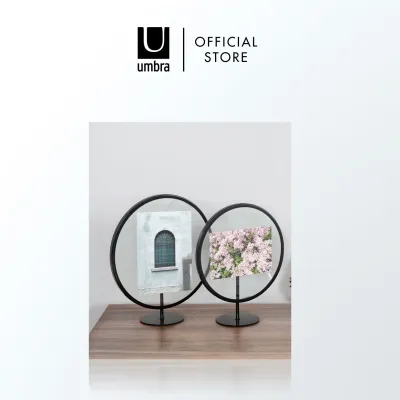

Prices are valid at publication and may change. Please refer to the product page for the latest price.
You must also decide whether you want the frames to blend seamlessly with your existing decor or serve as a deliberate, contrasting statement. A cohesive approach involves matching the frame materials and colors directly to your wall paint or nearby wooden furniture, creating a subtle, integrated look. A contrasting approach, such as placing a bold, metallic geometric frame against a dark, moody accent wall, creates a striking focal point that highlights the artwork as an independent design element.
Finally, consider the environmental factors of your specific room, such as natural light exposure and humidity levels. In Singapore’s tropical climate, walls near large windows receive intense sunlight, which can cause glare on glass frame fronts and accelerate the fading of printed photographs. Identifying these spatial and environmental baselines early in the planning process ensures that your chosen frame style not only looks appealing but also functions practically within your living space.
Matching Umbra Frame Designs to Interior Styles
Pairing the right frame silhouette with your interior theme requires a careful evaluation of profiles, materials, and dimensions to ensure long-term visual harmony.

Modern and Minimalist Spaces
For homes that embrace modern, minimalist, or contemporary design, the goal is to maintain clean lines and uncluttered visuals. Look for frames with exceptionally slim profiles, metallic finishes like brushed brass or matte black, or frameless floating designs that allow the wall color to show through. Floating frames are particularly effective in minimalist spaces because they eliminate the traditional heavy border, making the artwork appear suspended in mid-air and emphasizing the negative space around the image.
Color coordination is critical when working within a minimalist palette. Matching neutral, white, or monochromatic frame finishes to your wall color prevents the display from breaking the visual flow of the room. If your walls are painted in off-white, light gray, or muted beige, selecting frames in a matching tone creates a sophisticated, low-contrast look that lets the photograph itself take center stage without visual distraction.
When reviewing product specifications, pay close attention to the matting options included with the frames. A wide, generous mat board creates a professional, gallery-like border that isolates the image and draws the viewer’s eye inward. In minimalist decor, utilizing a large mat with a relatively small photo is a classic technique to introduce breathing room and elevate simple snapshots into formal art pieces.
Rustic, Industrial, and Eclectic Rooms
If your home features a rustic, industrial, or eclectic aesthetic, you have the freedom to explore frames that add texture, warmth, and character to the space. Look for designs that incorporate wood-grain finishes, distressed textures, or mixed-material constructions, such as metal wire frames paired with wooden bases. These elements complement organic materials like indoor plants, exposed brick, concrete screed walls, and woven textiles, adding depth to a layered interior.
In eclectic or industrial rooms, the visual density of the decor is typically higher, meaning your frames must have enough physical or visual weight to avoid getting lost in the surroundings. Heavier frame profiles, dark wood tones, or bold geometric wire structures can hold their own against busy wallpapers, patterned fabrics, and diverse furniture styles. However, balance is key; ensure the frame’s visual weight matches the scale of nearby furniture to prevent the wall from feeling top-heavy or chaotic.
Before making a purchase, always verify the actual material composition on the product label rather than relying solely on visual finishes or category names. Some frames may feature a realistic wood-grain wrap over a lightweight composite or plastic core, while others are constructed from solid natural wood or powder-coated steel. Understanding the true material composition helps you assess the frame’s durability, weight, and suitability for high-humidity areas like hallways or kitchens.
Gallery Walls and Mixed-Media Displays
Creating a gallery wall or a mixed-media display allows you to tell a personal story while adding dynamic visual interest to a blank wall. To ensure cohesion across a diverse collection, try mixing varying frame sizes while maintaining a consistent color or material family. For example, combining square, rectangular, and round frames all finished in matte black or natural ash wood creates a curated, collected-over-time look that feels unified rather than chaotic.
If you prefer a more formal, structured appearance, a grid-like gallery layout is an excellent choice. This approach utilizes uniform frame styles, sizes, and matting, arranged in precise rows and columns. Grid layouts work exceptionally well in formal dining areas, entryways, or along long hallways, providing a clean, architectural feel that mimics a professional art gallery.
To simplify the installation of complex layouts, review the included hardware and hanging templates provided by the manufacturer. Many multi-frame sets include paper templates that you can tape to the wall beforehand, allowing you to visualize the spacing and mark the exact nail or screw placements. Utilizing these templates prevents unnecessary wall damage and ensures that your final arrangement is perfectly level and evenly spaced.
Sizing, Proportion, and Layout Considerations
Achieving visual balance on your wall requires precise measurements and an understanding of spatial proportions. Begin by measuring the available wall area—both the width and the height—where you plan to hang the frames. As a general rule of thumb, a wall display should occupy approximately 60% to 75% of the available empty wall space that is not covered by furniture or architectural moldings. A display that is too small will look lost and insignificant, while one that is too large can make the entire room feel cramped and confined.
When selecting a frame, it is crucial to distinguish between the outer frame dimensions and the inner photo size. The outer dimensions represent the actual physical footprint the frame will occupy on your wall, which is often significantly larger than the photo it holds due to the width of the frame profile and the inclusion of matting. For instance, a frame designed for a 5×7 inch photo might have an outer dimension of 10×12 inches; failing to account for this difference can lead to purchasing frames that do not fit your planned layout.
Spacing between multiple frames is another critical factor that influences the overall feel of the display. For a cohesive gallery wall, aim for a consistent spacing of 5 to 8 centimeters between each frame. Placing frames too far apart fragments the display, causing the eye to jump awkwardly from one image to another rather than viewing the arrangement as a single, unified composition. Conversely, spacing them too closely can create a cluttered, claustrophobic effect.
Finally, consider the viewing distance and the ceiling height of your room when determining the hanging elevation. In Singapore, standard residential ceiling heights typically range from 2.6 to 2.8 meters. To optimize sightlines, the center of your single frame or the center point of your gallery wall layout should hang at approximately eye level, which is generally 140 to 150 centimeters from the floor. If you are hanging frames above a piece of furniture like a sofa or a console table, position the bottom of the frames 15 to 20 centimeters above the top of the furniture to maintain a connected, balanced relationship.
Material, Finish, and Hardware Checks Before Buying
Before finalizing your purchase, it is essential to verify the physical attributes and installation requirements of your chosen frames to ensure a safe and secure mount. Read the manufacturer’s specifications carefully to check the weight limits and the materials used for the frame front. While glass offers classic clarity and scratch resistance, it is significantly heavier than acrylic glazing. For larger formats or homes with active children and pets, lightweight acrylic may be a safer, more practical alternative.
Next, confirm that the backing material and the included hanging mechanisms are compatible with your specific wall type and its structural capacity. In Singapore, internal walls are frequently constructed of solid concrete or brickwork, which requires a masonry drill bit, plastic wall plugs, and sturdy screws to hang heavy items securely. If you are mounting frames on drywall partition walls, which are common in newer condominium layouts, you must use specialized hollow-wall anchors or toggle bolts to distribute the weight safely and prevent the plasterboard from tearing.
Maintaining the appearance of your frames requires adhering to proper care instructions to avoid damaging the finishes or the glazing. For acrylic fronts, avoid using standard glass cleaners or harsh chemical solvents, as these can cause the plastic to cloud, yellow, or scratch easily. Instead, use a soft, dry, lint-free microfiber cloth to gently wipe away dust and fingerprints. If a deeper clean is necessary, check the manufacturer’s care label for approved cleaning solutions or use a highly diluted mixture of mild dish soap and water, testing it on a small, inconspicuous area first.
Safety should always be your top priority when installing wall decor. If you are planning to hang exceptionally heavy, oversized frames, or complex multi-frame installations at a significant height, do not hesitate to pause and consult a qualified professional handyman. Attempting to mount heavy glass-fronted frames on unstable walls without the correct tools, anchors, or structural checks can lead to falling hazards, property damage, or personal injury. Taking the time to verify your wall type and hardware compatibility beforehand ensures your curated display remains beautiful and secure for years to come.
Frequently Asked Questions (FAQ)
Can I mix different Umbra frame styles on the same wall?
Yes, you can successfully mix different frame styles on the same wall by establishing a clear, unifying element that ties the collection together. This unifying thread could be a consistent color palette, such as using only black and white frames, or a shared material finish like natural wood tones. By keeping one design variable constant, you can experiment with different frame shapes, depths, and profiles without making the wall look disorganized.
When combining highly distinct styles, such as pairing a sleek, geometric metal frame with a thicker, textured wooden frame, pay close attention to the visual weight of each piece. Distribute the heavier, more dominant frames evenly throughout the layout, placing them toward the center or bottom to anchor the composition. To ensure success, lay the physical frames out on the floor and adjust their positions until you achieve a balanced arrangement before driving any nails into your wall.
How do I clean and maintain acrylic or glass frame fronts?
Cleaning and maintaining your frame fronts requires gentle techniques to preserve their clarity and prevent surface damage. Always refer to the manufacturer’s care label or instruction manual for specific cleaning restrictions before applying any liquid. For glass fronts, a standard glass cleaner applied to a microfiber cloth—never sprayed directly onto the frame—is usually sufficient to remove smudges and dust.
For acrylic glazing, which is more sensitive to scratching and chemical damage than glass, avoid all ammonia-based cleaners, paper towels, and abrasive sponges. Use a clean, dry, lint-free microfiber cloth to gently sweep away dust particles. If the acrylic has stubborn smudges, use a specialized acrylic cleaner or a damp cloth with a tiny drop of mild soap, making sure to test the solution on a small, hidden corner of the frame first to ensure it does not cause clouding or discoloration.

Community discussion
Share your experience or ask a question. Comments are reviewed before publication.