
Finding the right seat cushion depends on balancing your body’s pressure-relief needs, your preferred level of responsiveness, and your local seating environment. While memory foam excels at deep contouring and pressure distribution, gel offers excellent temperature regulation and structural stability, and latex provides a buoyant, highly breathable bounce. Understanding how these materials interact with your body weight and ambient temperature is the key to transforming an uncomfortable office chair or dining seat into a supportive oasis.
Identify Your Primary Seating Challenge
Before comparing materials, you must evaluate your daily sitting habits and the specific discomforts you experience. Sitting for extended periods—such as an eight-hour workday in a home office or a long commute—places significant cumulative stress on your musculoskeletal system. Take note of whether your discomfort manifests as a sharp ache in your tailbone (coccyx), a dull strain in your lower back, or a pins-and-needles sensation in your thighs that suggests restricted circulation.
Your physical environment also plays a critical role in how a cushion performs. In a warm, tropical climate like Singapore’s, ambient room temperature can dramatically alter both your personal comfort and the physical properties of certain cushion materials. A room cooled by a ceiling fan presents different thermal challenges than a fully air-conditioned office, meaning heat dissipation should be a primary factor in your decision. Additionally, consider the baseline firmness of your current chair, as a cushion will behave differently on a hard wooden dining chair compared to a soft, sagging mesh office chair.
Products mentioned in this guide
![[SG INSTOCK] Seat Cushion Memory Foam Orthopedic Pressure Relief Car Home Soft Office Chair Pad Wheelchair for Tailbone Sciatica Back Pain Relief](https://img.lazcdn.com/g/p/005adf43d933a7c5edf0e3585d56492d.jpg_400x400q80.jpg_.webp)
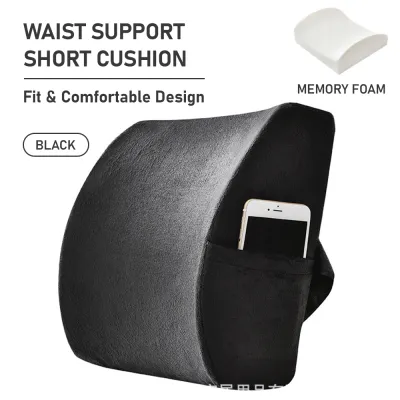
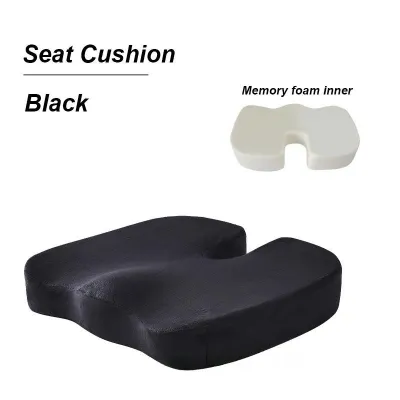
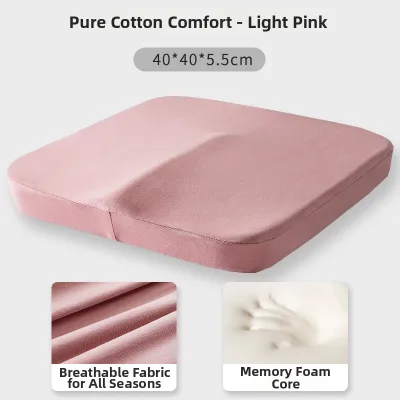
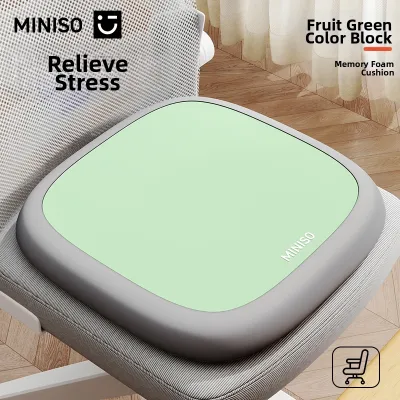
Prices are valid at publication and may change. Please refer to the product page for the latest price.
Memory Foam Cushions: Contouring and Pressure Distribution
Memory foam, or viscoelastic polyurethane foam, is highly regarded for its ability to conform closely to the unique contours of your body. When you sit on memory foam, your body heat and weight soften the material, allowing it to compress and distribute your weight evenly across the entire seating surface. This custom-molded fit significantly reduces peak pressure points on your sit bones (ischial tuberosities) and tailbone, making it an excellent choice for those seeking deep, cradling pressure relief.

However, this high level of contouring comes with distinct physical trade-offs that you must consider. Because memory foam relies on body heat to conform and has a dense, closed-cell structure, it tends to retain heat over long periods. In warmer environments, this can lead to a sweaty, uncomfortable seating experience. Additionally, the slow-recovery nature of viscoelastic foam creates a “sinking” sensation, which can make it feel as though you are stuck in one position, requiring more physical effort to shift or stand up.
Consequently, the ideal user profile for a memory foam seat cushion consists of individuals who require targeted joint relief and deep pressure distribution, particularly those who work in consistently air-conditioned or cooler spaces. If you sit relatively still for long stretches and prioritize a highly cushioned, body-hugging feel over ease of movement, memory foam provides the specialized support you need.
Gel and Gel-Infused Cushions: Temperature Regulation and Firmness
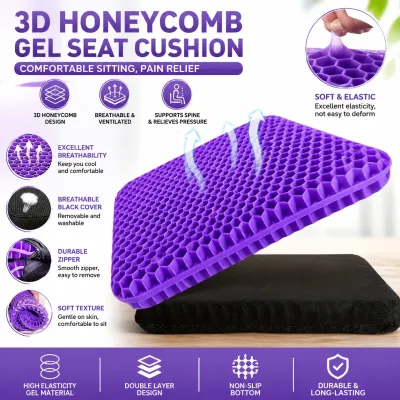
Gel seat cushions are engineered to address the heat retention issues common in traditional foam products while providing a highly stable seating surface. Many of these cushions feature an open, elastic gel grid design—often referred to as a honeycomb structure—which allows air to flow freely beneath you rather than trapping it against your body. Other designs incorporate gel-infused layers or solid gel pads on top of a foam base to help absorb and dissipate initial body heat.
In terms of support, gel cushions offer a noticeably firmer and more structured feel than memory foam. The elastic columns of a gel grid are designed to buckle only when a specific threshold of weight is applied, distributing your load across the surrounding columns without allowing you to “bottom out” against the hard chair underneath. This structural integrity ensures that the cushion maintains its height and supportive properties even during long, continuous hours of use.
This makes gel cushions highly suitable for individuals who tend to overheat easily or who sit in non-air-conditioned rooms where airflow is paramount. If you prefer a firm, stable platform that keeps you positioned on top of the cushion rather than sinking into it, a gel-based option will deliver the temperature-neutral, active support you require.
Latex Cushions: Responsive Support and Durability
Latex seat cushions offer a unique combination of natural responsiveness, open-cell breathability, and exceptional long-term durability. Derived from the sap of rubber trees (in the case of natural latex) or manufactured chemically (for synthetic latex), this material is inherently resilient and quick to spring back to its original shape. Natural latex is often preferred for its superior breathability and lower environmental footprint, while synthetic or blended latex offers a more uniform consistency at a different price point.
Unlike memory foam, which slowly molds to your body, latex provides an immediate “push-back” effect when weight is applied. This buoyant responsiveness prevents the heavy, stuck feeling associated with deep contouring, allowing you to shift positions, turn, or stand up with minimal resistance. The open-cell structure of latex, often enhanced by molded ventilation pinholes, also facilitates natural air circulation to prevent heat buildup.
The ideal user profile for a latex seat cushion includes active sitters who frequently shift their posture, turn to reach items, or stand up throughout the day. If you appreciate a cooler, highly resilient seating surface that offers reliable, springy support without sacrificing ease of movement, latex is an outstanding material choice.
Material Comparison Matrix
To help you quickly evaluate the primary differences between these three common cushion materials, the table below outlines their general performance characteristics across key comfort dimensions.
| Dimension | Memory Foam | Gel / Gel Grid | Latex |
|---|---|---|---|
| Pressure Relief | High (Deep contouring) | Moderate (Even distribution) | Moderate to High (Buoyant support) |
| Heat Dissipation | Low (Retains body heat) | High (Promotes airflow) | Moderate to High (Breathable open-cell) |
| Responsiveness | Low (Slow recovery) | Moderate (Elastic rebound) | High (Immediate spring-back) |
| General Firmness | Soft to Medium (Heat-sensitive) | Medium-Firm to Firm | Medium to Medium-Firm |
Decision Framework: Matching Cushions to Your Needs
To finalize your selection, consider how your specific physical needs and daily routine align with these conditional scenarios.
Choose a memory foam cushion if your primary goal is to alleviate intense, localized pressure on your tailbone or sit bones, and you spend your sitting hours in a temperature-controlled environment. The deep contouring properties will help isolate these pressure points, provided you do not mind a warmer seating surface and a slower response when moving.
Choose a gel or gel-infused cushion if you struggle with overheating during long sitting sessions or if you require a highly stable, firm surface that will not flatten out over time. This option is particularly beneficial if you use the cushion in a fan-cooled room or a tropical climate where heat buildup is a constant distraction.
Choose a latex cushion if you prefer a natural, highly durable material that offers a buoyant, springy feel and allows you to move freely without feeling restricted. Latex is ideal for those who want a balance of reliable pressure relief, excellent breathability, and a quick-recovery surface.
Neither material may fit your needs if you are experiencing severe, chronic pain, recovering from a recent spinal injury, or dealing with a diagnosed medical condition that affects your posture. In these instances, standard consumer seat cushions cannot substitute for specialized orthopedic or custom-molded medical devices prescribed by a qualified healthcare professional.
Pre-Purchase Checklist: Sizing, Covers, and Safety
Before making your final purchase, you must verify several practical dimensions and product specifications to ensure the cushion integrates seamlessly with your existing furniture. First, measure the depth and width of your chair’s seat pan, comparing these measurements directly to the cushion’s dimensions to avoid overhang or a mismatched fit. If you are using the cushion in an office chair with fixed armrests or in a wheelchair, ensure the added height of the cushion will not restrict your thigh clearance or alter your arm alignment uncomfortably.
Next, evaluate the design and material of the cushion cover. Look for a cover that is easily removable and machine-washable to maintain hygiene over months of daily use. The underside of the cover should feature a reliable non-slip textured base or securing straps to prevent the cushion from sliding forward when you sit down or stand up.
Finally, check the manufacturer’s product label to verify the weight capacity limits, as exceeding these limits can cause any of these materials to bottom out prematurely. You should also look for recognized material safety certifications, such as CertiPUR-US for polyurethane foams or OEKO-TEX for textile covers and latex, to ensure the product has been tested for harmful emissions and substances.

Community discussion
Share your experience or ask a question. Comments are reviewed before publication.