
Finding the right seat cushion for your butt depends entirely on your body weight, sitting duration, and temperature preferences. There is no single best material; memory foam, gel, and latex each offer distinct pressure relief and support mechanisms. This guide breaks down how each material behaves under pressure so you can match the cushion to your specific daily sitting situation.
Selecting an improper cushion can lead to discomfort, poor posture, and premature wear of the product itself. By understanding the physical properties of these three common materials, you can make an informed decision that enhances your daily comfort, whether you work from a home office, sit at a corporate desk, or need extra support on a dining chair.
How Memory Foam, Gel, and Latex Support Your Body
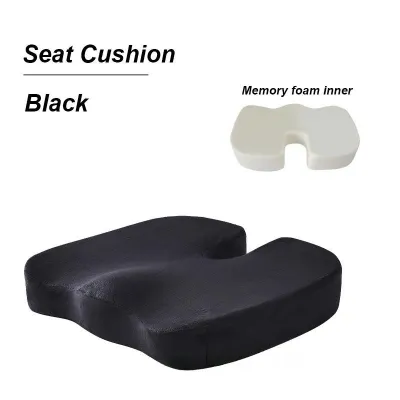
Memory foam, or viscoelastic polyurethane foam, is highly regarded for its contouring behavior. When you sit on memory foam, the material reacts to both your body weight and your body heat. It softens in response to warmth, allowing it to mold precisely to the unique shape of your hips and thighs. This custom contouring distributes your weight across a larger surface area, which helps minimize high-pressure hot spots on your sit bones. However, because memory foam relies on heat to conform, its density plays a major role in how supportive it feels. High-density memory foam offers deeper, more structured support but takes longer to adapt, while low-density foam molds quickly but may compress too easily under heavier loads.
Products mentioned in this guide
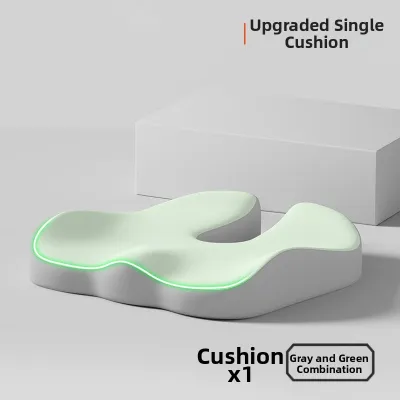
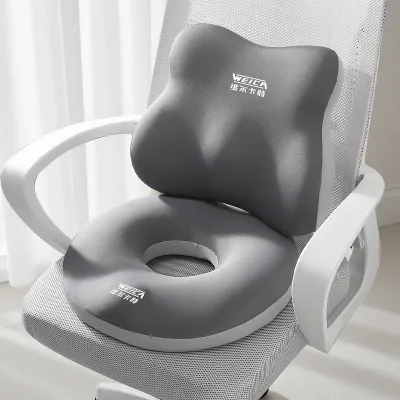
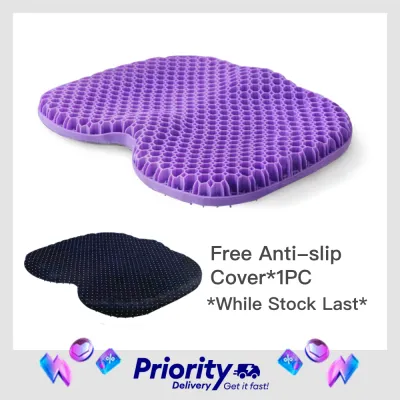
Prices are valid at publication and may change. Please refer to the product page for the latest price.
Gel seat cushions utilize a completely different physical mechanism to distribute weight. Most gel cushions are constructed from an elastic polymer arranged in a honeycomb or grid pattern, often referred to as column buckling gel. Instead of sinking and molding like foam, the walls of the gel grid stand firm until a specific weight threshold is reached. Once that threshold is crossed, the columns buckle and shift the load to surrounding columns. This unique behavior allows the cushion to provide firm, immediate support under your thighs while yielding gently under your prominent sit bones. Additionally, the open spaces within the grid structure do not trap air, allowing heat to escape rather than building up beneath you.
Latex cushions are made from natural or synthetic rubber and are characterized by their responsive bounce and structural resilience. Unlike memory foam, which slowly conforms and holds an impression, latex pushes back against pressure immediately. This elastic quality prevents you from feeling like you are sinking into a hole, making it much easier to shift your weight or stand up. Latex is manufactured with an open-cell structure and is often perforated with small ventilation holes during production. This design ensures consistent airflow throughout the cushion core, preventing the material from trapping moisture or heat during extended sitting sessions.
Comparing Comfort and Pressure Relief for Daily Sitting
When evaluating comfort, the depth to which you sink into a cushion—and the risk of “bottoming out”—is a primary consideration. Bottoming out occurs when your body weight completely compresses the cushion material, leaving your sit bones resting directly against the hard chair surface beneath. Memory foam is highly susceptible to bottoming out if the cushion is too thin or if the foam density is too low for your body weight. Over a long sitting session, as the foam absorbs more body heat, it continues to soften and sink lower. Gel cushions, with their buckling column design, have a firm physical limit to how far they will compress, making them highly resistant to bottoming out even during long hours of use. Latex offers a middle ground, compressing under weight but maintaining a consistent upward resistance that keeps your body elevated.

Rebound speed is another critical factor that influences your daily comfort and mobility. Memory foam has a slow recovery rate, meaning it retains your body impression for several seconds after you move. While this feels incredibly supportive when you remain perfectly still, it can make shifting your posture feel sluggish or restrictive. If you frequently reach for items on your desk or adjust your seating position, the instant rebound of gel and latex is highly advantageous. Both materials recover their shape immediately as you shift, providing continuous, uninterrupted support without requiring you to fight against a pre-formed foam impression.
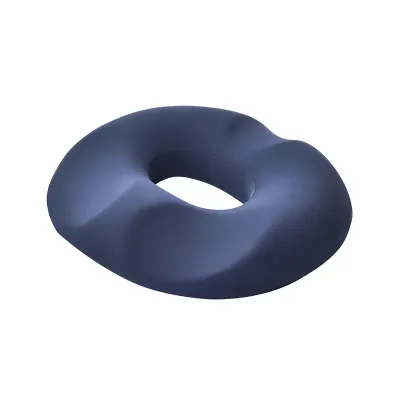
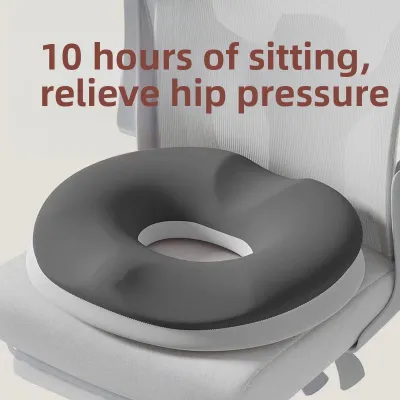
Pressure distribution patterns also vary significantly across these materials, particularly around the tailbone and sciatic nerve. Memory foam excels at cradling the entire pelvic region, which can help distribute pressure away from sensitive areas if the cushion features an ergonomic cutout. However, if the foam is too soft, the lack of structural support can cause your pelvis to tilt backward, potentially straining your lower back. Gel grids distribute pressure evenly across the entire contact surface by collapsing only where the pressure is greatest, maintaining a neutral pelvic alignment. Latex provides a firm, springy base that supports the natural curvature of your spine by resisting deep compression, making it an excellent option for those who prefer a highly active, upright sitting posture.
Durability, Care, and Performance in Singapore's Climate
Operating in a warm, humid tropical environment like Singapore introduces specific challenges for seat cushion materials. Heat retention is a major drawback for standard memory foam. Because the material is dense and relies on body heat to contour, it acts as an insulator, trapping warmth and moisture close to your body. This can quickly lead to a sweaty, uncomfortable seating experience during long working hours. Gel cushions perform exceptionally well in humid climates because the open grid design allows air to circulate freely, preventing heat buildup. Latex also offers superior breathability due to its open-cell structure and ventilation channels, making both gel and latex highly suitable for non-air-conditioned spaces or warm afternoons.
Proper care and maintenance are essential to preserve the structural integrity of your cushion, especially in humid conditions where moisture can accelerate material breakdown. Most cushion cores—whether memory foam, gel, or latex—cannot be placed in a washing machine or dryer. Water can trap inside the open cells of memory foam and latex, leading to mold growth and structural crumbling. Instead, you must rely on a removable, machine-washable cover to protect the inner core from sweat, dust, and spills. When cleaning is necessary, the inner core should only be spot-cleaned with a damp cloth and allowed to air dry completely in a shaded, well-ventilated area. Never expose memory foam or latex to direct sunlight, as ultraviolet rays will rapidly degrade the polymers, causing them to yellow, crack, and lose their elasticity.
Over time, all seat cushions will exhibit observable signs of material degradation. Memory foam eventually suffers from permanent indentation, where the foam fails to recover its original flat shape even after hours of non-use. This indicates that the cell structure has collapsed, and the cushion can no longer provide adequate pressure relief. Latex degradation typically manifests as flaking, crumbling, or a noticeable loss of its characteristic springy bounce. Gel cushions are highly durable and rarely sag, but the outer protective film can wear down, or the individual grid walls can tear under extreme stress. Regularly inspecting your cushion for these signs ensures you do not continue sitting on a collapsed support system that could compromise your posture.
How to Choose the Right Seat Cushion for Your Needs
To select the ideal seat cushion for your specific setup, consider how your body weight, sitting habits, and environment align with each material’s strengths.
You should choose a memory foam cushion if:
- You prefer a deeply cradled, body-conforming sensation that molds to your exact shape.
- You sit in a temperature-controlled, air-conditioned environment where heat retention is less of a concern.
- You have an average body weight and do not experience issues with cushions bottoming out.
You should choose a gel cushion if:
- You require active cooling and maximum airflow to combat warm, humid conditions.
- You have a higher body weight and need a firm, resilient surface that resists deep compression.
- You prefer a cushion that does not sink deeply, allowing you to slide in and out of your chair easily.
You should choose a latex cushion if:
- You want a highly responsive, springy support system that promotes active posture and easy movement.
- You prefer natural, durable materials with inherent breathability and resistance to dust mites.
- You want a consistent level of support that does not change or soften in response to your body heat.
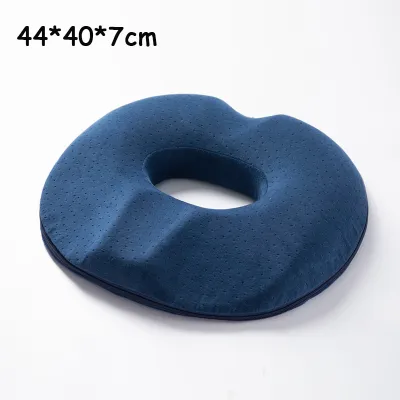
Before finalizing your purchase, always verify the physical dimensions of your chair to ensure the cushion fits securely within the seat pan without hanging over the edges. Check if the cushion cover features a non-slip base, which is crucial for preventing the cushion from sliding around on smooth wooden or plastic office chairs. Finally, if you are experiencing severe, chronic, or radiating pain in your tailbone, hips, or lower back, consult a qualified healthcare professional for personalized advice, as a seat cushion is a comfort aid rather than a medical cure.
Frequently Asked Questions (FAQ)
Are hybrid gel-memory foam cushions better than single-material options?
Hybrid cushions typically feature a layer of cooling gel—either as a solid sheet, a grid, or infused beads—bonded to a supportive memory foam base. These designs attempt to combine the deep contouring comfort of memory foam with the initial cooling sensation of gel. While they can offer a more comfortable initial touch than standard memory foam, the underlying foam layer still restricts overall airflow. Over extended sitting sessions, the gel layer will eventually warm up to match your body temperature, meaning a hybrid cushion may still retain more heat than a pure gel grid or a highly ventilated latex cushion. A hybrid is a practical compromise if you desire foam contouring but want to take the edge off initial heat buildup.
How can I tell when it is time to replace my seat cushion?
You can determine if your seat cushion needs replacing by performing a few simple visual and physical checks. First, observe the cushion when no weight is applied; if you notice visible sagging, hollows, or a permanent body impression that does not disappear after several hours, the material has lost its structural integrity. Second, pay attention to how quickly you feel the hard surface of the chair beneath you when you sit down; if you bottom out almost immediately, the cushion is no longer distributing your weight. Finally, if you begin to experience new or returning physical discomfort, stiffness, or fatigue in your hips and lower back during your usual sitting routine, it is a strong indicator that the cushion’s supportive properties have degraded and it is time for a replacement.

Community discussion
Share your experience or ask a question. Comments are reviewed before publication.