
The Philips Eridani ceiling light series can be an excellent fit for standard Singapore HDB flats with 2.6m ceilings, provided you carefully match the specific model’s mounting type, physical dimensions, and light output to your room’s layout. Because a 2.6m ceiling height leaves limited vertical clearance, choosing the wrong fixture profile or incorrect brightness levels can quickly make a room feel cramped or uncomfortably harsh.
To ensure a successful installation, homeowners must evaluate whether a recessed downlight or a surface-mounted version of the Eridani best suits their ceiling structure. By verifying key physical proportions, calculating the necessary lumen distribution, and confirming local electrical compatibility, you can achieve a balanced, modern look that maximizes both headspace and visual comfort. The following assessment guide details exactly how to verify these factors before making your purchase.
Assessing Physical Proportions and Visual Weight
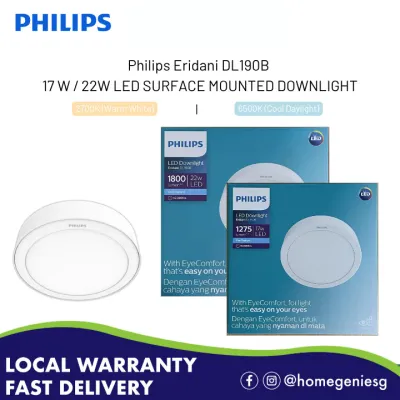
When dealing with a standard 2.6m HDB ceiling, vertical clearance is your most valuable asset. To maintain a safe and comfortable living environment, interior design standards recommend keeping at least 2.1m to 2.2m of clear headspace between the floor and the bottom of any light fixture. If you are considering a surface-mounted Philips Eridani model, you must verify its overall thickness or drop height. A low-profile fixture that protrudes minimally from the ceiling slab is ideal, as it preserves precious vertical space and prevents taller occupants or household items from accidentally contacting the light.
Products mentioned in this guide
![[Climate Voucher] PHILIPS Eridani 12W / 18W / 24W Surface Mounted Ceiling Light Concrete Ceiling Warm Cool Daylight](https://img.lazcdn.com/g/p/b0b8cdbe06560ee9f647429ec02035f2.jpg_400x400q80.jpg_.webp)
![[3 Year Warranty] Philips Eridani Round LED Surface Light - 18W Cool DayLight](https://img.lazcdn.com/g/p/ebbe196fb472fca0aedf9da6368e3a4b.png_400x400q80.png_.webp)
Prices are valid at publication and may change. Please refer to the product page for the latest price.
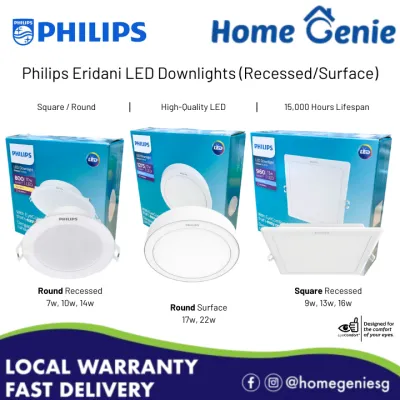
If you opt for the recessed downlight version of the Eridani, the physical challenge shifts from room clearance to ceiling cavity depth. Recessed downlights require a false ceiling to hide the driver and the body of the fixture. You must measure the depth of your false ceiling cavity to ensure it can accommodate the recess depth specified on the product packaging. If the cavity is too shallow, the fixture will not sit flush against the gypsum board, ruining the clean, integrated look typical of modern HDB renovations.
Evaluating the fixture’s diameter relative to your room’s overall width is equally important for maintaining visual balance. For compact HDB spaces, installing a single, oversized ceiling light can make the ceiling appear lower than it actually is. A helpful method is to scale the fixture size to the room’s footprint; smaller rooms benefit from multiple distributed downlights or a single compact surface light, whereas larger living areas can handle slightly wider profiles. The minimalist, clean-bezel design of the Eridani series generally carries a light visual weight, meaning its simple shape and white finish help it blend seamlessly into plaster ceilings to reduce visual clutter.
Evaluating Light Output and Glare at 2.6m
At a ceiling height of 2.6m, the distance between the light source and your eyes is relatively short, making proper light distribution and glare control critical. To avoid creating a space that feels either under-illuminated or blindingly bright, you must cross-reference the fixture’s lumen output with the square footage of your room. You can calculate your total lighting needs by multiplying the room’s area in square meters by the recommended lux level for that specific space. For example, a standard HDB living room typically requires around 150 lux, meaning a 15-square-meter room would need a total light output of approximately 2,250 lumens, which can be distributed across multiple Eridani fixtures.

Because the light source sits closer to eye level in a 2.6m room, direct glare can easily cause eye strain and headaches. When shopping for your light fixtures, check the product specifications to confirm that the model includes an integrated frosted diffuser or an opaque shade. These components scatter the light evenly, preventing the harsh, direct glare of exposed LED chips. A well-diffused light source ensures that even when you look upward, the illumination remains soft and comfortable for the eyes.
Color temperature also plays a significant psychological role in how spacious your HDB flat feels. The Philips Eridani series typically offers options ranging from warm white to cool daylight. While color temperature is a matter of personal preference, cooler temperatures (such as cool white or daylight) can make a low-ceilinged room feel more open, airy, and expansive. Conversely, warm white creates a cozy, intimate atmosphere but can make a small room feel slightly more enclosed. Consider the primary function of each room before selecting the color temperature for your fixtures.
Checking HDB Installation and Electrical Compatibility
Before purchasing any ceiling light, you must ensure that its physical mounting requirements and electrical specifications align with standard HDB structures. Standard HDB concrete ceilings have strict drilling and load-bearing limits. While lightweight LED fixtures like the Eridani rarely pose a structural risk, you must verify the total weight of the fixture against the load limits of your ceiling box. If you are installing a heavier surface-mounted model or mounting fixtures onto a false ceiling, ensure that the support structure is properly reinforced to prevent sagging or structural failure over time.
Electrical compatibility is another critical checkpoint for Singapore homeowners. Verify that the fixture is rated for the standard local voltage of 220V to 240V and check its compatibility with your existing wall switches. If you plan to connect the lights to a smart home system or use a wall dimmer, you must check the product packaging to confirm if the specific Eridani model supports dimming. Using a non-dimmable LED fixture with a standard dimmer switch can lead to persistent flickering, buzzing, or premature driver failure.
Working with electricity always carries inherent risks, especially when dealing with fixed wiring or working at heights. Always isolate the main power supply at your home’s distribution board before inspecting, installing, or replacing any light fixture. If your installation requires running new electrical wires, modifying your false ceiling, or if you are unsure about the compatibility of your existing setup, do not attempt a DIY installation. Instead, hire a Licensed Electrical Worker (LEW) to complete the work safely and in compliance with local electrical safety regulations.
Room-by-Room Suitability Guide
In the living and dining areas of an HDB flat, lighting serves both functional and aesthetic purposes. Because these are high-traffic zones where family members gather, achieving even ambient lighting is essential. A series of recessed Eridani downlights spaced evenly across the ceiling can provide excellent, shadow-free illumination without encroaching on your vertical space. If you prefer a single surface-mounted fixture, ensure it is positioned centrally over your main seating or dining area to act as a clean, unobtrusive visual anchor that does not disrupt the flow of the room.
For HDB bedrooms, the focus shifts toward relaxation and glare control. Since you will often be looking upward while lying in bed, placing high-output, non-dimmable lights directly overhead can be highly uncomfortable. To create a restful environment, consider installing lower-wattage Eridani models or positioning the fixtures closer to the wardrobe or walkways rather than directly over the bed. If your chosen model supports dimming, integrating it with a compatible dimmer switch will allow you to adjust the light levels to suit different times of day.
Kitchens and bathrooms present unique environmental challenges due to high humidity, steam, and splashing water. Before installing any Eridani fixture in these zones, you must check the product label for its Ingress Protection (IP) rating. Standard indoor ceiling lights without moisture resistance are highly susceptible to water damage, short circuits, and corrosion. For safety and longevity, ensure that any fixture installed near a shower, sink, or heavy cooking area has the appropriate IP rating to withstand moisture, or restrict standard models to dry, well-ventilated areas of the home.
Frequently Asked Questions (FAQ)
Can I install the Philips Eridani on a false ceiling in my HDB?
Yes, recessed models of the Philips Eridani are designed specifically for false ceiling installations. However, you must verify that your false ceiling cavity has sufficient depth to accommodate the fixture’s height and driver safely. For surface-mounted models, ensure the gypsum board is properly reinforced with support channels to bear the weight of the fixture securely over time.
Does the Philips Eridani work with standard HDB dimmer switches?
Most standard Philips Eridani models are non-dimmable. You must check the specific product packaging or specification sheet for a dimmable label before attempting to connect it to a dimmer. Installing a non-dimmable LED light on a dimming circuit can cause severe flickering, loud buzzing noises, and permanent damage to the light’s internal driver.

Community discussion
Share your experience or ask a question. Comments are reviewed before publication.