
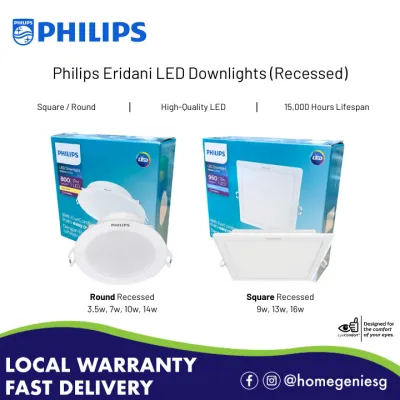
Evaluating the technical specifications of the Philips Eridani downlight series is an essential step in planning your home lighting layout. As integrated LED recessed fixtures, these downlights offer a streamlined design that fits flush against your ceiling, making them highly suitable for modern residential spaces. However, selecting the right model requires a clear understanding of how their physical and electrical characteristics align with your home’s architecture.
To ensure a successful installation, you must verify key metrics such as lumen output, color temperature, cut-out dimensions, and driver compatibility. By matching these manufacturer specifications to the specific needs of each room, you can achieve optimal brightness, visual comfort, and long-term reliability without encountering installation surprises.
Core Lighting Specifications to Verify
When reviewing the product label or official specification sheet for the Philips Eridani series, the lumen output and wattage are your primary indicators of brightness and energy consumption. Rather than assuming a higher wattage is always better, compare the lumen-to-watt ratio to evaluate energy efficiency. To determine the number of fixtures needed, calculate your target lumens based on the square footage of your room and the desired light levels, then select the appropriate wattage model from the manufacturer’s range.
Products mentioned in this guide
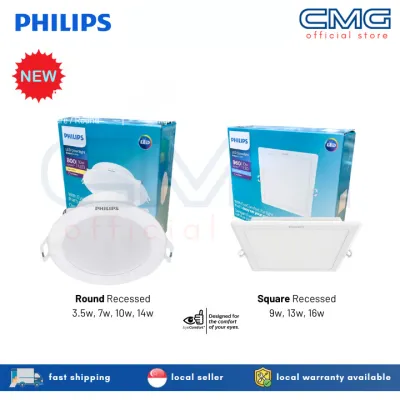
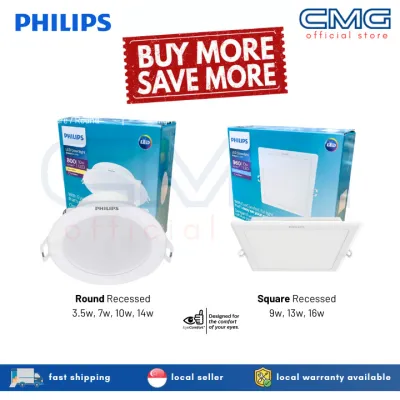
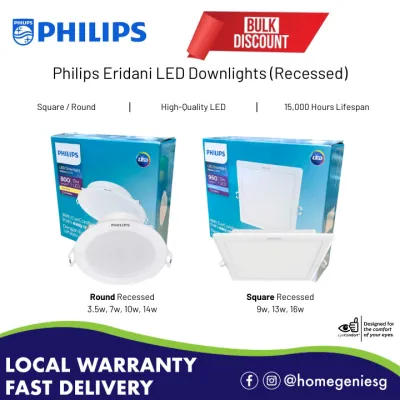
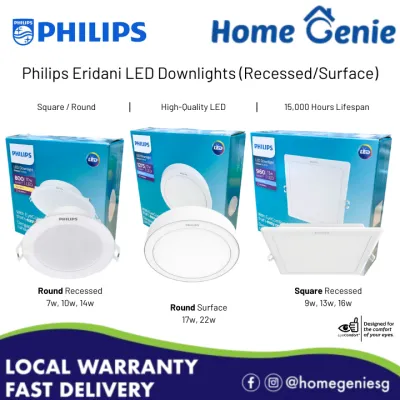
![[3 Year Warranty] Philips Eridani Round LED Surface Light - 18W Cool DayLight](https://img.lazcdn.com/g/p/ebbe196fb472fca0aedf9da6368e3a4b.png_400x400q80.png_.webp)
Prices are valid at publication and may change. Please refer to the product page for the latest price.
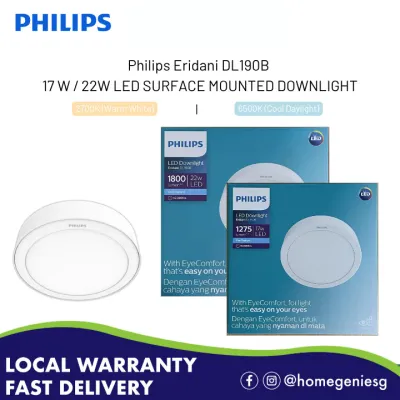
Correlated Color Temperature (CCT) is another critical specification that dictates the ambiance of your space. The Eridani series typically offers options ranging from warm white (around 3000K) to neutral white (4000K) and cool daylight (6500K). Because color temperature is a matter of conditional preference, you should verify the CCT marked on the packaging before purchasing, ensuring it aligns with the functional requirements of the room.
Beam angle specifications tell you how the light will distribute across your floor plan. Recessed downlights like the Eridani series generally feature a wide beam angle, often exceeding 100 degrees, which is designed to deliver broad, diffused flood illumination. If your goal is to highlight specific artwork or architectural features, check the spec sheet to confirm if the fixture provides a focused spot or a wide, general wash of light.
Design and Optical Features to Evaluate
Visual comfort depends heavily on the optical design of your recessed fixtures. When evaluating the Eridani series, look closely at the diffuser specifications and the recessed depth of the LED light source. A well-designed frosted diffuser helps scatter light evenly, minimizing direct glare and reducing the harsh glare that can cause eye strain when looking toward the ceiling.

Ceiling aesthetics require a clean, unobtrusive finish that complements your interior design. Verify the bezel width and trim material of the specific Eridani model you are considering. The standard white bezel is engineered to blend smoothly with plasterboard ceilings, but you should confirm the physical dimensions to ensure the trim covers any minor imperfections around the ceiling cut-out.
Thermal management is a critical factor in preserving the lifespan of any integrated LED fixture. Because heat buildup can degrade LED chips and drivers, check the manufacturer’s product description for details on the housing materials. Effective heat dissipation structures, whether utilizing thermally conductive plastics or aluminum components, ensure the downlight operates within safe temperature limits.
Installation and Electrical Compatibility
Before purchasing any recessed lighting, you must measure your ceiling’s physical limits. Compare your ceiling’s available cavity depth against the height of the downlight fixture to ensure there is adequate clearance for air circulation. Additionally, verify the exact cut-out diameter required for the specific Eridani model, as installing a fixture in an incorrectly sized hole can compromise both safety and aesthetics.
Electrical compatibility must be verified against your local residential power supply. In Singapore, residential electrical systems operate at a nominal voltage of 220V to 240V at 50Hz. Ensure the integrated LED driver of the downlight is rated for this range. You should also check whether the driver is built directly into the housing or sits externally, as this affects how you route the wiring within the ceiling plenum.
Dimming compatibility is a common point of confusion for homeowners. Many standard integrated LED downlights are non-dimmable by default. If you plan to use dimming switches, you must explicitly verify on the product packaging or spec sheet that the model supports dimming, and match it to a compatible dimmer switch protocol.
Safety must always be your top priority during installation. For any fixed electrical wiring, working at height, or modifying ceiling structures, always isolate the mains power at the distribution board before beginning work. Because improper electrical work poses severe fire and shock hazards, we highly recommend hiring a licensed electrician to handle the wiring and installation.
Matching Specifications to Room Requirements
For living rooms and dining areas, prioritize visual comfort and relaxation by selecting a warm white or neutral CCT. In these shared spaces, downlights with effective anti-glare diffusers are ideal, as they provide soft, ambient illumination that does not interfere with television viewing or conversation.
Task-oriented areas, such as kitchens, home offices, and study rooms, demand higher visibility and focus. For these zones, select downlights with a higher lumen output and a neutral to cool daylight CCT (4000K to 6500K). Ensure the fixtures are spaced evenly to eliminate shadows on countertops, desks, and food preparation areas.
Wet or damp zones, including bathrooms, kitchens, and covered outdoor balconies, require careful attention to Ingress Protection (IP) ratings. Standard indoor downlights are typically rated IP20, which only protects against solid objects and offers no moisture resistance. Check the product label to verify if the specific Eridani model has a suitable IP rating, such as IP44, before installing it in areas exposed to steam or water splashes.
Frequently Asked Questions (FAQ)
Can I use Philips Eridani downlights with my existing dimmer switches?
Most standard models in the Philips Eridani downlight range are non-dimmable. Before connecting them to any dimming circuit, you must check the product packaging or official specification sheet for an explicit dimmable rating. Connecting a non-dimmable LED fixture to a standard wall dimmer can lead to persistent flickering, buzzing, reduced lifespan, or immediate driver failure. If you require dimming, ensure you purchase a specific dimmable variant and consult a qualified electrician to verify compatibility with your wall switch.
How do I safely clean and maintain the downlight fixtures?
To clean your recessed downlights safely, always turn off the mains power switch first and allow the fixtures to cool down completely to prevent thermal shock or burns. Use a dry, clean, soft microfiber cloth to gently wipe away dust from the outer bezel and the diffuser surface. Never spray water, liquid cleaners, or harsh chemical solvents directly onto the fixture, as moisture can penetrate the ceiling seal, damage the synthetic finish, or enter the electrical housing and cause a short circuit.

Community discussion
Share your experience or ask a question. Comments are reviewed before publication.