
Choosing the right reading lamp is a critical decision for any student in Singapore, where long study sessions, late-night exam preparation, and compact living spaces are the norm. Whether you are setting up a study corner in a Housing & Development Board (HDB) flat or organizing a desk in a university dormitory, the quality of your desk lighting directly impacts your productivity and eye comfort. Three brands dominate the local market, each offering a distinct philosophy: Philips focuses on advanced optical engineering, Xiaomi emphasizes smart home integration and minimalist design, and IKEA provides highly affordable, modular simplicity.
To find the ideal lamp, you must look beyond aesthetic appeal and evaluate how each brand aligns with your daily study habits, desk dimensions, and budget. A lamp that works perfectly for a student typing on a laptop might not provide the right coverage for someone sketching on large sheets of paper or reading thick textbooks. By understanding the core strengths and trade-offs of Philips, Xiaomi, and IKEA, you can make an informed decision that supports your academic journey without cluttering your workspace or straining your eyes.
Essential Criteria for a Student Reading Lamp
Before comparing specific brands, it is essential to establish a baseline of what makes a reading lamp effective for prolonged study. The primary function of a study lamp is to provide sufficient, uniform illumination over your workspace while minimizing glare and eye fatigue. To achieve this, a lamp must offer a high degree of physical adjustability, allowing you to position the light source directly over your materials without casting shadows from your hands or head. A stable, weighted base or a secure clamp is necessary to prevent the lamp from tipping over when the arm is fully extended across a deep desk.
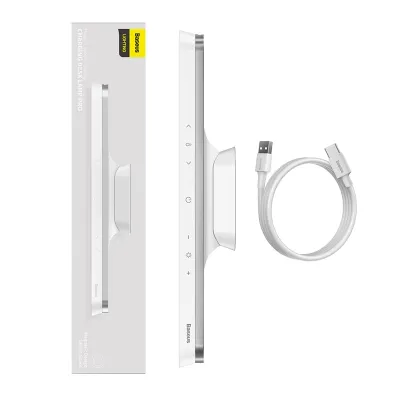
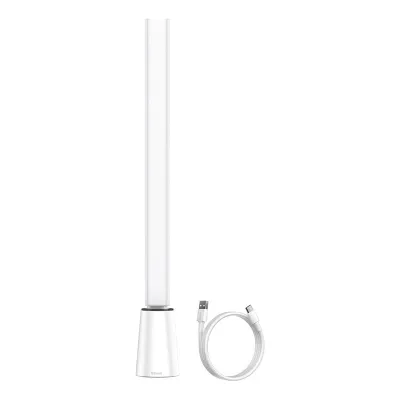
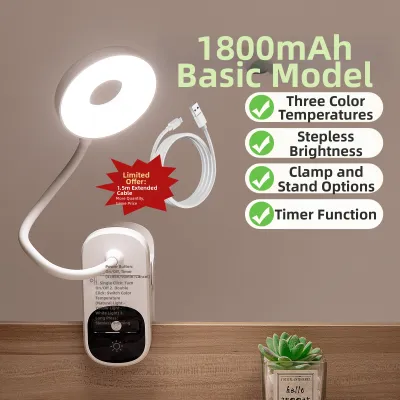
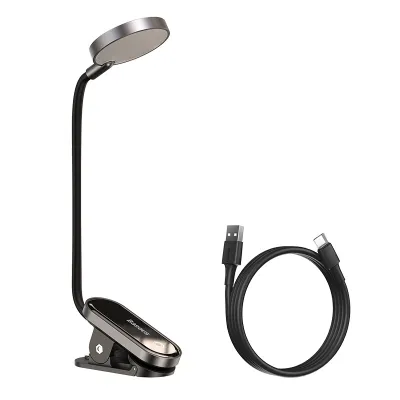
Products mentioned in this guide
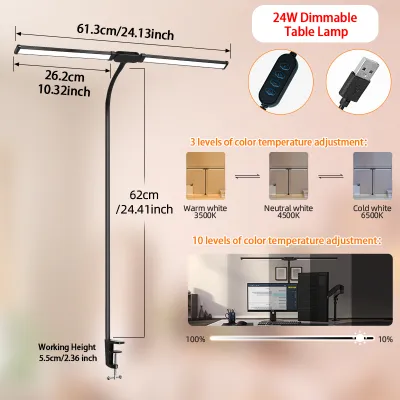
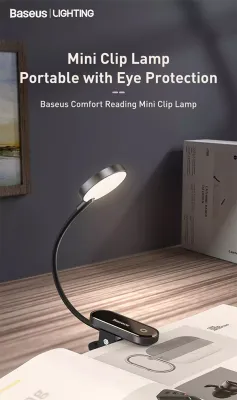
![[Pre-Order 18-25 Days]Banker Lamp Vintage European reading desk lamp bedroom bedside reading light solid wood eye-protecting iron table lamp](https://img.lazcdn.com/g/p/3c7586971f89f675495f663ab43088a9.jpg_400x400q80.jpg_.webp)
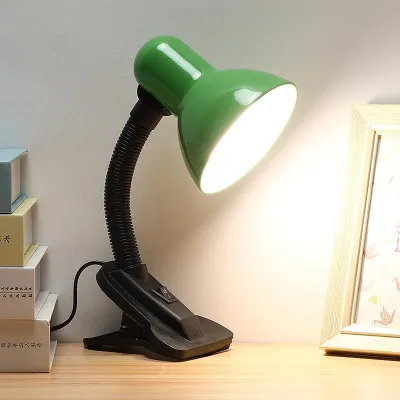
Prices are valid at publication and may change. Please refer to the product page for the latest price.
Light quality is another critical factor that you can verify by checking product labels and manufacturer specifications. Look for lamps that offer adjustable color temperatures, typically measured in Kelvin (K). A cool white light of around 4000K to 5000K is generally preferred for active studying as it promotes alertness and focus, while a warmer light of 2700K to 3000K is gentler on the eyes during late-night reading sessions. Additionally, look for a high Color Rendering Index (CRI or Ra), ideally above 90, which ensures that colors appear natural and vibrant—a crucial feature for art, design, or geography students working with colored diagrams.
Finally, consider the physical footprint of the lamp and its power requirements. In typical Singaporean student bedrooms, desk space is highly valuable. A lamp with a massive base might crowd out your keyboard, notebooks, or mousepad. You must also verify the power source; some modern lamps rely on USB power, which offers flexibility but may require a nearby computer or a dedicated wall adapter, while others use standard mains power plugs.
Philips: Ergonomics and Optical Design
Philips has long been a household name in Singapore, recognized for its focus on traditional lighting quality and optical safety. The brand’s design philosophy for study lamps centers on eye comfort, often incorporating proprietary technologies designed to reduce glare, eliminate visible flicker, and distribute light evenly across the desk. When examining Philips packaging, you will frequently see references to specialized optical lenses, honeycomb diffusers, or dual-light sources that aim to soften the output and prevent harsh hotspots.

Ergonomically, Philips lamps often feature robust, multi-axis adjustable arms. These designs allow you to lift, lower, tilt, and rotate the lamp head with precision, making them highly adaptable to different tasks. For instance, you can lower the head close to the desk for detailed writing or raise it high to illuminate a wide spread of textbooks. The build quality typically utilizes high-grade plastics and aluminum alloys, resulting in a sturdy feel and a heavier base that ensures the lamp remains stable even when fully extended.
In terms of pricing, Philips lamps generally sit in the mid-to-premium segment of the market, with prices often ranging from S$50 to over S$150 depending on the complexity of the optical design and the presence of features like auto-dimming. They are best suited for students who prioritize optical precision and traditional build quality, and who have a dedicated study desk where the lamp can remain in a fixed position. If your primary concern is minimizing eye strain during marathon study sessions, Philips offers a highly reliable, medically-conscious approach to illumination.
Xiaomi: Smart Features and Minimalist Aesthetics
Xiaomi has gained a massive following among tech-savvy students in Singapore by offering sleek, modern designs packed with smart capabilities at highly competitive prices. The brand’s aesthetic is characterized by minimalist, ultra-slim profiles, matte white finishes, and a single-button interface that keeps the physical footprint on your desk to an absolute minimum. This makes Xiaomi lamps particularly appealing for compact study corners or modern bedroom setups where visual clutter must be avoided.
The standout feature of Xiaomi reading lamps is their integration into the smart home ecosystem. By connecting the lamp to a mobile application via Wi-Fi, you can control brightness and color temperature directly from your smartphone. The app often includes pre-programmed lighting modes tailored for specific activities, such as a “Focus Mode” that uses the Pomodoro technique to gently cycle the light intensity, reminding you to take regular breaks. You can also set schedules, integrate the lamp with voice assistants, or link it to other smart devices in your home.
However, there are several trade-offs to consider before choosing a Xiaomi lamp. Because these lamps rely heavily on smart connectivity, some advanced features may become unavailable if your home Wi-Fi is unstable or if there are server connection issues. Additionally, many Xiaomi models are imported, meaning you must carefully verify that the power adapter is compatible with Singapore’s Type G (3-pin) wall sockets and operates safely on a 230V, 50Hz electrical system. If you prefer a simple, plug-and-play device that does not require a smartphone setup, the smart features of a Xiaomi lamp might feel unnecessary.
IKEA: Modularity and Budget-Friendly Flexibility
For students operating on a tight budget or living in temporary accommodations like university hostels, IKEA offers an incredibly practical and cost-effective range of study lamps. IKEA’s approach is rooted in modularity and straightforward utility. Many of their classic work lamps feature mechanical joints, spring-tensioned arms, and simple physical toggle switches. This mechanical simplicity means there are no complex circuits or software updates to worry about, making the lamps highly durable and easy to operate.
One of the greatest advantages of IKEA lamps is their use of standard, replaceable bulbs (such as E27 or E14 bases) rather than integrated LED chips. This modular design allows you to customize your lighting experience completely. If you prefer a smart setup, you can screw in a smart bulb from any major brand; if you want a specific color temperature or brightness, you can purchase a bulb that matches those exact specifications. If the bulb eventually burns out, you simply replace the bulb rather than discarding the entire lamp fixture, making it a highly sustainable and cost-effective long-term option.
IKEA lamps are typically the most budget-friendly option, with many functional models priced well under S$30. They are highly suited for multi-purpose desks, shared living spaces, or students who frequently rearrange their rooms. While they may lack the advanced optical diffusers of Philips or the built-in smart automation of Xiaomi, their physical flexibility, ease of repair, and low entry cost make them an excellent, no-nonsense choice for practical student life.
Specification and Compatibility Comparison
To help you evaluate specific models from these three brands, it is helpful to compare their core specifications side-by-side. Because product lineups change, you should always verify these details on the official product sheets or packaging before making a purchase.
| Feature | Philips (Typical Range) | Xiaomi (Typical Range) | IKEA (Typical Range) |
|---|---|---|---|
| Light Source | Integrated LED | Integrated LED | Replaceable Bulb (E27/E14) or Integrated LED |
| Control Method | Physical buttons / Touch sliders | Single dial / Mobile App / Voice control | Physical toggle or inline cord switch |
| Adjustability | Multi-axis folding or flexible gooseneck | Single-axis hinge or flexible neck | Spring-tensioned articulated arm or gooseneck |
| Power Source | Mains power (3-pin plug) | USB-C or 2-pin adapter (requires check) | Mains power (2-pin or 3-pin plug) |
| Smart Integration | None (on standard models) | Full Wi-Fi / Smart App integration | None (unless paired with a separate smart bulb) |
When purchasing any reading lamp in Singapore, electrical safety and compatibility must be your top priority. Always check if the product carries the local Safety Mark, which indicates that the appliance has been tested and certified safe for use in Singapore. This is especially important for imported smart lamps purchased from online marketplaces, which may ship with non-compliant plugs or power adapters. If a lamp uses an integrated LED, keep in mind that the entire unit will generally need to be replaced once the LED reaches the end of its lifespan, whereas models with replaceable sockets offer a simpler path for long-term maintenance.
Final Decision: Matching the Lamp to Your Study Setup
Choosing between Philips, Xiaomi, and IKEA ultimately comes down to identifying your primary constraints and study preferences. If your main priority is protecting your eyes during long hours of reading physical textbooks, and you prefer a traditional, high-quality fixture with advanced optical engineering, a Philips lamp is an excellent investment. Its specialized diffusers and sturdy, multi-axis adjustability are designed specifically to create an optimal, glare-free reading environment on a dedicated study desk.
If you love technology, appreciate a clean and minimalist aesthetic, and want a lamp that can integrate into your existing smart home routine, Xiaomi is the clear choice. Its slim profile is perfect for compact desks, and the ability to customize lighting schedules and use focus timers directly from your phone adds a layer of modern convenience that appeals to many digital-first students. Just be sure to verify the plug compatibility and ensure your Wi-Fi connection is stable.
If you are working with a limited budget, living in temporary student housing, or simply prefer a straightforward, modular design that you can easily customize and repair, IKEA is the most practical option. By choosing an IKEA lamp with a replaceable bulb socket, you gain the freedom to select your own bulb type and easily swap it out if your lighting needs change or if the bulb fails. Before making your final purchase, measure your desk depth, locate your nearest power outlets, and ensure the lamp’s physical footprint fits comfortably within your study setup.
Frequently Asked Questions (FAQ)
Can I use a smart reading lamp without a Wi-Fi connection?
Yes, almost all smart reading lamps retain their basic physical functionality even without a Wi-Fi connection. You can typically turn the lamp on and off, and often adjust the brightness or cycle through basic color temperatures using the physical buttons or dials on the lamp base. However, you will lose access to all app-based features, such as remote control, custom schedules, smart home automation, and specialized focus modes, until the lamp is reconnected to a stable network.
Are integrated LED reading lamps better than those with replaceable bulbs?
Neither option is universally superior; they serve different needs. Integrated LED lamps are designed as a single, cohesive unit where the LEDs are optimized for the lamp’s specific optical diffusers, often resulting in more uniform light distribution and a slimmer design. They also boast very long lifespans, often rated for tens of thousands of hours. However, once an integrated LED fails, the entire lamp must be replaced. Lamps with replaceable bulbs offer lower optical optimization but provide excellent modularity, allowing you to easily change the bulb’s brightness, color temperature, or smart capabilities, and replace it instantly if it burns out.
How do I check if a desk lamp will cause screen glare?
To prevent screen glare, you should look for a lamp with an adjustable head that allows you to direct light downward onto your desk surface rather than outward toward your computer screen. When positioning the lamp, place it to the side of your monitor rather than directly behind or in front of it, and angle the beam so that it does not reflect off the glass of your laptop or tablet. If you frequently work on digital screens, look for lamps that specify asymmetrical light distribution or anti-glare optical designs in their manufacturer documentation, as these are engineered to project light at an angle that illuminates your workspace while keeping the screen completely clear of reflections.

Community discussion
Share your experience or ask a question. Comments are reviewed before publication.