
Choosing the right motion detection technology for your outdoor lamp is the key to balancing reliable home security with energy efficiency. Passive Infrared (PIR) and microwave sensors represent two distinct approaches to motion detection, each suited to different environmental layouts. PIR sensors are highly effective for open, direct-line-of-sight areas where you want to minimize false triggers from wind-blown foliage. Microwave sensors offer active, high-sensitivity coverage that can penetrate non-metallic barriers, making them ideal for complex architectural layouts or hidden installations.
To make the right choice for your property, you must evaluate your local climate, physical obstacles, and mounting locations. Selecting the wrong sensor type can lead to persistent false alarms that annoy neighbors, or worse, a security light that fails to trigger when an intruder approaches. Understanding how these technologies interact with your outdoor environment ensures your security lighting operates exactly when needed.
How PIR and Microwave Sensors Detect Motion
Passive Infrared (PIR) sensors operate by detecting changes in thermal radiation within their field of view. Every object with a temperature above absolute zero emits infrared light, which the PIR sensor measures through a specialized multi-segmented lens. When a warm body, such as a human or a large animal, moves across these segments, the sensor detects a rapid change in infrared energy and triggers the outdoor lamp. Because PIR is a passive technology, it does not emit any signals of its own, making it highly energy-efficient but entirely dependent on a clear line of sight.
Products mentioned in this guide
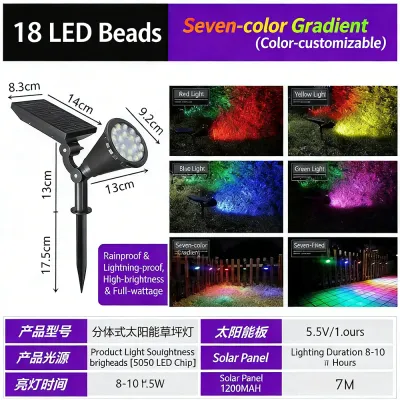
Prices are valid at publication and may change. Please refer to the product page for the latest price.
Microwave sensors are active devices that continuously project high-frequency electromagnetic waves into the surrounding environment. The sensor monitors the reflected waves and analyzes the time delay to establish a baseline of the area. When a moving object enters the detection zone, it alters the frequency of the reflected waves—a phenomenon known as the Doppler effect. The sensor detects this shift and instantly switches on the connected outdoor lamp. Because microwave signals can pass through non-metallic materials, these sensors do not require a direct line of sight to function.
Matching Sensor Technology to Your Property Layout
Selecting the right sensor requires a careful assessment of physical obstacles around your outdoor lamp installation site. If your property features dense landscaping, wooden fences, or glass partitions, a microwave sensor is often the more practical choice. Because microwave pulses pass through glass, plastic, and thin wood, you can position the sensor in a protected area while still monitoring the zone beyond the barrier. Conversely, a PIR sensor installed behind a glass window or thick shrubbery will fail to detect any movement on the other side.

Environmental interference is another critical factor when planning your outdoor lighting layout. In busy suburban areas, wind-blown branches, falling leaves, or passing vehicles can trigger highly sensitive sensors. PIR sensors are generally less prone to false alarms caused by inanimate moving objects because they require a moving heat signature to trigger. However, if a PIR sensor is pointed directly at a busy road, the heat from car engines can still cause unwanted activations, requiring careful adjustment of the sensor’s physical angle.
Local climate conditions play a significant role in sensor performance, particularly in tropical environments like Singapore. During hot afternoons and warm nights, the ambient outdoor temperature can closely match human body temperature. This minimal temperature differential can make it difficult for a PIR sensor to distinguish a moving person from the warm surrounding air, temporarily reducing its effective detection range. Microwave sensors are completely unaffected by ambient air temperature or thermal fluctuations, maintaining consistent detection performance regardless of seasonal heat.
When PIR Sensors Are the Better Choice
PIR sensors are highly suited for open, unobstructed outdoor spaces where targeted detection is required. Front porches, straight driveways, and open back patios are ideal locations for a PIR-equipped outdoor lamp. In these settings, the sensor can monitor a clearly defined zone without being triggered by activity in neighboring yards or adjacent streets. This precise targeting helps conserve energy and prevents light pollution from disturbing your household or neighbors.
However, PIR technology has distinct physical limitations that you must consider before installation. These sensors cannot detect motion through any solid objects, meaning a single large pillar or decorative partition can create a blind spot. Additionally, their detection sensitivity is highest when an object moves across the sensor’s field of view, rather than directly toward it. If your layout forces visitors to walk in a straight line directly toward the sensor, the trigger response may be slightly delayed.
When Microwave Sensors Are the Better Choice
Microwave sensors excel in complex, irregularly shaped properties or areas where aesthetic integration is a priority. Because the sensor can operate through non-metallic materials, manufacturers can completely conceal the sensor inside a sealed, weatherproof plastic or glass outdoor lamp housing. This hidden design protects the sensor from harsh weather elements while maintaining clean architectural lines on your home’s exterior. It is also highly effective for wide-angle coverage of L-shaped pathways or hidden side passages.
Despite their versatility, microwave sensors carry a higher risk of false triggers if not carefully configured. The electromagnetic waves can easily penetrate thin drywall, glass doors, and wooden fences, meaning movement inside your living room or a neighbor walking in their adjacent yard could trigger your outdoor lamp. They are also highly sensitive to moving metal objects, such as metal security gates, wind chimes, or heavy rain gutters, which can reflect the signal and cause continuous cycling of the light.
Key Specifications to Check on the Product Label
When shopping for an outdoor lamp, always verify the technical specifications on the product packaging or manual to ensure compatibility with your installation environment. Check the stated detection range, which is typically measured in meters, and the detection angle, measured in degrees. Keep in mind that these figures represent maximum values achieved under ideal laboratory conditions; actual performance will vary based on mounting height and local environmental obstacles.
Look for fixtures that offer adjustable settings, usually labeled as “Sens” (sensitivity), “Time” (delay time), and “Lux” (ambient light threshold). Physical dials or app-based controls allow you to fine-tune how long the light stays on after motion stops and prevent the light from turning on during bright daylight hours. For microwave sensors, a highly adjustable sensitivity setting is essential to prevent the signal from penetrating boundary walls and triggering false alarms from neighboring properties.
Finally, verify the physical and electrical specifications of the fixture. Ensure the outdoor lamp carries an appropriate Ingress Protection (IP) rating, such as IP65, to guarantee resistance against rain and dust. Check that the operating voltage matches your local electrical supply and that the fixture carries recognized electrical safety certifications, such as the Safety Mark in Singapore. If you plan to use a microwave sensor, confirm that the housing material is non-metallic, as aluminum or steel enclosures will block the microwave signals entirely.
Installation Rules to Prevent False Alarms
Proper mounting and positioning are critical to achieving stable sensor performance and avoiding frequent false alarms. Always install the outdoor lamp at the manufacturer’s recommended mounting height, which is typically between 2.0 and 2.5 meters above the ground. Avoid pointing PIR sensors directly at localized heat sources, such as air conditioning condenser exhausts, clothes dryer vents, or highly reflective swimming pool surfaces, as these thermal variations will trigger the light.
For any installation involving fixed electrical wiring, working at heights, or mounting in damp outdoor areas, prioritize safety by isolating the power supply at your home’s main distribution board. Never attempt to modify structural wiring or connect high-voltage fixtures if you are unsure of the local electrical codes. Always consult a qualified, licensed electrician to handle the physical installation, ensuring the fixture is properly grounded and sealed against moisture ingress.
After the physical installation is complete, perform a systematic walk-test during the evening to calibrate the sensor. Walk through the desired detection zone at a normal pace and observe where the light triggers, adjusting the sensor head angle or sensitivity dials as needed. If you are using a PIR sensor and find that passing street traffic is causing false triggers, you can apply small strips of adhesive electrical tape to specific sections of the sensor lens to physically mask out those unwanted detection zones.
Frequently Asked Questions (FAQ)
Can I use a microwave sensor light indoors?
While it is technically possible, using a standard outdoor microwave sensor light indoors is generally not recommended. Because microwave signals easily penetrate interior drywall and glass, the light may turn on when people move in adjacent rooms or walk past external windows. If you require indoor motion-activated lighting, look for fixtures specifically designed for indoor use that feature ultra-low sensitivity settings or utilize PIR technology instead.
Do PIR security lights work in heavy rain or fog?
Heavy rain, dense fog, and tropical downpours can temporarily reduce the detection range of a PIR sensor. Water droplets in the air scatter and absorb infrared radiation, which dampens the thermal signal reaching the sensor lens. Additionally, cold rainwater hitting a warm driveway can create rapid thermal changes that may cause temporary false triggers. Keeping the sensor lens clean and slightly reducing the sensitivity during stormy seasons can help maintain stable operation.

Community discussion
Share your experience or ask a question. Comments are reviewed before publication.