
Choosing the right sensor for a solar powered light depends on your property’s layout, environmental conditions, and specific security goals. Passive Infrared (PIR) and microwave sensors use entirely different physical mechanisms to detect motion, meaning each excels in distinct scenarios. PIR sensors are highly effective for direct, line-of-sight monitoring where you want to detect heat-emitting objects like people or cars without triggering false alarms from wind-blown trees. Microwave sensors offer much broader, highly sensitive coverage that can penetrate non-metallic barriers, making them ideal for complex layouts but more prone to false triggers if not carefully positioned. Understanding these operational differences will help you avoid the frustration of a light that either fails to turn on when needed or stays illuminated constantly due to environmental interference.
How PIR and Microwave Sensors Actually Detect Movement
Passive Infrared (PIR) sensors operate by detecting thermal radiation. Every object above absolute zero emits invisible infrared light detectable by specialized sensors. A PIR sensor does not emit any energy itself; instead, it monitors the ambient infrared signature of its detection zone. When a warm body, such as a person, animal, or vehicle, moves across the sensor’s field of view, it creates a rapid change in the detected infrared energy. This sudden thermal differential triggers the sensor to activate the solar powered light.
Because PIR technology detects temperature differences relative to the background, its effectiveness is closely tied to ambient conditions. The sensor recognizes moving heat sources, so stationary warm objects will not trigger it. However, this also means that if the ambient air temperature is very close to human body temperature, the thermal contrast decreases, which can occasionally reduce the sensor’s detection sensitivity. Additionally, because infrared light cannot penetrate solid objects, a PIR sensor requires an entirely unobstructed line of sight to function.
Products mentioned in this guide
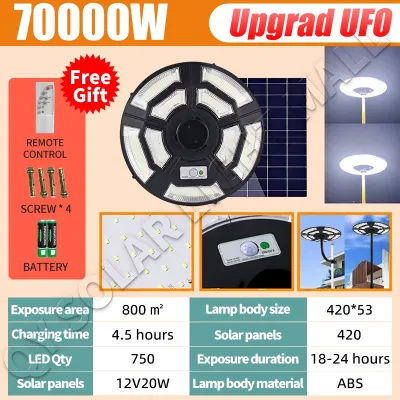
Prices are valid at publication and may change. Please refer to the product page for the latest price.
In contrast, microwave sensors are active detection systems. They continuously emit low-power, high-frequency electromagnetic waves into the surrounding area and analyze the waves that bounce back to the receiver. This process relies on the Doppler effect, measuring frequency changes caused by moving objects. When the emitted microwave signals strike a stationary object, they reflect back at the same frequency. If an object is moving within the detection zone, the frequency of the reflected wave changes, signaling the system to turn on the light.
This active emission makes microwave sensors highly sensitive to any physical movement, regardless of heat. A falling leaf, wind-blown debris, or a swinging gate can alter the reflected wave frequency and trigger the sensor. Because microwave signals do not rely on thermal signatures, their performance remains completely unaffected by ambient air temperatures or seasonal weather changes. This makes them highly consistent in terms of raw detection capability, though it introduces unique challenges regarding where and how they are installed.
Range, Penetration, and False Trigger Trade-Offs
The physical differences between infrared light and radio waves create distinct performance profiles. PIR sensors typically project a focused, cone-shaped detection field. This coverage pattern is highly directional, meaning the sensor is most sensitive to movement that crosses laterally across its detection zones rather than movement directly toward the lens. The range of a standard PIR sensor is generally limited to a direct line of sight, making it highly predictable and easy to contain within your property boundaries.

Microwave sensors offer a much broader, often omnidirectional coverage pattern. The high-frequency waves spread widely, creating a large, bubble-like detection zone. This makes microwave-equipped solar security lights highly effective at covering wide driveways, expansive backyards, or multi-angled entryways where a single PIR sensor might leave significant blind spots. However, this expansive coverage requires careful planning, as the sensor will detect motion in a much larger volume of space than a typical PIR unit.
Penetration capability is the most significant differentiator. Because PIR sensors rely on infrared light, they cannot see through glass, wooden fences, or dense foliage. If a person walks behind a thin glass partition or a wooden privacy fence, a PIR sensor will remain inactive. Microwave signals, however, easily pass through non-metallic materials. A microwave sensor mounted on an exterior wall can detect movement through glass doors, plastic panels, thin wooden fences, and even light masonry, allowing the light to activate before an intruder actually steps into the open yard.
While penetration is beneficial, it increases false trigger risks. A microwave sensor near a boundary wall may detect a neighbor walking in their yard or traffic behind a fence. Similarly, heavy rain, wind-blown branches, or water flowing through plastic downspouts can trigger a microwave sensor. PIR sensors are immune to these non-thermal movements, but they can still be falsely triggered by sudden temperature changes, such as hot air blowing from an air conditioning condenser, vehicle exhaust fumes, or direct sunlight rapidly heating the sensor lens.
Matching the Sensor to Your Property Layout
Selecting the right sensor requires assessing your property’s layout. A PIR sensor is ideal for straightforward, open areas where you want localized, predictable lighting. For example, mounting a PIR solar powered light directly above a garage door, along a clear side path, or over a front entryway ensures the light activates only when someone approaches that specific entrance. This prevents the light from turning on unnecessarily due to activity in neighboring yards or on the public sidewalk.
Opt for a PIR sensor if the light is near mechanical movement. If your yard has swaying trees or hanging plants, a microwave sensor will trigger continuously, draining the battery. A PIR sensor will ignore these movements as long as the moving objects do not have a high thermal contrast compared to the surrounding air. This makes PIR the more reliable option for maintaining battery charge in vegetated or windy suburban environments.
Conversely, a microwave sensor suits complex layouts with obstructed lines of sight. On an L-shaped driveway or blind corner, it can detect an approach before the person enters the light’s direct view. It is also an excellent choice for mounting behind decorative glass panels or inside a carport, where you want the sensor protected from the elements while still maintaining full detection capabilities through the protective barrier.
However, neither technology performs well under extreme interference. Placing a microwave sensor near a busy road or large metal structures can lead to constant activation. Likewise, installing a PIR sensor directly opposite a metal fence that reflects intense afternoon sunlight, or right next to a laundry dryer vent, will cause frequent false alarms. In these challenging environments, standard fixed-sensitivity sensors are likely to fail.
To mitigate these limitations, check if the solar powered light features adjustable sensitivity or dual-technology sensors. Some models combine both technologies, requiring both thermal change and physical movement to trigger activation. Alternatively, models with adjustable sensitivity dials allow you to dial down the range or detection threshold, helping you customize the sensor’s behavior to match the exact boundaries of your property.
Pre-Purchase and Installation Checks
Before purchasing a solar powered light, verify physical and electrical specifications for reliability. First, evaluate solar panel placement independently of the light fixture. Because the sensor and light must be positioned to cover specific security zones, the solar panel must be installed where it can receive maximum, unshaded sunlight throughout the day. Many high-quality solar security lights feature a detached solar panel connected by a cable, allowing you to mount the light in a shaded entryway while placing the panel on a sunny roof or wall.
Next, review manufacturer guidelines for mounting height. Installing a sensor too high creates a blind spot underneath, while mounting too low restricts the detection range. PIR sensors generally require precise angling to ensure their detection cones intersect with the expected path of travel. Keep in mind that decorative style, perceived color temperature, and spatial lighting effects are conditional preferences rather than universal performance facts, so prioritize sensor functionality and physical placement first.
Weatherproofing and electrical safety are critical factors, particularly in tropical climates like Singapore’s, which experience heavy rainfall and high humidity. Check the product label for its Ingress Protection (IP) rating; an IP rating of at least IP65 is highly recommended to prevent water and dust from penetrating the housing. Additionally, verify the battery voltage, charging interface, maximum wattage limit, physical dimensions, and electrical certifications to ensure the unit is fully compatible with your outdoor installation environment.
Finally, establish clear boundaries for installation safety. While many solar units allow simple DIY mounting, certain scenarios require professional assistance. If your installation involves working at height, mounting in damp areas, handling suspended loads, or integrating the solar unit with existing fixed electrical wiring, you must consult a qualified professional. Always ensure that any existing electrical power lines are fully isolated before working near them, and strictly follow the manufacturer’s installation instructions to prevent personal injury or property damage.
Frequently Asked Questions (FAQ)
Can I adjust the sensitivity of PIR and microwave sensors?
Yes, many modern solar security lights feature adjustable settings. Check the product packaging, label, or manual for physical dials labeled ‘SENS’ (sensitivity), ‘TIME’ (illumination duration), or ‘LUX’ (ambient light threshold). Adjusting the sensitivity dial allows you to expand or contract the detection range, which is particularly important for microwave sensors to prevent them from detecting movement beyond your property line.
If the sensor lacks dials, it may use toggle switches or a remote control. For microwave sensors, reducing sensitivity minimizes false triggers from wind-blown vegetation. For PIR sensors, adjusting the sensitivity can help the unit ignore smaller heat signatures, such as stray cats, while still activating when a human approaches. Always perform a walk-test after making adjustments to verify that the sensor still covers your desired security zone.
Do solar security lights work during prolonged cloudy weather?
Solar security lights rely on internal rechargeable batteries to power the sensor and LED source. The sensor draws a small, continuous standby current, while the LED draws significantly more when triggered. During prolonged cloudy or rainy weather, the solar panel’s charging efficiency decreases, meaning the battery may not receive a full charge during the day.
To ensure reliable operation during overcast periods, check the battery capacity (mAh) and solar panel wattage before buying. A larger battery acts as a power reserve during consecutive cloudy days. Additionally, choosing a model with an adjustable ‘TIME’ setting allows you to shorten the illumination duration per trigger, conserving valuable battery power when solar charging is limited.

Community discussion
Share your experience or ask a question. Comments are reviewed before publication.