
Selecting the right outdoor flood light for your home in Singapore involves more than just picking the brightest bulb. Because our residential landscape ranges from high-density HDB estates with shared corridors to private condominiums and landed properties, a sensor that works perfectly in one setting might cause constant headaches in another. A flood light that triggers every time a neighbor walks past their door or whenever a sudden tropical downpour begins quickly becomes a nuisance rather than a security asset.
The key to a reliable outdoor lighting setup lies in the motion sensor technology powering the fixture. The three primary options available on the market are Passive Infrared (PIR), microwave, and dual-technology sensors. Each of these technologies operates on a fundamentally different physical principle, meaning they react differently to heat, physical barriers, and environmental movement.
There is no single “best” sensor for every home. The most reliable flood light detection method depends entirely on your property layout, environmental interference, and installation boundaries. By understanding how these sensors interact with the unique climate and housing structures of Singapore, you can establish a condition-based decision framework to choose the right system for your property.
Products mentioned in this guide
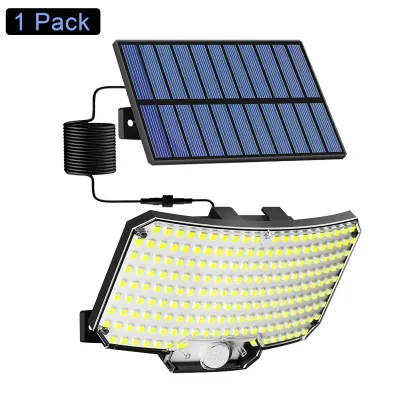
Prices are valid at publication and may change. Please refer to the product page for the latest price.
How PIR, Microwave, and Dual-Technology Sensors Detect Motion
To make an informed choice, it is essential to understand the underlying physical mechanisms of each sensor type and how they behave in outdoor environments.
PIR (Passive Infrared) sensors are passive devices, meaning they do not emit any energy of their own. Instead, they detect changes in infrared heat signatures within a direct line of sight. Every warm object, including humans, animals, and car engines, naturally emits infrared radiation. The PIR sensor contains a pyroelectric material that detects these heat signatures. When a warm body moves across the sensor’s field of view, it crosses multiple detection zones created by the sensor’s curved lens, triggering the flood light.
Microwave sensors are active devices that continuously emit high-frequency electromagnetic radio waves and measure the reflection of those waves off surrounding objects. This technology operates similarly to radar. The sensor establishes a baseline echo pattern of the surrounding area. When any object—regardless of its temperature—moves within the detection zone, it alters the reflected wave pattern. The sensor detects this frequency shift and immediately activates the light.
Dual-technology sensors combine both PIR and microwave detection methods into a single unit to maximize reliability. To prevent false alarms, these sensors typically employ an “AND” logic gate, meaning both the PIR sensor must detect a change in heat and the microwave sensor must detect physical movement before the flood light turns on. Alternatively, some advanced systems use one technology as the primary trigger and the other to verify the signal before activating the light.
Key Comparison Dimensions for Outdoor Security Lighting
Evaluating sensor performance requires looking at how these technical traits translate to real-world challenges in an outdoor setting.

Detection range and penetration represent the most significant difference between these technologies. PIR sensors are strictly limited by line-of-sight. If a physical barrier, such as a glass panel, a wooden fence, or dense foliage, stands between the sensor and the moving object, the PIR sensor will not detect it because infrared heat cannot penetrate these materials. In contrast, microwave signals can easily pass through non-metallic barriers, including glass, wood, drywall, and thin plastics. While this allows microwave sensors to cover a wider area and even detect motion around corners, it also means they can easily detect movement outside your property line, such as a neighbor walking inside their adjacent home.
Environmental interference is another critical factor, particularly in Singapore’s tropical climate. Our weather is characterized by sudden, heavy downpours, high humidity, and strong winds. PIR sensors can be sensitive to rapid temperature fluctuations. A sudden gust of hot air from an air-conditioning compressor or the rapid cooling of a concrete wall during a thunderstorm can sometimes trigger a false alarm. Microwave sensors are completely unaffected by temperature changes, making them highly stable in hot weather. However, because they detect any physical movement, they can easily be triggered by wind-blown tree branches, heavy rain sheets falling close to the sensor, or plastic tarps moving in the wind.
False trigger rates and energy balance determine the long-term usability of your security lighting. Frequent false triggers not only disturb your peace and potentially annoy your neighbors, but they also waste electricity and shorten the lifespan of your flood light. PIR sensors generally have a lower false trigger rate in clear, open spaces, but they can sometimes fail to detect motion if the ambient outdoor temperature rises close to human body temperature (around 37°C), as the thermal contrast is reduced. Microwave sensors offer extreme sensitivity, but without careful calibration, they can trigger constantly, leading to high energy consumption. Dual-technology sensors offer the lowest false trigger rates because they filter out individual environmental anomalies, though the units themselves generally carry a higher initial purchase price.
| Sensor Type | Detection Method | Penetration Capability | Primary Vulnerability |
|---|---|---|---|
| PIR | Passive heat signature tracking | None (requires direct line of sight) | Sudden temperature shifts, blind spots |
| Microwave | Active radio wave reflection | High (passes through glass, wood, plastic) | Moving foliage, wind-blown objects, over-penetration |
| Dual-Technology | Combined heat and wave reflection | Low to Moderate (limited by the PIR component) | Higher initial cost, complex calibration |
Decision Framework: Matching Sensors to Property Layouts
Choosing the right sensor requires matching these technical characteristics to your specific residential layout and daily routine.
You should choose a PIR sensor if your property requires strict boundary control and has a clear, unobstructed line of sight. PIR is highly effective for narrow HDB corridors, defined walkways, side gates, and small balconies. Because the sensor cannot see through walls or fences, you can be confident that the light will only turn on when someone enters your specific property space, preventing nuisance triggers from neighbors walking past shared corridor partitions or cars driving on the street outside a low fence.
You should choose a microwave sensor if you need to detect motion around corners, through glass panels, or in areas with visual obstructions, such as a large landed property driveway with decorative landscaping. Microwave sensors are also ideal if you prefer a clean, minimalist aesthetic, as the sensor can be completely hidden inside a plastic or glass light fixture. However, you must be prepared to manage the wider detection footprint by carefully adjusting the sensitivity settings to prevent the signal from penetrating shared walls or reaching into public pavements.
You should choose a dual-technology sensor if you experience frequent false alarms from environmental factors and require high reliability for critical security zones. If your flood light is linked to a security camera system or guards a vulnerable entry point of a landed home or ground-floor condominium unit, minimizing false alarms is essential. While these units require a higher initial investment, they ensure the light only activates when a genuine physical presence is detected, ignoring wind-blown plants and sudden temperature shifts.
Before making a final decision, always verify the physical characteristics of your planned installation location. If the area contains heavy metallic structures, such as steel gates or aluminum cladding, microwave sensors may experience erratic behavior due to radio wave reflection. Conversely, if the location is directly exposed to extreme heat sources, such as an air-conditioning condensing unit or a clothes dryer exhaust vent, a PIR sensor is highly likely to suffer from constant false triggering.
Installation Boundaries and Setup Considerations
Proper physical installation and electrical calibration are vital to ensure your chosen flood light sensor operates safely and reliably without causing nuisance tripping.
Mounting height and angle adjustments play a crucial role in defining the sensor’s detection field. Most outdoor flood lights are designed to be mounted at a height of 2 to 2.5 meters. Mounting the fixture too high will reduce its sensitivity to ground-level movement, while mounting it too low will restrict its overall detection range. Angling the sensor downward can help contain the detection zone within your property boundaries, which is especially important for high-sensitivity microwave sensors.
When selecting a fixture, always check the product labels for appropriate Ingress Protection (IP) ratings. Because Singapore experiences intense tropical rainstorms, outdoor security lights should have a rating of at least IP65 to ensure complete protection against dust and low-pressure water jets. Additionally, verify that the fixture’s voltage rating is fully compatible with Singapore’s standard electrical supply of 230V at 50Hz.
Electrical safety must always be your top priority. Installing a new outdoor flood light typically involves working at heights and dealing with fixed electrical wiring. Before attempting any installation or adjustment that involves open wires, always isolate the power supply at the main circuit breaker (DB box) and use a reliable voltage tester to confirm the circuit is dead. If the installation requires running new electrical conduits, modifying existing circuits, or mounting heavy fixtures on high external walls, stop and engage a licensed electrical worker (LEW) or a qualified professional to ensure the work is completed safely and in compliance with local regulations.
Frequently Asked Questions (FAQ)
Can I adjust the sensitivity and timer on these flood light sensors?
Yes, most modern outdoor flood lights feature physical dials or digital settings that allow you to customize their behavior. These typically include a sensitivity control (to adjust the detection range), a time delay dial (to control how long the light stays on after motion stops), and a lux sensor adjustment. The lux setting determines how dark it must be before the sensor is allowed to trigger the light, preventing the flood light from turning on during bright daylight hours. Always refer to the manufacturer’s instruction manual for the specific adjustment ranges and calibration steps of your model.
Do microwave sensors detect motion through walls and glass?
Yes, microwave sensors emit high-frequency radio waves that can easily penetrate non-metallic materials such as glass, wood, drywall, and thin plastics. While this allows for versatile and hidden installations, it can also lead to unintended triggering if the sensor detects movement from an adjacent room, a neighboring yard, or a public corridor. To prevent this over-penetration, you should position the sensor carefully, angle it downward, or reduce its sensitivity setting to contain the active detection zone within your property lines.

Community discussion
Share your experience or ask a question. Comments are reviewed before publication.