
Choosing a radio alarm clock requires balancing clear audio delivery with sleep-supportive design. The ideal bedside companion should wake you reliably without disrupting your rest during the night. Prioritising features like adjustable display brightness, progressive alarm volumes, and dependable power backups ensures your device serves as a functional tool rather than a nighttime distraction. By focusing on specifications that match your personal sleep habits and bedroom environment, you can select a model that integrates seamlessly into your daily routine.
Decoding Audio and Alarm Specifications
Bedside audio equipment does not need to fill an entire living room, but it must deliver clear, intelligible sound at low to moderate volumes. When reviewing speaker specifications, look closely at the rated wattage (RMS). A speaker rated between 1 to 3 watts RMS is generally sufficient for bedside tables, providing enough clarity for spoken-word news broadcasts and morning music without introducing heavy distortion. Pay attention to the frequency response if you prefer a richer sound; while compact clocks rarely produce deep bass, a balanced mid-range ensures that voices do not sound thin or tinny.
The way an alarm delivers sound is just as critical as the audio quality itself. Fixed-volume alarms can cause a sudden spike in heart rate, leading to a jarring start to your morning. To avoid this, look for models featuring a progressive or gradual wake-up volume. This specification ensures the alarm starts at a whisper-quiet level and slowly climbs to your preset volume over several seconds, allowing your body to transition naturally out of sleep.
Products mentioned in this guide
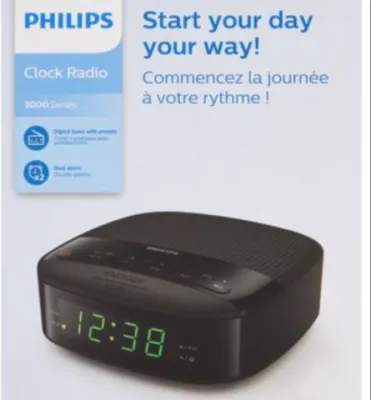
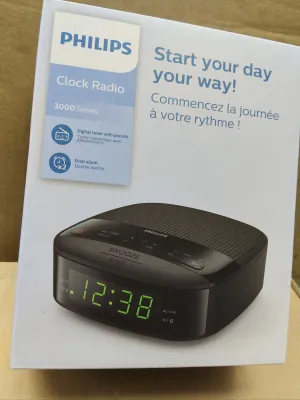
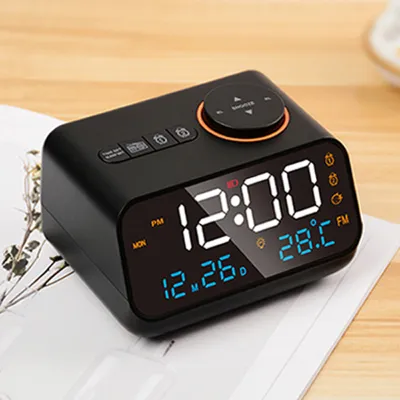
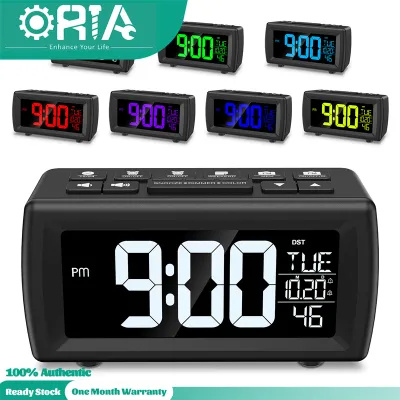
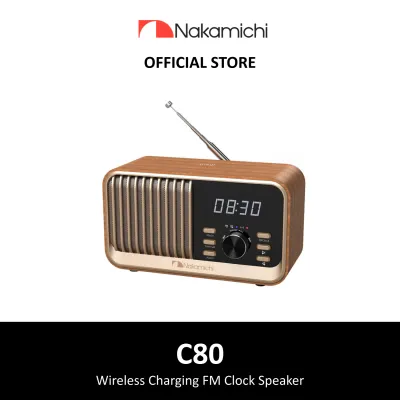
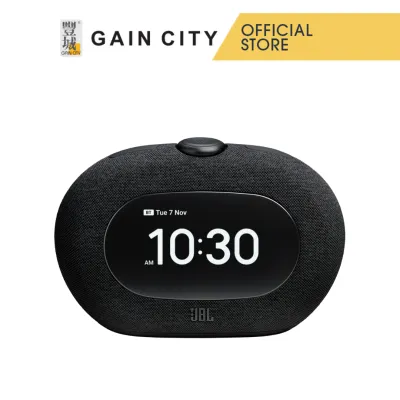
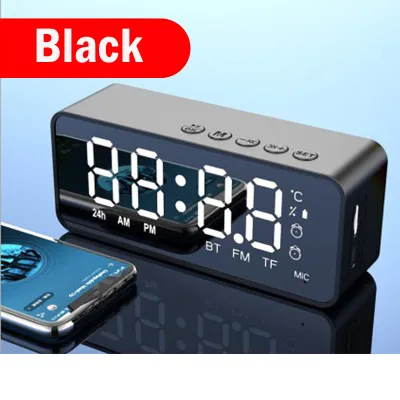
![[SG Stock] Smart Astronaut Bluetooth Speaker | Digital Alarm Clock & LED Night Light | 6W Hi-Fi Sound & FM Radio | AI Voice Intercom & TF Card Supported | Perfect Home Decor Gift](https://img.lazcdn.com/g/p/383127917cf390d2698500ae8b7e1700.png_400x400q80.png_.webp)
Prices are valid at publication and may change. Please refer to the product page for the latest price.
For shared bedrooms, dual-alarm settings are an essential specification to verify before purchase. This feature allows you to program two independent wake-up times with different audio sources, accommodating partners with contrasting schedules. Additionally, check the available sound library; while some users prefer waking up to their favourite local radio station, others benefit from built-in nature sounds or gentle acoustic tones that offer a softer alternative to standard buzzer alerts.
Evaluating Display and Usability Specs
The display technology of a bedside clock directly impacts your sleep quality, as excess light in a dark room can disrupt your natural circadian rhythm. LED panels are highly popular for their sharp contrast and readability, but they can sometimes emit a noticeable glow even on lower settings. LCD panels with backlighting offer an alternative, though you should check the specified viewing angles to ensure the numbers remain legible when viewed from a low angle on your mattress. The choice of display color, such as soft red or amber versus bright blue, is a matter of personal preference; many users find warmer tones less disruptive to their sleep environment.

To manage light emission, look for clocks equipped with either an auto-dimming sensor or multi-step manual brightness controls. An auto-dimming sensor uses an integrated light cell to detect ambient room conditions, automatically lowering the screen’s output when you turn off the bedroom lights. If you prefer manual control, ensure the clock offers a “near-black” or complete display shut-off option, allowing you to sleep in total darkness while still keeping the alarm active.
Usability in the dark relies heavily on physical design and tactile feedback. When shopping, examine the layout of the top panel, paying close attention to the size and placement of the snooze button. A prominent, easily accessible snooze button prevents you from accidentally turning off the alarm or knocking the clock off your bedside table. Buttons with distinct physical shapes or raised textures allow for effortless, eyes-closed operation when you are still half-awake.
Power, Tuner, and Connectivity Requirements
A radio alarm clock must remain reliable even when your home’s electrical supply is interrupted. Always check the battery backup specifications of any model you consider. Some clocks use small button-cell batteries (such as CR2032) solely to retain the time and alarm settings in memory during an outage, while others support larger batteries that can actually trigger the buzzer even if the main power is cut. Ensure you verify the battery type required and whether it is included in the package. Additionally, verify the power adapter’s voltage compatibility and local electrical safety certifications to ensure safe operation on your bedside table, keeping the device away from damp areas like adjacent en-suite bathrooms.
Tuner specifications determine your access to local broadcasts. Standard FM tuners are widely compatible and reliable, but digital audio broadcasting (DAB/DAB+) tuners offer access to a wider variety of digital stations with static-free reception. Before prioritising a DAB/DAB+ model, verify the digital broadcast coverage in your specific residential area, as signal strength can vary depending on building materials and local geography.
Modern bedside clocks often double as secondary bedroom speakers through auxiliary inputs or wireless connectivity. If you plan to stream audio from your smartphone, check the supported Bluetooth version to ensure stable pairing and energy-efficient operation. Models featuring built-in USB charging ports are also highly practical, allowing you to charge your phone overnight directly from your bedside clock and freeing up valuable wall sockets.
Matching Specs to Your Sleep and Wake Profile
Selecting the right features depends heavily on whether you are a heavy or light sleeper. Heavy sleepers should focus on models that specify high maximum decibel limits or offer compatibility with external accessories, such as under-pillow bed shakers. These physical vibration tools connect directly to the clock, providing a tactile wake-up cue that bypasses audio altogether for those who easily sleep through standard alarms.
Light sleepers, conversely, require a device that minimises sensory disruption. If you wake up at the slightest sound, look for clocks that feature silent, soft-touch buttons rather than loud, clicky switches that might disturb your partner. Gradual wake features and a display that can be turned off entirely are crucial specifications to keep your sleeping environment as peaceful as possible.
By distinguishing essential timekeeping and alarm functions from premium add-ons like wireless phone charging pads or multi-coloured ambient nightlights, you can streamline your decision. Focus your budget first on display customisation, alarm reliability, and sound clarity. Once these core specifications are met, you can evaluate secondary connectivity features to find the perfect balance for your bedside table.
Frequently Asked Questions (FAQ)
Do I need a DAB radio alarm clock instead of an FM one?
A DAB or DAB+ tuner provides digital-quality audio clarity and access to a broader range of stations without the static associated with analogue tuning. It also simplifies setup by automatically scanning and listing stations by name rather than frequency. However, if you only listen to mainstream local stations and live in an area with weak digital signals, a standard FM tuner remains a highly reliable and cost-effective choice.
How do sleep timer specs affect overnight radio listening?
A sleep timer allows you to fall asleep to music or talk radio by automatically turning off the audio after a set period. When evaluating this feature, check the available time increments—such as 15, 30, 60, or 90 minutes—to ensure they match your typical sleep-onset time. Additionally, verify that the sleep timer function applies to all audio sources, including Bluetooth streams and auxiliary inputs, rather than just the built-in radio tuner.

Community discussion
Share your experience or ask a question. Comments are reviewed before publication.