
The “better” diffuser stick material depends entirely on your specific diffuser oil formulation, desired scent throw, and maintenance preference. Engineered fibre sticks generally offer consistent capillary action due to uniform micro-pores, making them reliable for thicker oils. Natural rattan provides a traditional aesthetic but features irregular vascular channels that may require more frequent flipping to maintain a strong fragrance. This guide breaks down the structural differences, liquid compatibility, and maintenance signals to help you choose the right diffuser stick for your setup.
In regions with warm temperatures and varying indoor climates, such as Singapore, the way fragrance evaporates into the air is highly sensitive to environmental conditions. High humidity can slow down the evaporation of water-based carriers, while air-conditioned interiors can accelerate the drying of volatile organic compounds. Choosing the correct wicking material ensures that your fragrance disperses evenly throughout the room rather than pooling at the top of the bottle or evaporating within a few days. Understanding how these materials interact with your environment and your specific fragrance oil is the first step toward optimizing your home scenting setup.
Understanding the Core Differences in Material Structure
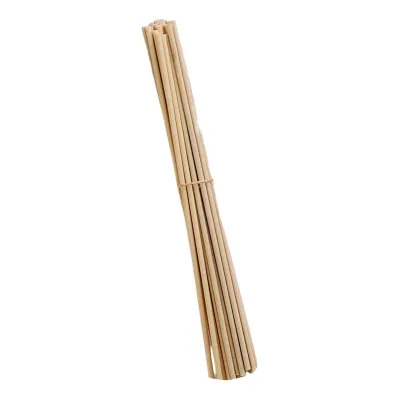
To understand why these materials perform differently, one must look at their physical anatomy. Natural rattan sticks are sliced from the stems of climbing palms. If you look closely at the cross-section of a rattan reed, you will see dozens of tiny, hollow tubes running vertically through the stick. These are the plant’s natural vascular bundles, which once transported water and nutrients. Because they are organic, these channels are naturally irregular in diameter, spacing, and alignment. Some channels may be completely open, while others are partially blocked by natural plant sugars, sap, or fibrous tissue. This organic variation gives rattan its classic, slightly textured appearance and rustic charm, but it also means the wicking speed can vary from one stick to the next.
Products mentioned in this guide
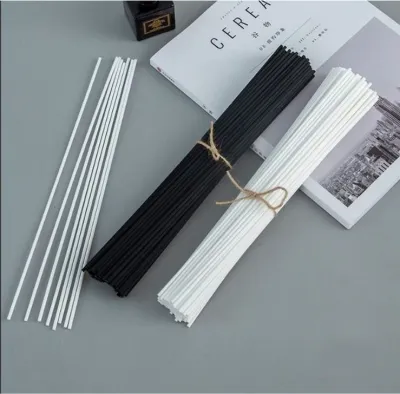
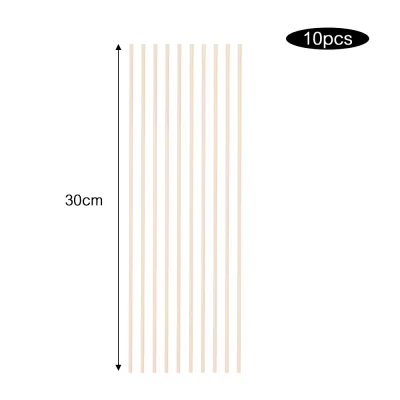
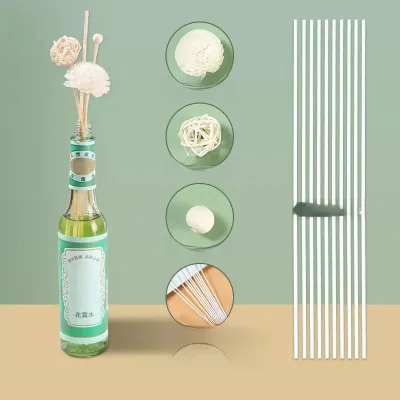
Prices are valid at publication and may change. Please refer to the product page for the latest price.
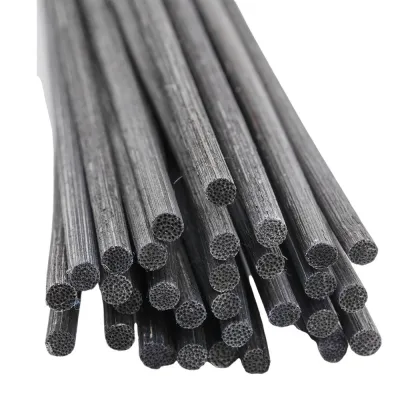
In contrast, engineered fibre sticks are manufactured from synthetic polymers, typically polyester or cotton-polyester blends. During the manufacturing process, these synthetic fibres are extruded and bonded together to form a highly uniform structure. Instead of hollow tubes, fibre sticks rely on the tiny spaces between the tightly packed parallel fibres—known as micro-pores—to draw liquid upward. Because this process is mechanically controlled, every single pore is identical in size and distribution. This structural uniformity ensures a highly predictable, continuous capillary action. Furthermore, because they are synthetic, fibre sticks can be dyed in a wide range of colors, from minimalist charcoal black to vibrant hues, allowing them to serve as a deliberate design accent in modern interiors.
Before placing any sticks into your diffuser bottle, performing a quick visual and tactile check can help you verify the quality of the material. High-quality rattan should feel lightweight but sturdy, with visible, open pores at both cut ends. If the ends look crushed, frayed, or sealed by a dull blade during manufacturing, the capillary action will be severely restricted. For fibre sticks, run your fingers along the surface; they should feel smooth, firm, and free of loose lint or shedding fibres. Squeeze the stick gently; a good fibre stick should feel dense and springy, indicating that the internal micro-pores are tightly packed and ready to draw liquid efficiently without collapsing.
Matching Stick Material to Oil Viscosity and Base Formulas
The compatibility between your diffuser stick and your fragrance liquid is governed by fluid dynamics, specifically viscosity and surface tension. Viscosity refers to the thickness or resistance to flow of the liquid. Many premium home fragrances use thick, oil-based carriers, such as dipropylene glycol (DPG), isopropyl myristate (IPM), or natural carrier oils. These dense liquids have high internal friction, making it difficult for them to climb through narrow, irregular pathways. Natural rattan’s organic channels can easily become overwhelmed or completely blocked by these heavy molecules, resulting in a weak scent throw. Engineered fibre sticks, with their uniform and slightly larger micro-pores, provide a much stronger capillary pull, making them the ideal choice for drawing up thick, oil-based formulations.

Conversely, many lighter, budget-friendly, or quick-evaporating diffusers utilize water-based or alcohol-based formulations. Alcohol, such as ethanol or specialized evaporative solvents, has a very low viscosity and evaporates rapidly upon contact with the air. When paired with natural rattan, these lighter liquids flow smoothly through the natural channels without causing blockages. The slower, more restrictive wicking of rattan actually acts as a helpful regulator, preventing the volatile alcohol from evaporating too quickly. If you were to place engineered fibre sticks into a highly volatile, alcohol-heavy formulation, the aggressive wicking action would draw the liquid up at an accelerated rate. This would cause the entire bottle of fragrance to evaporate in a matter of weeks, leaving you with an empty vessel and an overwhelmingly intense scent in the first few days.
To avoid these performance issues, always check the manufacturer’s recommended stick type on the diffuser liquid label or packaging. Formulators spend significant time calibrating the evaporation rate of their carrier liquids to match a specific wicking material. If a refill bottle explicitly states it is optimized for fibre reeds, using rattan may result in almost no scent throw. Conversely, if a delicate, alcohol-based perfume is designed for rattan, switching to fibre could ruin the scent profile by releasing the top notes too quickly while leaving the heavier base notes trapped in the bottle.
Maintenance, Clogging, and Lifespan Indicators
Even the highest-quality diffuser sticks will eventually lose their efficiency due to environmental exposure and chemical changes. The most common cause of performance decline is clogging. In any household, airborne dust, pet dander, and cooking grease gradually settle on the exposed upper portions of the sticks. As the carrier liquid evaporates from the tips, it leaves behind a concentrated residue of fragrance oils and colorants. This residue mixes with the settling dust to form a sticky, impermeable barrier that seals the pores. You can identify this visually by looking for a distinct darkening or discoloration at the tips of the sticks, or the formation of tiny, hard crystals. Once these tips are sealed, the capillary flow stops, and the fragrance throw drops dramatically.
To combat this decline, many users rely on a fixed calendar schedule to flip their sticks, but a more effective approach is to monitor observable scent fade. When you walk into your living space and notice that the fragrance is no longer noticeable, it is time to take action. For natural rattan, flipping the sticks upside down once every one to two weeks is a practical way to re-prime the dry ends and keep the scent flowing. However, avoid flipping them too frequently, as this introduces excess liquid to the air too quickly and can lead to messy drips on polished wooden or stone surfaces. Engineered fibre sticks, due to their continuous wicking design, rarely require flipping; however, if you notice a temporary dip in performance due to dust, a single flip can help clear the pathways.
Eventually, every set of diffuser sticks reaches the end of its functional lifespan. When flipping the sticks no longer restores the fragrance, or when the entire length of the stick appears permanently saturated, dark, and heavy, the material has become fully compromised. A common mistake is attempting to wash and reuse old sticks in a fresh batch of oil, or keeping the same sticks when changing to a new fragrance. The clogged pores of the old sticks will not allow the new liquid to wick, and any residual scent trapped in the fibres will contaminate the new fragrance profile. As a general rule, always discard your old sticks and start with a brand-new set whenever you refill your diffuser bottle or introduce a new scent.
Decision Framework: Choosing the Right Diffuser Stick
To help you make the right choice for your home, use this condition-based framework to select the material that best aligns with your fragrance formulation, maintenance habits, and aesthetic preferences.
Choose Fibre if:
- You are using thick, oil-based carrier liquids, glycol-based formulas, or heavy essential oil blends.
- You want a strong, immediate, and highly consistent scent throw that can easily fill medium to large living spaces.
- You prefer a low-maintenance home fragrance setup and do not want the chore of regularly flipping the sticks.
- Your home decor features modern, minimalist, or contemporary styling where colored sticks (such as solid black or grey) complement the aesthetic.
Choose Rattan if:
- You are using lighter, alcohol-based, or highly volatile fragrance formulations that evaporate easily.
- You prefer a subtle, gradual, and background scent release that is not overpowering in smaller rooms like bathrooms or study areas.
- You enjoy the natural, organic, and rustic appearance of real wood that pairs well with botanical elements and warm timber tones.
- You do not mind performing routine maintenance, such as flipping the sticks every week or two to maintain the scent throw.
Before making your final purchase, verify first if the manufacturer of your specific diffuser liquid outlines a required stick material. Adhering to their specifications ensures you achieve the intended scent profile and prevents premature evaporation of your investment.
Frequently Asked Questions (FAQ)
Can I mix rattan and fibre sticks in the same diffuser bottle?
While you can physically place both materials in the same vessel, doing so is generally not recommended for optimal performance. Because fibre and rattan have vastly different wicking speeds and pore structures, they will draw up the liquid at unequal rates. This uneven absorption can disrupt the balanced evaporation of the fragrance, causing the lighter notes to disperse too quickly through the fibre while the heavier notes struggle to climb the rattan. Visually, mixing the natural, slightly irregular texture of rattan with the perfectly uniform, colored appearance of synthetic fibre can also create a cluttered, inconsistent look that detracts from your home decor. For a harmonious aesthetic and a predictable scent throw, it is best to stick to a single material type per bottle.
Why is my diffuser stick not absorbing the liquid?
If your diffuser sticks remain dry or fail to disperse scent, the most likely cause is a mismatch between the liquid’s viscosity and the stick’s pore structure. Heavy, oil-based liquids cannot climb the narrow, irregular channels of natural rattan; if this is the case, switching to engineered fibre sticks will usually resolve the issue. If you are using brand-new rattan sticks, keep in mind that they can take up to 24 hours to fully saturate and begin throwing scent, so a brief waiting period is normal. Additionally, ensure that the liquid level in your bottle is sufficient; if the bottle is nearly empty, there may not be enough hydrostatic pressure to push the liquid up the remaining length of the stick. Finally, check for dust accumulation or water contamination, as moisture on the sticks can block the absorption of oil-based fragrances.

Community discussion
Share your experience or ask a question. Comments are reviewed before publication.