
Quick Answer: Which Mandir Option Fits Your Needs?
Choosing between a ready-made and a custom-built mandir depends on your budget, available space, and specific spiritual requirements. An off-the-shelf prayer altar is highly practical if you have a fixed budget, live in a rental property, or need an immediate setup that fits standard dimensions.
Conversely, a custom-built mandir is the ideal choice if you must accommodate specific deity sizes, have non-standard spatial constraints—such as a dedicated niche in a Singapore HDB flat or condominium—or want to match the materials and architectural style of your home.
Before making a final decision, always verify if your preferred location requires structural modifications, specialized electrical routing for integrated lighting, or heavy floor load support for solid stone or hardwood structures.
Products mentioned in this guide
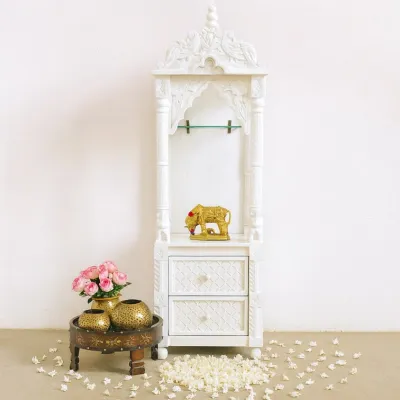
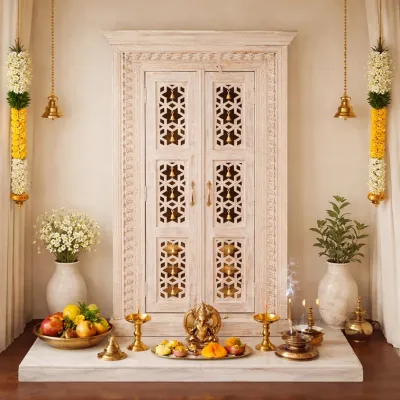
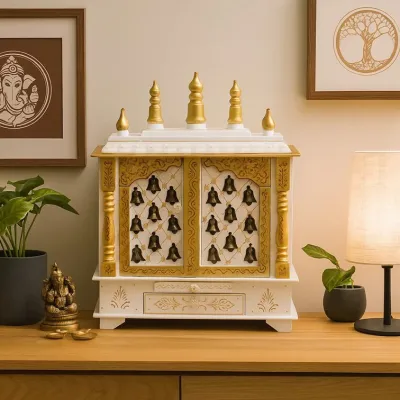

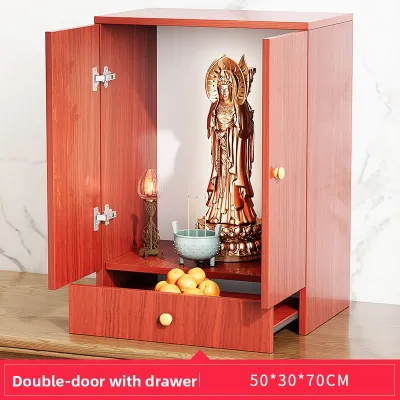
Prices are valid at publication and may change. Please refer to the product page for the latest price.
Key Differences Between Ready-Made and Custom Mandirs
Understanding the practical and financial trade-offs between these two options helps you make an informed investment for your home. The table below outlines the primary differences across key decision-making dimensions:

| Feature | Ready-Made Mandir | Custom-Built Mandir |
|---|---|---|
| Cost Structure | Transparent, fixed upfront retail pricing. | Variable, multi-stage costs (materials, carpentry, installation). |
| Lead Time | Immediate delivery or short retail shipping windows. | Extended timeline for design, sourcing, and fabrication. |
| Design Flexibility | Standardized dimensions, factory finishes, fixed layouts. | Tailored woodwork, specific carvings, bespoke configurations. |
| Space Utilization | Freestanding or standard wall-mounted units. | Built-in, alcove-fitted, or integrated room-divider solutions. |
| Portability | Highly portable; easy to pack and relocate. | Semi-permanent or permanent; difficult to move without damage. |
Cost Structure and Budgeting
Ready-made units offer financial predictability. You pay the listed retail price, which typically includes standard delivery. Custom fabrication, however, involves a multi-stage fee structure. You must account for material costs, carpenter labor rates, design revisions, and on-site installation fees. This makes custom options a larger financial commitment, though it allows you to control the quality of every component.
Lead Time and Project Timeline
If you are planning a housewarming or a specific religious ceremony, timing is critical. Ready-made mandirs are pre-fabricated and ready to ship, often arriving at your home within a few days. A custom-built altar requires a collaborative design process, material sourcing, workshop fabrication, and final on-site assembly. This process can take several weeks or even months to complete.
Design and Spatial Integration
Standard retail mandirs come in fixed sizes that may not utilize your room’s layout efficiently. Custom-built solutions are designed to fit the exact contours of your home. Whether you want to turn an awkward living room corner into a peaceful prayer space or integrate a floor-to-ceiling unit that matches your existing cabinetry, custom carpentry ensures seamless spatial integration.
When a Ready-Made Mandir Is the Right Choice
For many households, an off-the-shelf prayer altar provides a highly efficient and beautiful solution. This path is particularly suitable for renters who need to respect tenancy agreements regarding wall drilling and permanent fixtures. A freestanding ready-made mandir can be placed on existing furniture and easily packed away when moving to a new home.
Standard apartment layouts, such as modern condominiums or built-to-order flats, often have designated multi-functional spaces where a compact, wall-mounted, or small tabletop mandir fits perfectly. These retail options are designed to maximize vertical space without overwhelming a room’s footprint.
Before purchasing a ready-made unit, perform these essential verification steps:
- Measure internal shelf heights: Ensure your existing idols or frames have sufficient clearance, including any top crowns or decorative arches.
- Check material durability: Verify that the surfaces can withstand daily exposure to heat, oil spills, water, and incense ash. Engineered woods should have protective, easy-to-clean laminates.
- Assess weight limits: If you plan to place heavy brass or stone deities inside, check the manufacturer's maximum load capacity for both shelves and wall-mounting brackets.
The primary limitation of a ready-made mandir is its lack of adaptability. If your collection of prayer items grows, or if you acquire a larger deity, you cannot easily expand a pre-fabricated unit. Additionally, standard designs may not offer specialized storage for items like long incense boxes, oil bottles, or prayer books.
When to Commission a Custom-Built Mandir
Commissioning a bespoke mandir is a highly rewarding path if you view the prayer space as a permanent, central feature of your home. Homeowners with dedicated prayer rooms or large families often require a grander focal point that standard retail units simply cannot provide.
Custom builds are highly recommended if you have specific traditional architectural requirements, such as precise alignments or proportions. If you own large, heavy stone deities, a custom-built altar can be engineered with reinforced bases and structural supports to distribute the weight safely across your flooring.
When planning a custom design, prioritize these practical features:
- Integrated storage: Design dedicated drawers with custom dividers for cotton wicks, camphor, matchboxes, and oil vessels to keep the space organized.
- Low-heat lighting: Plan for integrated LED strip lights or spotlights. Ensure the design includes proper ventilation channels behind the panels to dissipate heat from the light fixtures.
- Smoke ventilation: If you burn incense or perform small fire rituals, design the upper canopy with open carvings or integrated exhaust paths to prevent smoke buildup and ceiling staining.
The main trade-offs of this route are the higher initial investment and the effort required to manage the project. You will need to coordinate closely with a carpenter or interior designer, select materials, approve technical drawings, and prepare your home for the dust and noise of the installation phase.
Pre-Purchase Checklist for Space, Safety, and Placement
Regardless of which purchasing option you choose, installing a mandir requires careful planning to ensure safety, structural integrity, and compliance with local home standards.
Spatial and Structural Checks
Before delivery or fabrication begins, measure the physical boundaries of your chosen location. Ensure there is adequate clearance for the mandir doors to open fully without obstructing walkways. If you are opting for a heavy custom unit made of solid teak, marble, or granite, verify your floor’s load capacity. For wall-mounted units, ensure the wall consists of solid concrete or reinforced masonry rather than hollow drywall.
Electrical and Lighting Safety
If your mandir features integrated lighting, electrical safety must be a priority.
- Verify certifications: Ensure all integrated LED drivers, wiring, and plugs carry recognized local electrical safety certifications.
- Check wattage limits: Do not exceed the recommended wattage for small enclosed spaces to prevent overheating.
- Isolate power: For fixed, hardwired lighting installations, always isolate the power supply at the main distribution board before installation.
- Hire a professional: Any new electrical routing, socket installations, or fixed wiring modifications must be carried out by a qualified licensed electrician.
- Keep cables clear: Route all electrical cords away from open flames, oil lamps, and water vessels to eliminate fire and shock hazards.
Placement and Environmental Boundaries
Consider the environmental conditions of the room. Avoid placing your mandir directly under air conditioning units where condensation might drip onto the wood, or next to high-moisture areas like bathroom walls. While traditional guidelines often suggest placing the altar in a quiet, clean corner facing east or northeast, you should always consult your personal or family practices to determine the final orientation and elevation that feels right for your household.
Frequently Asked Questions (FAQ)
Can I modify a ready-made mandir to fit a specific space?
Modifying a ready-made mandir depends heavily on its construction materials. Units made from engineered wood, such as MDF or particle board, have structural limits; cutting or drilling into them can cause the material to crumble, peel, or lose its load-bearing capacity. Solid wood frames are more forgiving but altering them may still compromise their balance. Always check the manufacturer’s warranty terms and structural integrity before making any cuts, painting, or adding heavy hanging hardware.
What materials are best for a custom mandir in a humid climate?
In humid tropical climates like Singapore, wood is highly susceptible to warping, swelling, and mold. If you are commissioning a custom mandir, check your carpenter’s specifications to ensure they use moisture-resistant materials, such as marine-grade plywood or naturally dense, treated hardwoods like teak. Ensure all surfaces are sealed with a high-quality, heat-resistant, and water-resistant polyurethane finish. Additionally, incorporate open-carved panels or lattice designs to promote natural air circulation, which prevents moisture and incense smoke from getting trapped inside the cabinet.

Community discussion
Share your experience or ask a question. Comments are reviewed before publication.