
Recreating the immersive, calming atmosphere of a five-star hotel lobby at home relies on selecting the right fragrance formulation and diffusion method. Many high-end hospitality brands design custom signature scents to evoke a sense of luxury, comfort, and exclusivity. To replicate this experience in your own living space, you must look beyond generic room sprays and focus on high-quality reed diffusers that utilize complex, layered hotel essential oil blends.
Achieving a consistent, sophisticated aroma requires understanding how different scent profiles interact with your home’s environment. In Singapore’s warm, humid climate, where air conditioning and natural ventilation constantly shift airflow, the way a fragrance disperses changes throughout the day. By focusing on the formulation, carrier bases, and reed materials, you can establish a continuous, elegant scent throw that mimics a luxury suite.
Rather than relying on unverified claims of a single brand, the key to finding the right diffuser lies in evaluating the structural quality of the fragrance and matching it to your specific room dynamics. This guide outlines how to decode luxury scent profiles, assess diffuser specifications for longevity, explore reputable brand categories, and optimize placement for a lasting sensory experience.
Products mentioned in this guide
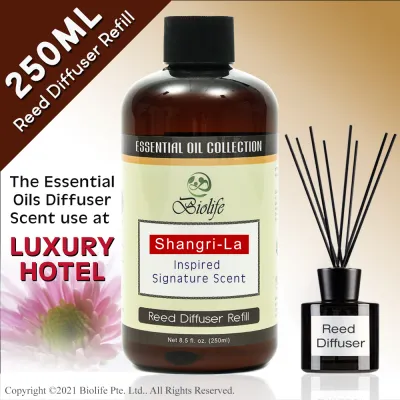
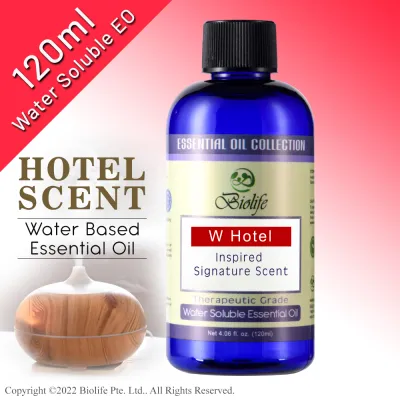
![Biolife Premium Hotel Scent Water Soluble Aromatherapy Essential Oil (120ml). [Shangri-La Hilton Westin Sheraton Ritz-Carlton Marriott Four Seasons W Hotel] For use with Aroma Diffusers Air Revitalizers Air Purifiers Humidifiers.](https://img.lazcdn.com/g/p/4e6c41efb55f6fdb6a615d686f88b873.jpg_400x400q80.jpg_.webp)
![[KIRONA SCENT] 120ML Diffuser Essential Oil | Bundle of 2 | Water Soluble Essential Oil | Suitable For Aroma Diffusers Air Revitalizers Air Purifiers Humidifiers | Luxury Hotel & Shopping Mall Scents](https://img.lazcdn.com/g/p/eebd614c2e05a630558bfdf3b85345af.jpg_400x400q80.jpg_.webp)
![[KIRONA SCENT] 120ML Diffuser Essential Oil | Water Soluble | 60+ Scents | Luxurious Mall & Hotel Scents | For Diffusers Air Revitalizers Air Purifiers Humidifiers](https://img.lazcdn.com/g/p/816881bc0108d3c1b35161778dcd211a.jpg_400x400q80.jpg_.webp)
Prices are valid at publication and may change. Please refer to the product page for the latest price.
Defining the Luxury Hotel Scent Profile
Luxury hotels rarely rely on simple, single-note fragrances like basic lavender or sweet vanilla. Instead, hospitality scent branding utilizes sophisticated, multi-layered compositions designed by professional perfumers to evoke specific emotional responses. These fragrances are crafted to feel clean, welcoming, and distinct, often serving as an invisible signature for the property.
Several key scent families dominate the luxury hospitality sector. Woody notes, such as sandalwood, cedarwood, and amber, provide a warm, grounding base that feels deeply comforting and high-end. Citrus elements, including bergamot, grapefruit, and mandarin, introduce a crisp, energizing brightness often found in upscale wellness retreats. White tea, green tea, and subtle florals like jasmine or iris add a clean, airy sophistication that prevents the heavier notes from overwhelming the space.
The structural difference between a complex hotel fragrance and a standard room spray lies in the fragrance pyramid. A premium hotel essential oil blend features a balanced progression of top, middle, and base notes. Top notes are the initial, volatile scents you perceive immediately, such as citrus or light herbs. Middle notes, or the heart of the fragrance, emerge next to define the core character, often featuring delicate florals or spices. Base notes are the heaviest molecules, such as musk, patchouli, or wood, which linger in the air for hours and provide the lasting foundation.
When evaluating reed diffusers, reading and interpreting these fragrance pyramids on product labels is essential. A label that only lists “vanilla” or “ocean breeze” typically indicates a simple, synthetic formulation that may smell flat or artificial over time. Look for products that explicitly detail a progression of notes, allowing you to anticipate how the scent will evolve in your home as it diffuses. This complexity is what transforms a simple room deodorizer into a true luxury experience.
Evaluating Reed Diffusers for Longevity and Scent Throw
The performance of a reed diffuser depends heavily on its chemical composition and physical components rather than marketing promises. To ensure your chosen fragrance lasts for weeks without losing its character, you must examine the ingredient list and product specifications. The concentration of the hotel essential oil within the carrier liquid is a primary indicator of scent strength and longevity.

High-quality diffusers typically feature a higher percentage of pure essential oils or premium fragrance oils blended with a stable carrier. Avoid formulations that rely heavily on alcohol or cheap solvents, as these evaporate rapidly in Singapore’s warm climate, leading to a short-lived scent and a dry, empty vessel within a couple of weeks. Look for carriers like glycol ethers or specialized bio-based solvents, which evaporate at a controlled, slow rate, ensuring a steady release of fragrance.
The physical reeds themselves play a critical role in how effectively the scent is projected into the room. Traditional rattan reeds contain natural micro-channels that draw the liquid upward, but they can occasionally become clogged by heavier oil molecules, requiring manual intervention. Modern synthetic fiber reeds are engineered with highly uniform pores, offering a faster capillary action and a stronger, more consistent scent throw. If you prefer a subtle, gradual diffusion, rattan is often suitable; for a more pronounced, room-filling aroma, fiber reeds are generally more effective.
The number of reeds you insert into the vessel directly controls the diffusion rate. Starting with three to five reeds allows you to test the intensity in a specific space, and you can gradually add more if the scent throw feels too faint. Keep in mind that using more reeds increases the surface area for evaporation, which will cause the oil mixture to deplete more quickly.
Always check the manufacturer’s guidelines regarding reed flipping and refill intervals. While some brands recommend flipping the reeds weekly to refresh the scent, doing so too frequently accelerates evaporation. Additionally, verify the recommended room size for the diffuser’s volume; a standard 100ml diffuser is typically designed for smaller spaces like bathrooms or study rooms, whereas a larger living area may require a 200ml or 250ml vessel to achieve a noticeable presence.
Brand Categories to Explore for Hotel-Quality Fragrances
When searching for a diffuser that delivers a genuine luxury hotel experience, organizing your search by brand categories can help you navigate the market systematically. One of the most direct routes is exploring luxury hotel amenity lines. Many world-renowned hotel groups retail their signature lobby scents directly to consumers through their official online boutiques or select local stockists. Purchasing directly from these hospitality brands ensures you receive the exact formulation used in their properties, though these options often carry a premium price tag.
Niche perfumery houses represent another excellent category. These brands focus exclusively on fragrance creation, utilizing high-grade ingredients and complex blending techniques. Their home fragrance collections often mirror their personal perfumes, offering sophisticated, avant-garde scent profiles that elevate a room’s atmosphere. While these diffusers are typically more expensive, they offer exceptional ingredient transparency, elegant glass vessels, and highly refined scent journeys.
Boutique home decor and wellness brands offer a more accessible yet high-quality alternative. Many of these brands focus on natural essential oil blends and sustainable materials, such as recycled glass and biodegradable reeds. They often design scents inspired by travel, nature, or classic spa environments, making them ideal for creating a relaxing, hotel-like sanctuary at home.
Before making a purchase, perform key practical checks to ensure a smooth buying experience. Verify local availability in Singapore to avoid high international shipping fees and potential customs delays. Evaluate the price point in S$ relative to the oil volume; a higher upfront cost for a larger volume or a highly concentrated formula often represents better long-term value than cheaper, rapidly evaporating alternatives. Finally, review the return and exchange policies, especially for blind buys, as fragrance preference is highly subjective and some retailers do not accept returns on opened home fragrance products.
Optimizing Placement and Maintenance for an Optimal Experience
Proper placement and regular maintenance are vital to maximizing the lifespan and performance of your reed diffuser. To achieve an optimal scent throw, position the vessel in a high-traffic area where natural foot traffic creates gentle air currents. Hallways, entryways, or near the center of a living room are ideal, as the movement of people helps disperse the fragrance molecules throughout the space.
Environmental factors like airflow, temperature, and humidity significantly influence evaporation rates. In Singapore, placing a diffuser directly under an air conditioning vent or next to an open window can cause the oil to evaporate much faster than intended. Similarly, keep the diffuser away from direct sunlight and heat sources, such as radiators or sunny windowsills, as excess heat can degrade the delicate essential oils and alter the fragrance profile.
Safety must always be a priority when positioning home fragrances. Ensure the diffuser sits on a stable, flat surface out of reach of children and pets. Because fragrance oils can permanently damage wood veneers, varnishes, plastics, and delicate fabrics, always place a decorative coaster, ceramic tray, or glass plate beneath the vessel to catch any accidental drips or condensation.
Routine maintenance will keep your diffuser performing optimally. Over time, airborne dust can settle on the exposed portions of the reeds, clogging their pores and blocking the oil’s upward path. Gently dusting the reeds or replacing them entirely every few months will restore the scent throw. When the oil level runs low, clean the vessel thoroughly before adding a fresh refill to prevent old, oxidized oil from affecting the new batch.
Frequently Asked Questions (FAQ)
Can I mix different hotel essential oil refills in the same vessel?
Mixing different hotel essential oil refills in a single vessel is generally not recommended by manufacturers. Fragrance formulations are carefully balanced chemical mixtures, and combining different brands or scent profiles can lead to unpredictable results. The carrier oils may not be compatible, potentially causing the mixture to separate, become cloudy, or clog the reeds entirely.
Furthermore, mixing complex scents often results in a clashing, chaotic aroma that ruins the sophisticated, clean profile of a luxury hotel fragrance. If you wish to switch to a new scent, it is advisable to use a fresh vessel or thoroughly clean your existing glass bottle. To clean the vessel, wash it with warm, soapy water, rinse it with isopropyl alcohol to remove oily residue, and allow it to dry completely before pouring in the new refill and inserting brand-new reeds.
Are hotel-scented reed diffusers safe for pets and children?
While reed diffusers do not use heat or open flames, they still require careful safety considerations in households with pets and children. Many common essential oils used to create luxury hotel scents—such as eucalyptus, citrus, tea tree, and certain floral oils—can be toxic to dogs and cats if ingested or if they come into direct contact with the skin.
Always review the ingredient list on the product label to identify any potential allergens or toxic substances. Keep the diffuser placed high on a secure shelf or mantelpiece where it cannot be knocked over. If an accidental spill occurs, clean the area immediately using protective gloves, and ensure the room is well-ventilated. If you have highly sensitive individuals, infants, or pets in your home, consult a veterinary or medical professional before introducing strong, continuous home fragrances to ensure the environment remains safe for everyone.

Community discussion
Share your experience or ask a question. Comments are reviewed before publication.