
To keep outdoor spaces safely illuminated in Singapore’s tropical climate, choosing a garden solar light requires prioritizing durability against high humidity, intense UV exposure, and heavy monsoon downpours. Selecting the right motion sensor solar lights requires evaluating technical specifications rather than relying on aesthetic appeal alone. Premium options from brands like Philips, Brennenstuhl, and Lutec—available through local lighting specialists and authorized distributors—provide the build quality and engineering necessary to withstand Singapore’s demanding weather conditions.
Quick Answer: Key Specs for Singapore's Climate
To survive intense tropical downpours and high humidity, outdoor solar lights must feature an IP65 or higher water-resistance rating. This ensures the internal electronics remain protected against low-pressure water jets from any angle during severe thunderstorms.
Monocrystalline solar panels are highly recommended for Singapore’s frequent overcast skies. They offer superior conversion efficiency under diffuse light compared to polycrystalline alternatives, ensuring the battery charges even when direct sunlight is limited.
Products mentioned in this guide
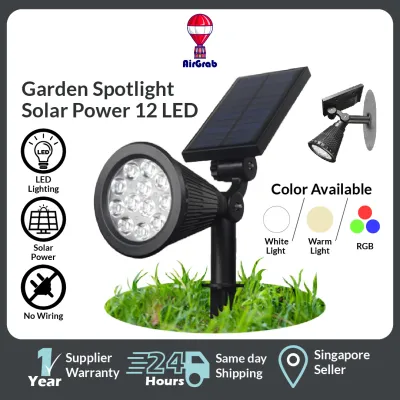
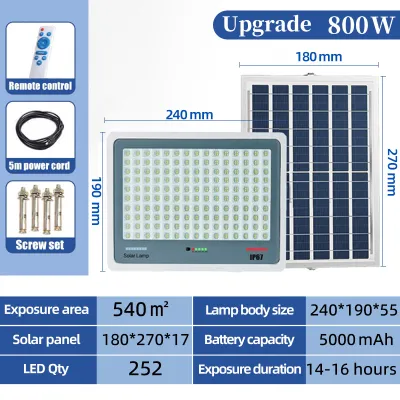
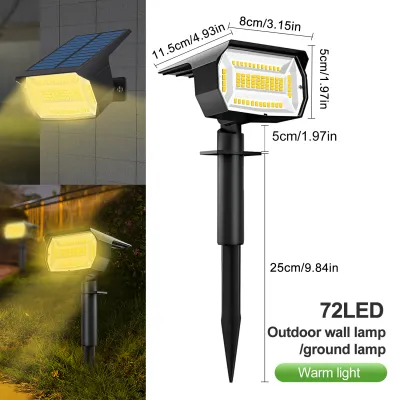
Prices are valid at publication and may change. Please refer to the product page for the latest price.
Passive Infrared (PIR) sensors must feature adjustable sensitivity or a well-shielded detection cone. This prevents false triggers from heavy rain sheets and wind-blown tropical foliage, conserving stored battery power for when actual motion is detected.
Essential Weather-Resistance Features to Verify
IP Ratings Explained An Ingress Protection (IP) rating consists of two digits: the first represents protection against solids, and the second represents protection against liquids. While IP65 is the absolute baseline for outdoor garden lighting, providing protection against dust and water jets, IP67 is highly recommended for low-lying areas. In Singapore, ground-level lights along garden paths or lawn borders face heavy splashing and temporary water accumulation during intense afternoon storms. For these zones, IP67 provides essential protection against temporary immersion. Wall-mounted or post-top lights can safely utilize IP65 ratings, provided they are not positioned directly under unguttered roof valleys where concentrated water streams can strike them.

Material Durability Singapore’s high UV index accelerates the degradation of standard plastics. Cheap ABS housings quickly turn brittle, yellow, and crack under sustained sunlight, leading to seal failure and water ingress. When selecting fixtures, verify that the product uses UV-stabilized polycarbonate, high-grade ABS, marine-grade stainless steel (316 or 304), or powder-coated die-cast aluminum. Tempered glass covers for the solar panels are highly superior to plastic covers, which cloud over when exposed to intense sunlight and humidity, permanently reducing solar transmission.
Battery Chemistry High ambient temperatures, often exceeding 30°C daily, can degrade batteries rapidly. Traditional Nickel-Metal Hydride (NiMH) batteries are highly sensitive to heat and suffer from high self-discharge rates in warm climates. Lithium Iron Phosphate (LiFePO4) batteries are the gold standard for tropical outdoor lighting. They operate safely at higher temperatures, offer a significantly longer cycle life (often exceeding 2,000 charge-discharge cycles), and maintain stable voltage output. Lithium-ion (Li-ion) batteries are also acceptable but require robust built-in thermal protection circuits to prevent degradation.
Seal Integrity Inspect the construction of the battery compartment and wiring entry points. High-quality fixtures utilize thick silicone gaskets or double-O-rings rather than flat rubber seals, which dry out and crack in tropical heat. Cable entry points must be sealed with tight-fitting compression grommets. Look for designs where the electronic control board is completely potted—encased in a protective resin—to isolate sensitive components from the ambient humidity that naturally penetrates air gaps over time.
Maximizing Sensor and Charging Efficiency in Overcast Skies
Solar Panel Types Monocrystalline silicon panels feature a single, high-purity crystal structure that allows electrons to move more freely, achieving energy conversion efficiencies of 15% to 22%. In contrast, polycrystalline panels generally hover between 13% and 16% efficiency. During Singapore’s inter-monsoon periods and the northeast monsoon, heavy cloud cover reduces direct sunlight. Monocrystalline panels excel at capturing diffuse light, ensuring the battery receives a partial charge even on fully overcast days.
PIR Sensor Optimization PIR sensors detect changes in infrared radiation when a warm body moves across their field of view. However, Singapore’s high ambient temperature—often close to human body temperature—reduces the thermal contrast, which can decrease detection range. To compensate, choose sensors with a wider detection angle (120 to 180 degrees) and a rated range of at least 8 to 12 meters. Additionally, look for models with adjustable sensitivity or physical shrouds to prevent false triggers caused by wind-swept palm fronds, large tropical leaves, or heavy downpours that block the sensor’s field of view.
Lighting Modes and Battery Conservation Constant-on solar lights will quickly deplete their batteries during consecutive rainy days. To ensure year-round reliability, select fixtures that offer smart power management modes. The most effective configuration is a “dim-to-bright” setting, where the light remains at a low, energy-saving level (e.g., 10% brightness) and ramps up to 100% output only when motion is detected. Alternatively, a pure “off-to-bright” mode conserves the maximum amount of energy, preserving battery life for multiple nights of overcast weather.
Recommended Light Profiles by Garden Zone
Pathway and Step Lighting
For pathways and steps, safety and glare reduction are paramount. Glare from exposed LEDs can temporarily blind residents walking in the dark. Select low-glare, downward-facing designs (often called “eyelid” or “hooded” step lights) that direct light precisely onto the walking surface. The PIR sensor should have a wide, downward-angled detection zone to capture footsteps early.
In Singapore’s wet seasons, garden soil becomes highly saturated and soft. Stake-mounted lights must have long, sturdy spikes (preferably made of heavy-duty aluminum or glass-filled nylon rather than thin plastic) to prevent them from tilting or falling over in loose soil. For concrete steps or paved walkways, surface-mounted fixtures secured with stainless steel expansion bolts are far more stable and permanent.
Aim for a moderate light output of 50 to 150 lumens per fixture. This level provides sufficient visibility without creating harsh shadows. A warm color temperature of 2700K to 3000K is highly recommended for pathways, as it enhances the natural tones of stone, timber, and foliage while creating a welcoming, low-contrast ambient environment. When purchasing pathway lights, check the packaging to verify that the stake or mounting hardware is rated for outdoor ground contact.
Security and Flood Lighting
Security zones, such as side alleys, car porches, and dark corners of landed properties, require high-intensity illumination to deter intruders and provide clear visibility. Look for heavy-duty floodlights with a light output of 500 to 1200 lumens. These units require a larger, separate solar panel connected by a cable, allowing you to position the panel on a roof or high wall for maximum sun exposure while mounting the light fixture in a shaded security zone.
The PIR sensor on a security light must be highly precise. Choose models with a narrow, adjustable detection field (e.g., 90 to 110 degrees) to target specific entry points, such as gates or doors, without being continuously triggered by public sidewalks or swaying tree branches in the background.
Because security floodlights are heavier and wind-loaded, avoid temporary mounting methods like adhesives or light stakes. Securely mount them to brick, concrete, or solid timber walls using stainless steel screws and wall plugs. If the installation requires working at height (such as on a second-story fascia), prioritize safety by using stable ladders, isolating any nearby electrical wiring, or hiring a qualified professional installer. Ensure any hybrid models that connect to mains power for backup charging carry the Enterprise Singapore Safety Mark on their power adapters.
Decorative and Accent Lighting
Decorative lights, such as wall sconces, hanging lanterns, and integrated trellis lights, add architectural depth to gardens and patios. However, complex decorative shapes often feature intricate joints and crevices where rainwater and high humidity can pool, leading to premature corrosion or mold growth. Verify that decorative fixtures still carry at least an IP54 or IP65 rating and feature clear drainage channels to prevent standing water.
Consistent color rendering (a Color Rendering Index of CRI 80 or higher) is essential for highlighting the rich greens of tropical landscaping and the textures of feature walls. Warm white light (3000K) creates a relaxing resort-like atmosphere, whereas cool white light (above 5000K) can make outdoor living areas feel clinical and harsh. These decorative style and color temperature choices are conditional preferences that depend on your landscape design rather than universal performance metrics.
When selecting decorative solar lights, prioritize brands that offer a clear warranty (ideally 1 to 2 years) and have established local customer support in Singapore. This ensures you can easily source replacement batteries or seek assistance if the humid climate affects the fixture’s internal electronics.
Installation and Maintenance for Humid Climates
Optimal Placement To maximize charging efficiency, mount solar panels where they receive unshaded sunlight for at least 6 hours daily. In Singapore, which lies near the equator, panels should ideally be mounted horizontally or tilted slightly (about 10 to 15 degrees) facing north or south to catch the sun year-round while allowing rainwater to naturally wash away dust. Ensure the PIR sensor is positioned away from highly reflective surfaces like glass doors, swimming pools, or light-colored gloss walls, as shifting reflections can cause false triggers.
Routine Cleaning Singapore’s air can carry fine dust, construction dust, and pollen, which accumulate on solar panels and form a film that blocks light. Every three to six months, gently wipe the solar panels with a soft, damp microfiber cloth. Use clean water or a highly diluted, pH-neutral mild soap if necessary. Never use abrasive scrubbing pads, steel wool, or harsh chemical cleaners, as these will scratch or strip the anti-reflective coating on the glass, permanently reducing solar conversion efficiency.
Moisture Checks Periodically inspect your outdoor lights for signs of internal moisture, such as condensation on the inside of the lens or rust around the battery terminals. If you observe water pooling inside the unit, immediately turn off the switch, remove the battery if it is designed to be user-replaceable, and allow the components to dry completely in a well-ventilated indoor area. If corrosion has damaged the terminals or the seals are visibly degraded, stop using the unit and consult the manufacturer’s customer service.
Seasonal Adjustments Tropical plants in Singapore, such as heliconias, palms, and bougainvillea, grow rapidly in high humidity and rain. Check your garden monthly to ensure fast-growing foliage has not overgrown the solar panels or crept into the PIR sensor’s field of view. Regularly trim back branches and leaves that cast shadows on the panels during peak daylight hours or cause continuous false motion triggers during windy nights.
Frequently Asked Questions (FAQ)
Do solar garden lights work during the monsoon season?
Yes, high-quality solar garden lights will continue to charge during the monsoon season, though their charging efficiency will be significantly reduced due to heavy cloud cover. Monocrystalline panels can still generate power from diffuse daylight. To prevent the battery from draining completely during consecutive rainy days, switch the lights to a motion-sensor-only mode (where they remain off until motion is detected) rather than a constant-on dusk-to-dawn mode. This conserves the stored energy for when illumination is actually needed.
How often should I replace the batteries in outdoor solar lights?
In Singapore’s hot and humid climate, outdoor solar light batteries typically last between 1.5 to 3 years before their capacity degrades noticeably. Lithium Iron Phosphate (LiFePO4) batteries generally offer a longer lifespan compared to standard Lithium-ion or NiMH options. To maximize the value of your investment, look for solar light brands that feature user-replaceable battery compartments secured by screws and silicone seals, rather than fully sealed units that must be discarded entirely when the battery fails.
Can I install solar motion lights under a dense tree canopy?
Installing a standard integrated solar light directly under a dense tree canopy is not recommended, as the lack of direct sunlight will prevent the battery from charging adequately. To overcome this challenge, choose a split-type solar motion light. These systems feature a separate solar panel connected to the light fixture by a long, weatherproof cable (typically 3 to 5 meters). This design allows you to mount the light fixture under the shaded canopy or patio ceiling while positioning the solar panel in a nearby sunny spot, such as a roofline or open garden wall.

Community discussion
Share your experience or ask a question. Comments are reviewed before publication.