
Selecting the right wall light brands for your corridor in Singapore requires balancing spatial constraints, electrical safety, and optical performance. For narrow residential hallways, the most suitable brands are those that offer low-profile profiles, comply with local 230V/50Hz electrical standards, and provide glare-free illumination. Mainstream global brands like Philips and Megaman offer highly reliable, standardized fixtures with local safety certifications, while premium architectural brands like Astro Lighting and Flos provide precise beam control and high-end finishes. Local specialized suppliers, such as Sol Luminaire, curate minimalist, low-glare options tailored specifically to the structural layouts of Singapore Housing & Development Board (HDB) flats and private condominiums.
To find the ideal sconces for your home, you must evaluate brands based on their physical dimensions, driver reliability, and compatibility with local installation constraints. Corridors serve as high-traffic transition zones where bulky fixtures can become physical hazards, meaning your choice of brand directly impacts both the safety and visual flow of your living space.
Why Corridor Spaces Demand Specific Sconce Designs
Corridors in Singapore homes, particularly HDB flats and modern condominiums, are characterized by tight physical boundaries. Standard hallways typically measure between 1.0 and 1.2 meters in width, leaving very little clearance on either side. Because these areas experience high daily foot traffic—ranging from carrying groceries to moving furniture—any fixture mounted on the wall must respect these spatial limits. Bulkier, traditional sconces that protrude significantly from the wall restrict movement and are highly susceptible to being bumped, damaged, or causing minor injuries.
Products mentioned in this guide
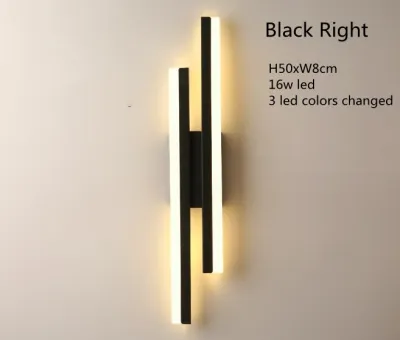
![[KATEKYO X SG] LED Wall Mounted Sconce Lights with Remote Control USB Charging Operated Dimmable Wall Lamp Black 3 Color](https://img.lazcdn.com/g/p/5df5afd4a8f0e9ce6322a18d310ab547.png_400x400q80.png_.webp)
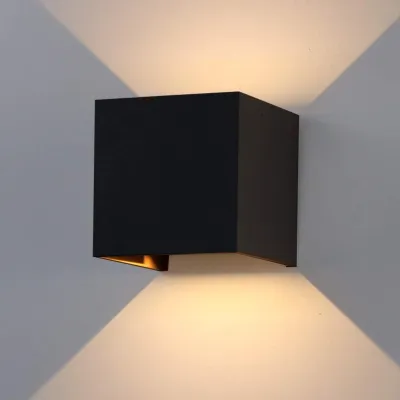
Prices are valid at publication and may change. Please refer to the product page for the latest price.
In these narrow pathways, the primary role of a wall light is to provide safe wayfinding, eliminate dark corners, and establish a comfortable ambient layer. Unlike a spacious living room where decorative, oversized fixtures can serve as visual centerpieces, corridor lighting must prioritize functional integration. The goal is to distribute light evenly along the floor and walls without creating harsh, direct glare that can temporarily blind someone walking down a dark hallway. This requirement makes slim-profile, flush-mount, or directional up-and-down wall lights the standard choice for modern corridors.
Consequently, when shortlisting brands, you should look for manufacturers that prioritize ergonomic design and precise optical engineering over purely decorative forms. A well-designed corridor sconce uses recessed light sources, frosted diffusers, or indirect light paths to project illumination upward, downward, or flat against the wall surface. This structural approach ensures the corridor remains bright and welcoming while keeping the physical footprint of the light fixture as unobtrusive as possible.
Core Criteria for Evaluating Wall Light Brands in Singapore
Electrical Compliance and Safety
Singapore’s residential electrical grid operates on a 230V/50Hz standard. Any wall light brand you consider must supply fixtures engineered to operate safely within these parameters. For integrated LED fixtures and external LED drivers, it is critical to verify if the products carry the Safety Mark, which is administered by Enterprise Singapore as the safety authority. The Safety Mark ensures the electrical components have been tested and certified safe for local household use, protecting your home from short circuits, overheating, and potential electrical fires.

Dimensional and Spatial Awareness
Before purchasing any wall light, always review the brand’s technical specification sheets for the exact physical dimensions, paying close attention to the depth or “projection” of the fixture. For narrow Singapore corridors, look for brands that offer ultra-slim or low-profile designs, ideally protruding no more than 50 to 100 millimeters from the wall surface. Reliable brands provide precise millimeter measurements and detailed 3D technical drawings, allowing you to plan your hallway layout accurately and prevent shoulder-brushing or head-bumping.
Optical Quality and Glare Control
Because you will view corridor lights from a close distance, glare control is a critical comfort factor. High-quality brands design their sconces with frosted glass diffusers, micro-prismatic optics, or deep-recessed LED chips that shield the light source from direct line of sight. Look for brands that specify a high Color Rendering Index (CRI) of 90 or above, which ensures colors appear natural and vibrant under the light, and offer warm color temperatures (typically 2700K to 3000K) to create a relaxed, inviting transition zone.
Material Durability in Tropical Climates
Singapore’s tropical climate features high relative humidity, which can accelerate the degradation of low-quality metals and finishes. When evaluating brands, prioritize those that use corrosion-resistant materials such as powder-coated aluminum, solid brass, marine-grade stainless steel, or high-density polymers. Brands that invest in high-quality surface treatments and anodizing processes ensure their fixtures will not rust, discolor, pit, or peel over years of exposure to local ambient humidity.
Local Warranty and After-Sales Support
LED drivers are the most common failure point in modern wall lights, often failing long before the LED chips themselves reach the end of their lifespan. Choosing a brand with an established local distributor or official presence in Singapore ensures you have access to direct warranty claims, responsive customer service, and readily available replacement parts. Opting for brands that offer a comprehensive local warranty of at least one to three years saves you the hassle of discarding an entire fixture due to a single failed internal component.
Types of Reliable Brands to Consider for Your Corridor
Global Heritage and Mainstream Lighting Brands
Global heritage brands, such as Philips (Signify), Megaman, and Ledvance, represent the benchmark for standardized, highly reliable utility lighting. These manufacturers focus heavily on electrical efficiency, rigorous quality control, and widespread compliance with international and local safety standards. If you are looking for a practical, durable, and cost-effective corridor lighting solution, these mainstream brands offer an excellent starting point.
Their product catalogs feature a wide variety of minimalist, low-profile LED wall lights that integrate seamlessly into modern home designs. Because these brands produce fixtures on a global scale, their integrated LED drivers are highly stable and designed to withstand voltage fluctuations. Furthermore, their extensive local distribution networks in Singapore mean you can easily find replacement parts, and securing warranty support is a straightforward process through authorized retail channels.
Architectural and Designer Lighting Specialists
For homeowners seeking to elevate their corridor into a curated design feature, premium architectural and designer brands are worth the investment. Brands like Astro Lighting (highly regarded for their minimalist British plaster and metal sconces), Flos, Artemide, and Vibia treat lighting as both an art form and a precise science. These manufacturers specialize in high-end material finishes, such as machined aluminum, hand-blown glass, and brushed brass, which add a sophisticated tactile quality to your walls.
Beyond aesthetics, architectural brands offer superior optical engineering, allowing you to project precise shapes, clean lines, or soft washes of light onto your corridor walls. These fixtures often feature advanced dimming capabilities, making them compatible with sophisticated phase-cut or DALI dimming systems. While these premium options come with a higher price tag—often ranging from S$300 to over S$1,000 per fixture—they provide unmatched visual refinement and are ideal for luxury condominiums or landed properties.
Local Showrooms and Specialized Suppliers
Singapore boasts a vibrant ecosystem of local lighting showrooms and specialized suppliers, such as Sol Luminaire, Lightcraft, and Near. These local players deeply understand the specific architectural constraints of HDB flats and local condominiums. They often curate, design, or manufacture lighting collections specifically tailored to fit the lower ceiling heights and structural concrete walls common in Singaporean residential developments.
Sourcing from local specialists offers the distinct advantage of personalized, high-touch customer service. Many local showrooms provide comprehensive services, including on-site lighting consultations, custom driver configurations, and direct coordination with your interior designer or electrician. Visiting a physical showroom also allows you to observe the actual light output, color temperature, and glare levels in person, ensuring the fixtures you select perform exactly as expected in your home environment.
Where to Source and Verify Authentic Sconces
Physical Lighting Hubs
For a hands-on shopping experience, traditional physical lighting districts in Singapore, such as Balestier Road and the Jalan Besar area, host dozens of established showrooms. Walking through these hubs allows you to compare multiple brands side by side, feel the weight and material quality of the fixtures, and negotiate package deals directly with showroom sales representatives. Many of these shops have operated for decades and can offer valuable practical advice on which brands perform best under local installation conditions.
Premium Design Showrooms
If your focus is on high-end architectural or designer brands, you should visit specialized interior design showrooms and flagship concept stores, which are primarily located in central commercial districts or industrial design hubs like Henderson and Outram. These showrooms display fixtures in fully realized, architect-designed mockups, helping you visualize how different beam angles and light distributions interact with various wall textures and colors.
Brand Official Stores and Authorized Dealers
To guarantee authenticity and secure a valid local warranty, always purchase your wall lights from a brand’s official flagship store or an authorized local dealer. Authorized distributors are contractually obligated to supply fixtures that meet Singapore’s specific electrical standards and contain certified internal components. They also provide direct access to manufacturer-backed warranties, ensuring that any replacement parts or drivers you receive are authentic and safe.
Navigating Online Marketplaces
While online marketplaces and e-commerce platforms offer unmatched convenience and lower price points, they carry significant risks when sourcing electrical fixtures. Many unverified third-party sellers list parallel imports designed for foreign markets, which may operate on different voltages (such as 110V systems from North America) or lack essential safety certifications like the local Safety Mark. To protect your home, avoid purchasing unbranded or suspiciously cheap electrical goods online. If you choose to buy online, always cross-reference the seller’s credentials with the brand’s official local distributor directory to confirm they are an authorized retail partner.
Installation Rules and Safety Boundaries in Singapore
Concealed vs. Surface Wiring
Before finalizing your wall light purchase, you must assess the structural composition of your corridor walls. Many HDB flats and private condominiums utilize structural concrete shear walls or precast panels. Hacking these structural walls to conceal electrical wiring is highly restricted and often requires formal structural engineering approvals. If your corridor walls cannot be hacked, you must either use surface-mounted PVC casing (trunking) to route the wires or opt for plug-in sconces. Make sure the brand you choose offers fixtures with a rear housing design that can cleanly accommodate surface-entry wiring if trunking is necessary.
HDB Regulations and Common Areas
It is vital to distinguish between your private internal corridor and the shared common corridor outside your flat’s front door. Under HDB regulations, modifying, adding, or tapping into the electrical wiring of shared public corridors is strictly prohibited. Any decorative or functional wall lighting you install must remain entirely within the boundaries of your private, titled property. Ensuring your lighting projects do not spill disruptive glare into neighboring units is also a key consideration for maintaining community harmony.
The Requirement for a Licensed Electrician
In Singapore, performing DIY electrical work on fixed household wiring is illegal and can void your home insurance policy. For your safety and regulatory compliance, you must hire a Licensed Electrical Worker (LEW) registered with the Energy Market Authority (EMA) to perform any fixed wiring, circuit modifications, or installation of wall sconces. Before the electrician begins work, ensure the main power supply to the affected circuit is isolated at the distribution board (DB box). The LEW will ensure that all connections are properly grounded, load capacities are respected, and the installation complies fully with the SS 638 Singapore Standard Code of Practice for Electrical Installations.
Smart Home Integration
If you plan to integrate your corridor wall lights into a smart home ecosystem (such as Apple Home, Google Home, or Zigbee-based platforms), you must verify compatibility before purchasing. Some smart lighting brands require a dedicated neutral wire at the switch box, which may not be present in older Singaporean homes without rewiring. Alternatively, you can pair standard “dumb” wall lights with smart switches, provided the switch box has sufficient depth to house the smart module and the wall light’s LED driver is fully dimmable and compatible with the smart switch’s dimming protocol.
Frequently Asked Questions (FAQ)
Do indoor corridor sconces need an IP rating?
Standard indoor corridors in Singapore are classified as dry environments, meaning a specific Ingress Protection (IP) rating is generally not required, and standard IP20-rated fixtures are perfectly adequate. However, there are key exceptions to this rule. If your corridor sconce is positioned near an open window where wind-driven rain can blow in, or if the hallway is located immediately adjacent to an open-air balcony or a frequently damp bathroom entrance, you should select a fixture with a minimum rating of IP44. An IP44 rating ensures the internal electrical components are protected against splashing water and high localized humidity, preventing premature driver failure or electrical shorting.
Can I use plug-in sconces in an HDB private corridor?
Yes, plug-in wall sconces are legally permissible inside the private interior space of an HDB flat, as they connect directly to an existing three-pin wall outlet and do not involve altering the home’s fixed electrical wiring. This option is highly convenient if you wish to avoid the cost of hiring an electrician or are renting a property where wall hacking and permanent modifications are prohibited. The primary trade-off is aesthetic and practical: you will have a visible power cord hanging down the wall. To maintain a clean look and prevent tripping hazards in a narrow hallway, use paintable, self-adhesive cord covers to secure and conceal the wire flat against the wall surface.

Community discussion
Share your experience or ask a question. Comments are reviewed before publication.