
Selecting the ideal Rhythm table clock requires balancing your aesthetic preferences with the functional demands of your living space. As a brand renowned for its diverse range of timepieces, Rhythm offers everything from traditional wooden mantels to ultra-modern digital hybrids and animated musical designs. To find the model that best suits your needs, you must evaluate key specifications such as movement type, sound control features, and physical dimensions against the specific environment where the clock will reside. By understanding how these elements interact, you can select a timepiece that not only complements your interior decor but also enhances your daily routine without causing unwanted distractions.
Whether you are decorating a compact study in a modern condominium or looking for a striking focal piece for a spacious living room, the right clock serves as both a functional tool and a design statement. The process begins with identifying the primary design categories available, followed by a close inspection of the technical features that dictate how the clock operates throughout the day and night.
Exploring Rhythm Table Clock Design Categories
Rhythm table clocks are categorized into several distinct design families, each tailored to different decorative styles and functional priorities. Understanding these categories allows you to quickly narrow down your options based on the visual atmosphere you wish to create in your home.
Products mentioned in this guide
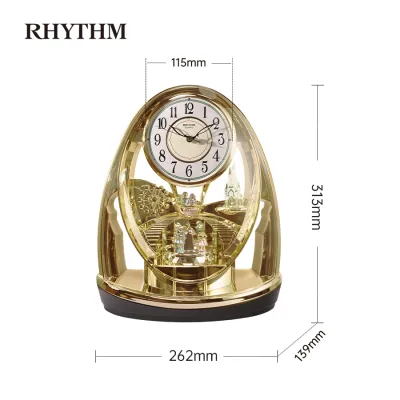
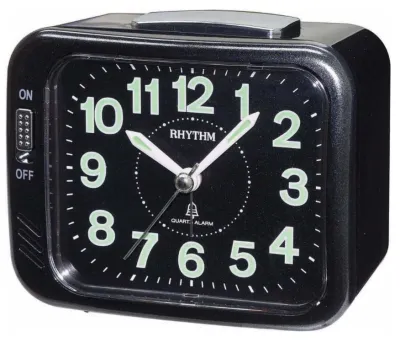
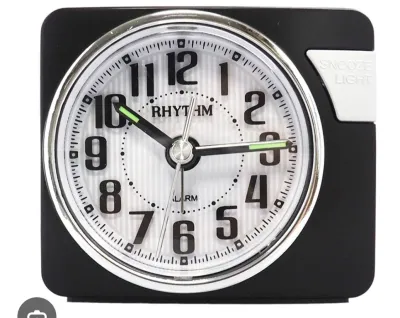
Prices are valid at publication and may change. Please refer to the product page for the latest price.
Classic and wooden designs represent the traditional heritage of table timepieces. These models often feature rich wood-grain finishes, such as walnut, mahogany, or oak tones, which bring natural warmth and a sense of permanence to a room. Many classic models incorporate traditional elements like Roman numerals, ornate hands, and even moving pendulums that sway gently beneath the dial. These clocks are highly suited for formal spaces, including libraries, traditional studies, and classic living room mantels, where they act as anchoring decorative elements. The visual weight of a wooden casing adds a touch of sophistication, making it an excellent match for classic or transitional interior design styles.
Modern and minimalist models cater to contemporary tastes, prioritizing clean lines, simplicity, and updated materials. These timepieces frequently utilize sleek plastics, brushed metals, glass, or high-gloss finishes to create a streamlined profile. The dials are typically uncluttered, featuring simple bar markers or clean Arabic numerals that allow for quick, effortless reading. Minimalist clocks are designed to blend seamlessly into modern interiors, such as Scandinavian, industrial, or mid-century modern spaces. Their compact and lightweight structures make them highly versatile, fitting easily onto narrow floating shelves, minimalist desks, or bedside tables without overwhelming the surrounding decor.
Musical and novelty clocks offer a more dynamic and interactive experience, combining timekeeping with motion and sound. These models are famous for their animated dials, which may split apart, rotate, or reveal hidden decorative elements when a melody plays. They often feature built-in libraries of classical tunes, seasonal melodies, or Westminster chimes. Novelty designs may also include themed illustrations or character licensing, making them popular choices for family rooms, children’s bedrooms, or as unique conversation starters in entryways. While these clocks are highly entertaining, they require careful placement to ensure their visual and auditory features can be fully appreciated without disrupting the household.
Functional and hybrid displays focus heavily on utility, readability, and multi-functional performance. These models often combine analog clock faces with digital sub-displays, or they may be entirely digital. They prioritize high-contrast dials with bold, easily readable numerals that can be seen from a distance. In addition to telling the time, hybrid models frequently display essential environmental data, such as the date, day of the week, indoor temperature, and relative humidity levels. This makes them exceptionally practical for daily scheduling and monitoring indoor comfort, particularly in tropical climates where managing indoor humidity is key to maintaining a comfortable living environment.
Key Features and Specifications to Evaluate
Once you have identified your preferred design category, the next step is to evaluate the technical specifications of individual models. These features directly influence how the clock performs, how much maintenance it requires, and how it fits into your daily life.

The movement type is one of the most critical factors to consider, as it determines the motion of the second hand and the sound the clock produces. Standard quartz movements feature a stepping motion, where the second hand moves forward in distinct, one-second intervals, often accompanied by a soft, rhythmic ticking sound. While this ticking is barely noticeable in a busy room, it can become highly audible in a silent space. In contrast, sweep movements—often labeled as silent or continuous sweep—move the second hand in a smooth, uninterrupted glide. This eliminates the mechanical ticking sound entirely, making sweep movements the preferred choice for anyone sensitive to repetitive noises.
Sound and melody controls are essential for any clock that features chimes or musical tunes. When evaluating a model, check the physical interface on the back or side of the casing for volume adjustment sliders or dials, which allow you to set the sound to a comfortable level. Additionally, look for physical on/off switches that let you disable the melodies entirely when quietness is required. Many advanced Rhythm models also feature built-in light sensors, often referred to as automatic night shutoff sensors. These sensors detect when the room darkens and automatically silence all chimes and melodies, ensuring your sleep remains undisturbed without requiring you to manually turn off the sound every evening.
Power requirements vary significantly depending on the complexity of the clock’s features. Simple analog quartz clocks typically run on a single AA battery and can operate for a year or more before requiring a replacement. However, models with moving pendulums, animated dials, digital displays, or frequent musical chimes consume power at a much faster rate. These feature-rich clocks often require larger C-cell or D-cell batteries, or multiple batteries of varying sizes. Always review the manufacturer’s specifications to understand the battery configuration and expected power consumption, as this will influence your long-term maintenance routine and battery purchasing habits.
Dimensions and weight must be verified to ensure the clock fits safely on your chosen surface. Table clocks are designed to sit on flat surfaces, but their footprints can vary from compact travel-sized models to large, heavy mantel clocks. Measure the depth, width, and height of your shelf, desk, or mantelpiece before purchasing, and compare these measurements against the clock’s physical specifications. A clock that is too deep may sit precariously close to the edge of a shelf, while a clock that is too light might be easily tipped over by pets, children, or accidental bumps. Ensure the weight of the clock is compatible with the load capacity of floating shelves or delicate glass surfaces.
Matching the Clock to Your Space and Daily Routine
A clock’s suitability depends heavily on the environment in which it is placed. By matching the clock’s features to the specific demands of each room, you can maximize its utility and aesthetic value.
In bedrooms, the primary goals are rest and relaxation, making silence and minimal light disruption the top priorities. For these spaces, you should prioritize clocks equipped with silent sweep movements to eliminate any distracting ticking sounds that could interfere with falling asleep. If you prefer a clock with an alarm or chime function, ensure it features an automatic light-activated shutoff so that the melodies do not trigger during the night. Additionally, if the clock has a digital display or backlighting, verify that the brightness can be dimmed or turned off completely, preventing excess artificial light from disrupting your sleep cycle.
Living rooms and entryways are the social hubs of the home, making them ideal locations for larger, more decorative timepieces. In these areas, you can opt for statement wooden cases, elegant pendulums, or musical clocks that serve as visual focal points. Since these rooms experience higher ambient noise levels, a standard ticking quartz movement is rarely an issue, and the sound of hourly chimes can add a welcoming, traditional charm to the home. When placing a clock in an entryway, consider positioning it near eye level on a console table, where guests can easily view the time and appreciate the clock’s craftsmanship as they enter your home.
Home offices require an environment that fosters concentration and productivity, which influences both the style and functionality of the clock you choose. For a workspace, look for a clock with a compact footprint that does not clutter your desk or interfere with computer monitors and writing materials. The dial should be exceptionally clear and readable at a quick glance, allowing you to track your schedule without losing focus. To minimize auditory distractions during virtual meetings or deep-focus work, a silent sweep movement is highly recommended. Additionally, hybrid models that display the date and day of the week can help you stay organized throughout your workweek.
Lighting conditions within a room can dramatically affect how easy it is to read your clock. In Singapore, many homes feature large windows that let in abundant natural light, which can create significant glare on glass clock faces. If you plan to place your clock opposite a window or directly under bright overhead artificial lights, look for models with matte-finish dials and high-contrast hands—such as black hands on a white or cream background. Avoid highly reflective metallic dials or dark-on-dark color schemes in brightly lit areas, as the lack of contrast can make the hands difficult to distinguish from certain angles.
Final Verification and Purchasing Guidelines
Before finalizing your purchase of a Rhythm table clock, taking a few precautionary steps will ensure that you receive an authentic, high-quality product that is backed by proper customer support.
Always purchase your timepiece from authorized retailers or official brand stores. Because Rhythm is a well-established global brand, counterfeit products or unauthorized parallel imports can sometimes circulate in online marketplaces. Buying from an authorized source guarantees that you receive a genuine clock made with authentic materials and movements. Furthermore, authorized purchases are typically backed by an official manufacturer’s warranty, which protects you against any internal mechanical defects or electronic failures that might arise during the initial ownership period. Whether you are looking for a simple desk companion under S$50 or an intricate musical masterpiece, verifying the seller is key to protecting your investment.
Upon receiving your clock, conduct a thorough physical inspection immediately. Carefully examine the outer casing for any scratches, dents, or cracks that may have occurred during transit. Inspect the protective glass cover to ensure it is securely fitted and free from blemishes, and check that the hands are perfectly aligned and do not touch or overlap as they rotate. If you purchased a model with moving parts or a pendulum, verify that these components move freely without catching on the frame or dial.
Before inserting batteries or setting the time, read the included instruction manual carefully. The manual contains crucial information regarding the correct battery installation procedure, which is particularly important for musical or animated clocks that require multiple batteries. It will also outline the proper way to set the time—many quartz movements require you to turn the hands only in a clockwise direction to avoid damaging the internal gear train. Following these manufacturer guidelines from day one will help preserve the accuracy and lifespan of your clock’s movement.
Finally, familiarize yourself with the return and exchange policies of the retailer before completing your transaction. Decorative home goods and electronic items can sometimes look different in your home environment than they do in online photos or showroom lighting. Understanding the retailer’s policy regarding returns, exchanges, or store credits will give you peace of mind, allowing you to exchange the clock if you find that its size, color, or sound profile does not suit your space as well as you had anticipated.
Frequently Asked Questions (FAQ)
Do Rhythm table clocks require special batteries?
Rhythm table clocks do not typically require highly specialized batteries, but they do require adherence to the manufacturer’s specific battery type recommendations. Many traditional quartz movements are designed to operate on standard carbon-zinc batteries, which provide a steady, low-drain power supply. Using high-drain alkaline batteries in a movement designed for carbon-zinc can sometimes deliver too much current, potentially leading to premature wear or damage to the delicate electronic circuits over time. Conversely, feature-rich clocks with melodies, lights, or moving parts often specify alkaline batteries to handle the higher power demand. Always check the battery compartment label or the user manual to verify the correct battery chemistry and voltage limits for your specific model.
How do I clean the clock case and glass without damaging it?
To clean your clock safely, always use a dry, soft microfiber cloth to gently wipe away dust from the casing and the glass cover. For stubborn smudges on the glass, you can slightly dampen the microfiber cloth with water, but avoid spraying any liquid directly onto the clock face, as moisture can seep through the edges of the glass and damage the dial or internal movement. Never use harsh chemical cleaners, abrasive pads, or solvents like alcohol or acetone, especially on wooden casings or plastic components with metallic finishes. These substances can strip away protective lacquers, discolor the wood, or dissolve plastic coatings, permanently damaging the aesthetic appeal of your timepiece.

Community discussion
Share your experience or ask a question. Comments are reviewed before publication.