
Using an E27 to E27 extension is a practical way to adjust the position, depth, or angle of a light bulb within a deep fixture or a high ceiling. However, adding any accessory to an electrical circuit introduces new connection points and physical boundaries that must be carefully managed. To ensure a safe installation, you must respect the specific wattage and voltage limits of the extension adapter, the primary light fixture, and the bulb itself.
In Singapore, the safe voltage limit for standard E27 extensions is aligned with the local mains supply of 230V AC. The safe wattage limit, however, is highly variable and depends on the materials used in the extension’s construction. While ceramic extensions can often handle up to 100W, standard thermoplastic or flexible plastic extensions are typically limited to 40W or 60W. Exceeding these thresholds can lead to severe thermal damage, short circuits, or fire hazards.
Understanding Electrical Ratings on E27 Extensions
To build a safe lighting setup, it is essential to understand the difference between voltage and wattage ratings on your E27 to E27 extension. Voltage, measured in volts (V), represents the electrical pressure or force that pushes current through the circuit. Wattage, measured in watts (W), represents the actual rate of power consumption and, consequently, the amount of heat generated by the bulb during operation.
Products mentioned in this guide
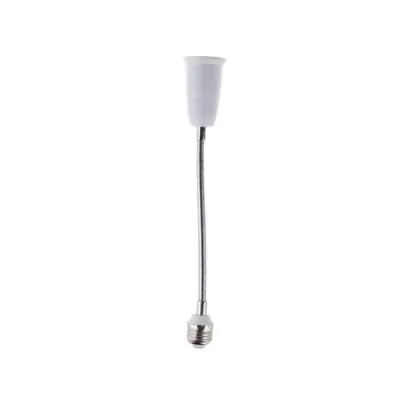
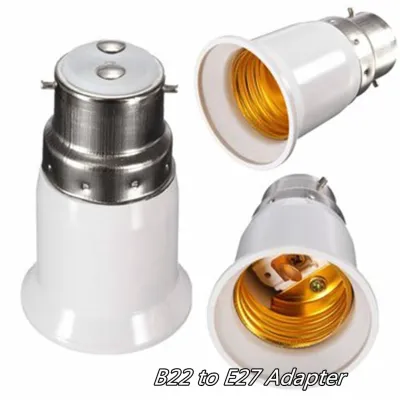
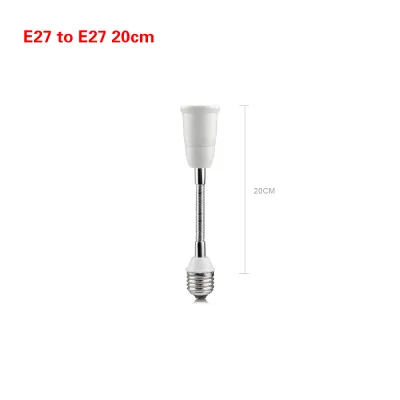
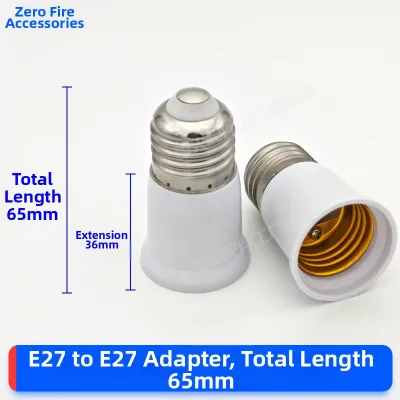
Prices are valid at publication and may change. Please refer to the product page for the latest price.
You can typically find these electrical ratings embossed directly onto the collar of the E27 extension body, printed on the product packaging, or detailed in the manufacturer’s specification sheet. A common rating stamped on high-quality adapters is “250V 2A” or “Max 60W”. The voltage rating indicates the maximum electrical pressure the insulation can safely withstand, while the wattage or current rating indicates the thermal limit of the internal wiring and contacts.
It is a critical safety rule that the extension adapter’s rated maximum serves as the absolute ceiling for your entire lighting setup. Even if your home’s wall socket can deliver ample current, and even if your primary ceiling fixture is rated for a higher load, you must never install a bulb that draws more power than the extension’s stated limit. The extension is the bottleneck of the circuit.
Furthermore, do not confuse the physical E27 screw base standard with the electrical capacity of the specific extension product. The term “E27” refers strictly to the physical dimensions of the Edison screw thread, which has a diameter of 27 millimeters. While any E27 bulb will physically thread into any E27 extension, the internal metal contacts, wire gauge, and housing materials of the extension dictate its actual safe electrical limits.
Safety Risks of Exceeding Maximum Load Limits
Overloading an E27 to E27 extension by installing a bulb with a wattage that exceeds the adapter’s rated capacity introduces significant physical and electrical hazards. The primary risk is thermal accumulation. High-wattage bulbs, particularly traditional incandescent or halogen options, convert only a small fraction of their energy into visible light, releasing the remaining energy as intense heat.

When this heat exceeds the thermal limits of the extension, the plastic, rubber, or low-grade silicone components of the adapter will begin to soften, warp, or melt. This structural failure can cause the internal metal contacts to shift out of alignment. Once the contacts shift, they can create loose connections, which generate localized electrical arcing—a major cause of electrical fires.
Over time, prolonged exposure to excessive heat degrades the insulation surrounding the extension’s internal copper wiring. As this insulation becomes brittle, cracks, and flakes away, the live electrical conductors inside the extension are left exposed. This drastically increases the risk of a short circuit if the wires touch, or a severe electrical shock hazard for anyone attempting to adjust or replace the bulb.
Fire hazards are especially pronounced when extensions are used inside enclosed fixtures, deep recessed cans, or tight decorative shades. In these confined spaces, heat cannot dissipate naturally through convection. The trapped thermal energy can rapidly escalate to temperatures capable of igniting nearby combustible materials, such as paper, fabric, or wooden ceiling elements.
It is also important to contrast the heat tolerance of flexible, corded, or plastic E27 extensions with fixed ceramic ceiling roses. A fixed ceramic socket is designed to withstand extremely high temperatures without structural degradation. In contrast, a flexible extension relies on thinner internal wires and plastic joints that are highly vulnerable to heat. Consequently, extensions require much stricter load management and lower wattage limits than the robust fixtures they are plugged into.
How to Calculate Your Safe Maximum Wattage
Determining the safe maximum wattage for your lighting setup requires a systematic approach based on the “weakest link” rule. This rule dictates that the safe operating limit of any electrical circuit is determined by the component with the lowest maximum rating. You must identify and compare three distinct ratings: the maximum wattage rating of the original ceiling or wall fixture, the maximum rating of the E27 extension, and the actual power consumption of the bulb.
To apply this rule, locate the manufacturer’s labels on all three components. For example, if your original ceiling light fixture is rated for a maximum of 100W, but your flexible E27 to E27 extension is rated for a maximum of 40W, and you intend to use a bulb, the absolute maximum power draw you can safely install is 40W. The lowest rating always wins. Violating this rule by matching the bulb to the higher-rated fixture while ignoring the lower-rated extension creates an immediate hazard.
The materials used in the construction of the E27 extension play a massive role in heat dissipation and safe operating thresholds. When selecting an extension, consider the following material characteristics:
- Ceramic and Porcelain: These materials offer outstanding heat resistance and structural stability, often allowing safe operation up to 100W or more. However, they are rigid, heavier, and lack flexibility.
- Thermoplastic (PBT or PET): These engineering plastics are lightweight, flame-retardant, and highly common. They typically support wattages up to 40W or 60W, making them ideal for low-power bulbs but unsuitable for high-wattage heat sources.
- Silicone and Flexible Plastics: These materials allow the extension to bend or angle the light. However, their flexible nature means they have moderate thermal limits and require careful placement to avoid bending the internal wires too sharply.
Always check product labels for specific warnings regarding different bulb types. While modern LED bulbs draw significantly less power than older incandescent bulbs, their internal electronic drivers are highly sensitive to trapped heat. If an LED bulb is placed on an extension inside a tight space, the heat generated by the LED’s base can build up, causing the driver to fail prematurely. Therefore, even with low-wattage LEDs, adequate ventilation around the extension is crucial.
Voltage Compatibility and Singapore's Mains Supply
Voltage compatibility is just as critical as wattage limits when installing an E27 to E27 extension. In Singapore, the standard mains electricity supply operates at 230V AC with a frequency of 50Hz. Therefore, any E27 extension used in local households must be rated to safely handle this voltage level. Most standard extensions sold by reputable local retailers are rated for 220V to 250V.
You must exercise extreme caution when purchasing lighting accessories online, especially from international marketplaces. Extensions imported directly from regions that use a lower mains voltage, such as North America (which operates on 110V/120V), may not have the insulation thickness or contact spacing required to handle Singapore’s 230V supply. Plugging a 110V-rated adapter into a 230V socket can cause immediate insulation breakdown, electrical arcing, and catastrophic failure.
If you are utilizing specialized low-voltage smart bulbs or decorative lighting systems that run on 12V or 24V, the E27 extension must only act as a passive pass-through for the correct voltage. Ensure that the appropriate transformer or driver is installed before the electrical current reaches the extension, or verify that the bulb itself contains the necessary step-down circuitry.
To guarantee safety and compliance, always check for recognized safety marks or electrical compliance indicators on the extension’s packaging or body. Purchasing products that meet local electrical safety standards ensures that the materials used are flame-retardant, the insulation is sufficient for 230V, and the internal contacts are securely manufactured to prevent loose connections.
Physical Installation and Environmental Precautions
Beyond electrical calculations, physical handling and environmental factors play a major role in the safety of an E27 to E27 extension. First, you must consider physical weight limits. These extensions are designed solely to support the weight of a standard, lightweight light bulb. They are not structurally rated to hold heavy glass globes, heavy metal shades, or to withstand downward pulling forces.
Suspending heavy decorative elements from an extension can bend the metal screw threads, damage the internal contacts, or cause the extension to break free from the primary socket. If your design requires a heavy shade, the shade must be independently supported by the ceiling structure or a dedicated mounting bracket, rather than hanging directly from the E27 extension.
Environmental heat trapping is another critical concern. Avoid using E27 extensions inside completely enclosed, unventilated lampshades or tight, recessed ceiling cavities. Without proper airflow, the heat generated by the bulb is trapped in a small pocket around the extension, rapidly accelerating material degradation and shortening the lifespan of both the extension and the bulb.
Moisture protection is equally vital. Standard E27 extensions are designed strictly for dry, indoor environments. They do not possess an Ingress Protection (IP) rating, which means they lack seals to prevent moisture, steam, or water droplets from entering the electrical contacts. Do not use these extensions in bathrooms, kitchens near sinks, or outdoor areas like patios and balconies where humidity and wind-blown rain can cause dangerous short circuits.
Finally, establish clear boundaries for when to seek professional help. Before performing any physical installation, adjustment, or maintenance on your lighting setup, always isolate the power at the main distribution board (DB box). If your project requires modifying the fixed building wiring, working at dangerous heights, or if you notice any signs of scorching, melting, or loose threads on the original E27 ceiling socket, stop immediately. Consult a licensed electrical worker (LEW) to handle the work safely and ensure full compliance with local wiring regulations.
Frequently Asked Questions (FAQ)
Can I use an E27 extension with a dimmer switch?
An E27 to E27 extension is a passive copper and plastic conductor, meaning it does not alter or interfere with the electrical dimming signal. However, successful dimming depends entirely on the compatibility between the wall dimmer switch and the installed bulb. If you use a dimmable LED bulb with a compatible dimmer switch, the extension will function perfectly; using non-dimmable bulbs on a dimming circuit will cause flickering, buzzing, or driver damage.
Do E27 extensions affect the brightness or performance of smart bulbs?
Under normal operating conditions, a high-quality E27 extension will not affect the brightness, color output, or wireless connectivity of a smart bulb. However, because smart bulbs contain sensitive wireless receivers and electronic drivers in their bases, they are highly vulnerable to heat. If the extension is used in an unventilated space where heat builds up, the smart bulb may experience thermal throttling, leading to dropped wireless connections or premature hardware failure.
Is it safe to daisy-chain multiple E27 extensions together?
No, you should never connect multiple E27 extensions in a series. Daisy-chaining extensions increases electrical resistance at each joint, which can lead to a localized voltage drop and significant heat buildup at the connection points. Furthermore, linking multiple extensions creates excessive mechanical leverage and weight, putting severe physical stress on the original ceiling socket’s threads and increasing the risk of structural collapse.

Community discussion
Share your experience or ask a question. Comments are reviewed before publication.