
Selecting the right Superfire flashlight for your Housing & Development Board (HDB) flat depends on balancing immediate visibility needs with long-term storage reliability. Because Singapore’s urban residential layouts feature distinct indoor spaces, compact bomb shelters, and shared common corridors, a single flashlight model rarely fits every household’s needs optimally. To make an informed choice, you must evaluate how a flashlight’s brightness, battery configuration, and physical size align with your family’s specific emergency plan. By understanding the technical specifications of these tools, you can avoid common purchasing pitfalls and ensure your household remains safe and well-lit during an unexpected power disruption.
Identifying Your HDB Emergency Lighting Scenarios
Preparing for a power outage in an HDB flat requires analyzing the physical spaces you might need to navigate in complete darkness. Inside your unit, the primary tasks usually involve short-range navigation, such as locating family members, retrieving emergency supplies from a household shelter, or checking the electrical distribution board (DB box). These close-up tasks require soft, diffused light that illuminates an entire room without blinding you with harsh reflections off white walls or glossy cabinetry. A flashlight that is too powerful can actually hinder your vision indoors by creating intense glare and deep shadows.
Conversely, navigating common areas during a wider block outage presents different challenges. If you need to evacuate or check on neighbors, you will encounter long, unlit corridors, lift lobbies, and concrete stairwells. These environments demand a more focused beam that can project light over longer distances, helping you spot trip hazards, steps, or signage clearly from afar. A weak, wide-angle light will fail to pierce the darkness of a long corridor, making it difficult to assess potential obstacles ahead of you.
Products mentioned in this guide
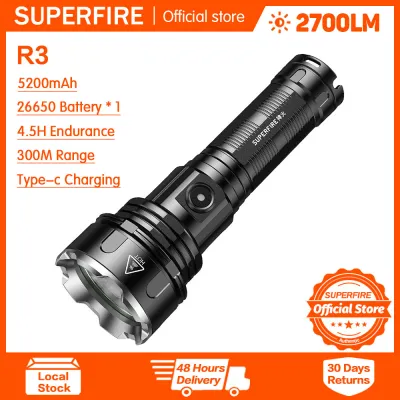
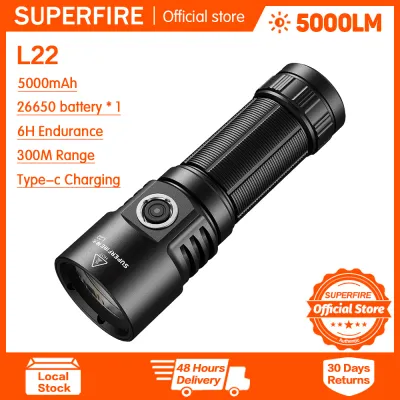
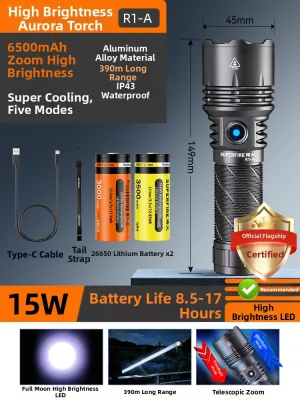
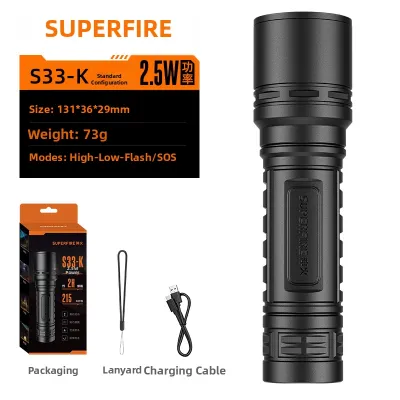
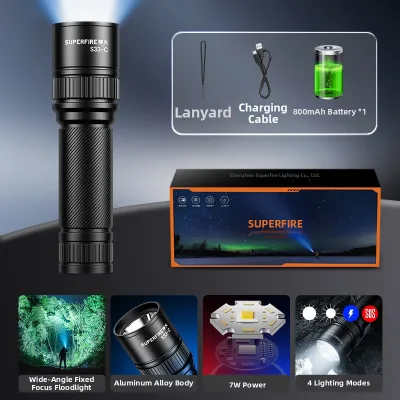
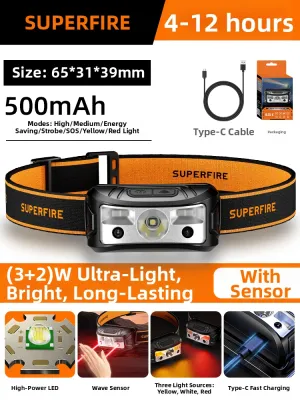
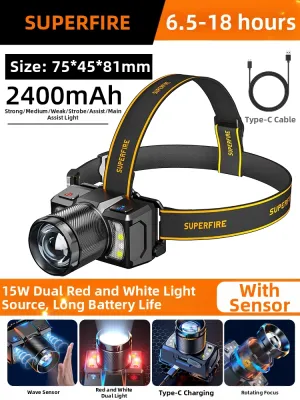
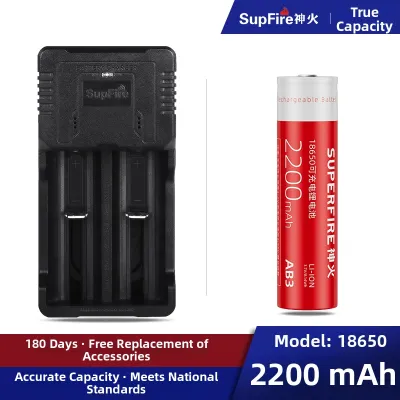
Prices are valid at publication and may change. Please refer to the product page for the latest price.
The composition of your household also dictates your emergency lighting strategy. Relying on a single high-powered flashlight can leave other family members stranded in the dark if they are in different rooms. For most HDB households, a practical approach involves distributing multiple compact, user-friendly lights to individual family members while keeping one high-output unit in a central, easily accessible location. This ensures that everyone has a personal light source for basic movement, while the primary high-output tool remains available for demanding tasks.
Finally, consider where you plan to store your emergency gear. HDB flats often have dedicated utility closets, bomb shelters, or compact grab-and-go emergency bags. Your chosen flashlights must fit comfortably within these designated storage zones without cluttering the space, ensuring they remain instantly accessible when the power suddenly cuts out. Storing a flashlight in an awkward or hard-to-reach spot defeats its purpose, so physical size and ease of storage should be key factors in your decision-making process.
Evaluating Superfire Flashlight Specifications
When browsing Superfire product listings on online marketplaces or official retail channels, you will encounter a wide array of technical specifications. Understanding how to read these metrics allows you to filter out unsuitable options and verify that a specific model meets your household’s practical requirements.

Brightness and Beam Distance
Flashlight brightness is measured in lumens, which indicates the total amount of visible light emitted by the source. While high lumen numbers look impressive on paper, excessively bright settings can cause intense glare when reflected off light-colored HDB walls, temporarily straining your eyes. For indoor use, look for models that offer multiple adjustable brightness modes, including a low or “eco” setting of under 100 lumens, which is more than sufficient for navigating a dark bedroom or kitchen. Having multiple modes also allows you to conserve battery power when maximum brightness is unnecessary.
The beam profile is equally important and is generally categorized into flood and spot beams. A flood beam disperses light widely over a short distance, making it ideal for illuminating an entire room or working on close-up tasks. A spot beam concentrates the light into a narrow, intense column that travels much farther, which is highly useful for scanning long corridors or deep stairwells. Many modern flashlights feature adjustable zoom lenses or dual-emitter designs that allow you to transition between these two beam types as needed, offering versatile functionality.
When reviewing specifications, always check the manufacturer’s stated maximum lumens alongside the corresponding runtime. High-output modes typically generate significant heat and drain batteries rapidly, meaning the flashlight will automatically step down to a lower brightness level after a few minutes to protect its internal circuitry. Understanding this thermal step-down behavior prevents surprises during use, as a flashlight advertised at thousands of lumens will only maintain that peak output for a very short duration.
Battery Life and Power Sources
An emergency flashlight is only as reliable as its power source, making battery selection a critical decision for long-term preparedness. Flashlights generally fall into two categories: those with built-in rechargeable lithium-ion batteries and those that run on replaceable standard cells, such as AA or AAA alkaline or lithium batteries. Each system has distinct trade-offs regarding maintenance, cost, and readiness.
Rechargeable models are highly convenient for regular use and eliminate the ongoing cost of buying disposable batteries. However, they require a disciplined maintenance routine, as lithium-ion cells slowly lose their charge over time even when stored in a drawer. If you choose a rechargeable Superfire model, you must commit to checking and recharging the unit periodically to ensure it is not dead when an actual emergency occurs. Additionally, if a power outage lasts for several days, recharging these units can become difficult without a backup solar charger or a large power bank.
Replaceable battery models offer excellent long-term storage reliability because high-quality alkaline or primary lithium batteries can hold their charge for several years in storage. In an extended power outage, you can simply swap out dead batteries for fresh ones instantly, without waiting for a USB charging source. For maximum flexibility, some users prefer dual-fuel flashlights that can accept both rechargeable lithium cells and standard disposable batteries, providing a versatile backup plan for any scenario.
Portability, Size, and Storage
The physical dimensions and weight of a flashlight directly affect how easily it can be handled during a stressful situation. A heavy, bulky flashlight might offer extended battery life, but it can be difficult for children or elderly family members to hold for long periods. Selecting a lightweight, ergonomic design ensures that every member of the household can operate the tool comfortably.
Hands-free functionality is another valuable feature to look for when evaluating a flashlight’s physical design. Models equipped with magnetic tail caps can be easily attached to metal surfaces, such as the frame of your DB box or a metal shelf, allowing you to use both hands to inspect fuses or pack supplies. Lanyard holes and pocket clips also prevent accidental drops and keep the light securely attached to your wrist or clothing, which is especially helpful when navigating dark stairwells.
Ultimately, you must balance the trade-off between a larger flashlight body and a compact everyday carry (EDC) size. Larger bodies typically accommodate larger batteries and heat sinks, allowing for longer runtimes and higher sustained brightness. Compact models are much easier to pack into a small emergency grab bag, but they may require more frequent battery changes or charging cycles during prolonged use. Evaluating who will be using the flashlight and where it will be stored will help you find the right balance between size and performance.
Matching Flashlight Categories to Household Needs
To simplify your selection process, you can group Superfire flashlights into three functional categories based on their primary design strengths. By matching these categories to your household’s specific layout and family structure, you can build a balanced emergency lighting kit.
First, the high-output and long-throw category features larger flashlights designed to project a powerful beam over significant distances. These models are highly suited for residents living in large HDB estates with extensive common corridors, multi-story car parks, or complex stairwells. While their larger size makes them less ideal for pocket storage, their high battery capacity ensures they can sustain bright illumination for outdoor navigation or community assistance. They are excellent primary lights to keep in a central location for major emergencies.
Second, the compact and wide-beam category prioritizes portability and close-range flood lighting. These lightweight models are highly suited for storing in bedside drawers, kitchen cabinets, or individual emergency grab bags. Because they produce a wide, soft beam, they are the most comfortable option for indoor room illumination, reading emergency documents, or navigating small spaces without causing eye strain. They are also easy for children and elderly family members to handle without fatigue.
Third, the multi-power and long-runtime category focuses on maximum operational flexibility during extended outages. These models often feature dual-power compatibility or highly efficient low-power modes that can stretch battery life over several days. This category is highly recommended for larger families or households that want a dependable backup light that can sit in a utility closet for months without requiring constant maintenance.
When shopping on online marketplaces or official retail stores, use these categories as a guide to filter product listings. Rather than searching for a single ideal model, aim to combine a compact wide-beam light for daily indoor convenience with a high-output or multi-power model for serious emergency backup. This multi-tiered approach ensures that your household is prepared for both minor localized blackouts and more significant, prolonged utility disruptions.
Pre-Purchase Verification and Storage Safety
Before finalizing your purchase, you must verify that the flashlight meets essential safety and durability standards suitable for Singapore’s tropical climate. High humidity and warm temperatures can accelerate battery degradation and corrosion, making proper product selection and storage maintenance vital.
Start by checking the product’s IP (Ingress Protection) rating, which indicates its resistance to dust and water. An emergency flashlight should ideally have a rating of at least IPX4, meaning it can withstand splashes of water from any direction. This level of protection ensures the flashlight remains functional if you need to navigate outdoors in heavy rain or if it is stored in a damp utility area near a window. Higher ratings, such as IPX6 or IPX7, offer even greater peace of mind against accidental submersion or severe weather.
Next, verify that the flashlight and its charging accessories carry recognized electrical safety certifications. When purchasing rechargeable models that plug directly into wall outlets, ensure the charging adapters are compatible with local voltage standards and possess valid safety marks. Avoid using unbranded, ultra-cheap charging cables or wall plugs, as substandard electronics pose a fire hazard during charging. Checking for these certifications protects your home from electrical faults and ensures the device charges safely.
Proper battery storage is critical to preventing permanent damage to your flashlight. If you select a model that uses replaceable alkaline batteries, always store the batteries outside the flashlight body if you do not plan to use it for several months. Alkaline batteries are prone to leaking corrosive acid over time, which can ruin the flashlight’s internal contacts. For rechargeable models, establish a calendar reminder to charge the battery to around fifty to eighty percent every six months, as storing lithium-ion batteries completely flat can permanently reduce their capacity.
If a product listing lacks clear specifications regarding battery chemistry, charging voltage, or water resistance, stop and consult the manufacturer or an authorized retailer before buying. Taking the time to verify these details ensures that your investment remains safe, reliable, and ready to perform when your household needs it most.
Frequently Asked Questions (FAQ)
How often should I check the batteries in my emergency flashlight?
You should inspect your emergency flashlight and its batteries at least once every six to twelve months. For models utilizing disposable alkaline batteries, check for any signs of white powdery corrosion or leakage, and replace the cells if they are past their printed expiration date. For rechargeable lithium-ion flashlights, turn the unit on to verify it still holds a charge, and top up the battery to ensure it is ready for an unexpected power outage. Keeping a small maintenance log or setting a recurring phone reminder can help you stay on top of these essential checks.
Can I use a Superfire flashlight with a power bank during an outage?
Whether you can operate a Superfire flashlight while it is connected to a power bank depends entirely on the specific model’s circuitry. Some models support pass-through charging, allowing them to run on a low setting while plugged into a USB power source, while others will disable the LED entirely during charging. Refer to your product’s user manual to verify this capability, and avoid running the flashlight on high settings while charging to prevent excessive heat buildup. Always use high-quality, certified power banks and cables to ensure safe power delivery.

Community discussion
Share your experience or ask a question. Comments are reviewed before publication.