
An emergency kit for a Housing & Development Board (HDB) flat requires a reliable, high-quality light source that can handle both sudden indoor blackouts and high-rise evacuations. To choose the right Nightcore torchlight, you must look for a model that balances a wide, glare-free beam for indoor navigation with a focused, long-reaching beam for descending dark stairwells. Additionally, the torchlight must feature a dependable power source—whether through USB-C rechargeable lithium-ion cells or easily stored standard batteries—and a compact form factor that fits seamlessly into your household’s emergency grab bag.
By focusing on verified specifications such as lumen levels, beam distance, battery types, and ingress protection (IP) ratings, you can select a tool that remains operational when the power grid fails. Rather than relying on generic emergency lights, a specialized torchlight offers the durability and precise illumination control needed to navigate Singapore’s unique high-rise residential environments safely.
Identifying Lighting Needs for HDB Power Outages and Evacuations
Preparing for an emergency in an HDB flat requires a clear understanding of the physical environment during a power failure. Unlike landed properties, high-rise apartments present specific challenges, such as navigating long, windowless common corridors and descending multiple flights of concrete stairs. The lighting tools you choose must be tailored to these architectural realities to ensure safety and prevent panic.
Products mentioned in this guide
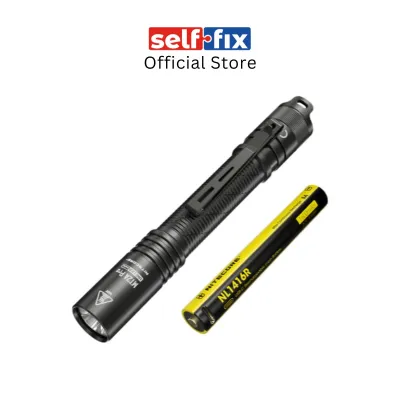
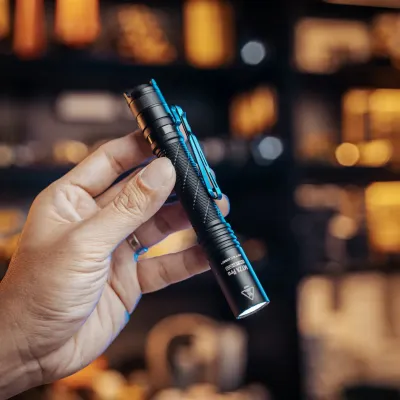
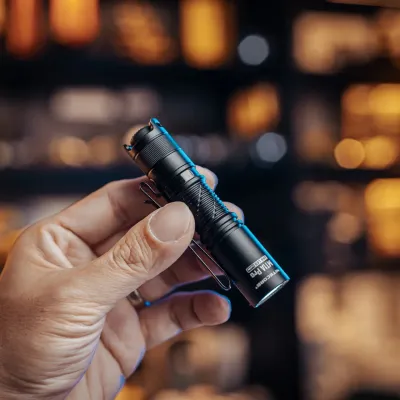
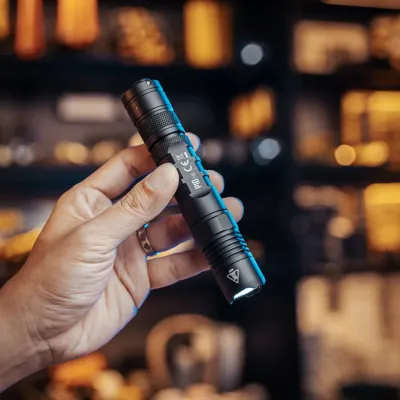
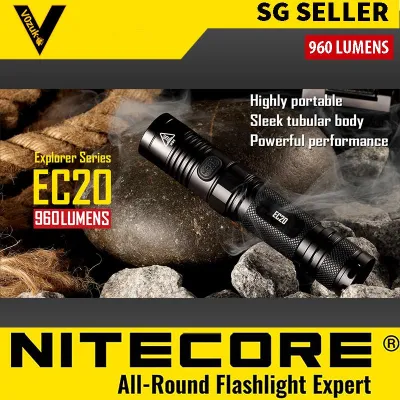
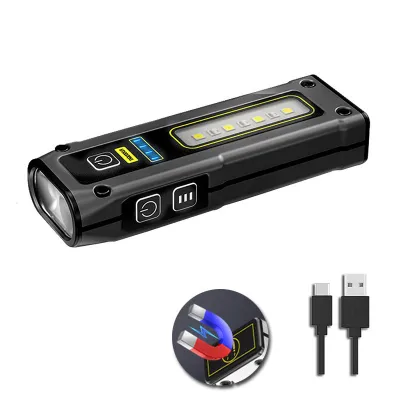
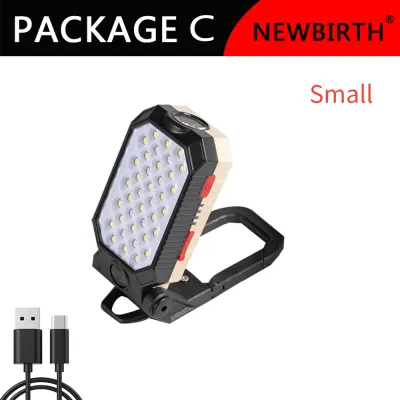
Prices are valid at publication and may change. Please refer to the product page for the latest price.
During a sudden indoor blackout, your immediate priority is safely navigating your flat without tripping over furniture or colliding with walls. HDB interiors typically feature light-colored paint or tiled surfaces that reflect light easily. Using a torchlight that is too bright or has an overly focused beam can cause intense, blinding glare when pointed at a nearby wall. For indoor navigation, you need a torchlight that offers a low-lumen setting and a wide, diffused beam profile to illuminate an entire room evenly without straining your eyes.
If a power outage or building emergency requires you to evacuate, the lighting requirements change dramatically. Lifts will be non-operational, forcing you and your family to use the emergency stairwells. These concrete stairwells can be pitch black, especially in the middle sections of high-rise blocks. To descend safely, you need a torchlight with a focused beam and sufficient throw distance to illuminate several steps ahead, allowing you to spot debris, water puddles, or uneven surfaces before stepping on them.
Finally, storage space is a premium commodity in most HDB flats. Your emergency kit is likely stored in a household shelter, a utility closet, or a compact grab-and-go bag kept near the main entrance. A bulky, heavy searchlight is impractical for these storage conditions and difficult to carry during an active evacuation. The ideal emergency torchlight must feature a compact, lightweight, and snag-free design that can be slipped into a pocket or clipped to a belt, leaving your hands free for other essential tasks.
Key Specifications to Check on Nightcore Torchlights
When browsing Nightcore’s extensive catalog, it is easy to get overwhelmed by technical jargon. To make an informed decision, you must know how to read the product specifications on the packaging or manufacturer’s website and match them directly to your household’s emergency plan.

The first specification to evaluate is the lumen output, which measures the total amount of visible light emitted by the torchlight. For an HDB emergency kit, look for a model that offers multiple brightness levels rather than a single high-output mode. A versatile torchlight should have a “low” or “ultralow” mode of 1 to 15 lumens for close-up tasks and reading, a “medium” mode of 100 to 300 lumens for general indoor navigation, and a “high” mode of 500 to 1000 lumens for outdoor use or stairwell evacuations. Avoid relying solely on maximum “turbo” modes, as these generate significant heat and drain the battery rapidly.
Along with lumens, you must check the beam distance and beam profile, which are determined by the reflector design. A “flood” beam disperses light over a wide angle, making it perfect for illuminating a bedroom or living room during a blackout. A “throw” beam concentrates the light into a tight, far-reaching spotlight, which is essential for outdoor search scenarios or long corridors. For a general household emergency kit, a balanced beam profile—often achieved through a textured orange-peel reflector or a specialized optical lens—is highly recommended as it provides a useful mix of both flood and throw.
Physical dimensions and weight are equally critical when selecting a torchlight that every family member, including children or elderly relatives, can use comfortably. Check the product specifications for the length and weight (including the battery). A torchlight measuring between 10 to 15 centimeters in length and weighing under 150 grams is generally considered the sweet spot for comfortable, single-handed operation over extended periods.
Lastly, do not overlook environmental durability. Singapore’s tropical climate is characterized by high humidity, which can accelerate the degradation of electronic components and battery contacts. Ensure the Nightcore model you select has a verified Ingress Protection (IP) rating. An IP66 rating indicates protection against powerful water jets, while an IP68 rating means the torchlight is completely dust-tight and can withstand continuous submersion in water. A high IP rating ensures that your torchlight will function perfectly even if you have to evacuate during a heavy tropical downpour.
Evaluating Battery and Charging Options for Blackouts
The performance of any emergency torchlight is only as reliable as its power source. When evaluating Nightcore models, you must choose between built-in rechargeable batteries, replaceable standard batteries, or hybrid systems, keeping in mind the potential duration of a power disruption.
Built-in rechargeable lithium-ion batteries are highly popular due to their convenience and superior energy density. They allow the torchlight to remain incredibly compact while delivering high lumen outputs and long runtimes. However, rechargeable batteries require active maintenance. If a lithium-ion battery is left completely discharged in a drawer for several years, it can suffer permanent capacity loss or fail entirely. If you choose a model with an internal battery, you must commit to a routine charging schedule to ensure it is ready when an emergency strikes.
For maximum resilience during prolonged power outages, torchlights that accept replaceable standard batteries, such as AA or AAA alkaline or lithium cells, offer distinct advantages. Standard batteries have an exceptionally long shelf life—often up to ten years for quality lithium cells—and can be stockpiled easily in your emergency kit. If the power grid remains down for several days, you do not need to worry about finding an electrical outlet; you can simply swap out the dead batteries for fresh ones from your storage.
A highly versatile compromise is a torchlight that features USB-C charging compatibility. Many modern Nightcore models allow you to charge the internal battery directly through a sealed USB-C port on the flashlight body. This feature is incredibly valuable during an extended blackout, as it allows you to recharge your primary light source using a standard portable power bank—the same type you use to keep your mobile phone alive. When selecting a USB-C model, verify whether the torchlight can still be operated on its lower brightness settings while actively plugged into a power bank.
Integrating the Torchlight Into Your Home Emergency Kit
Acquiring a high-quality Nightcore torchlight is only the first step; you must integrate it correctly into your household’s emergency preparedness routine to ensure it functions when needed.
When assembling your emergency kit, pack the torchlight alongside its essential accessories in a dedicated, waterproof pouch. This pouch should contain a compatible USB-C charging cable, a fully charged portable power bank, and a spare set of batteries if your torchlight uses replaceable cells. Keeping these items grouped together prevents you from scrambling to find a charging cable or spare battery in the dark during a sudden power failure.
Establish a strict maintenance schedule to keep your emergency lighting in peak condition. A practical approach is to perform a quick check every six months, perhaps aligning with the start and middle of the calendar year. During this check, turn on the torchlight and cycle through all brightness modes to verify functionality. Check the battery level indicator; if the battery is below 70%, recharge it to full. If your torchlight uses replaceable batteries, inspect the battery compartment for any signs of white powdery corrosion or leakage, and replace the cells immediately if any damage is detected.
Finally, store your emergency kit in a cool, dry, and easily accessible location. Avoid storing the kit in areas prone to extreme temperature fluctuations, such as near kitchen appliances, laundry areas, or in direct sunlight near windows, as high heat accelerates battery self-discharge and degradation. The storage spot should be known to all adult members of the household and positioned so that you can reach it quickly in complete darkness, such as a designated shelf in the entryway console or a bedside drawer.
Frequently Asked Questions (FAQ)
Can I use a Nightcore headlamp instead of a handheld torchlight for emergencies?
Yes, a headlamp is an excellent alternative or supplement to a handheld torchlight for household emergencies. The primary advantage of a headlamp is that it provides hands-free illumination, allowing you to carry emergency bags, hold onto stairwell handrails, or assist family members during an evacuation. However, headlamps typically have a wider, more diffuse beam profile designed for close-up tasks, which may offer less throw distance than a dedicated handheld torchlight when navigating long corridors or deep stairwells.
How should I store rechargeable batteries to prevent degradation?
To maximize the lifespan and safety of rechargeable lithium-ion batteries, store them in a cool, dry place away from direct sunlight and metal objects that could cause a short circuit. For long-term storage, it is best to keep the batteries charged to approximately 40% to 60% of their capacity rather than storing them completely full or entirely empty. Always consult the specific manufacturer guidelines for your Nightcore model to verify the recommended storage voltage and temperature ranges.
Is it necessary to have multiple torchlights in an HDB flat?
Having multiple torchlights is highly recommended for a comprehensive household emergency plan. Relying on a single, centrally located torchlight means that if a blackout occurs while you are in a bedroom or bathroom, you will have to navigate the dark to retrieve it. A safer strategy is to place smaller, compact torchlights or keychain lights in bedside drawers, the kitchen, and the living room, ensuring immediate access to light from anywhere in the flat.

Community discussion
Share your experience or ask a question. Comments are reviewed before publication.