
To keep a standard 2.6m HDB ceiling feeling spacious and open, the ideal square LED light should feature an ultra-slim profile—ideally under 3cm to 5cm in thickness—and a proportional width that matches the room’s footprint. Selecting the right fixture requires balancing physical clearance with visual weight so the light source does not dominate the vertical space. By focusing on slim profiles, appropriate dimensions, and even light distribution, you can enhance the perceived height of your rooms while ensuring comfortable, functional illumination throughout your home.
Assessing Room Proportions for 2.6m Ceilings
Square fixtures have a distinct geometric presence that can significantly influence how we perceive room volume. Unlike round lights, which soften corners and blend easily into the ceiling plane, a square LED light introduces sharp, defined lines. These lines naturally draw the eye upward and align with the structural walls of a typical HDB layout. However, this strong geometric form also carries more visual weight, meaning an oversized or overly thick square fixture can quickly dominate a compact room.
Maintaining adequate physical clearance is essential for both safety and comfort in a home with 2.6m ceilings. As a general rule, the bottom of any ceiling-mounted fixture should remain at least 2.3m above the floor. This clearance ensures that taller occupants can walk underneath without feeling restricted, and it prevents accidental contact during daily activities like changing bedsheets or moving tall furniture.
Products mentioned in this guide
![ONS 18W/24W/36W/48W LED Magnetic Ceiling Light 6500K Round/Square/Tri-Tone LED Ceiling Light [Singapore Home Grown Brand]](https://img.lazcdn.com/g/p/4ee96a0041eca859bcf3b72390759725.png_400x400q80.png_.webp)
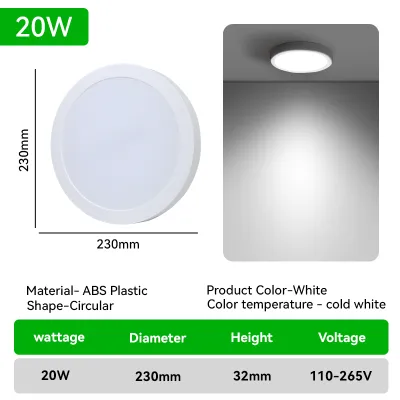
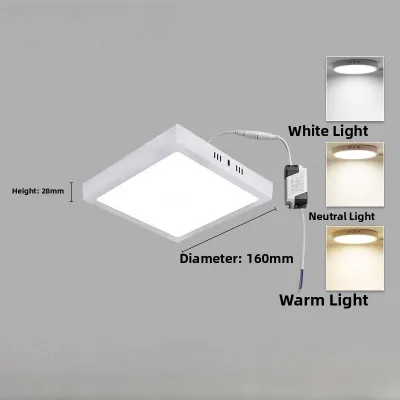
![[Local Seller] LED Ceiling Surface Mounted Downlight LED Panel Light Square Round](https://img.lazcdn.com/g/ff/kf/Sdd11b528478549189cb70a967ccae3d2t.jpg_400x400q80.jpg_.webp)
![[LOCAL SELLER] Slim Square Round LED Downlight Panel Light (1 Year Local Warranty)](https://img.lazcdn.com/g/p/8700acf2c884301cbc23863a7307538c.jpg_400x400q80.jpg_.webp)
Prices are valid at publication and may change. Please refer to the product page for the latest price.
A common spatial mistake in HDB flats is choosing a fixture that is too wide or protrudes too far down. When a square light is disproportionately large, it visually crowds the ceiling plane, casting shadows closer to the walls and creating a cramped, cave-like atmosphere. Opting for a slim, scaled-down profile helps preserve the open feel of the room, allowing the ceiling to appear higher than it actually is.
Matching Square LED Light Sizes to Room Dimensions
To find the right size, you can use a simple proportional framework based on the room’s dimensions. A helpful starting point is to sum the length and width of the room in meters, then multiply that sum by a scaling factor of 8 to 10 to estimate a balanced fixture width in centimeters. For example, if your bedroom measures 3 meters by 3 meters, the sum is 6. Multiplying this by 8 to 10 suggests a square fixture width of roughly 48cm to 60cm. This method keeps the light proportional to the floor area without relying on rigid, arbitrary rules.

HDB layouts often feature rectangular bedrooms alongside square living areas, which requires some adjustment in your lighting strategy. In a rectangular room, a single centered square light can sometimes leave the far ends of the room in shadow. To counter this, you might need to select a slightly wider fixture with a broader beam angle, or pair a smaller central square light with complementary task lighting like bedside lamps or track lights. For square living areas, a single, well-proportioned square fixture naturally aligns with the room’s symmetry and provides balanced coverage.
Positioning is key to avoiding dark corners without overwhelming the central ceiling space. A square LED light with a wide beam angle—typically 120 degrees or more—helps distribute light evenly toward the walls. This wide distribution reduces the contrast between the bright center of the room and the dim edges, making the entire space feel larger and more cohesive.
Selecting the Ideal Profile and Thickness
The physical depth of your square LED light directly influences how high your ceiling feels. Traditional flush-mount fixtures often have thick frames that protrude 8cm to 10cm or more from the ceiling. In contrast, ultra-slim profiles—often measuring less than 3cm in thickness—sit almost flush against the concrete slab. This minimal protrusion preserves precious vertical clearance and keeps the ceiling line clean and uninterrupted.
Bulky housings or semi-flush mounts that hang down create a physical obstacle and cast shadows upward onto the ceiling. This “shadow ring” darkens the area immediately around the fixture, visually lowering the ceiling. While semi-flush lights can offer decorative appeal, they are generally less suited for standard 2.6m HDB ceilings where maximizing vertical space is the priority.
To minimize the visible depth of the housing, look for square LED lights with edge-to-edge diffusers. These designs eliminate thick plastic or metal borders, allowing the light to emit from the entire surface of the fixture. When illuminated, the borderless design blends seamlessly with the ceiling, reducing the perceived thickness of the fixture and creating a softer, more expansive glow.
Optimizing Brightness and Color Temperature
Bright, even illumination is crucial for making a compact room feel spacious. Instead of relying solely on wattage, focus on lumens, which measure actual light output. A general guideline for HDB living areas is to aim for approximately 300 to 400 lumens per square meter, while bedrooms may only require 150 to 200 lumens per square meter. Checking the product specifications for the lumen rating ensures you achieve adequate brightness without over-illuminating the space.
Color temperature is a matter of personal preference, but it also affects how we perceive room volume. Cool white light (around 4000K) offers a crisp, clean look that can make a utility space or kitchen feel more open and airy. Warm white light (around 3000K) creates a cozy, intimate atmosphere suitable for bedrooms, though it may make a small room feel slightly more enclosed. Many modern square LED lights feature tri-color switching, allowing you to adjust the tone to suit your mood and activities.
To prevent harsh shadows that can visually shrink a room, choose a fixture with a high-quality anti-glare diffuser. Acrylic or polycarbonate diffusers scatter the light evenly across the space, softening the transition between light and shadow. This even distribution eliminates hot spots and glare, making the compact 2.6m ceiling feel taller and more comfortable to live under.
HDB Installation Requirements and Safety Checks
Before purchasing a square LED light, it is crucial to verify your existing ceiling setup. Inspect the location of the junction box, the condition of the wiring, and the compatibility of the mounting bracket. Ensure the fixture’s voltage rating matches Singapore’s standard 220V-240V electrical supply, and look for recognized safety certifications, such as the local Safety Mark, to guarantee electrical compliance.
HDB ceilings are typically made of solid concrete slabs. Drilling into concrete requires appropriate masonry drill bits and wall plugs to secure the mounting bracket safely. Because concrete is highly rigid, ensure you do not drill too deeply or interfere with embedded conduits. Keep the weight of the fixture minimal; lightweight plastic or aluminum-framed square LED lights are ideal because they put less stress on the mounting screws.
While mounting a lightweight fixture on an existing point can sometimes be a straightforward task, working with electrical wiring carries inherent risks. Always isolate the power at the main distribution board (DB box) before touching any wires. If your installation requires running new wiring, creating a new light point, or modifying fixed electrical installations, you must engage a licensed electrical worker (LEW) in Singapore to ensure the work is performed safely and legally.
Frequently Asked Questions (FAQ)
Can I use a recessed square LED light instead of a surface-mounted one in an HDB flat?
Standard HDB flats feature solid concrete slab ceilings, which cannot be hacked or recessed to accommodate recessed downlights. To install recessed lighting, you would need to construct a false ceiling, which typically lowers the overall ceiling height by 10cm to 15cm—a significant reduction for an already standard 2.6m ceiling. If you prefer the clean, minimalist look of recessed lights without losing vertical space, an ultra-slim surface-mounted square LED light is an excellent alternative. These fixtures sit incredibly close to the concrete ceiling, mimicking the flush appearance of a recessed light.
How do I clean a slim square LED ceiling light without damaging it?
To clean your slim square LED light safely, always start by isolating the power at the main switch or DB box to prevent any electrical hazards. Use a dry, soft microfiber cloth to gently wipe away dust and cobwebs from the diffuser and frame. For stubborn spots, slightly dampen the cloth with water or a mild, non-abrasive soap solution, ensuring no moisture enters the housing or contacts the LED driver. Avoid using harsh chemical cleaners, alcohol, or abrasive pads, as these can scratch or discolor the acrylic diffuser and degrade the light quality over time.

Community discussion
Share your experience or ask a question. Comments are reviewed before publication.